
Blog
Fix It Now vs. Wait: Neighbor Reported Unpermitted Work?
Neighbors reported unpermitted work in Florida? Compare fixing it now vs. waiting, and learn how after-the-fact permits resolve complaints fast.
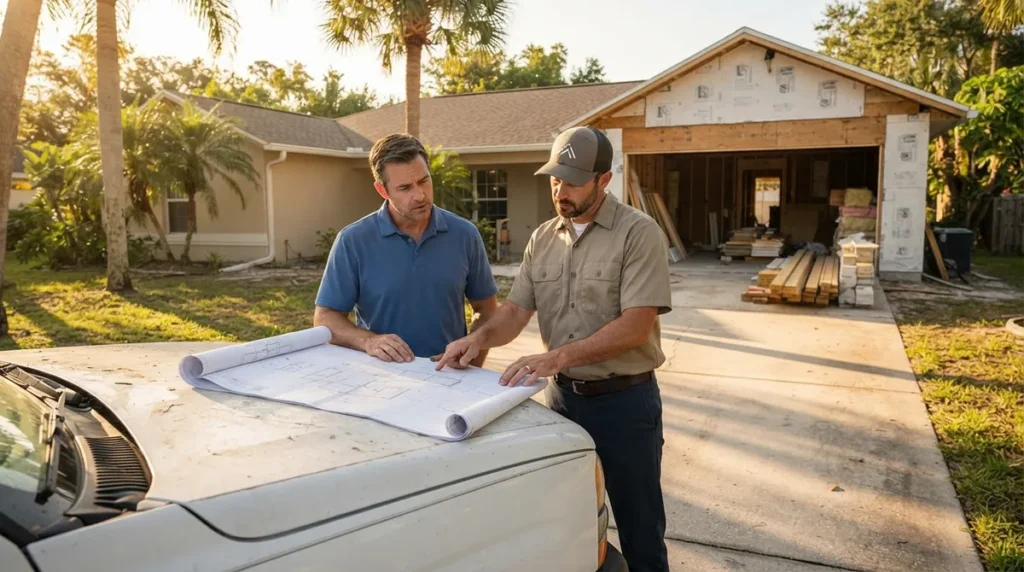
Key Takeaways
-
A neighbor's report is only an allegation, not a finding; the building department decides what the facts show, so responding promptly and cooperatively matters most.
-
Florida law generally bars local code inspectors from acting on anonymous complaints, so a complaint that reaches you has usually passed an initial screening step.
-
Verify the permit history first: the work may have been permitted but left expired or unclosed, or a prior owner or contractor may have skipped the permit.
-
Many unpermitted projects can be legalized through an after-the-fact permit, which may require as-built drawings, engineer letters, and exposed-work inspections.
-
Waiting usually adds risk: open cases can escalate into stop-work orders, higher fees, growing correction requirements, and complications at sale or refinance.
-
Avoid confronting the neighbor, ignoring deadlines in the notice, concealing the work, or guessing which office has jurisdiction, since each can make the case harder to resolve.
It happens more often than most Florida property owners expect. You open the mailbox, or answer the door, and there it is: a notice from the city or county saying someone reported construction at your property. Your stomach drops. Was it the deck? The garage conversion? That electrical panel the previous owner swapped out years ago?
First, take a breath. When neighbors reported unpermitted work in Florida, it feels personal, but the process that follows is usually procedural, not punitive. A report is an allegation, not a finding. What matters most is how you respond in the first few days.
In this friendly guide, we compare the two paths property owners typically take: acting quickly to verify and correct the situation, or waiting and hoping it blows over. We will walk through how complaints work under Florida law, what investigators look for, how after-the-fact permitting works, and how 1 Contractor Solutions helps owners, contractors, and realtors resolve these situations across all 67 Florida counties. Whether you are a homeowner, general contractor, solar installer, or real estate professional, you will find practical steps you can use today.
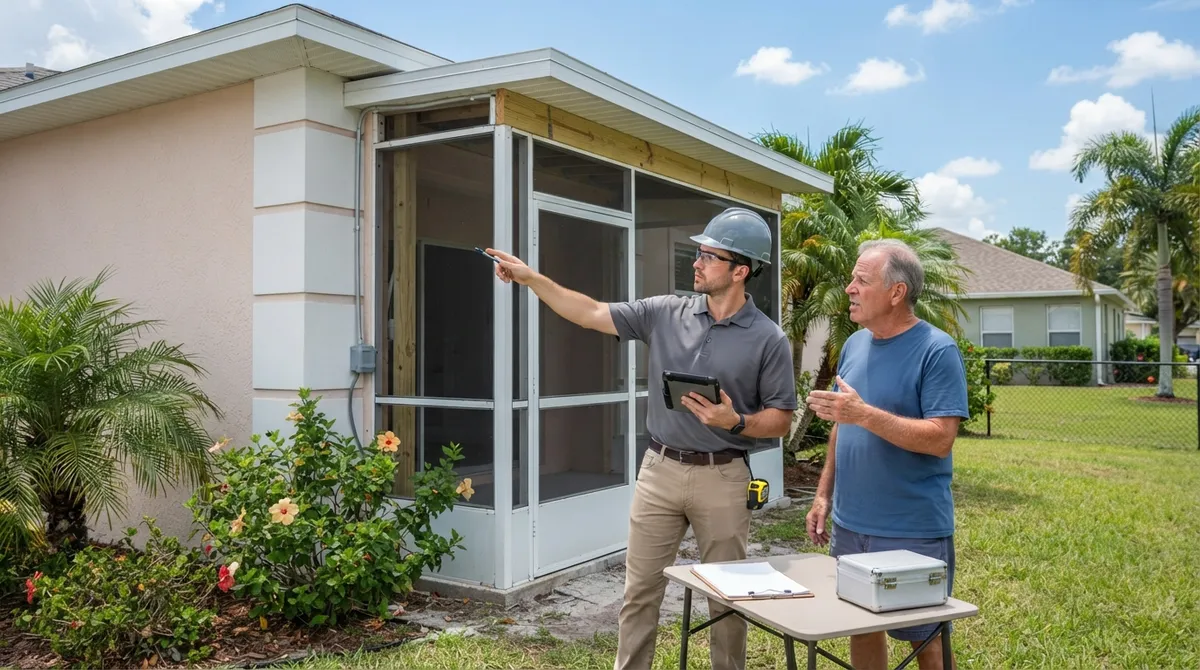
How a Neighbor's Report Actually Works in Florida
Florida generally requires a permit before covered building work begins. Under Florida Statutes §553.79(1)(a), it is unlawful to construct, alter, repair, or demolish a building without first obtaining a permit from the appropriate enforcing agency, subject to legal exceptions. Enforcement, however, happens locally.
That means the right authority depends on where the property sits. It may be a city building or code-enforcement department, or it may be the county. Near city lines, the answer is not always obvious. Our building department lookup tool can help you confirm which office controls an address.
Neighbors can typically report suspected unpermitted construction through the local government's designated complaint channel. For example, Hillsborough County accepts reports online, while the City of Tampa routes construction-without-permit reports through its Accela portal. Procedures vary, so there is no single statewide form.
Can a Neighbor Report Anonymously?
Generally, no. Florida law restricts anonymous code complaints. Under Florida Statutes §§125.69, 162.21, and 166.0415, local code inspectors generally may not investigate complaints submitted anonymously. Complainants typically must provide identifying information, such as a name and address, and have personal, first-hand knowledge of the alleged violation. Each local agency explains its own submission requirements.
This is useful to know. A complaint that reaches you has usually passed through at least a basic screening step.
What Happens After the Report Is Filed?
Local timelines are not uniform. As one example, the City of Kissimmee says it aims to send an inspector within two business days for qualifying reports within city limits, but that is a local service standard, not a statewide deadline. In general, the process looks like this:
- The local authority confirms it has jurisdiction over the address.
- Staff review the permit history for the property.
- An inspector may visit, often from the public right-of-way, to look at the reported work.
- If the work appears to require a permit and none exists, the owner is notified.
- The owner is given a path to correct the issue, which often means an after-the-fact permit.
Some jurisdictions publish case records or let complainants check status, so your neighbor may be able to see progress even though you may not know who filed.
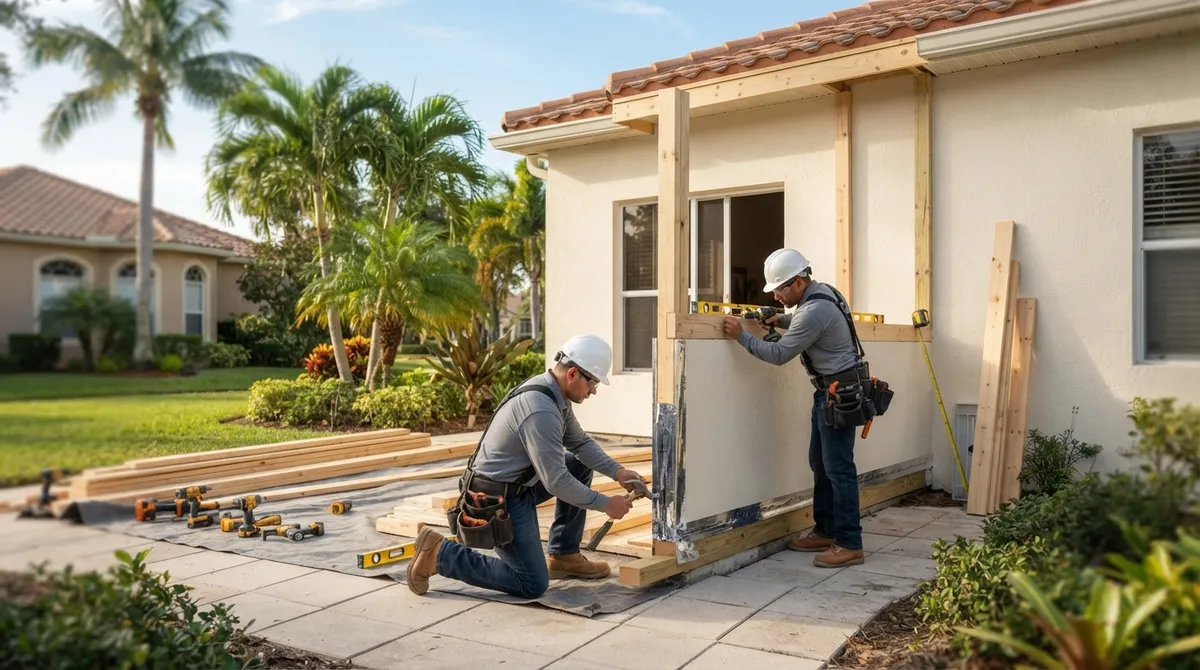
Path One: Fix It Now
Acting quickly is almost always the lower-stress option. Florida permitting departments are used to owners who come forward, ask what is needed, and cooperate. The tone of the entire case often shifts when the owner shows up prepared.
Step 1: Verify the Permit History
Before you assume the worst, find out what is actually on record. Sometimes the work was permitted, but the permit expired or was never closed. Other times the work was done by a prior owner or a contractor who promised to pull the permit and never did. Our open permit search tool is a good starting point.
If a contractor said they would handle the permit, you are not alone. We have written about exactly that situation in our guide on what to do when a homeowner said they would pull the permit and it never happened.
Step 2: Contact the Building Department
Ask the local building department what documentation, inspections, corrections, or after-the-fact permitting are required. Be polite, be specific, and take notes. If you are unsure how to speak the language of the department, a permitting professional can handle that conversation for you.
Step 3: Gather Plans and Documentation
Unpermitted work usually has to be documented as it exists today. That often means as-built drawings, and sometimes an engineer's letter. Depending on the scope, you may need:
- As-built drawings showing what was actually constructed
- Engineer letters verifying structural or life-safety compliance
- Site plans for additions, accessory structures, or setbacks
- Product approvals, photos, and invoices for materials used
Step 4: Apply for the After-the-Fact Permit
Many unpermitted projects can be legalized. The local building department determines what is required, and concealed work may need to be exposed for inspection. Unsafe or noncompliant work may require correction or removal. Our detailed guide on how to legalize unpermitted work in Florida walks through the process, and our after-the-fact and expired permits service handles the full file from drawings to closeout.
Path Two: Wait and Hope
It is human nature to hope a problem fades away. Unfortunately, a code-enforcement complaint does not usually disappear on its own. It is typically tracked as an open case until it is resolved, and unresolved cases tend to escalate.
Waiting can lead to several consequences, depending on the facts and the local enforcement process:
- Stop-work action if work is still in progress
- Permit and inspection fees that can be higher when work is done before permitting
- Correction requirements that grow as the issue lingers
- Civil or other penalties under local enforcement rules
- Complications at sale or refinance when an open violation or permit shows up
Florida Statutes §553.79 authorizes permitting agencies to enforce permit requirements, but the statute does not set one statewide fee or penalty for every unpermitted-work case. Costs depend on your jurisdiction, so obtain the applicable local rules and fee schedule rather than assuming a fixed number. For a deeper look at how penalties vary, see our article on the penalty for building without a permit in Florida.
Side-by-Side: Fix It Now vs. Wait
| Factor | Fix It Now | Wait and Hope |
|---|---|---|
| Relationship with inspectors | Cooperative and collaborative | Can become adversarial |
| Cost control | Predictable, scoped upfront | Fees and penalties may compound |
| Timeline | You set the pace | Enforcement sets the pace |
| Impact on sale or refinance | Clean permit record | Possible holds or delays |
| Stress level | Lower, with a clear plan | Higher, with open uncertainty |
The comparison is not close. Fixing the problem early keeps you in control of the outcome.
What Different Property Owners Should Know
The right response depends a bit on who you are. Here is how the situation tends to look from each seat.
| Who You Are | Common Scenario | Smart First Move |
|---|---|---|
| Homeowner | Prior owner or contractor skipped permits | Check permit history, then speak with the building department |
| General contractor | Subcontractor or client started work early | Pause work, confirm scope, and file immediately |
| Solar company | Install completed before final approval | Provide structural and electrical documentation to close out |
| Realtor or investor | Complaint or open permit surfaces before closing | Get a permit review and a corrective plan before the closing date |
If you are a general contractor, our team supports general contractors with filing, tracking, and revisions. Solar firms can lean on our solar contractor support, and real estate professionals can learn how we help through realtor and closing support.
Common Mistakes When a Neighbor Files a Report
Even well-meaning owners can make the situation harder. Here are the missteps we see most often:
- Confronting the neighbor. It rarely helps and can sour things for years. Direct your energy at the permit file instead.
- Ignoring the notice. Deadlines in notices are real. Missing one can add penalties or limit your options.
- Hiding or covering the work. Concealment can make inspections harder, and exposed-work requirements may follow.
- Guessing at the jurisdiction. Filing with the wrong office wastes time. Confirm the controlling authority first.
- Submitting incomplete drawings. Weak plans trigger rejections and delay approval. If this happens, see why a building permit gets rejected.
If you have already received a formal notice, our page on code compliance violations explains how we help owners respond and resolve cases.
A Simple Checklist You Can Use Today
If you are reading this because a complaint just landed in your lap, here is a short roadmap:
- Read the notice carefully and note every deadline.
- Confirm which city or county office issued it.
- Pull the permit history for the address.
- List every piece of work that may have been done without a permit.
- Collect photos, receipts, contractor names, and any prior permit paperwork.
- Contact the building department to ask what is required.
- Engage drafting and engineering support to document existing conditions.
- File the after-the-fact application and schedule inspections.
This is also a good moment to remember that every county has its own quirks. Owners in Hillsborough County, Miami-Dade County, and Orange County may all see different forms, fees, and timelines for the same underlying problem.
How 1 Contractor Solutions Helps
Think of us as Florida's outsourced permitting department. We are not a construction contractor. We are the team contractors, owners, and agents call when the permit is the thing standing in the way. Give us an address and a problem, and we tell you which jurisdiction controls it, what it will take, and then we go do it.
That includes preparing or reviewing plans, filing the application, tracking it, working every reviewer comment, handling revisions, and carrying it through approval and closeout. Our drafting and engineering are in house, and our own engineer signs and seals the work, so when a reviewer flags something, we fix it without waiting on an outside consultant. For urgent situations, our urgent permit rescue service is built for stop-work orders, denials, and closings held up by permit issues.
We answer 24/7, respond within 30 minutes day or night, and se habla español. Curious how other clients feel about the experience? You can visit us on Google — 1 Contractor Solutions and read what they have said. You can also follow us on LinkedIn or follow us on Facebook for practical Florida permitting tips.
For official statutory language, you can read Florida Statutes Chapter 553, Section 79 directly on the Florida Senate website.
Final Verdict: Fix It Now Wins
When neighbors reported unpermitted work in Florida, the fastest way back to peace of mind is to take ownership of the process. A report is only an allegation, and the building department decides what the facts show. By verifying the permit history, speaking with the right authority, documenting the work, and pursuing an after-the-fact permit when appropriate, you turn an open-ended worry into a defined project with a finish line.
Waiting rarely improves anything. It tends to add stress, fees, and complications, especially if you plan to sell, refinance, or finish a project on schedule.
If you are ready to resolve a complaint with a team that handles this every day, get a free quote and let us help you move from notice to approval. Permits approved. Projects moving.
FAQs
How do I report a neighbor for unpermitted construction in Florida?
Contact the building or code-enforcement department for the city or county that covers the property, since procedures vary by jurisdiction. Many offer online portals, and you will typically need to provide your name and address along with details of what you personally observed.
Can unpermitted work be reported anonymously in Florida?
Generally, no. Florida law restricts local code inspectors from investigating anonymous complaints, and complainants usually must provide identifying information and have first-hand knowledge. Each local agency spells out its own submission requirements, so check with the specific office.
What happens after a neighbor reports unpermitted work?
The local authority confirms jurisdiction, reviews the permit history, and may send an inspector to look at the reported work. If a violation is found, the owner is notified and typically given a path to correct it, often through an after-the-fact permit with plans, documentation, and inspections.
Can unpermitted work be legalized with an after-the-fact permit in Florida?
In many cases, yes. The local building department decides what is required, which can include as-built drawings, engineer letters, exposed-work inspections, and corrections. Work that is unsafe or noncompliant may need to be repaired or removed before approval.
What are the penalties for building without a permit in Florida?
There is no single statewide penalty. Consequences depend on the facts and the local enforcement process, and may include permit and inspection fees, correction requirements, stop-work action, and civil penalties. Always get the applicable local rules and fee schedule from your building department.
We do this work every day across all 67 Florida counties. Call (866) 314-6931 and we will tell you what your situation actually requires — including when you do not need us.
Related services
Permit Facilitation & Filing
You have a crew scheduled, a client asking for dates, and a permit sitting somewhere in a queue you cannot see. We file it, w…
See the servicePlan Review Coordination
A permit in plan review is not one queue. On a commercial project it can be six queues, each with its own reviewer, its own c…
See the serviceReady to get your permit moving?
One call tells you which jurisdiction controls your project, what it will take, and what it will cost. Most of the time we can scope it on the phone.