
Blog
Fix Before Closing vs. Close As-Is: Unpermitted Work in FL?
Unpermitted work at a Florida closing? Compare fixing it first vs. closing as-is, plus practical steps to keep your sale moving.
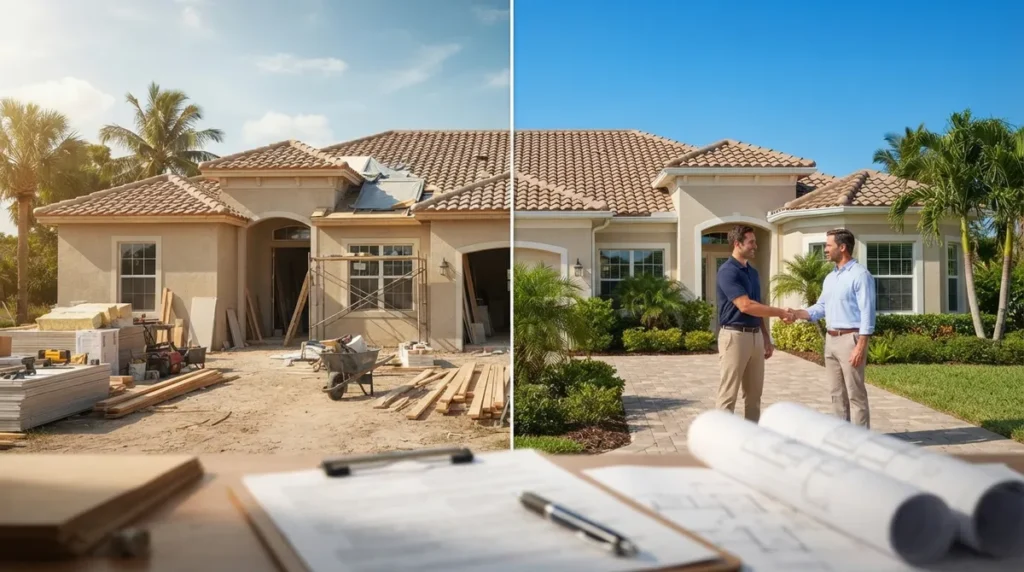
Key Takeaways
-
Florida sellers must disclose known unpermitted work that materially affects property value; an as-is clause does not erase this legal duty under Johnson v. Davis (1985), so consult an attorney before assuming protection.
-
Fix unpermitted work before closing if time and budget allow—it removes buyer doubt, satisfies lenders and insurers, and protects sale price; closing as-is works only for cash buyers or investors with written agreements on who handles legalization.
-
Unpermitted work and open permits are handled differently; unpermitted work may require full after-the-fact permits with plans and engineering, while open permits often need only a final inspection—verify your jurisdiction's specific process first.
-
Lenders, appraisers, and insurers can block or delay closings over unpermitted work by imposing extra conditions, adjusting valuations, or questioning coverage; proactive permit-history searches during due diligence prevent last-minute friction.
-
After-the-fact permit costs and timelines vary significantly by Florida jurisdiction and project scope—no statewide average exists, so obtain specific quotes from your local building department rather than relying on generic estimates.
-
Identify the correct permitting jurisdiction (city or county) immediately, pull permit records early, document suspected work with photos, and keep all final approvals in writing to maintain deal momentum and protect both buyer and seller interests.
Picture this: the inspection is done, the buyer is excited, the clock is ticking toward closing day, and then someone pulls the permit history. Suddenly there is a finished garage conversion, a screened porch, or a new water heater with no permit on file. Deep breath. This happens more often than you might think, and it does not automatically kill a deal.
When a real estate closing with unpermitted work in Florida is on the line, you generally have two paths. You can fix the problem before closing, or you can close as-is and let the buyer take on the cleanup. Each path has real trade-offs for sellers, buyers, agents, and lenders.
In this friendly guide, we will compare both options side by side, explain the difference between unpermitted work and an open permit, and walk through a practical plan you can follow in 2026. Whether you are a homeowner, a Realtor, a contractor, or an investor, you will leave knowing what to ask, who to call, and how to keep your closing moving.
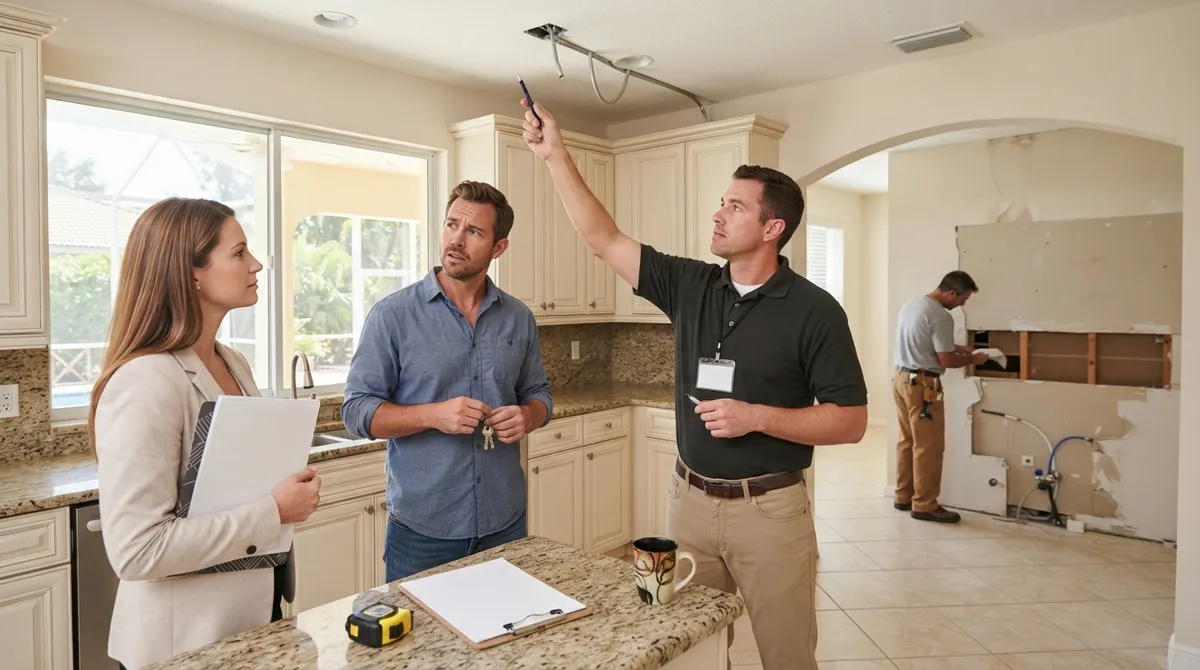
What Counts as Unpermitted Work (and What Doesn't)
Let's start with clear definitions, because the two most common permit problems at closing sound similar but are handled differently.
- Unpermitted work: Construction, alteration, or installation that required a permit but was done without one.
- Open permit: A permit was issued, but required inspections or final approval were never completed.
- Expired permit: A permit that lapsed before the work was finalized, which often needs to be reopened or closed out.
Why does the difference matter? Because the local building department may prescribe different steps for each. An open permit might only need a final inspection. Unpermitted work may need plans, engineering, and a full after-the-fact permit.
Common examples we see at Florida closings include:
- Garage conversions and enclosed patios
- Room additions and finished lanais
- Roof replacements and impact window swaps
- Electrical panel upgrades and plumbing changes
- Pool cages, decks, fences, and retaining walls
One important note: Florida does not have a single statewide process or fee schedule for this. The city or county building department decides whether a permit was required and what the fix looks like. That is why confirming the correct jurisdiction is your very first step.
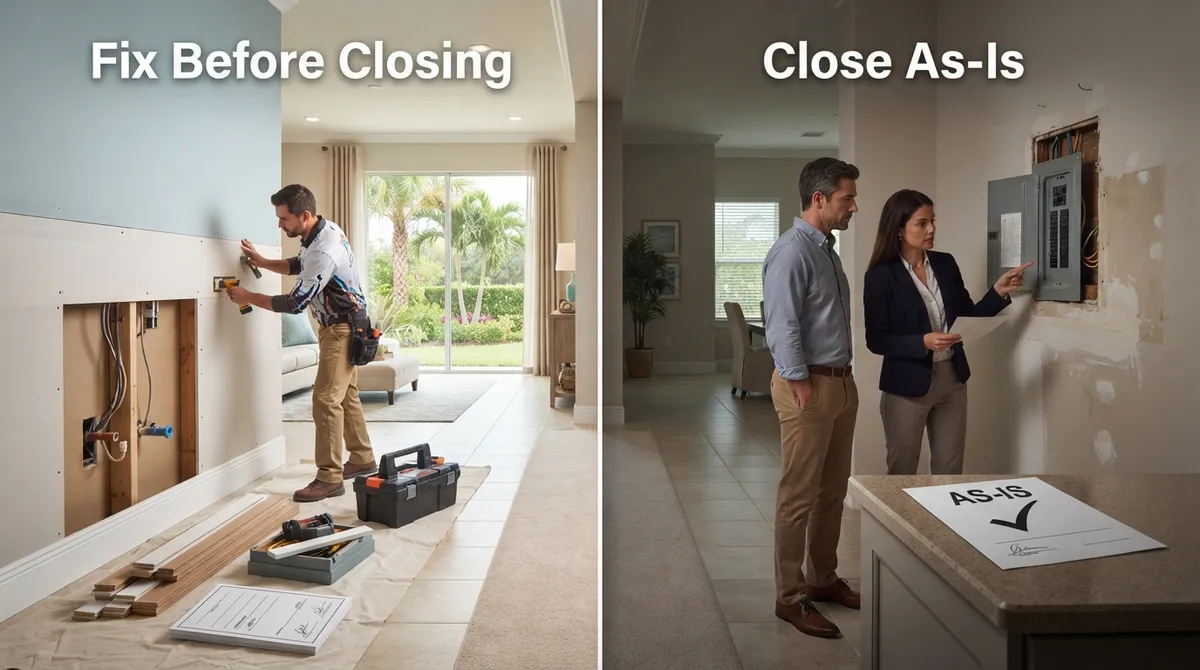
Two Paths Compared: Fix Before Closing vs. Close As-Is
Here is the heart of the decision. Neither path is automatically "right." The best choice depends on your timeline, your budget, the type of work, and what your buyer and lender will accept.
| Factor | Fix Before Closing | Close As-Is |
|---|---|---|
| Who handles it | Seller, usually with a permitting pro | Buyer takes it over after closing |
| Timeline impact | May delay closing or need an extension | Closing date stays on track |
| Upfront cost | Seller pays plans, fees, and corrections | Often reflected in a price reduction or credit |
| Buyer confidence | High, with final approvals in hand | Lower, and uncertainty remains |
| Lender and insurer comfort | Usually stronger | Can trigger questions or conditions |
| Risk after sale | Minimal once closed out | Buyer inherits code and enforcement exposure |
| Best for | Financed buyers, tight lenders, higher-value homes | Cash buyers, investors, renovation-minded buyers |
Notice that "close as-is" is not a free pass. Even in an as-is sale, the problem does not disappear. It simply changes hands, and that can affect price, financing, and trust.
Path One: Fixing Unpermitted Work Before Closing
If time allows, resolving the issue before the closing table is usually the smoothest route for everyone. It removes the mystery, gives the buyer written proof, and often protects the sale price.
The Upside
- Cleaner transaction: Final approvals give buyers, lenders, and insurers something concrete to review.
- Fewer renegotiations: You avoid last-minute repair demands and credit requests.
- Less post-closing risk: The paper trail protects both sides.
The Trade-Offs
- It takes time: Review and inspection schedules vary by jurisdiction.
- It may cost money: Plans, engineering, fees, and corrections can add up.
- No guaranteed outcome: An after-the-fact permit is not automatic approval. Officials may require corrections or, if concealed work cannot be verified, may ask that finishes be opened up.
Speaking of which, jurisdictions can require as-built drawings, review by a Florida-licensed architect or engineer for certain work, and inspections before signing off. If you are wondering how that plays out on the ground, our guide to how to get an after-the-fact permit in Florida breaks it down.
Path Two: Closing As-Is with Unpermitted Work
Sometimes fixing it first is not realistic. Maybe the closing date is days away, the seller has no budget, or the buyer is an investor who plans to renovate anyway. Selling as-is can work, but it works best when everyone goes in with eyes open.
When As-Is Makes Sense
- The buyer is paying cash and understands the condition.
- The buyer plans to gut, remodel, or demolish the affected area.
- The price already reflects the cost and risk of legalizing the work.
- Both sides agree in writing on who handles the permit afterward.
The Catch: Disclosure Still Matters
Here is a point many sellers miss. An "as-is" clause does not erase disclosure duties. Under the Florida Supreme Court's decision in Johnson v. Davis (1985), sellers must disclose known facts that materially affect the value of residential property and are not readily observable. Whether a particular permit issue triggers that duty depends on the facts, so talk with your real estate professional or attorney rather than assuming an as-is sale protects you.
Real-World Friction Points
Unresolved work can prompt buyer concerns, lender or insurer questions, appraisal issues, repair negotiations, or delays. It does not make a sale impossible, but it can shift leverage quickly. If you want to see how these delays unfold, read can a permit hold delay a Florida real estate closing.
How Lenders, Insurers, and Appraisers React
Even when the buyer and seller are relaxed about the situation, third parties may not be. Understanding who cares about what helps you plan ahead.
| Party | Typical Concern | How It Can Affect Closing |
|---|---|---|
| Lender | Safety, value, and code compliance of the collateral | Extra conditions, repair requirements, or delays |
| Appraiser | Whether unpermitted space counts toward square footage or value | Lower valuation or adjusted comparables |
| Insurer | Unverified electrical, roofing, or structural changes | Coverage questions or additional inspections |
| Title/closing agent | Open permits, liens, or code-enforcement charges | Holdbacks or escrow arrangements |
The specific effect depends on the work, the contract, financing and insurance requirements, and local enforcement status. If a lender is the roadblock, our article on fixes when a mortgage stalls over unpermitted work is a helpful next read.
How to Check a Florida Property's Permit History
Smart buyers and sellers do their homework early. A permit-history search is useful due diligence, though it is not a complete physical inspection. It may not tell you whether every visible improvement required a permit, so compare the records to what you actually see on the property.
- Confirm the jurisdiction. Near city lines, the property may be governed by the county instead of the city. Our building department lookup can help.
- Pull permit records. Look for issued, expired, and finaled permits.
- Check for open permits. Try our open permit search tool as a starting point.
- Look for enforcement history. Check for code-enforcement cases, failed inspections, and recorded liens or charges where applicable.
- Walk the property. Compare records against visible additions, conversions, and upgrades.
- Document what you find. Photos, dates, and notes make the next steps much easier.
Not sure which office actually reviews your project? Here is a helpful primer on which Florida jurisdiction reviews your project.
A Practical Step-by-Step Plan to Resolve It
Whichever path you choose, having a clear sequence keeps stress low and momentum high. Here is a practical roadmap that works for most Florida transactions.
- Identify the permitting jurisdiction for the property address.
- Obtain permit and enforcement records from the city or county.
- Document the suspected work with photos, measurements, and dates.
- Have qualified professionals assess it. This may include a licensed contractor, architect, or engineer.
- Ask the building department what retroactive permit or closeout path applies.
- Complete plans, corrections, fees, and inspections as required.
- Keep written final approvals in the transaction file for the buyer, lender, and title agent.
Depending on the situation, you may need as-built drawings, an engineer letter, or a full structural engineering review. For a deeper walkthrough, see our guide on how to legalize unpermitted work in Florida.
Who Pays and What It Might Cost
Everyone asks this one, and we wish we could give you a single number. The honest answer is that there is no reliable statewide figure for after-the-fact permit costs or processing times. Fees, inspection requirements, and penalties vary by jurisdiction, trade, project scope, and required corrections. Be cautious about any blog or quote that presents a "Florida average" as fact.
As for who pays, that is a matter of negotiation and the purchase contract. Common arrangements include:
- The seller resolves the issue before closing at their own expense.
- The seller offers a price reduction or closing credit.
- The parties place funds in escrow to cover the permitting work after closing.
- The buyer accepts the condition as-is and handles it later.
Whatever you agree to, put it in writing and involve your real estate attorney. If you want a sense of the cost drivers, our overview of after-the-fact permit costs in Florida explains what typically moves the price.
How a Permitting Partner Can Help
Closings run on deadlines, and permit questions can pile up fast. A Florida permitting service can take a big chunk of that burden off your plate by coordinating records research, application prep, as-built documentation, licensed design professionals, communication with the jurisdiction, inspections, and permit closeout.
At 1 Contractor Solutions, we act as Florida's outsourced permitting department. Our drafting and engineering are done in house, and our own engineer signs and seals the work, so when a reviewer flags something, we fix it without waiting on an outside consultant. We work across all 67 Florida counties and offer dedicated realtor and closing support for exactly these situations. If a deal is truly on fire, our urgent permit rescue team is built for it.
One honest caveat: no legitimate provider can promise approval or quote a universal timeline or penalty, because requirements vary by jurisdiction and project. What we can promise is clear communication, organized paperwork, and a team that knows how local offices work. You can also see what our customers say when you visit us on Google — 1 Contractor Solutions.
Quick Tips for Each Audience
- Sellers and homeowners: Run a permit search before listing, not after you are under contract. Surprises are cheaper early.
- Buyers and investors: Add permit-history review to your due diligence, and negotiate who resolves issues in writing.
- Realtors: Flag suspicious additions early, and loop in a permitting pro before the inspection period ends.
- Contractors and solar companies: Keep your own jobs finaled and closed out so they never become a seller's headache later.
- Designers and trades: Reliable as-built documentation is often the key that unlocks an after-the-fact approval.
Final Thoughts: Which Path Wins?
If you have the time and the budget, fixing unpermitted work before closing is usually the stronger, calmer choice. It gives buyers confidence and removes doubt for lenders and insurers. If time is short or the buyer is a cash investor, closing as-is can still work, provided disclosures are honest and the agreement is clear and in writing.
The bottom line is that unpermitted work is a solvable problem, not a dealbreaker. Start early, verify the jurisdiction, get the records, and keep every approval on file.
Ready to keep your deal on track? Reach out today to get a free quote and let our team map out the fastest, most realistic path to a clean closing. You can also follow us on LinkedIn or follow us on Facebook for more Florida permitting tips.
FAQs
Can you sell a house in Florida with unpermitted work?
Yes, in many cases you can. Unpermitted work does not automatically block a sale, but it can affect buyer confidence, financing, insurance, and negotiations. Checking your permit history early and deciding whether to fix it first or sell as-is will keep surprises to a minimum.
Does a Florida seller have to disclose unpermitted work?
Under Johnson v. Davis (1985), sellers must disclose known facts that materially affect residential property value and are not readily observable. Whether a specific permit issue qualifies depends on the facts, and an as-is clause does not automatically erase that duty, so check with your real estate professional or attorney.
Can unpermitted work be permitted after the fact in Florida?
Often, yes, but it is not automatic approval. The local building department may require plans or as-built drawings, engineer or architect review, inspections, and corrections, and it may ask to open finishes if concealed work cannot be verified.
What is the difference between unpermitted work and an open permit?
Unpermitted work never had a required permit, while an open permit was issued but never received final inspection or approval. They are handled differently, and an open permit is often simpler to close out than a full after-the-fact permit.
Can unpermitted work delay my Florida closing?
It can. Lenders, insurers, appraisers, or the title agent may raise questions that lead to repairs, credits, escrow arrangements, or a pushed closing date. Starting the permit-history check and any needed fixes early is the best way to protect your timeline.
We do this work every day across all 67 Florida counties. Call (866) 314-6931 and we will tell you what your situation actually requires — including when you do not need us.
Related services
Permit Facilitation & Filing
You have a crew scheduled, a client asking for dates, and a permit sitting somewhere in a queue you cannot see. We file it, w…
See the servicePlan Review Coordination
A permit in plan review is not one queue. On a commercial project it can be six queues, each with its own reviewer, its own c…
See the serviceReady to get your permit moving?
One call tells you which jurisdiction controls your project, what it will take, and what it will cost. Most of the time we can scope it on the phone.