
Blog
Best Retroactive Permitting Service in Florida: 2026 Guide
Learn how retroactive permitting works in Florida, what documents you need, and how to choose a trustworthy service to legalize unpermitted work in 2026.
Key Takeaways
-
Each Florida jurisdiction sets its own retroactive permitting procedures, fees, and inspection requirements—what works in one county may not work in another, so confirming the correct local building department is the critical first step.
-
Legitimate retroactive permitting services cannot guarantee approval, waive code requirements, or promise fine reductions; providers making these promises should be avoided immediately.
-
The most common reason after-the-fact applications stall is skipping the documentation phase—you must confirm jurisdiction, pull permit history, and prepare as-built drawings before submitting to avoid costly delays.
-
In-house drafting and engineering capacity matters significantly because when reviewers request revisions, relying on outside consultants adds weeks of delays, while in-house teams can respond quickly and anticipate how specific jurisdictions typically review projects.
-
Beyond building permits, retroactive cases often require approval from zoning, planning, utilities, environmental health, or fire departments; code-enforcement notices and liens may also need separate resolution alongside the permit application.
-
Requesting written, itemized proposals that separate the service fee, engineering costs, and government fees helps you compare providers fairly and understand where your money goes before committing.
Let's be honest: finding out that a deck, a garage conversion, a roof, or a bathroom remodel was never permitted is a gut-punch. Maybe a prior owner skipped the paperwork. Maybe a contractor promised to pull the permit and quietly vanished. Maybe a buyer's lender just flagged it two weeks before closing. Whatever brought you here, take a breath. This is fixable far more often than people fear.
Retroactive permitting (also called after-the-fact or legalization permitting) is the process of asking your local building department to approve work that was already built without the required permit. Finding the best retroactive permitting service in Florida comes down to experience, local knowledge, and honest communication, not flashy promises.
In this guide, we'll walk through how retroactive permitting really works in 2026, what documents you'll need, how to compare providers, and the red flags to avoid. Whether you're a contractor, solar installer, realtor, designer, or homeowner, you'll leave knowing exactly what to do next.
What Retroactive Permitting Actually Means in Florida
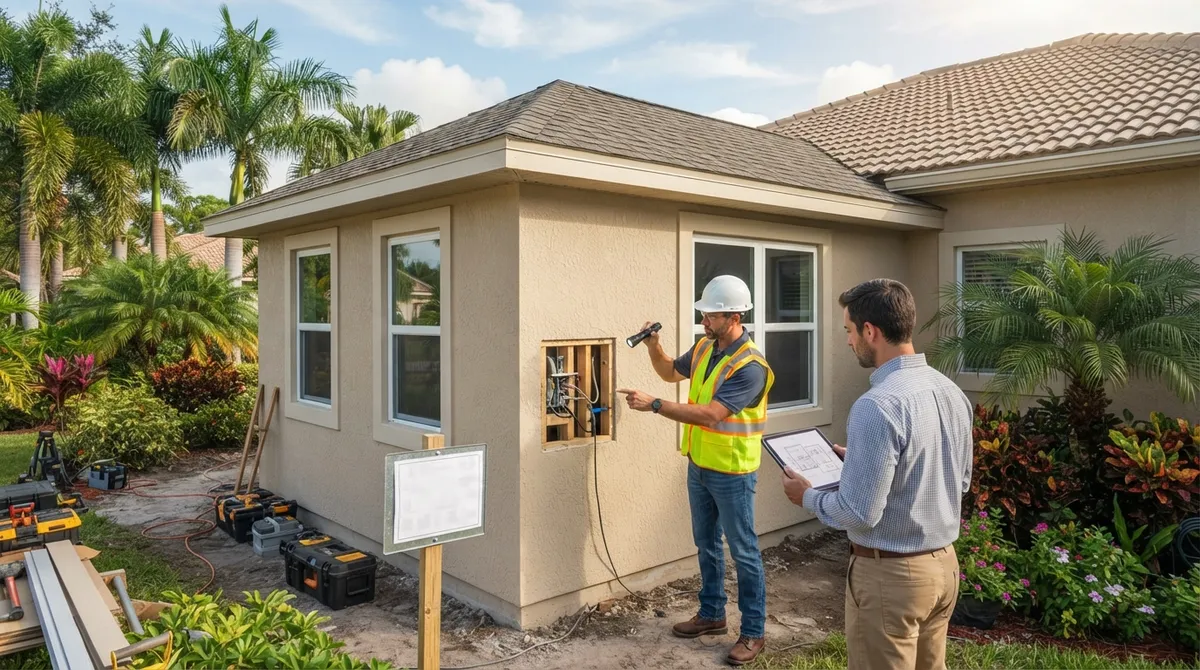
Florida law generally requires a permit before covered construction or alterations begin. The statutory framework for building permits and plan review is found in Florida Statutes §553.79. But here's the part that surprises people: there is no single statewide after-the-fact application. Each city or county building department sets its own procedures, fees, and inspection requirements.
That means an approach that works smoothly in one jurisdiction can fall flat in another. Florida has 67 counties, but permitting authority isn't always countywide. A municipality may administer permits for properties inside its boundaries, so the first job is always confirming who actually has jurisdiction over your address. Our building department lookup tool is a handy starting point.
One more important point: an after-the-fact application does not automatically legalize the work or erase a violation. The building official still reviews the work against the Florida Building Code and local rules, and deficiencies may need to be corrected before approval and closeout.
What a Good Retroactive Permitting Service Does for You
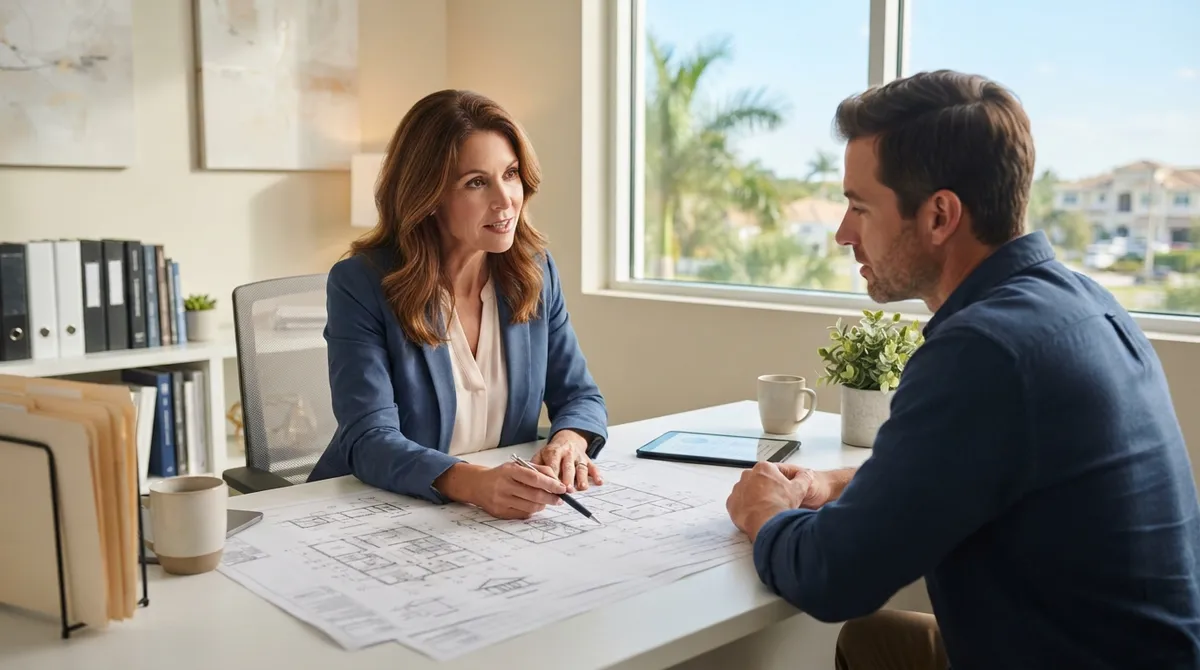
A strong provider acts like your outsourced permitting department. Instead of leaving you to guess your way through a county portal, they take the process off your plate from start to finish.
- Identify the correct jurisdiction for your property, which isn't always obvious near city lines
- Research permit and violation history, including open or expired permits
- Prepare as-built drawings, site plans, and supporting documents
- Coordinate licensed Florida professionals when sealed reports or engineer letters are required
- Prepare, submit, and track the application and respond to reviewer comments
- Schedule inspections and carry the file through final approval and permit closure
What a legitimate service cannot do is just as important. No one can guarantee approval, waive code requirements, or promise that fines will be reduced. If a provider makes those promises, keep walking.
How the Retroactive Permit Process Works, Step by Step
Every jurisdiction varies, but most after-the-fact cases follow a similar path. Here's the general flow:
- Confirm jurisdiction and history. Pull permit records and check for open permits, expired permits, or code-enforcement notices. Our open permit search tool can help you get oriented.
- Document what exists. A professional measures and drafts as-built drawings showing the work as it was actually built.
- Evaluate the work. Depending on scope, structural, electrical, plumbing, or mechanical elements may need inspection or a sealed evaluation.
- Submit the application. The package goes to the correct building department with plans, site information, and any required forms.
- Respond to review comments. Reviewers may ask for corrections, added details, or other department sign-offs.
- Inspect, correct, and close out. Inspectors verify the work. Any deficiencies get fixed, and the permit is finaled.
Skipping straight to submission without steps one through three is the most common reason after-the-fact applications stall.
Documents You'll Typically Need
Requirements vary by local government, but this table shows what commonly comes up:
| Document | Why It's Needed | Typical Source |
|---|---|---|
| Permit application | Formally opens the after-the-fact review | Local building department |
| As-built drawings | Shows the work as actually constructed | Drafter or design professional |
| Survey or site plan | Confirms setbacks, placement, and lot coverage | Surveyor or drafter |
| Product or technical data | Verifies materials meet code (windows, roofing, equipment) | Manufacturer or installer |
| Signed and sealed engineer report | Certifies structural or concealed work that can't be inspected | Florida-licensed engineer or architect |
| Notice of Commencement | Required in many jurisdictions for qualifying jobs | Owner, recorded with the county |
For a local example, the Indian River County/City of Vero Beach after-the-fact procedure calls for a Florida-licensed design professional to inspect and certify certain existing structural work that is no longer open for inspection. It also expects supporting drawings and site information, and it treats a recorded Notice of Commencement as preferred with the application (and required before the first inspection when job value exceeds $2,500). That's one jurisdiction, not a statewide rule, so always confirm current requirements with your local office.
Will I Have to Open Up Walls?
This is one of the most common worries, and the honest answer is: it depends. Some jurisdictions want concealed components such as framing, wiring, or plumbing exposed so inspectors can see them directly. Others accept a professional evaluation or other evidence when exposure isn't practical.
The golden rule: confirm requirements with the local building department before covering or altering anything further. A good service will ask this question early, which can save you from tearing into drywall unnecessarily or, worse, covering up something an inspector needed to see.
When concealed structural elements are involved, engineer letters and sealed evaluations often bridge the gap between what an inspector can see and what the code requires.
It's Not Always Just a Building Permit
Here's something many owners don't expect. After-the-fact cases can pull in more than building review. Zoning, planning, utilities, environmental health, or fire departments may all need to weigh in. On top of that, code-enforcement notices, liens, or open permits may require separate resolution.
If you've received a notice, our guide on code compliance violations explains how those cases are handled. And if an older permit simply lapsed, after-the-fact and expired permit services may be the faster route to closure.
How to Choose the Best Retroactive Permitting Service in Florida
With so many providers out there, how do you separate the pros from the pretenders? Use this checklist when you're comparing options:
| What to Evaluate | What a Good Answer Looks Like | Red Flag |
|---|---|---|
| Local experience | Specific knowledge of your jurisdiction and project type | Generic, one-size-fits-all answers |
| Who does the design work | Clear explanation of drafting and engineering roles | Vague about who draws, who seals, who builds |
| Written scope and fees | Itemized proposal showing what's included | Verbal quotes only, or "it depends" with no ranges |
| Communication | Fast, named point of contact and regular updates | Slow replies before you've even signed |
| Closeout documentation | Commits to documenting final inspection and permit closure | Stops at "submitted" |
| Honesty about outcomes | Explains risks; never guarantees approval | Promises approval or fine reductions |
Also verify any required Florida professional or contractor licenses independently. If a provider says an engineer will seal your drawings, you should be able to confirm that engineer's license with the state.
Why In-House Drafting and Engineering Matters
Here's where many retroactive jobs succeed or fail. When a reviewer flags a problem, someone has to fix the drawings quickly. If your provider relies on an outside consultant for every comment, each round trip adds days or weeks.
That's one reason homeowners and contractors lean on teams with in-house plans and engineering capacity. At 1 Contractor Solutions, drafting and engineering are our largest department, and our own engineer signs and seals the work, so revisions don't wait on someone else's calendar. We also handle plan review coordination and revisions and resubmittals so comments get answered, not ignored.
We're not a construction contractor. We're the team contractors call when the permit is the thing standing between them and a scheduled crew. We've handled more than 5,000 permits and projects and filed in over 400 Florida municipalities, which helps us anticipate how a given office tends to review things.
What About Cost?
Everyone asks, and it's a fair question. Costs for retroactive permits vary a lot. Fees depend on the jurisdiction, the job value, the type of work, and whether sealed reports or corrective construction are needed. Some jurisdictions also charge higher fees or penalties for work done without a permit, which are set locally.
Rather than chasing a single number, ask each provider for a written scope that separates:
- Their service fee (research, drafting, filing, tracking)
- Engineering or sealed-report costs, if required
- Government permit and review fees, which pass through at the jurisdiction's rates
- Possible corrective work if the inspector finds deficiencies
Our deeper dive on after-the-fact permit costs in Florida breaks down these line items in more detail.
Who Benefits Most From This Kind of Help?
Retroactive permitting touches a lot of people, and the pain points look different for each:
- General contractors: You inherit a jobsite with a missing permit or take over from a vanished sub. A service that works multiple counties keeps your schedule intact. See our page for general contractors.
- Solar companies: Prior installs without proper permits can block interconnection or inspections. Code-compliant structural and electrical documentation is key. Explore our work with solar contractors.
- Realtors and investors: An open permit or unpermitted addition can derail a closing. Quick research and clear paths forward protect your deal. Check out realtor and closing support.
- Homeowners: You want clear answers, honest costs, and someone to handle the county. Visit our homeowner resources.
- Designers and trades: If you already have your own engineer, drafting-only services let us draw the permit set while you keep your seal and your client relationship.
Closings, Lenders, and Time Pressure
If you're racing a closing date, speed matters, but so does doing it right. Appraisers, lenders, and title companies increasingly flag unpermitted work, and a deal can stall quickly. When that happens, our urgent permit rescue service is built for denials, stop-work orders, and closings on the clock.
We answer 24/7, respond within 30 minutes day or night, and se habla español. That kind of responsiveness can be the difference between a closing that slips and one that holds.
Red Flags to Avoid
Before signing anything, watch for these warning signs:
- Guarantees of approval or promises to "get your fines waived"
- Suggestions to cover up or hide unpermitted work
- No written scope, or fees that change without explanation
- No clear plan for who prepares, signs, and seals drawings
- Unwillingness to confirm jurisdiction and permit history first
- No commitment to document final inspection and closure
A trustworthy partner will tell you the hard truths up front, including when work may need to be corrected or, in rare cases, removed to meet code and zoning rules.
Ready to Get Started?
The best retroactive permitting service in Florida is the one that knows your jurisdiction, explains the process in plain English, puts everything in writing, and sticks with you through final closeout. It's not about promises. It's about experience, in-house capability, and communication.
If you're sitting on unpermitted work and feeling stuck, we'd love to help you find a path forward. Get a free quote and let's start with your address and your problem. You can also see what customers say by reading reviews on our profile: Visit us on Google — 1 Contractor Solutions. And if you like practical permitting tips, follow us on LinkedIn or follow us on Facebook for updates. For official statutory language on Florida's building permit framework, you can review Florida Statutes §553.79.
FAQs
Can I get an after-the-fact building permit in Florida?
In most cases, yes. Local building departments generally offer a process for seeking approval of work built without a permit, but approval depends on showing the work meets the Florida Building Code and local rules. Some work may need corrections first, so it's smart to have a pro review it early.
How do I find the right building department for my property?
Start with your property address and confirm whether a city or the county administers permits there, since it isn't always countywide. A permitting service can verify jurisdiction for you, which matters most for properties near city lines.
What documents are needed for a retroactive permit in Florida?
Commonly you'll need a permit application, as-built drawings, a survey or site plan, and product or technical information. Structural or concealed work may also need a signed and sealed report from a Florida-licensed engineer or architect, depending on local rules.
Can an after-the-fact permit resolve a code-enforcement violation or lien?
Not automatically. Code-enforcement notices and liens often need separate resolution alongside the permit, and fines are set by the local jurisdiction. A good service can coordinate both tracks, but no one can honestly promise that fines will be reduced.
How do I choose a Florida retroactive permitting service?
Look for local experience in your jurisdiction, clear written scope and fees, and a straightforward explanation of who drafts, engineers, and seals the work. Verify licenses independently, and steer clear of anyone who guarantees approval.
We do this work every day across all 67 Florida counties. Call (866) 314-6931 and we will tell you what your situation actually requires — including when you do not need us.
Related services
Permit Facilitation & Filing
You have a crew scheduled, a client asking for dates, and a permit sitting somewhere in a queue you cannot see. We file it, w…
See the servicePlan Review Coordination
A permit in plan review is not one queue. On a commercial project it can be six queues, each with its own reviewer, its own c…
See the serviceReady to get your permit moving?
One call tells you which jurisdiction controls your project, what it will take, and what it will cost. Most of the time we can scope it on the phone.