
Blog
8 Facts: Can I Get an After-the-Fact Permit for a Roof in Miami?
Wondering if you can get an after-the-fact roof permit in Miami? Learn 8 key facts on jurisdiction, inspections, product approvals, and next steps.
Key Takeaways
-
After-the-fact roof permits are possible in Miami but not automatic; the building department must review the work and determine what documentation, inspections, or corrections are needed before approval.
-
Identify your correct permitting jurisdiction first, as 'Miami' includes the City of Miami, unincorporated Miami-Dade County, and separate municipalities—each with different permit processes and requirements.
-
Product approvals are critical: roofing materials must have a Miami-Dade County Notice of Acceptance (NOA) or Florida Product Approval, and you may need to reconstruct documentation if the original contractor is unavailable.
-
Only licensed contractors or eligible owner-builders can pull permits; homeowners cannot apply directly unless they qualify as owner-builders in the City of Miami, and even then only for shingle roofs.
-
Expect building inspections that may require limited exposure or verification of concealed work; confirm exact inspection requirements with your department before any roof materials are removed or disturbed.
-
Address unpermitted roofs promptly, as they can complicate insurance claims, refinancing, and home sales—delaying resolution typically costs more in time and stress than addressing it immediately.
So you just found out the roof on your Miami property was replaced without a permit. Maybe a prior owner skipped the paperwork. Maybe a contractor said, "Don't worry, I'll handle it," and then disappeared. Maybe a buyer's inspector flagged it days before closing. Take a deep breath. You are not alone, and you have real options.
The short answer to can i get an after the fact permit for a roof in miami is this: often, yes, but it is never automatic. The building department has to review the unpermitted work and decide what documentation, inspections, and corrective work it needs. In 2026, that process still runs through the local authority, and it still depends on your roof system, your paperwork, and what the inspector finds.
In this friendly guide, we walk through eight facts that will help you understand the road ahead, avoid common mistakes, and get your roof legalized with less stress. Whether you are a homeowner, a general contractor, a realtor, or a roofer cleaning up a file, this one is for you.
Fact 1: Yes, an After-the-Fact Roof Permit May Be Possible
Let's start with the good news. Florida building departments do have a path for work that was done without authorization. Florida code generally requires a permit before regulated construction or repair begins, and a later permit does not erase the fact that work started without one. But it can bring the work into compliance on paper and in the field.
The key word is may. The department must review the work and decide what it needs from you. That could include records, inspections, engineering letters, or even corrective work. Before you assume a regular reroof permit will fix everything, contact the authority having jurisdiction and ask how it handles unpermitted roofing.
If you want a deeper look at how this works statewide, our guide on how to get an after-the-fact permit in Florida covers the big-picture steps.
Fact 2: "Miami" Can Mean Several Different Permitting Offices
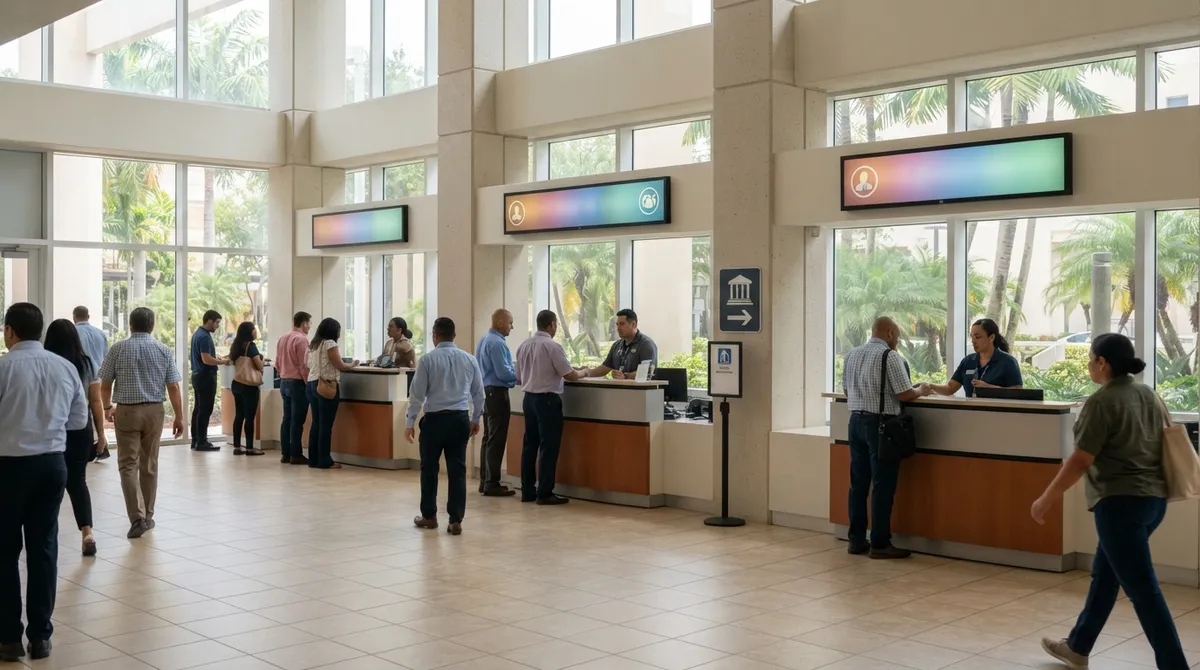
Here is where many owners get tripped up. "Miami" is not one permitting office. Your property could fall under the City of Miami, unincorporated Miami-Dade County, or one of the many other municipalities in the county that issue their own permits.
Miami-Dade County's online permitting instructions apply to unincorporated properties, typically those with folio numbers beginning with "30." If your property sits inside an incorporated city, the county sends you to that city's building department instead.
Not sure which one controls your address? Our building department lookup tool can point you in the right direction, and our guide to which Florida jurisdiction reviews your project explains why city lines can be surprisingly tricky.
| If your property is in... | Who handles the roof permit? | Where to start |
|---|---|---|
| City of Miami | City of Miami Building Department | City roofing permit guidance and online application |
| Unincorporated Miami-Dade | Miami-Dade County permitting | County online permitting (folios beginning "30") |
| Another municipality (e.g., a nearby city) | That city's building department | Contact the municipal office directly |
For local context, see our page on Miami-Dade County permitting and our Miami permitting page.
Fact 3: A Reroof Permit Only Covers the Roof
This one surprises people. A permit issued for reroofing generally authorizes only the roof work. It does not automatically legalize other unpermitted portions of the building. City of Miami reroofing checklists explicitly include a disclosure to that effect.
So if the same contractor also added a porch, moved a wall, or swapped out windows without permits, the roof permit will not cover those items. That does not mean you are stuck. It means each piece of unpermitted work may need its own review.
If you suspect more than just the roof, you may want to read about how to legalize unpermitted work in Florida before you file anything.
Fact 4: Product Approvals Are the Heart of the Review
A building official will want proof that the roof now on your home complies with code and uses approved products. In the City of Miami, roofing materials must carry a Miami-Dade County Notice of Acceptance (NOA) or a Florida Product Approval.
This is often the trickiest part of an after-the-fact case. If the roofer is gone and the paperwork was never saved, you may need to reconstruct what was installed. Here is what reviewers commonly look for:
- Product approval documents (NOA or Florida Product Approval) for the roofing materials
- Proof of the installed roof system, such as invoices, material labels, or photos
- Any records from the original installation, if they still exist
- Engineering letters or affidavits when the record is incomplete
Not sure which approval applies? Our explainer on Miami-Dade NOA vs. Florida Product Approval breaks it down in plain English.
Fact 5: Expect Inspections, and Possibly Some Exposure of Concealed Work
Once a roof is finished, most of the important details are hidden. That makes inspections tricky for after-the-fact cases. Depending on the work and what is concealed, the department may require records, plans, affidavits, inspections, exposure of concealed work, or corrective work.
For a normal City of Miami residential reroof, the inspections can include insulation, an in-progress tile, shingle, or metal inspection, a tin cap inspection, and a final roofing inspection. Which ones apply depends on your roof system and scope. In an after-the-fact case, the department will give you its own instructions.
Will you have to tear anything off? Sometimes a limited exposure, such as lifting a small area to verify attachment or deck condition, is enough. Other times, none is needed. Confirm the exact requirements with your local department before anyone picks up a pry bar.
Our team handles this coordination every day through inspection support and private provider inspections, which can sometimes move faster than waiting on the county calendar.
Fact 6: Who Can Actually Pull the Permit Matters
Only a licensed contractor or an eligible owner-builder may obtain permits under Miami-Dade County's guidance. That surprises a lot of homeowners who assume they can simply walk in and file.
The City of Miami says residential owner-builders may qualify, subject to an exam and interview. But its stated owner-builder option is limited to shingle roofs. If your roof is tile, metal, or flat, you will generally need a licensed contractor.
| Applicant type | Can pull a roof permit? | Important notes |
|---|---|---|
| Licensed roofing contractor | Yes | Must be properly licensed and registered for the jurisdiction |
| Residential owner-builder | Sometimes | City of Miami limits this option to shingle roofs; exam and interview apply |
| Unlicensed contractor or friend | No | Cannot legally obtain the permit |
For more detail, see our guides on who can pull a permit in Florida and owner-builder permits.
Fact 7: Timelines, Fees, and Penalties Vary
Everyone asks about time and money, so let's be honest: the exact numbers depend on your jurisdiction and your case. Here are the stated figures from official sources, which we encourage you to verify:
- The City of Miami says the first review cycle for a building permit application can take up to 14 business days. That is a stated timeframe, not a guarantee, and it may not apply to after-the-fact cases.
- The City's roofing page says residential projects costing less than $2,500 have no upfront fees. That is City-specific and should not be assumed to cover after-the-fact penalties or other charges.
- Miami-Dade County says an issued permit generally allows 180 days to complete the work and call for inspections. An approved inspection can extend the permit another 180 days.
- Miami-Dade County guidance says a Notice of Commencement is generally required before inspections when the work value exceeds $5,000, subject to stated exceptions.
Penalties, enforcement fees, and investigation charges are set by each local authority, so ask the department what applies to you. We break down typical ranges in our guides to after-the-fact permit costs in Florida and the penalty for building without a permit. You may also want to review the Notice of Commencement requirements.
Fact 8: A Step-by-Step Plan Makes It Much Easier
Legalizing a roof does not have to feel overwhelming. Here is a simple roadmap that works for most Miami-area cases:
- Confirm your jurisdiction. Find out whether your property is in the City of Miami, unincorporated Miami-Dade, or another municipality.
- Gather what you have. Collect invoices, photos, contracts, product labels, and any old permit records.
- Identify the roof system and approvals. Determine the material and locate the matching NOA or Florida Product Approval.
- Contact the building department. Ask how they handle unpermitted roofing, what inspections they require, and what fees or enforcement apply.
- Prepare the application and documents. This may include plans, engineering letters, or affidavits, along with a licensed contractor of record.
- Schedule inspections and correct any issues. Work with the inspector on any exposure or fixes they request.
- Close out the permit. Get the final approval documented so it is on record for insurance, refinancing, or a sale.
If there is a code enforcement notice involved, our guide on unpermitted roofs in Florida and our code compliance violations service can help you respond calmly and correctly.
Who Benefits Most From Professional Help?
Every situation is different, but some readers tend to need extra support:
- Homeowners who inherited an unpermitted roof from a prior owner or a vanished contractor
- Realtors and buyers facing a closing deadline and a permit hold
- General contractors and roofers cleaning up older jobs or scaling permit volume
- Property managers and investors handling multiple properties with unclear records
If you fall into one of these groups, see how we support homeowners, roofing contractors, and realtors.
How 1 Contractor Solutions Can Help
We are Florida's outsourced permitting department. We are not a construction contractor. We are the team contractors, owners, and agents call when the permit is the thing standing in the way. You give us an address and a problem, and we tell you which jurisdiction controls it, what it will take, and then we go do it.
For roof cases, that means preparing or reviewing plans, coordinating product approvals, working with our in-house engineering team on sealed letters and drawings, and carrying the file through review and closeout. Our after-the-fact and expired permits service and roof permits service are built for exactly this situation. If time is tight, our urgent permit rescue team can step in fast.
Curious how others feel about working with us? See what our customers say on our Miami-area Google Business Profile, and follow us on LinkedIn or follow us on Facebook for more Florida permitting tips.
Final Thoughts
So, can you get an after-the-fact permit for a roof in Miami? In many cases, yes. It takes the right jurisdiction, the right documentation, approved products, and a willingness to work with the building official on inspections and any fixes. It also takes patience, and a little help from people who do this every day.
The worst move is to ignore it. An unpermitted roof can complicate insurance claims, refinancing, and home sales, so sorting it out sooner usually costs less stress than waiting. If you are ready to move forward, get a free quote and let our team map out the fastest, cleanest path to a legal, closed-out roof permit.
FAQs
Can I get an after-the-fact permit for a roof in Miami?
Often, yes, but it is not automatic. Your local building department has to review the unpermitted work and decide what documents, inspections, or corrections it needs. Start by confirming whether your property is in the City of Miami, unincorporated Miami-Dade, or another municipality.
What documents are needed for an after-the-fact roofing permit in Miami?
Expect to provide a roofing application and product documentation, such as a Miami-Dade Notice of Acceptance (NOA) or Florida Product Approval. Invoices, photos, and any engineering letters or affidavits can help prove what was installed. Your department will confirm the exact list for your case.
Will I have to remove roofing materials or expose the roof deck for inspection?
Not always, but it is possible. Depending on what is concealed, the building official may ask for limited exposure or corrective work to verify the installation. Ask your department what applies before anyone starts tearing anything off.
Does a reroof permit legalize other unpermitted work on my house?
No. A reroof permit generally covers only the roof scope, and City of Miami reroofing checklists include a disclosure saying so. Other unpermitted work, like additions or windows, may need its own review.
Can a homeowner apply for a roofing permit in the City of Miami?
Sometimes. The City says residential owner-builders may qualify subject to an exam and interview, but its stated owner-builder option is limited to shingle roofs. Otherwise, a licensed contractor generally needs to pull the permit.
We do this work every day across all 67 Florida counties. Call (866) 314-6931 and we will tell you what your situation actually requires — including when you do not need us.
Related services
Permit Facilitation & Filing
You have a crew scheduled, a client asking for dates, and a permit sitting somewhere in a queue you cannot see. We file it, w…
See the servicePlan Review Coordination
A permit in plan review is not one queue. On a commercial project it can be six queues, each with its own reviewer, its own c…
See the serviceReady to get your permit moving?
One call tells you which jurisdiction controls your project, what it will take, and what it will cost. Most of the time we can scope it on the phone.