
Blog
8 Certificate of Use Clearwater FL Mistakes to Avoid in 2026
Avoid 8 common Clearwater certificate of use and BTR mistakes. Learn zoning, permit closeout, renewals, and when to get expert help in 2026.
Key Takeaways
-
In Clearwater, the official local license is a Business Tax Receipt (BTR), not a 'certificate of use'; always ask the requester exactly which document and issuing agency they need.
-
A Clearwater mailing address does not guarantee city jurisdiction; verify the parcel is inside city limits, since Pinellas County no longer requires its own occupational license.
-
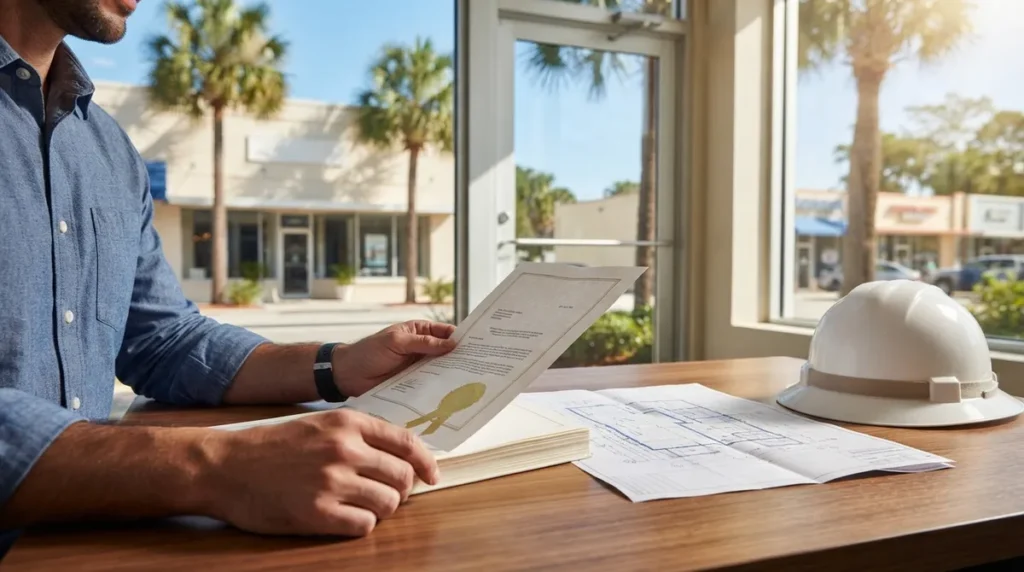
A BTR cannot be issued while required building permits remain open; complete final inspections and obtain a Certificate of Occupancy or Completion first.
-
Confirm zoning allows your use before signing a lease by calling the city zoning line at (727) 562-4604, and add a contingency clause tying the lease to permit approval.
-
BTRs run October 1 through September 30 and must be renewed by September 30 each year, with late fees possible, so set a reminder for early September.
-
There is no single universal BTR fee; costs vary by business classification, so confirm the exact amount through the city portal or the BTR office at (727) 562-4005.
You found the perfect storefront, signed the lease (or are about to), and now someone has asked for your "certificate of use." Suddenly you are Googling certificate of use Clearwater FL at 10 p.m., wondering whether it is a form, a fee, an inspection, or all three. First, take a breath. You are in good company, and this is very fixable.
Here is the quirk that trips up many Clearwater business owners: locals, landlords, and lenders often say "certificate of use," but the City of Clearwater's published local licensing process is called a Business Tax Receipt (BTR). Different words, similar goal: getting legal permission to operate at a specific address. Mix them up, and you can lose weeks.
In this friendly guide, we walk through the eight most common mistakes we see, how to sidestep each one, and what to do if you are already in a jam. Whether you are a general contractor opening a shop, a realtor advising a client, or a homeowner starting a home-based business, you will leave with a clear plan.
First, What Does "Certificate of Use" Mean in Clearwater?
In Clearwater, the phrase is often used informally. The city's business-licensing process is the Business Tax Receipt, administered through the Code Compliance Division within the Planning and Development Department. Applications go through the city's online BTR portal.
Why does the name matter? Because a landlord, lender, or agency may ask for a "certificate of use" when they really mean proof of your local BTR, a Certificate of Occupancy, or something from a different jurisdiction entirely. Always ask the requester exactly which document they need and which agency issues it.
| Document | What It Does | Who Typically Issues It |
|---|---|---|
| Business Tax Receipt (BTR) | Local permission to operate a business at a location | City of Clearwater (inside city limits) |
| Certificate of Occupancy (CO) | Confirms a building is safe for its intended occupancy | Building department after final inspections |
| Certificate of Completion | Closes out certain permitted work | Building department |
| State/professional license | Authorizes a regulated trade or profession | State agencies (such as DBPR) |
For a deeper look at how these approvals differ across Florida, see our guide on Certificate of Use support and our overview of small business permitting.
Mistake 1: Assuming the Mailing Address Means Clearwater Jurisdiction
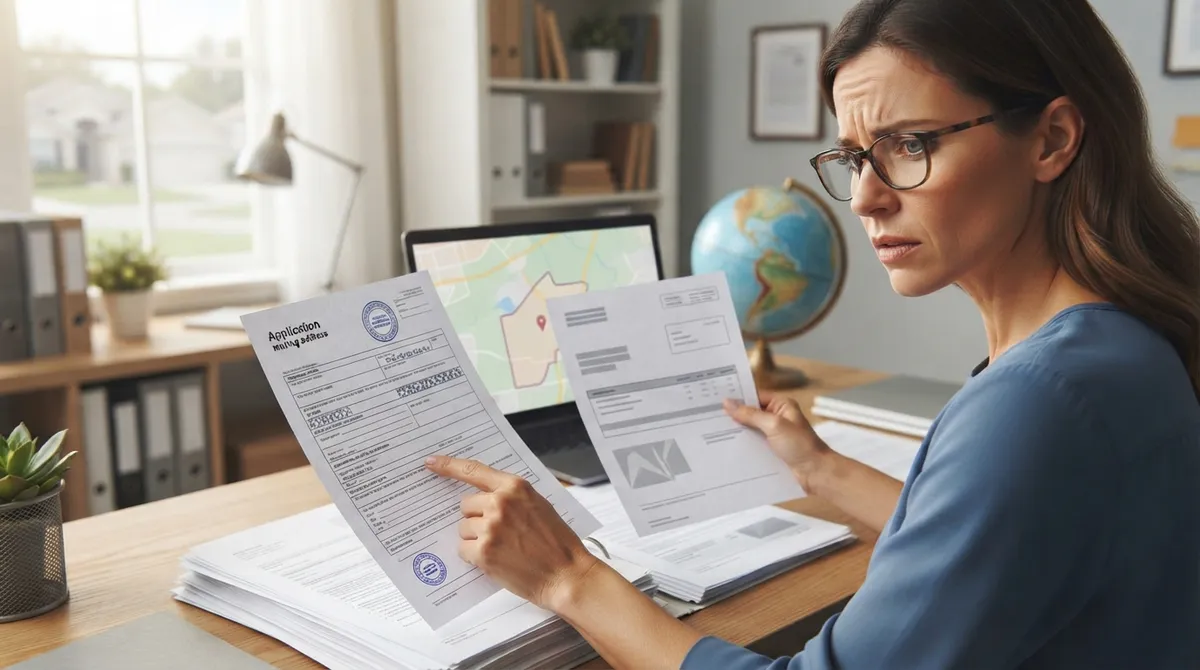
This one catches people constantly. A "Clearwater, FL" mailing address does not guarantee your property sits inside Clearwater city limits. Plenty of addresses with Clearwater ZIP codes are in unincorporated Pinellas County or other municipalities.
Why it matters: the City of Clearwater requires a BTR for businesses operating within its limits. Pinellas County states it repealed its county occupational-license requirement in 1995, so businesses in incorporated municipalities need to check with that municipality instead.
How to avoid it
- Verify the exact parcel's jurisdiction before you sign a lease or file anything.
- Call the city's BTR line at (727) 562-4005 if you are unsure.
- Ask your title company or real estate agent to confirm in writing.
Not sure which jurisdiction controls your address? Our building department lookup tool can point you in the right direction.
Mistake 2: Skipping the Zoning Check
Picture this: you sign a five-year lease for a space that looks perfect for your business, then learn the zoning does not allow your use at that address. Ouch. A BTR does not authorize a use that zoning prohibits, and it does not replace building, fire, health, or state licensing approvals.
The city advises checking zoning and permitted use at the proposed address before applying. The city's zoning line is (727) 562-4604.
A quick pre-lease checklist
- Get the exact street address and parcel number.
- Confirm the address is inside Clearwater city limits.
- Call the zoning line and describe your use in plain language.
- Ask whether any conditional approvals or additional reviews apply.
- Get the answer in writing when possible, then sign the lease.
If your lease is already signed, add a contingency clause next time that ties the lease to zoning and permit approval. Your future self will thank you.
Mistake 3: Treating the BTR as a Substitute for Building Permit Closeout
Here is a point that surprises many first-time applicants. According to the city's guidance, if building permits are required or still open, they must be completed, and a Certificate of Occupancy or Certificate of Completion issued, before the BTR can be issued.
In other words, an open permit can hold up your business launch. A tenant buildout that never got its final inspection is a classic culprit.
What this looks like in real life
- A previous tenant pulled a permit for new partitions and never finished inspections.
- A landlord did electrical upgrades without closing the permit.
- Your own contractor finished the work but never scheduled the final.
If you suspect open permits, search before you apply. Our open permit search tool is a handy starting point, and our article on how to fix a commercial build-out without a permit in Florida explains your options if work was done without approval.
Mistake 4: Showing Up With Incomplete Documents
The city's process is online, but "online" does not mean "no paperwork." Supporting documents vary by business type and location. Depending on your situation, you may need:
- Business-entity or fictitious-name records
- State or professional licenses
- Contractor credentials
- A home-based-business affidavit or similar forms
- Current agency licenses or inspection documentation for regulated businesses
Submitting without the right documents is one of the quickest ways to stall an application.
| Business Type | Documents You May Need to Gather |
|---|---|
| Retail or office tenant | Entity records, lease, closed permits/CO if applicable |
| Home-based business | Entity or fictitious-name record, home-based-business affidavit |
| Contractor | State license, insurance, contractor credentials |
| Regulated business (food, health, etc.) | Agency licenses and inspection documentation |
Treat this table as a starting point only. Requirements depend on your classification, so confirm with the city before you file.
Mistake 5: Missing the September 30 Renewal Deadline
Clearwater BTRs run on a fiscal year from October 1 through September 30 and must be renewed annually. The city says renewal is due by September 30, and late fees may apply after the deadline.
It is easy to forget when you are juggling payroll, customers, and a hundred other things. Put it on your calendar now.
Renewal tips that save headaches
- Set a reminder for early September, not September 30.
- Update your contact information with the city so notices reach you.
- Confirm whether your classification or documents changed during the year.
- Keep digital copies of everything you submit.
Mistake 6: Guessing at Fees
Many owners ask, "How much does a Clearwater certificate of use cost?" The honest answer: there is no single universal BTR fee in the available official materials. The city indicates that fees and supporting requirements vary by business classification and application.
So be careful about blog posts, forums, or well-meaning friends quoting exact numbers. Fees change, and your classification drives the total. Budget conservatively, then confirm the actual amount through the city's portal or the BTR office at (727) 562-4005.
Mistake 7: Opening Before the BTR Is in Hand
The city requires a BTR before opening or practicing a profession within city limits. It is tempting to start serving customers while paperwork "finishes up," especially when rent is ticking. Resist the urge.
Operating without the required approval can create compliance headaches, and it can complicate things down the road if a landlord, insurer, or lender asks for proof. If timing is tight, plan backward from your target opening date and build in buffer for any open-permit cleanup.
A sample timeline to work backward from
- Verify jurisdiction and zoning (before signing a lease).
- Search for open permits and resolve any found.
- Complete any needed buildout permits and inspections.
- Obtain Certificate of Occupancy or Completion if required.
- Gather entity records, licenses, and forms.
- Submit the BTR application through the city portal.
- Open your doors with approvals in hand.
Mistake 8: Going It Alone When the Situation Is Complicated
Many Clearwater applications are straightforward. But some are not: a tenant space with an unclear permit history, an unpermitted buildout, a denied permit, or a closing that is held up. That is when a little expert help saves a lot of time and money.
This is where we come in. 1 Contractor Solutions acts as an outsourced permitting department across all 67 Florida counties. We handle permit filing, tracking, plan review coordination, and revisions, and our in-house drafting and engineering team produces sealed drawings when a reviewer needs them. If your Certificate of Use or BTR is blocked by an open permit, a missing CO, or unpermitted work, we can help you sort it out. You can learn more on our Clearwater permitting page.
Common situations where outside help pays off
- An open or expired permit blocks your BTR. See how to fix expired and after-the-fact permits in Florida.
- A prior owner or tenant skipped permits. Read 4 steps if a prior owner skipped permits in Florida.
- You need drawings to legalize an existing space. Our post on as-built drawings explains when they are required.
- A final inspection failed. Check what to do when a Florida final inspection fails.
Who Benefits Most From Getting This Right?
Different readers feel this process differently, so here is how it tends to play out:
- General contractors: Your client cannot open until permits close and the BTR issues. Clean closeout protects your reputation and your final payment.
- Real estate professionals: Confirming jurisdiction, zoning, and permit history before a client signs a lease or purchase agreement prevents ugly surprises. See our realtor and closing support.
- Florida homeowners and residential property owners: Running a home-based business? You may need a home-based-business affidavit, and any unpermitted work on the property can complicate things.
- Design and trade professionals: Accurate drawings and clear permit history make the whole chain smoother.
Your Quick-Start Action Plan
If you only remember one section, make it this one:
- Clarify the document. Ask exactly what "certificate of use" means to whoever is requesting it.
- Verify the jurisdiction. Confirm the address is inside Clearwater city limits.
- Check zoning. Call (727) 562-4604 before you commit to a space.
- Check permits. Make sure nothing is open, expired, or missing a final.
- Gather documents. Entity records, licenses, and any required forms.
- Apply online. Submit through the city's BTR portal.
- Calendar the renewal. September 30, every year.
Want to see how other Florida owners feel about working with us? Visit us on Google — 1 Contractor Solutions and read what our customers say. And if you like Florida permitting tips, follow us on LinkedIn or follow us on Facebook. For marketing help with your own growing business, you can also check out Brain Buzz Marketing.
Wrapping Up
Getting your certificate of use in Clearwater, FL does not have to be stressful. Most delays come down to the same eight mistakes: wrong jurisdiction, skipped zoning checks, open permits, missing documents, forgotten renewals, guessed fees, opening too early, and tackling a tricky situation alone. Avoid those, and you are already ahead of the pack.
If your project has a permit snag, a failed inspection, or a landlord waiting on paperwork, we are happy to help. We respond within 30 minutes, day or night, and se habla español. Ready to move your project forward? Get a free quote and let us take the permitting weight off your shoulders.
FAQs
Is a certificate of use the same as a Business Tax Receipt in Clearwater, Florida?
Not exactly, but they are closely related in everyday conversation. Clearwater's published local business-licensing process is called a Business Tax Receipt (BTR), while "certificate of use" is often used informally. Always ask your landlord, lender, or agency which specific document they want so you do not chase the wrong paperwork.
How do I apply for a Clearwater business tax receipt?
Applications are submitted online through the City of Clearwater's BTR portal, handled by the Code Compliance Division. Gather your entity records, licenses, and any required forms first, and verify your address is inside city limits. If you get stuck, the city's BTR line is (727) 562-4005.
Can I get a Clearwater BTR while building permits are still open?
Generally, no. City guidance says required building permits must be completed, with a Certificate of Occupancy or Certificate of Completion issued, before the BTR can be issued. Closing out open permits early is one of the best ways to keep your opening date on track.
When does a Clearwater BTR expire, and how do I renew it?
Clearwater BTRs run October 1 through September 30 and must be renewed annually, with renewal due by September 30. Late fees may apply after that date, so set a reminder for early September and renew through the city's online portal.
Do I need zoning approval before opening a business in Clearwater?
You need to confirm your use is permitted at the address before you apply. A BTR does not authorize a use that zoning prohibits, so call the city's zoning line at (727) 562-4604 before signing a lease. It is a quick call that can save you thousands.
We do this work every day across all 67 Florida counties. Call (866) 314-6931 and we will tell you what your situation actually requires — including when you do not need us.
Related services
Permit Facilitation & Filing
You have a crew scheduled, a client asking for dates, and a permit sitting somewhere in a queue you cannot see. We file it, w…
See the servicePlan Review Coordination
A permit in plan review is not one queue. On a commercial project it can be six queues, each with its own reviewer, its own c…
See the serviceReady to get your permit moving?
One call tells you which jurisdiction controls your project, what it will take, and what it will cost. Most of the time we can scope it on the phone.