
Blog
6 Traits of the Best Company for After-the-Fact Engineering
Looking for the best company to qualify a job for after-the-fact engineering in Florida? Use these 6 traits to compare providers with confidence.

Key Takeaways
-
Verify the engineer's Florida professional license through the state's official lookup tool before signing anything; structural documents must be sealed by an appropriately licensed PE, and engineering firms must be registered with DBPR.
-
Choose providers with specific experience in your exact county or municipality, as Florida's 67 counties and hundreds of municipalities have different rules, fee structures, and review timelines that significantly impact your project.
-
Ensure the provider commits to full follow-through including plan-review responses, revisions, inspection coordination, and closeout—not just initial submission—as this is where most providers fall short.
-
Get a written scope detailing what is included (site visits, as-built drawings, sealed letters, filing, comment responses) and excluded, plus understand that government fees are separate and often run 2-3 times standard permit fees.
-
Seek providers who honestly evaluate your work before promising approval and explain whether corrections, structural additions, or removal might be needed—guarantees before inspection are a red flag.
-
Prioritize in-house drafting and engineering teams with one point of accountability; when drafting and engineering work under one roof, reviewer comments get resolved faster and communication with jurisdictions stays clear.
Finding out that work was built without a permit is a stomach-dropping moment. Maybe you bought a home with a screened-in porch the last owner added. Maybe a crew skipped the permit on a roof or a solar array. Maybe a lender or inspector just flagged something. Take a breath. This is fixable, and plenty of Florida owners and contractors go through it every year.
The big question is who to call. If you have been searching for the best company to qualify a job for after the fact engineering, here is the honest truth: no official statewide ranking crowns one winner. Every city and county sets its own rules, and every project is different. What you can do is judge providers on a short list of traits that actually matter. That is exactly what this guide covers.
Whether you are a general contractor, solar company, realtor, designer, or homeowner, these six traits will help you separate real problem-solvers from fast talkers. We will also explain what "qualifying a job" really means in Florida, so you know what you are shopping for.
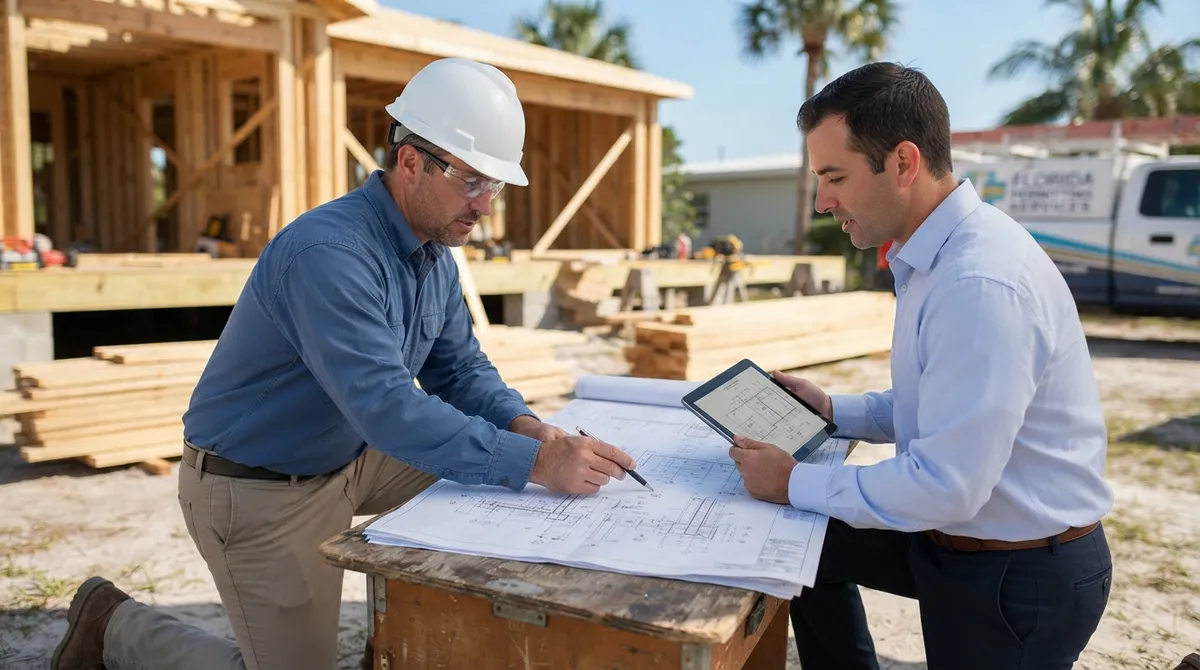
What "Qualifying a Job" Really Means in Florida
In this context, "qualify a job" does not mean finding someone to simply take the blame for finished work. It means documenting what was built, proving it meets the code, and getting the local building department to approve it. Florida Statutes §553.79 generally requires a building permit before covered construction or alterations begin, so skipping that step puts the work in a gray area until it is resolved.
An after-the-fact permit also does not automatically legalize anything. The work still has to satisfy the building code, zoning, floodplain rules, and any local requirements. If it does not, it may need to be corrected or even removed. The building department, not the engineer and not the permitting company, decides what is required.
A good provider helps you through these usual steps:
- Identify the exact jurisdiction that controls the property.
- Confirm with that department what it needs for your specific scope.
- Document existing conditions with measurements, photos, and as-built drawings.
- Have a licensed Florida engineer evaluate the work and prepare sealed documents.
- File the application, answer reviewer comments, and schedule inspections.
- Carry everything through to approval and permit closeout.
If you want a deeper walkthrough, our guide on how to get an after-the-fact permit in Florida covers the process step by step.
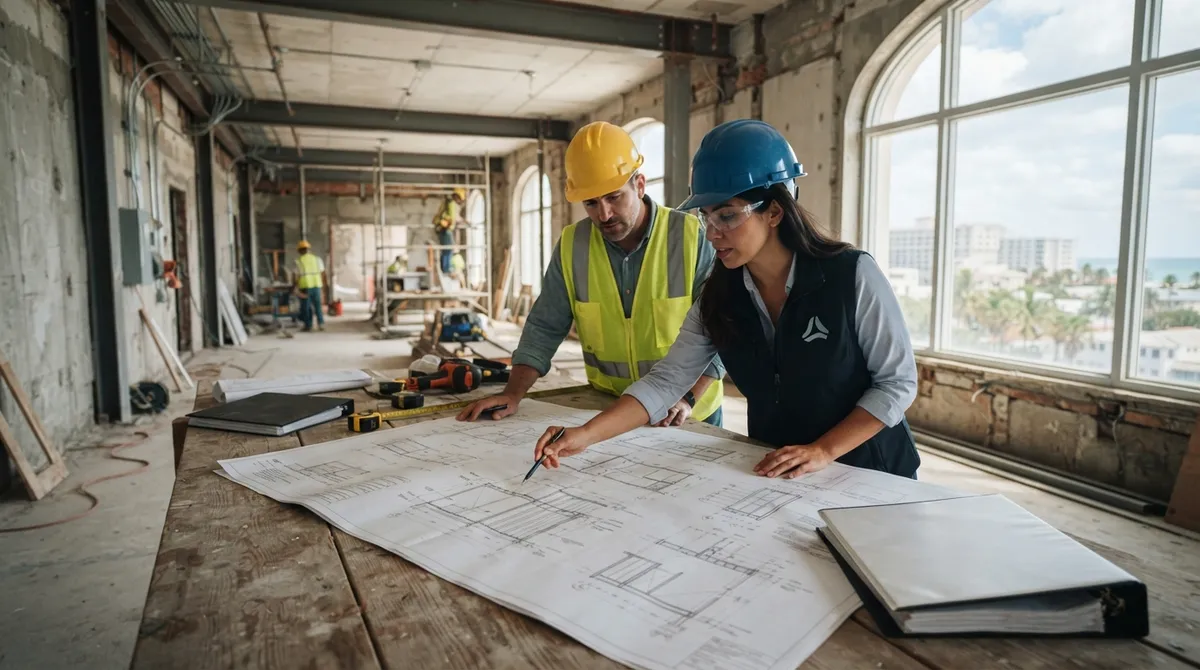
The 6 Traits of the Best After-the-Fact Engineering Partner
1. Proper Florida Licensing You Can Verify
This is the non-negotiable one. Structural engineering documents must be prepared and sealed by an appropriately Florida-licensed professional engineer. Other disciplines, like electrical or mechanical, may call for their own licensed professionals.
The Florida Board of Professional Engineers also states that an engineering business offering services in Florida must be registered with DBPR and qualified by a Florida-licensed PE. The good news is that you do not have to take anyone's word for it. You can check an individual license through the state's license verification tool, and look up firms through the Florida Board of Professional Engineers firm registry.
Before you sign anything, ask for the engineer's name and license number, then look them up yourself. It takes five minutes and can save you from a rejected package.
2. Real Experience in Your Specific Jurisdiction
Florida has 67 counties and hundreds of municipalities, and they do not all play by the same rulebook. Some charge investigation or penalty fees on top of standard permit fees. Some require walls or ceilings to be opened so inspectors can verify concealed work. Review timelines vary widely too.
The best partners know the local quirks. They know which office actually controls your address, which can be surprising near city lines. If you are not sure who reviews your project, try the building department lookup tool to start.
Ask any provider how many after-the-fact files they have handled in your county or city. Specific answers beat vague promises every time.
4. Clear Scope and Transparent Fees
After-the-fact work has a lot of moving parts, which makes vague quotes risky. A strong provider spells out what is included, such as site visits, as-built drawings, calculations, sealed letters, filing, and responses to reviewer comments. They also explain what is not included.
Remember that government fees are separate from provider fees. Some published guidance estimates after-the-fact permit fees at roughly two to three times the standard permit fee in some cases, but that is not a statewide rule. Your local fee schedule controls. Our breakdown of after-the-fact permit costs in Florida can help you set realistic expectations.
5. Follow-Through Until Closeout
Here is where many providers fall short. Getting a package submitted is the easy part. The real work is answering plan-review comments, handling revisions, coordinating inspections, and staying on it until the permit is closed. Review times for complete applications can range from about 5 to 60 days depending on the project and jurisdiction, and incomplete applications or corrections stretch that further.
Ask who will talk to the building department, who responds to comments, and what happens if the first submission is rejected. If the answer is "you will need to handle that," keep looking. Services like revisions and resubmittals and plan review coordination are signs of a provider who sticks around.
6. In-House Drafting and Engineering
When the drafting team and the engineer work under one roof, reviewer comments get fixed fast. There is no waiting on an outside consultant to return a call. In-house engineering also means one point of accountability, which matters when a reviewer asks a technical question on a tight timeline.
It is worth knowing who prepares each document, who seals it, and who communicates with the jurisdiction. A company's ability to manage permitting is different from an engineer's professional responsibility, so make sure both are clearly covered.
Notice that the traits are numbered 1, 2, 4, 5, and 6 above because trait three deserves its own space.
3. A Willingness to Be Honest About Your Odds
The best partner will tell you when a job might not pass as built. Some unpermitted work can be documented and approved with minimal changes. Other work needs corrections, added structural members, or in rare cases removal. A provider who promises approval before looking at the work is guessing.
Look for someone who inspects first, explains the likely path, and gives you options. That honesty is a green flag, not a sales weakness. If you are wondering whether removal is a real risk, read will you really have to demolish unpermitted work for a calm, practical answer.
Quick Comparison: Green Flags vs. Red Flags
| Question to Ask | Green Flag | Red Flag |
|---|---|---|
| Who seals the drawings? | Named Florida-licensed PE you can verify | "Our team handles it" with no names |
| Do you know my jurisdiction? | Specific local experience and process details | Generic, one-size-fits-all answer |
| Will approval be guaranteed? | Honest evaluation after reviewing the work | Guaranteed approval before seeing it |
| What is included in the fee? | Written scope covering filing, comments, revisions | Vague quote with surprise add-ons |
| Who handles reviewer comments? | Provider manages them through closeout | "You will need to deal with that" |
Which Audience Needs What
Different readers lean on after-the-fact engineering for different reasons. Here is a quick look at what usually matters most.
| Who You Are | Common Situation | What to Prioritize |
|---|---|---|
| General contractor | Prior crew skipped a permit or inspection | Fast turnaround, sealed letters, closeout support |
| Solar company | Installed array without a finaled permit | Structural and electrical documentation |
| Realtor or investor | Unpermitted work found before closing | Speed, clear timelines, escrow-friendly plans |
| Homeowner | Inherited an addition or enclosure | Plain-English guidance and honest cost estimates |
| Designer or trade pro | Needs outsourced drafting and engineering | Clean as-builts and dependable permit administration |
What to Prepare Before You Call
You will get a faster, more accurate answer if you gather a few basics first. Having this ready also shows a provider you are serious.
- The property address and parcel number
- A short description of what was built and roughly when
- Any existing permits, plans, surveys, or inspection records
- Photos of the work, including any exposed framing, wiring, or connections
- Any notice, citation, or lender or title-company request you received
- Your timeline, such as a closing date or a deadline from the city
If a notice of violation is part of your story, our guide on clearing a notice of violation in Florida pairs well with this one.
A Note on Marketing Claims
You will see plenty of providers advertising statewide after-the-fact engineering, in-house drafting, and permit coordination. Those are provider claims, not independent rankings or endorsements. Treat every one, including ours, as a starting point for your own checks: verify credentials, confirm the service area, read the contract terms, and ask for references.
That said, we are happy to be measured against the six traits above. 1 Contractor Solutions is Florida's outsourced permitting department. We handle after-the-fact and expired permits across all 67 Florida counties, with in-house drafting and engineering, a sealed-drawing process run by our own engineer, and same-day response. We also work with general contractors, solar contractors, realtors, and homeowners every day. You can also visit us on Google — 1 Contractor Solutions to see what customers say.
Common Mistakes to Avoid When Choosing
- Picking on price alone. The cheapest quote often leaves out revisions, filing, or inspections.
- Skipping the license check. A seal from someone unqualified for Florida can sink your submission.
- Calling the engineer before the building department. Confirm the process with the authority having jurisdiction first.
- Waiting too long. Citations, closings, and insurance questions rarely get easier with time.
- Assuming it will pass. Concealed work may need to be exposed so inspectors can verify it.
Wrapping It Up
There is no single, officially crowned "best" company for after-the-fact engineering in Florida, and anyone who says otherwise is selling something. The smarter move is to hold every candidate to the same six traits: verifiable Florida licensing, local jurisdiction experience, honest evaluation, transparent fees, follow-through to closeout, and in-house drafting and engineering.
Unpermitted work feels heavy, but it is a very solvable problem with the right partner. If you want a team that has handled thousands of Florida permits and will tell you straight what it will take, we would love to help. Get a free quote and tell us your address and your problem. You can also follow us on LinkedIn or follow us on Facebook for more practical Florida permitting tips.
FAQs
What does "qualify a job" mean for an after-the-fact permit in Florida?
It means documenting work that was already built, showing it meets applicable codes, and getting the local building department to approve it. It is not just finding someone to take responsibility for the work. The building department decides which documents, inspections, corrections, and fees are required.
Do I need a Florida-licensed engineer for an after-the-fact permit?
For structural documents, yes. They must be prepared and sealed by an appropriately Florida-licensed professional engineer, and other disciplines may need their own licensed pros. You can verify any license through the state's official lookup tool before you hire.
Will the building department make me open walls or ceilings?
Sometimes, yes. Concealed work may need to be exposed so inspectors can verify it meets code. Requirements vary by jurisdiction, so ask your local building department what it expects for your specific scope.
Can unpermitted work be denied approval or have to be removed?
It can. An after-the-fact permit does not automatically legalize work, so anything that does not meet code, zoning, or floodplain rules may need to be corrected or removed. A good engineer will evaluate it first and tell you honestly what to expect.
How much do after-the-fact permits and engineering cost in Florida?
It depends on your jurisdiction and scope. Some places add investigation or penalty fees, and some published estimates put after-the-fact fees at roughly two to three times standard permit fees, though that is not a statewide rule. Always confirm the current fee schedule with your local building department and get a written scope from your provider.
We do this work every day across all 67 Florida counties. Call (866) 314-6931 and we will tell you what your situation actually requires — including when you do not need us.
Related services
Permit Facilitation & Filing
You have a crew scheduled, a client asking for dates, and a permit sitting somewhere in a queue you cannot see. We file it, w…
See the servicePlan Review Coordination
A permit in plan review is not one queue. On a commercial project it can be six queues, each with its own reviewer, its own c…
See the serviceReady to get your permit moving?
One call tells you which jurisdiction controls your project, what it will take, and what it will cost. Most of the time we can scope it on the phone.