
Blog
6 Generator Permit Venice FL Steps to Know (2026)
Planning a standby generator in Venice, FL? Follow these 6 steps for permits, plans, fees, timelines, and inspections to get approved smoothly.
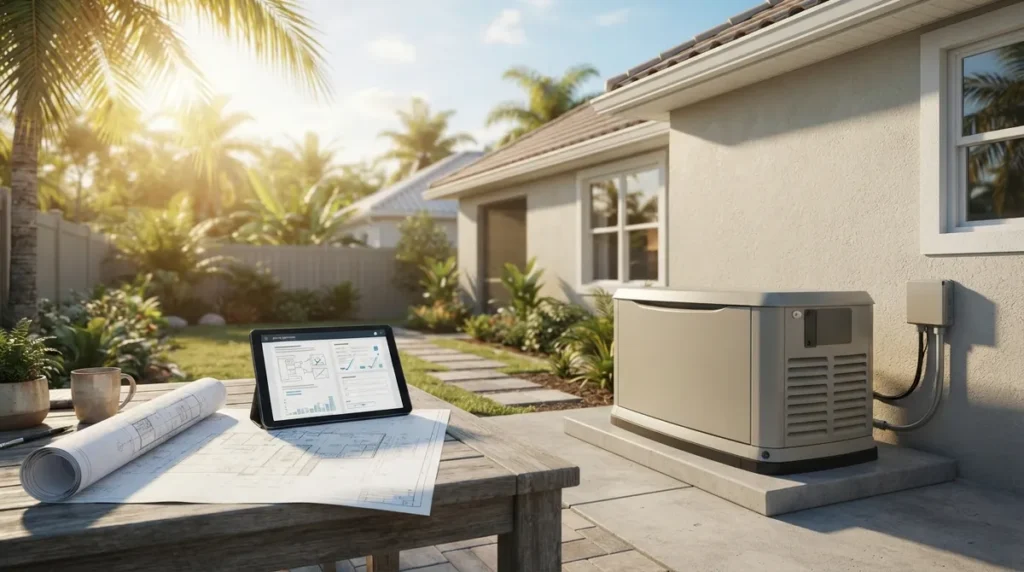
Key Takeaways
-
Permanently installed standby generators in Venice, FL generally require permits because they involve electrical work, often fuel piping, and a support pad, while plain portable use typically does not.
-
Venice requires permit applications to be submitted electronically through its online permitting portal and no longer accepts paper applications.
-
A complete package with a site plan, manufacturer specs, electrical one-line diagram, and pad details helps avoid slow reviews and correction comments.
-
Review times vary by scope; the City's published estimates run from 10 to 15 days for a single-family residence, so confirm current timing with the Building Department.
-
Valuation-based permit fees returned to the regular schedule effective April 1, 2025, so older quotes showing a 30% reduction may be outdated.
-
Schedule required inspections as work progresses and never cover or conceal electrical or fuel work before the inspector approves it.
If you live in Venice, Florida, you already know that hurricane season is not a suggestion. It is a calendar event. After a few long outages, plenty of homeowners decide a permanently installed standby generator is worth every penny. That is a smart move, and it is also exactly when the paperwork question pops up: do you need a generator permit in Venice?
The short answer is usually yes. A permanently installed generator typically involves electrical work, often fuel piping, and a support pad, and the City of Venice generally requires permits for work that installs, alters, or replaces those systems. The good news is that the process is very manageable once you know the steps. In this guide, we walk through six of them in plain English, so you can get your generator permit in Venice without the headaches, delays, or surprise corrections.
Whether you are a homeowner, a general contractor, a solar company adding backup power, or a realtor helping a buyer, this roadmap will keep your project moving.
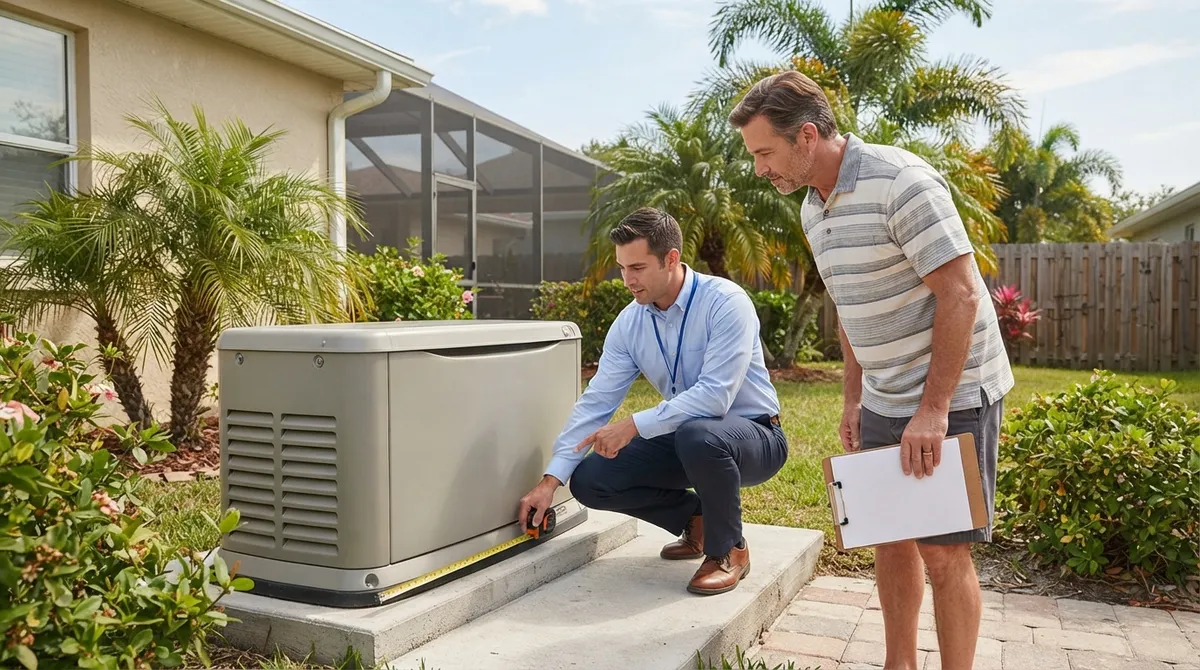
Step 1: Figure Out Whether Your Generator Needs a Permit
Not every generator is treated the same way. The City of Venice states that a permit is generally required for work that installs, alters, repairs, or replaces electrical, gas, mechanical, plumbing, or building systems. A permanently installed standby generator checks several of those boxes at once.
Here is how the common scenarios usually break down. Always confirm the exact permit categories for your scope with the City, because the details can vary by project.
| Generator Scenario | Likely Permit Involvement | Typical Work Triggered |
|---|---|---|
| Permanent whole-house standby generator | Yes, usually multiple trades | Electrical, fuel piping, pad or support |
| Transfer switch installation | Yes, electrical | Panel work, wiring, disconnects |
| Generator inlet or interlock setup | Typically yes, electrical | Wiring and inlet box |
| Portable generator used temporarily | Generally no building permit for plain use | Not hard-wired to the home |
A portable unit that you wheel out and plug appliances into is a different animal than a hard-wired system. Once it connects to your home's electrical system or fuel supply on a permanent basis, you are in permit territory.
Not sure which category you fall into? That is a perfectly normal question, and a quick conversation with a permitting professional can save you days of guesswork.
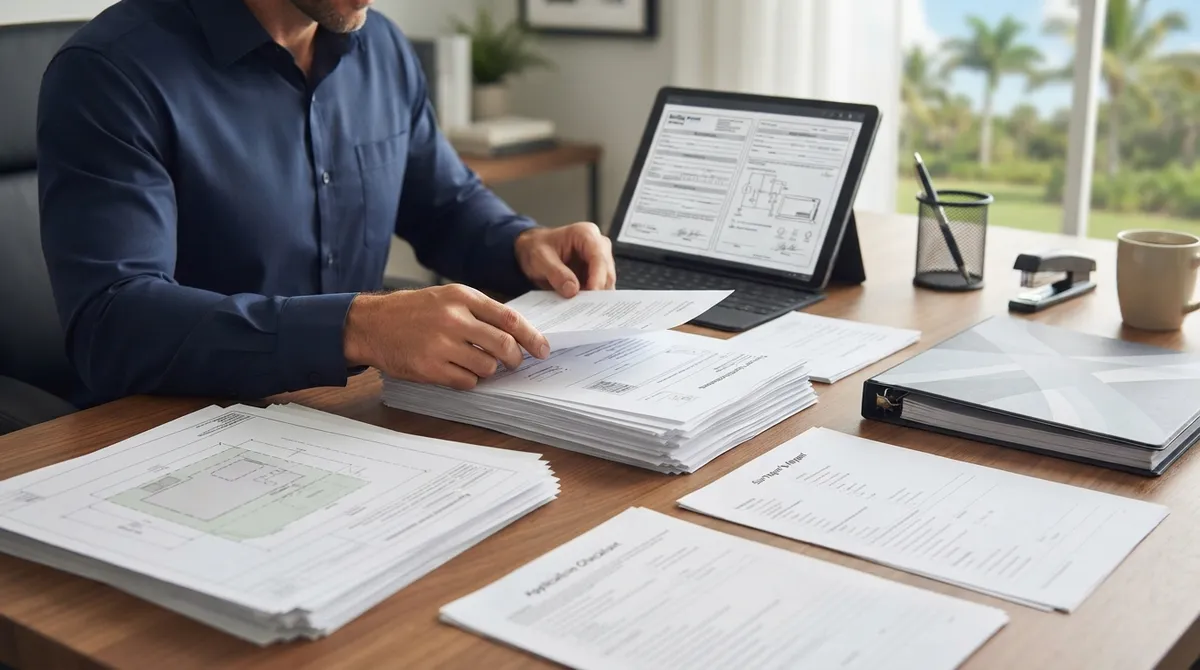
Step 2: Gather the Documents Reviewers Expect
A complete application is the single best way to avoid a slow review. The City's Building Department notes that review time depends on the scope of work and the completeness of submitted plans. In other words, a tidy package moves faster.
For a generator permit in Venice, plan to have these items ready:
- A site plan showing where the generator will sit on the property
- The generator manufacturer's specifications and installation instructions
- An electrical one-line diagram showing the transfer switch and connection to your panel
- Fuel type and piping details if the unit runs on natural gas or propane
- Details on the pad or support structure
- Contractor license and registration information, if a contractor is applying
Do not assume generic online placement numbers apply to your lot. Clearances, setbacks, and pad requirements depend on the approved plans, the applicable Florida Building Code and electrical requirements, the manufacturer's instructions, and any local site or property restrictions. Your property is unique, and your plans should reflect that.
This is where plan drafting earns its keep. A clear, accurate site plan and electrical diagram can be the difference between a first-pass approval and a round of correction comments. Our team at 1 Contractor Solutions prepares permit-ready drawings with in-house sealed engineering when a project calls for it, so reviewers get exactly what they need up front. If you are weighing who should draw your plans, our guide on how to get permit ready plans Florida officials approve is a helpful read.
Step 3: Apply Online Through the City's Permitting Portal
Here is a detail that surprises people: Venice requires permit applications to be submitted electronically through its online permitting service. The City says it no longer accepts paper applications, so there is no walking a folder to the counter.
The owner or an authorized agent may apply. If a contractor or agent applies on your behalf, they must meet the City's contractor registration requirements. If you are a contractor new to the area, our walkthrough on contractor registration in Venice, FL covers what to expect before you file.
Here is a simple way to approach the online submission:
- Confirm who is applying: the owner, or an authorized and properly registered agent.
- Create or log in to your account on the City's online permitting service.
- Select the correct permit type or types for your generator scope.
- Upload your plans, specifications, and supporting documents as clean PDFs.
- Enter project valuation and scope details accurately.
- Submit, then watch your account for review comments or approval notices.
Accuracy matters at every one of those stages. A mismatched address, a missing page, or an unclear scope description can trigger comments that add days to your timeline. If you would rather hand off the portal work entirely, permit facilitation and filing is exactly what we do across all 67 Florida counties.
Step 4: Understand Timelines and Fees Before You Commit
Nobody likes surprises on timing or cost, so let's set realistic expectations.
The City of Venice publishes general review-time estimates, and it cautions that actual timing varies with scope and completeness. These are not generator-specific guarantees, but they give you a sense of how the department thinks about review.
| Project Type | City's General Review Estimate |
|---|---|
| Some minor applications | One to two days |
| Single-family residence | 10 to 15 days |
| Commercial building | About 30 days |
A straightforward residential generator application may land closer to the faster end if everything is complete, but do not treat that as a promise. Confirm current expectations with the Building Department.
On fees, permit costs depend on the applicable fee schedule and your project valuation. The City announced that valuation-based building permit fees returned to the regular schedule effective April 1, 2025, after rescinding a temporary 30% reduction. So if you saw a lower number quoted in an older article or forum post, it may be out of date. Check the City's current fee schedule rather than relying on third-party estimates.
Here is the Building Department contact information to keep handy:
- Address: 401 West Venice Avenue, Venice, FL 34285
- Phone: (941) 882-7547
- Email: permitsonline@venicefl.gov
- Office hours: Monday through Friday, 8 a.m. to 4 p.m.
If a reviewer sends comments, do not panic. It happens on plenty of projects. Our post on who can rescue a denied building permit in Florida explains how to respond quickly and get back on track.
Step 5: Install Carefully and Schedule Inspections at the Right Time
Once your permit is issued, the real work begins, and so does the inspection schedule. This is the step where timing matters most.
Required inspections must be scheduled as work progresses, and covered or concealed work must not be hidden before the required inspection is approved. In plain terms: do not bury wiring, close up a wall, or pour over something that an inspector needs to see first. Covering it up too soon can force you to open it back up, which costs time and money.
The City offers inspection scheduling through its online services portal. Here is a friendly way to stay organized:
- Review your permit card or approval notice for the list of required inspections.
- Ask your installer which inspections apply to the electrical, fuel, and pad work.
- Schedule each inspection online as that stage of work is finished and still visible.
- Keep the approved plans and manufacturer instructions on site for the inspector.
- Request the final inspection only after the full installation is complete and operational.
Make sure the as-installed generator matches the approved plans. If something shifts in the field, such as a different location or a changed fuel line route, talk to the Building Department or your permitting professional before the inspection. A small revision handled early beats a failed inspection later. For related closeout needs, see what an as-built drawing is and when you need one in Florida.
Step 6: Know What to Do If Your Generator Is Already Installed
Sometimes a generator is already sitting in the yard, installed by a prior owner, a handyman, or a contractor who skipped the permit. It happens more often than you would think, and it tends to surface during a home sale, an insurance review, or a closing.
If that sounds familiar, take a breath. There is a path forward. Florida jurisdictions handle unpermitted work through a process commonly called after-the-fact permitting, which typically involves documenting what was installed, verifying that it meets code, and bringing the permit file into compliance. Our guide on 7 steps to legalize unpermitted work in Florida lays out the general approach, and our service page on after-the-fact and expired permits covers how we handle these files.
If you are buying or selling, this matters even more. Open or missing permits can stall a closing, so it is worth checking early. Our article on who pays for open permits when buying a Florida home is a useful companion for real estate professionals and buyers.
Here is a quick comparison of the two paths:
| Situation | Best Path | Main Benefit |
|---|---|---|
| Generator not yet installed | Permit first, then install and inspect | Cleanest process, no corrections after the fact |
| Generator already installed without a permit | After-the-fact permitting with documentation | Brings the work into compliance and protects resale |
Common Mistakes That Slow Down a Venice Generator Permit
A little foresight goes a long way. These are the stumbling blocks we see most often:
- Assuming a one-size-fits-all setback or clearance number applies to every lot
- Submitting an incomplete or low-quality site plan
- Forgetting that the fuel piping and electrical work may each need attention
- Hiding work before the required inspection is approved
- Relying on old fee information from before the April 1, 2025 schedule change
- Applying through an agent who is not registered with the City
None of these are dealbreakers, and all of them are avoidable. A careful plan set and a clear submission go a long way toward a smooth approval.
Why Many Venice Owners and Contractors Get Help
Permitting is a skill of its own. You can absolutely tackle it yourself, and some homeowners do. But if you would rather spend your time on the actual project, a permitting partner can be a real relief.
1 Contractor Solutions handles permit filing, tracking, plan review coordination, and drafting and engineering across Florida, with same-day response and in-house sealed drawings. We serve general contractors, solar and energy companies, realtors, homeowners, and design trade professionals, so we understand the pressure each of you is under. You can see how we support the area on our Venice permitting page, and you can read what customers say when you visit us on Google — 1 Contractor Solutions.
Want to stay connected? You can follow us on LinkedIn and follow us on Facebook for Florida permitting updates, and our website partner, Brain Buzz Marketing, helps us share them.
Ready to Power Up Your Venice Home the Right Way?
Getting a generator permit in Venice does not have to be stressful. Start by confirming your scope, gather clean plans and specs, apply online, set realistic expectations for review time and fees, schedule inspections before anything gets covered, and handle any existing unpermitted work with a proper after-the-fact path.
Do those six things, and you will have backup power you can trust, with the paperwork to prove it. When you are ready for a hand with plans, filing, or a tricky correction, get a free quote from our team, and let's get your project approved and moving.
FAQs
Do I need a permit to install a standby generator in Venice, Florida?
In most cases, yes. A permanently installed standby generator usually involves electrical work and may include fuel piping and a support pad, and the City of Venice generally requires permits for those kinds of system installations. Confirm the exact permit categories for your specific scope with the Building Department.
Can I use a portable generator in Venice without a permit?
A portable generator that you simply plug appliances into generally does not require a building permit for ordinary use. Once you connect a generator to your home's wiring or fuel supply on a permanent basis, such as with a transfer switch or inlet, permit rules typically apply.
How do I apply for a generator permit through Venice's online system?
Venice no longer accepts paper applications, so you submit through the City's online permitting service. The owner or a properly registered authorized agent can apply, upload plans and specifications, and then track review comments and approvals in the portal.
How long does generator permit approval take in Venice?
It depends on scope and how complete your plans are. The City's published general estimates range from one to two days for some minor reviews to 10 to 15 days for a single-family residence, but these are not generator-specific guarantees, so check with the Building Department for current timing.
What inspections are required after installing a generator in Venice?
Required inspections depend on your permit and typically cover the electrical, fuel, and pad work as they progress. Schedule each one through the City's online portal before any work is covered or concealed, and request the final inspection once the installation is complete.
We do this work every day across all 67 Florida counties. Call (866) 314-6931 and we will tell you what your situation actually requires — including when you do not need us.
Related services
Permit Facilitation & Filing
You have a crew scheduled, a client asking for dates, and a permit sitting somewhere in a queue you cannot see. We file it, w…
See the servicePlan Review Coordination
A permit in plan review is not one queue. On a commercial project it can be six queues, each with its own reviewer, its own c…
See the serviceReady to get your permit moving?
One call tells you which jurisdiction controls your project, what it will take, and what it will cost. Most of the time we can scope it on the phone.