
Blog
6 Documents You Need for a Florida Engineer Letter
Learn exactly which documents Florida building departments and engineers need for an engineer letter, from permit numbers to product approvals.
Key Takeaways
-
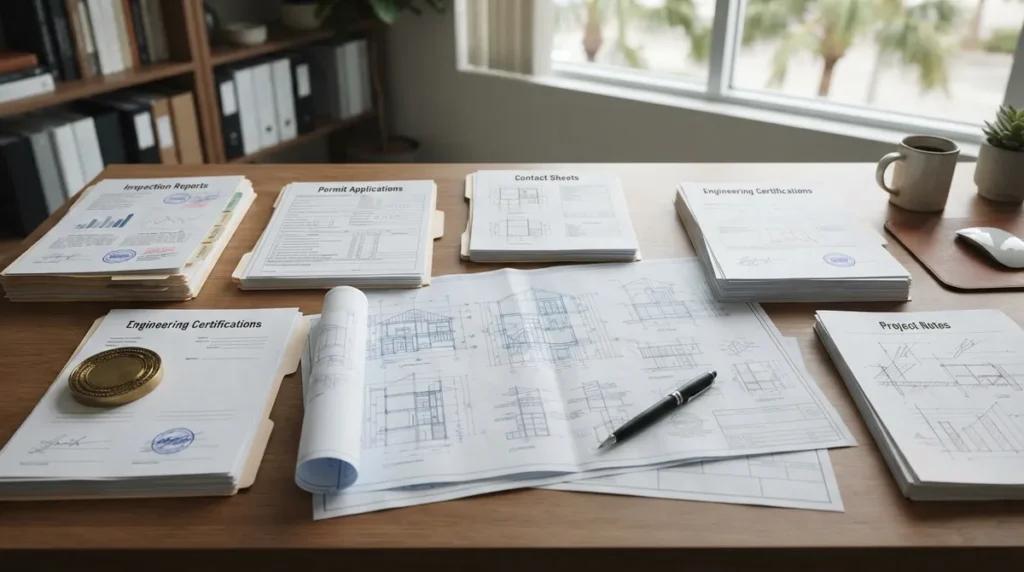
Gather six essential documents before contacting an engineer: permit number, approved plans with revisions, inspection history, product approvals/NOAs, owner/contractor contact info, and site access or photo evidence for verification.
-
Florida has no statewide engineer letter checklist; requirements vary by county and municipality, so always confirm specific requirements with your local building department's authority having jurisdiction (AHJ) before commissioning a letter.
-
Engineer letters must be signed, dated, and sealed by a Florida-licensed PE under state law; scanned signatures are invalid, and building departments increasingly reject improperly sealed documents.
-
An engineer letter is supporting documentation that may not fully replace required inspections; the building department decides acceptance and may still demand additional exposure, testing, revised plans, or follow-up inspections.
-
Common trigger scenarios include covered work before inspection, expired permits discovered during sales, solar installations needing structural verification, unpermitted additions being legalized, and open permits flagged during title searches.
-
The engineer's evaluation must document their verification method (site access, exploratory exposure, testing, or photographs) and clearly state both what was verified and what limitations exist to avoid liability and permit rejection.
If your permit is stuck because an inspector needs an engineer to weigh in, you've probably typed some version of "what documents are needed for an engineer letter florida" into a search bar late at night. Take a breath. You're not the first person to face a missed inspection, a covered wall, or a building department that wants a licensed professional engineer to vouch for work before they'll move your project forward. The good news? Once you know what to gather, this process moves a lot faster than it feels like it will right now.
An engineer letter is a signed, sealed, project-specific report a Florida-licensed engineer prepares to address a particular permitting issue. It might document a missed inspection, evaluate existing construction, or support a permit application. There's no single statewide checklist that applies to every letter in every county. What your engineer needs depends on the purpose of the letter and on the local authority having jurisdiction, or AHJ. Still, some documents show up again and again, and having them ready before your first call saves everyone time. Let's walk through exactly what to pull together, whether you're a general contractor chasing a closeout, a homeowner facing a code notice, or a realtor trying to save a closing.

Why There's No One-Size-Fits-All Checklist
Here's the honest truth: Florida doesn't run permitting through one central office. Each of the 67 counties, and hundreds of municipalities inside them, sets its own procedures for accepting engineer letters. What flies in Cape Coral may not fly in Tampa or Miami.
Cape Coral actually publishes one of the more detailed guidelines available, last revised January 21, 2026, and it's a useful reference point even if you're working in a different jurisdiction. Their guideline lists 12 minimum components an engineer letter should include, grouped around project information, inspection details, compliance findings, and signature and seal requirements. Think of it as a solid template, not a universal law.
Because requirements vary so much, the smartest first move is always confirming the current checklist with the specific city or county office handling your permit. If that sounds like one more phone call you don't have time for, that's exactly the kind of legwork our team handles daily through plan review coordination across every Florida county.
6 Documents to Gather Before You Call an Engineer
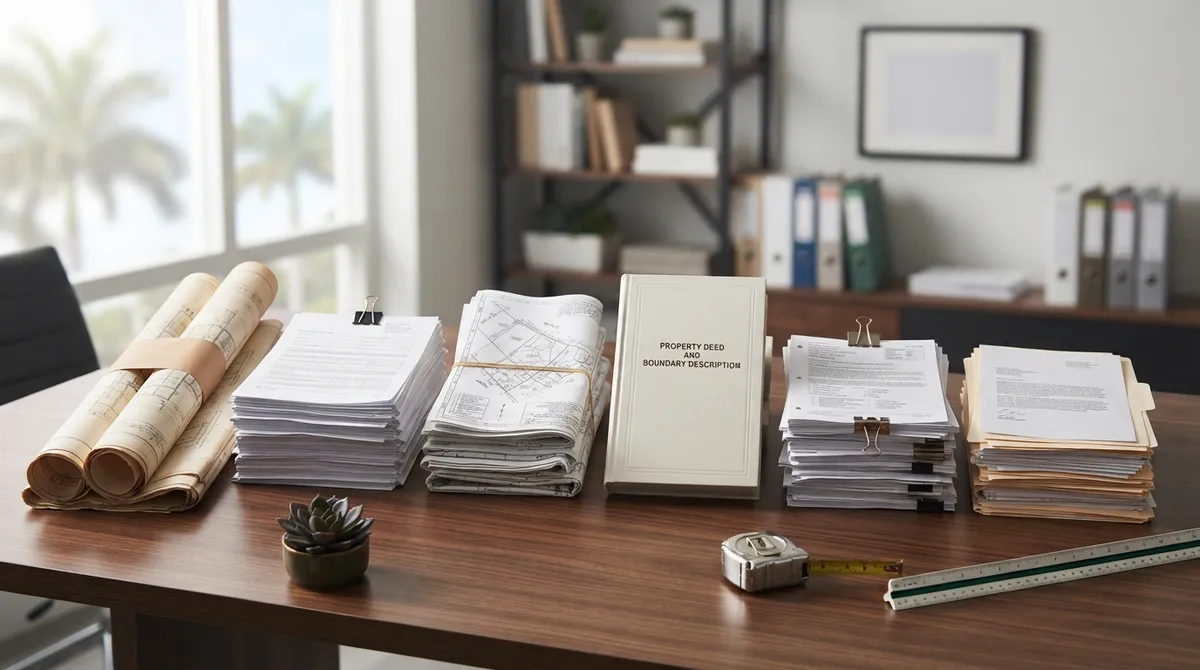
Whether you're dealing with a missed inspection, an after-the-fact permit, or a compliance letter, these six items form the backbone of almost every engineer letter package in Florida.
1. Permit Number and Project Address
This sounds obvious, but you'd be surprised how many calls start without it. Your engineer, and the building department reviewing the letter, need the exact permit number tied to the work in question, plus the full project address. If you've lost track of your permit number, most counties let you look it up through their online portal, or you can use a tool like our Open Permit Search to track it down quickly.
2. Approved Plans and Any Revisions
The engineer needs to see what was actually approved, not just what was built. Pull the approved plan set, including any revisions or resubmittals that went through after the original approval. This lets the engineer compare what's on paper to what's in the field, which is the whole point of the evaluation.
3. Inspection History and the Specific Missed Inspection
If your letter is addressing a missed inspection, and that's one of the most common reasons people need one, you'll want the full inspection history for that permit. Identify exactly which inspection was skipped, when, and why. Cape Coral's guideline specifically calls for the missed inspection type, the reason it was missed, and the date the engineer conducted their own site visit to verify the work.
4. Construction Details and Product Approvals
Details matter here. Gather any documentation showing how the work was actually built: materials used, methods, fastening patterns, whatever applies to your project. If products like impact windows, roofing systems, or structural components were installed, include the relevant product approvals or Notices of Acceptance (NOAs). These help the engineer confirm the installed materials meet code, especially in wind-borne debris regions along the coast.
5. Contractor and Owner Contact Information
Simple, but easy to overlook. The letter typically needs to name the owner and the contractor of record. Have this information ready, along with license numbers if applicable, so the engineer can include it accurately in the final report.
6. Access to the Work or Evidence for Evaluation
Finally, and this is a big one, the engineer needs a way to actually verify the work. That might mean physical access to open up covered areas, exploratory exposure of framing or connections, nondestructive testing, precise measurements, or simply clear photographs documenting the installation before it was covered. Without this access or evidence, the engineer can't responsibly put their seal on a conclusion.
| Document/Item | Why It Matters | Where to Find It |
|---|---|---|
| Permit number and address | Ties the letter to the correct project | Local building department portal |
| Approved plans and revisions | Shows what was authorized to be built | Your permit file or contractor |
| Inspection history | Identifies the specific missed inspection | Building department records |
| Product approvals/NOAs | Confirms materials meet code | Manufacturer or contractor |
| Owner/contractor info | Required for letter identification | Permit application |
| Site access or photo evidence | Allows engineer to verify the work | Property owner/contractor |
What the Engineer Actually Does With This Information
Once your engineer has these documents in hand, their job is to explain, in writing, how the work was verified. That might involve opening up covered areas, exploratory exposure, nondestructive investigation methods, precise measurements, or straightforward photographs. The letter should identify the applicable code provisions and design criteria, then state clearly what conclusion the engineer can responsibly support about the work's compliance.
It's important to understand what a letter can and cannot do. A well-written engineer letter describes the scope and limits of the evaluation. It doesn't imply that unobserved work was somehow verified through guesswork. If your engineer can't access certain areas, the letter needs to say so plainly, because overstating findings creates real liability, and it can get a letter rejected outright by the reviewing jurisdiction.
Signature and Seal Requirements: Non-Negotiable
Under Florida law, specifically Florida Statutes §471.025(1) and Florida Administrative Code Rule 61G15-23.001, final engineering documents, including reports and letters containing engineering opinions, must be signed, dated, and sealed by the Florida-licensed professional engineer responsible for the work. This isn't a suggestion; it's a legal requirement enforced by the Florida Board of Professional Engineers.
One detail that trips people up: a scanned image of a handwritten signature is not a valid substitute for a proper electronic or digital signature. If your engineer sends you a letter with a signature that's simply scanned from a printed page, ask about it before submitting. Building departments are increasingly strict about this, and a rejected letter means starting the clock over. You can read more about proper signing and sealing procedures directly from the Florida Board of Professional Engineers.
Common Situations Where You'll Need One
Engineer letters come up more often than most people expect. Here are the scenarios we see most frequently:
- A roofing or window contractor covered work before the inspector arrived, and now the permit is stuck
- A homeowner is trying to close an old, expired permit discovered during a home sale
- A solar company needs structural verification for a rooftop mounting system after installation
- A property owner is legalizing an addition or renovation that was never properly inspected
- A realtor has a closing delayed because of an open permit flagged during the title search
If any of these sound familiar, our guide on how to use an engineer letter to save your permit walks through the process in more depth.
Does an Engineer Letter Replace an Inspection?
Not automatically. The letter is supporting documentation, not necessarily a substitute for required permit applications, approved plans, inspection records, or other paperwork the AHJ still wants on file. The building department decides whether the letter is acceptable, and they may still require additional exposure, testing, revised plans, or a follow-up inspection.
This is exactly why local knowledge matters so much. A letter that satisfies Clearwater might not satisfy Fort Lauderdale. Working with a firm that files across all 67 Florida counties means someone on the team has likely already navigated your exact jurisdiction's quirks before.
How 1 Contractor Solutions Fits Into This Process
Here's where we come in, and why this matters for the audiences we work with every day. General contractors managing tight schedules can't afford to wait weeks for an outside engineer to return a call. Solar companies need structural documentation that satisfies both the building department and the utility interconnection process. Realtors need permit issues resolved before a closing date slips. And homeowners just want someone to explain what's happening in plain English.
Because our engineering and engineer letter work is handled in house, with our own Florida-licensed engineer signing and sealing the documents, we're not waiting on a third party to return calls. When a reviewer has a comment or a question, we address it directly. That's a meaningful difference when you're trying to keep a project on schedule in counties like Manatee, Hillsborough, or Pinellas.
We also coordinate the full picture around the letter itself, including permit facilitation and filing, as-built drawings when the field conditions differ from the original plans, and revisions and resubmittals if the building department asks for changes. If you're not sure which office actually controls your project, our Building Department Lookup tool is a good starting point.
A Quick Preparation Checklist
Before you reach out to any engineer, run through this short list. It'll save time on the first phone call:
- Locate your permit number and confirm the exact project address
- Pull the approved plan set, including revisions
- Identify the specific inspection type that was missed or the issue being addressed
- Gather product approvals, NOAs, or manufacturer documentation for installed materials
- Confirm owner and contractor contact details, including license numbers
- Arrange access to the site, or collect photographs and evidence if the work is already covered
Once you have these six items ready, the engineer's job becomes far more efficient, and your letter is far more likely to be accepted on the first submission.
Bringing It All Together
Engineer letters can feel intimidating, mostly because the requirements aren't standardized across Florida's many jurisdictions. But once you understand the purpose of the letter and gather the right supporting documents, permit number, approved plans, inspection history, product approvals, contact details, and access or evidence, you're in good shape to move forward with confidence.
We'd genuinely love to help make this easier for you. Our team has spent more than 15 years handling permitting challenges just like this one, and we've filed in over 400 municipalities across the state, so odds are good we've already worked with your local building department before. You can follow us on LinkedIn or follow us on Facebook for regular permitting tips and updates, and feel free to visit us on Google — 1 Contractor Solutions to see what other Florida property owners and contractors have experienced working with us.
If your project is stuck on a missed inspection, an expired permit, or a letter that needs a sealed engineer's opinion, don't wait for it to become a bigger headache. Get a free quote from our team today, and let's get your permit moving again.
FAQs
What should an engineer letter include for a missed inspection in Florida?
Most jurisdictions want the permit number, project address, letter date, owner and contractor names, the type of inspection that was missed and why, the engineer's site visit date, and a detailed list of items inspected. Cape Coral's published guideline is a great reference, but always confirm the exact requirements with your local building department first.
Can a Florida engineer letter replace a required building inspection?
Not on its own. The letter is supporting documentation, and the building department still decides whether it satisfies the requirement or whether additional testing, plans, or inspections are needed. Think of it as a strong assist, not a full substitute.
Does a Florida engineer letter need to be signed and sealed?
Yes, absolutely. Florida law requires final engineering documents, including letters with engineering opinions, to be signed, dated, and sealed by the licensed engineer responsible for the work. A scanned signature won't cut it; it needs a valid electronic or digital seal.
What documents should I give an engineer to prepare a permit letter?
Bring your permit number and address, the approved plans and any revisions, your inspection history, product approvals or NOAs, owner and contractor contact information, and access to the work or clear photo evidence. Having these ready speeds things up tremendously.
Do Florida engineer-letter requirements vary by city or county?
They sure do, and this trips up a lot of good people. There's no single statewide checklist, so what works in one county might not fly in the next. It's always worth confirming current requirements with the specific AHJ before you commission the letter.
We do this work every day across all 67 Florida counties. Call (866) 314-6931 and we will tell you what your situation actually requires — including when you do not need us.
Related services
Permit Facilitation & Filing
You have a crew scheduled, a client asking for dates, and a permit sitting somewhere in a queue you cannot see. We file it, w…
See the servicePlan Review Coordination
A permit in plan review is not one queue. On a commercial project it can be six queues, each with its own reviewer, its own c…
See the serviceReady to get your permit moving?
One call tells you which jurisdiction controls your project, what it will take, and what it will cost. Most of the time we can scope it on the phone.