
Blog
15 Insurance Rebuild After-the-Fact Florida Steps (2026)
Rebuilt after an insured loss without permits? Learn 15 steps to handle an insurance rebuild after the fact in Florida, including FEMA 50% rules.
Key Takeaways
-
Insurance approval and building permits are two separate legal processes in Florida; claim payment does not authorize construction or replace local code review requirements under Florida Statutes §553.79.
-
Contact your local building department promptly about their after-the-fact permit process before covering up walls or ceilings, as inspectors may need to see framing, wiring, and plumbing to verify code compliance.
-
If your home is in a FEMA Special Flood Hazard Area, repair costs reaching 50% or more of pre-damage market value trigger substantial damage rules requiring current floodplain compliance, which may include elevation or relocation.
-
Build a strong permit file with photos, contractor details, plans, damage documentation, and cost breakdowns before submitting; this reduces inspection delays and potential exploratory demolition needs.
-
Expect possible fees and penalties for unpermitted work that vary by jurisdiction, and coordinate with both your building department and insurance carrier simultaneously to keep claim files clean and permits current.
-
If concealed work cannot be visually inspected, a sealed engineer letter or as-built drawings can often satisfy building department requirements and bridge gaps where photos alone are insufficient.
You filed the claim, the check cleared, and your contractor finished the repairs. Then someone asks one simple question: where is the permit? If you are staring at that question right now, take a breath. You are far from alone, and there is a path forward.
An insurance rebuild after the fact in Florida usually means repairs or reconstruction were done after a covered loss without the required building permits. It happens more often than most people realize, especially after storms, when crews are stretched thin and everyone is in a hurry. The good news is that most jurisdictions offer an after-the-fact permit process, and with the right plans, documentation, and inspections, many of these projects can be brought into compliance.
In this guide, we walk through 15 practical steps and facts, from understanding what the law says to preparing a clean permit file. Whether you are a homeowner, general contractor, realtor, or restoration pro, you will find clear, friendly guidance below.
Why Insurance Approval Is Not the Same as a Permit
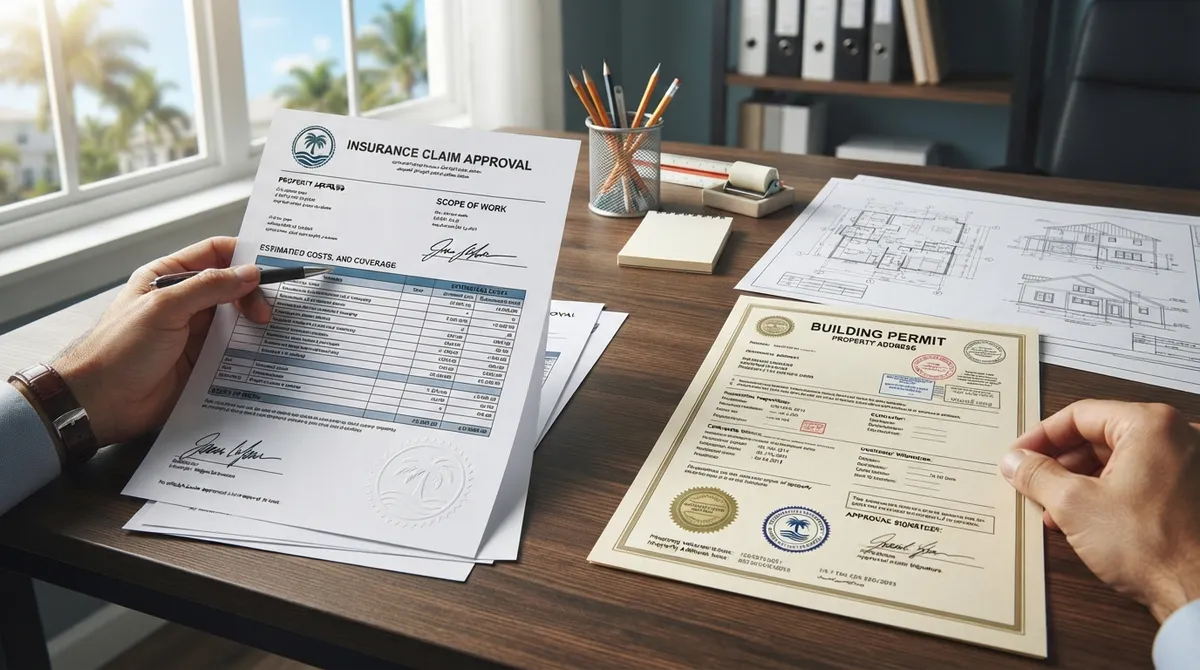
Here is the single biggest misunderstanding we see. Many owners assume that because an insurer approved and paid for the work, the work is automatically legal. It is not. Insurance decisions and building permits are two completely separate processes.
Under Florida Statutes §553.79(1)(a), most construction, alteration, modification, repair, and demolition work requires a permit from the local enforcing agency before work begins. Your insurance company does not issue permits, and its approval does not replace local code review.
1. Understand That Payment Does Not Equal Permission
A claim payment tells you the insurer accepted the loss. It says nothing about whether the repair scope required a permit, plans, or inspections. Treat these as two tracks that must both be satisfied.
2. Know What Typically Needs a Permit
Rules vary by jurisdiction, but insured-loss repairs commonly trigger permits for:
- Roof replacement or structural roof repair
- Electrical, plumbing, and mechanical work
- Structural framing, walls, and openings
- Windows and exterior doors
- Demolition and reconstruction after fire or water damage
If you are unsure, our building department lookup tool can help you identify which office actually controls your address.
First Moves When Repairs Were Done Without Permits
3. Pause Before Anything Gets Covered Up
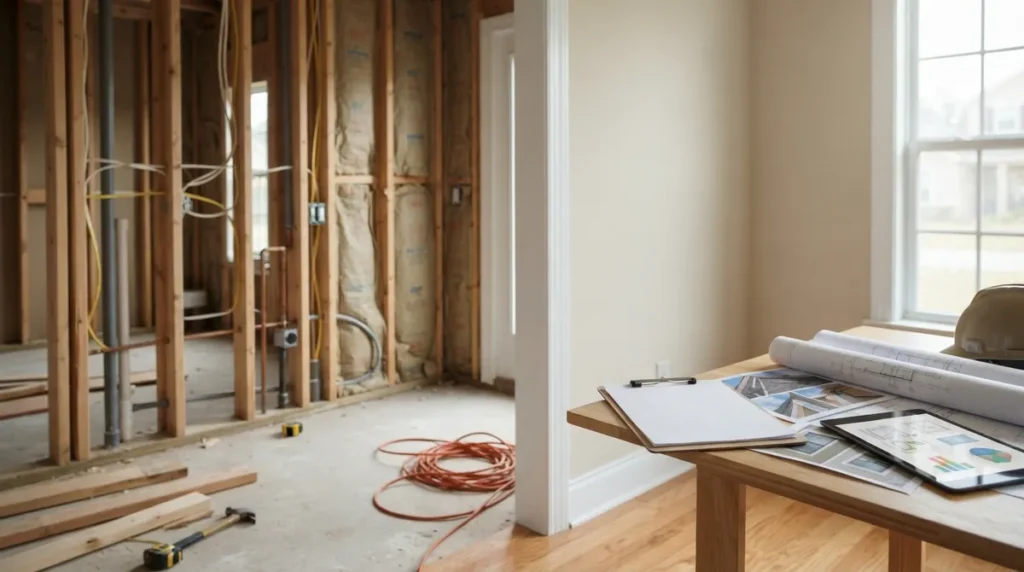
If walls, ceilings, or floors are still open, stop. Inspectors may need to see framing, wiring, plumbing, or insulation. Closing things up can mean tearing them back open later, which costs time and money.
4. Contact the Building Department Promptly
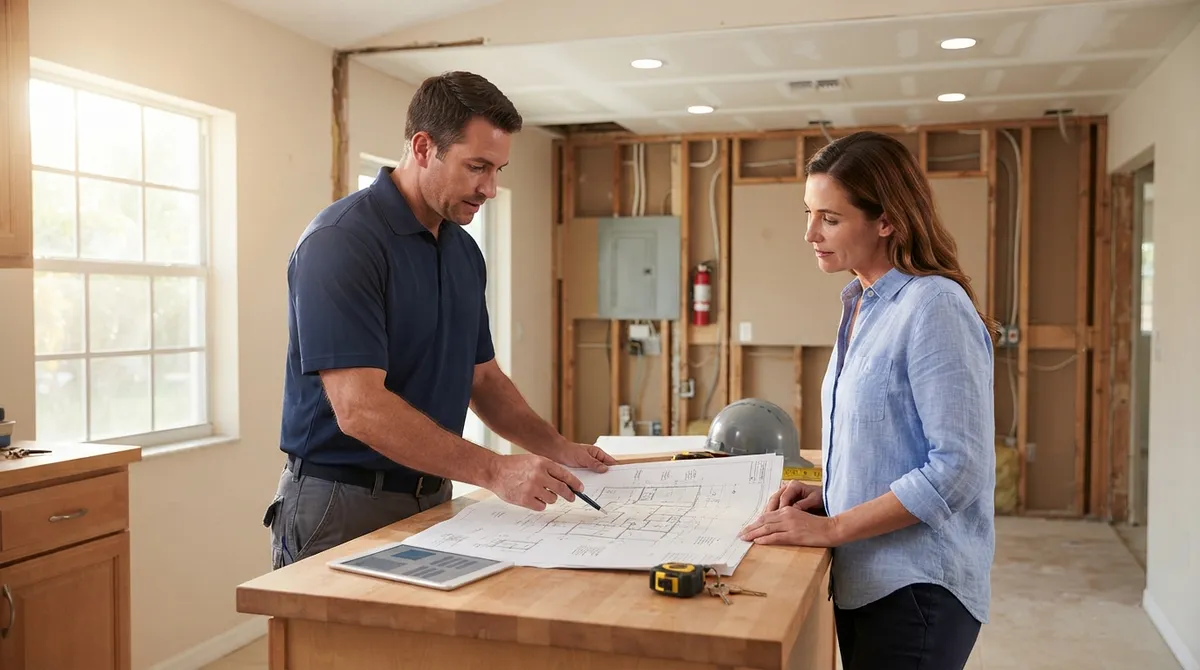
Reach out to the city or county building department and ask about their after-the-fact permit and inspection process. Being proactive almost always goes better than waiting for a notice. Procedures, fees, and penalties differ by jurisdiction and scope.
5. Keep Your Insurer in the Loop Separately
Coordinate with your insurance company, but do not assume they will resolve the permit issue. Ask what documentation they may need from the building department, such as a final inspection or certificate of completion, to keep your claim file clean.
For a deeper look at how permit status can ripple into coverage questions, read our guide on expired permits and insurance claims in Florida.
The Step-by-Step After-the-Fact Process
Every county is a little different, but the overall journey tends to follow a similar rhythm. Here is the typical order of operations.
- Document everything. Gather photos of the original damage, the repair progress, and the finished work.
- Collect claim records. Your adjuster's estimate and scope of loss help establish what was damaged and what was repaired.
- Identify the contractor. Record licensing and insurance details for whoever did the work.
- Prepare plans or as-builts. Many jurisdictions want drawings showing what actually exists.
- Submit the after-the-fact application. File with the proper enforcing agency and pay applicable fees.
- Schedule inspections. Expect inspections of visible and sometimes concealed work.
- Complete corrections. Fix anything that does not meet current code.
- Close the permit. Obtain final approval so the record is clean.
Our after-the-fact and expired permits service handles this entire sequence, and our guide to getting an after-the-fact permit in Florida goes even deeper.
6. Build a Strong Permit File
A well-organized file speeds things up. A practical file may include:
- A detailed scope and cost breakdown of the repairs
- Contractor name, license, and insurance information
- Before, during, and after photographs
- Plans or engineering documents
- Proof of ownership
- Documentation of the original damage and completed work
Exact submittal requirements depend on the local authority and on whether structural, electrical, plumbing, mechanical, roofing, or floodplain review is involved.
7. Expect Possible Fees and Penalties
Many jurisdictions charge higher fees or penalties for work started without a permit. Amounts vary widely. Our breakdown of after-the-fact permit costs in Florida can help you set realistic expectations.
8. Be Ready for Exploratory Inspections
Will the inspector ask you to open walls or ceilings? Sometimes, yes. If concealed work cannot be verified through photos or engineering, the building department may require limited demolition. Good documentation can reduce how much gets opened.
The FEMA 50% Rule: A Big One for Flood Zones
If your home sits in a FEMA-designated Special Flood Hazard Area, there is another layer to consider. This is where an insurance rebuild can get surprisingly complicated, so let us walk through it gently.
9. Learn What Substantial Damage Means
Under FEMA guidance, substantial damage generally means damage from any cause where the cost to restore the structure to its pre-damage condition equals or exceeds 50% of its market value before the damage. Local officials, not FEMA, make the determination under local floodplain rules.
10. Understand Substantial Improvement Too
Substantial improvement rules can apply to cumulative repairs, reconstruction, rehabilitation, or additions. If the applicable 50% threshold is met, the structure generally must comply with current floodplain requirements for new construction. That may include elevation or other flood-compliance measures.
| Term | What It Generally Means | Who Decides |
|---|---|---|
| Substantial damage | Repair cost equals 50% or more of pre-damage market value | Local floodplain administrator |
| Substantial improvement | Cumulative repair or improvement cost reaches the local 50% threshold | Local floodplain administrator |
| Repetitive flood damage | Flood damage twice within 10 years, each averaging 25% or more of market value | Local jurisdiction (per FEMA definition) |
For a plain-English walkthrough, see our article on the FEMA 50 percent rule in Florida.
11. Check How Your Jurisdiction Counts the 50%
Local definitions, valuation methods, and aggregation periods differ. For example, Hillsborough County says permits pulled in the prior 12 months may be included in its calculation. That is not a universal statewide method, so always confirm locally. If you are in that area, our Hillsborough County permitting page is a helpful starting point.
12. Do Not Assume Cosmetic Work Is Exempt
Some drywall removal or replacement may not need a building permit but can still require a substantial-damage packet in certain jurisdictions. Do not guess. Ask the building department directly.
13. Ask About Increased Cost of Compliance Coverage
If you carry a FEMA flood insurance policy and have a substantially damaged building in a Special Flood Hazard Area, you may be eligible for up to $30,000 in Increased Cost of Compliance coverage toward elevation, relocation, or demolition, subject to policy terms. It is worth a conversation with your flood insurer.
Who Should You Call First?
This is the question we hear most. The short answer: do not wait, and do not go it alone.
| Contact | Why Call Them | When |
|---|---|---|
| Local building department | Learn the after-the-fact process, fees, and required documents | As early as possible |
| Insurance carrier | Coordinate claim documentation and coverage questions | In parallel with the permit process |
| Permitting professional | Prepare plans, file, track, and respond to reviewer comments | Before you submit anything |
| Engineer | Verify structural, electrical, or other concealed work | When inspectors need proof of compliance |
14. Bring In Engineering Support When Needed
When concealed work cannot be inspected visually, a sealed engineer letter can sometimes bridge the gap. Our engineer letters and as-built drawings services are built for exactly these situations, with in-house sealed drawings so you are not waiting on an outside consultant.
15. Get Help When the Clock Is Ticking
Pending closing? Stop work order? Lender questions? Our urgent permit rescue team responds fast, and we can often help realtors and buyers through a closing held up by permit issues.
Who Benefits Most From This Process
- Homeowners: Protect resale value and keep your insurance file clean.
- General contractors: Close out jobs properly and protect your license and reputation. See our page for general contractors.
- Restoration companies: Handle storm-driven volume without permit backlogs. Explore our restoration company support.
- Realtors and investors: Evaluate and legalize properties before closing.
Searching for local help? We work across all 67 Florida counties, including Lee County, Charlotte County, and Collier County, where storm recovery has kept permit desks busy. For official background on the statute itself, you can review Florida Statutes Section 553.79, and for flood rules see FEMA's fact sheet on substantial damage.
A Quick Word on Staying Positive
If you take only one thing from this article, let it be this: an insurance rebuild after the fact in Florida is fixable. Building departments see these situations all the time, and they generally want to help owners reach compliance rather than punish them. Move early, stay organized, and lean on professionals who know the local terrain.
Curious how others have fared? You can visit us on Google — 1 Contractor Solutions to see what our customers say. You can also follow us on LinkedIn or follow us on Facebook for Florida permitting updates.
Conclusion: Turn a Permit Problem Into a Closed File
Repairs paid for by insurance still need to satisfy local permitting rules. If yours were completed without a permit, the steps above give you a clear roadmap: contact the building department, document the work, prepare plans or engineering, pass inspections, and close the permit. Check floodplain rules if you are in a flood zone, and keep your insurer informed along the way.
1 Contractor Solutions acts as Florida's outsourced permitting department, with in-house drafting, sealed engineering, and a team that responds within 30 minutes, day or night. Ready for a clean, closed permit file? Get a free quote and let us take it from here.
FAQs
Can I get an after-the-fact building permit in Florida for storm or insurance repairs?
In most cases, yes. Many Florida building departments offer an after-the-fact permit process, which may require plans, inspections, corrective work, and extra fees. The exact steps depend on your city or county and the scope of the repairs.
Does homeowners insurance approval count as a building permit in Florida?
Nope, they are two separate things. An insurer paying a claim does not authorize construction. You still need the proper permits and inspections from your local building department.
What documents do I need to apply for an after-the-fact permit?
A solid file usually includes a scope and cost breakdown, contractor information, photos, plans or engineering, proof of ownership, and documentation of the damage and completed work. Requirements vary by jurisdiction, so check with your local office.
What is Florida's FEMA 50% rule for repairing a flood-damaged home?
In a flood hazard area, if repair or improvement costs reach 50% or more of the structure's pre-damage market value, the home generally must meet current floodplain rules for new construction. Your local floodplain administrator makes the official determination.
Who should I contact first after unpermitted insurance repairs?
Start with your local building department to learn the after-the-fact process, and coordinate with your insurer at the same time. A permitting professional can help you prepare the file before you submit so things move smoothly.
We do this work every day across all 67 Florida counties. Call (866) 314-6931 and we will tell you what your situation actually requires — including when you do not need us.
Related services
Permit Facilitation & Filing
You have a crew scheduled, a client asking for dates, and a permit sitting somewhere in a queue you cannot see. We file it, w…
See the servicePlan Review Coordination
A permit in plan review is not one queue. On a commercial project it can be six queues, each with its own reviewer, its own c…
See the serviceReady to get your permit moving?
One call tells you which jurisdiction controls your project, what it will take, and what it will cost. Most of the time we can scope it on the phone.