
Blog
15 Facts to Know: After The Fact Permit Broward County
Learn what an after the fact permit in Broward County involves, what it costs, and how to avoid delays when legalizing unpermitted work.
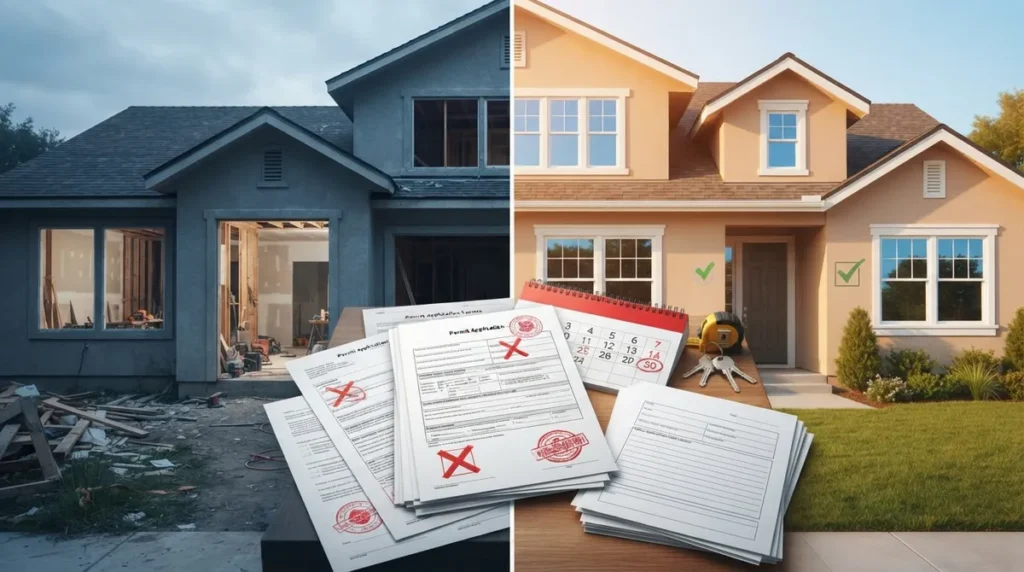
Key Takeaways
-
Broward County ATF permits cost double the standard permit fee plus potential $500 civil penalties per violation, so budget accordingly before filing.
-
Confirm jurisdiction first—most Broward properties fall under city building departments (Fort Lauderdale, Hollywood, Pembroke Pines, etc.), not Broward County itself, or you'll file with the wrong office.
-
You have 30 days to respond to a notice of violation or face contractor license suspension statewide; the current property owner is responsible even if previous owners did the unpermitted work.
-
Submitting an ATF permit application doesn't resolve the violation—it must pass final inspections and receive building official sign-off to actually close the file.
-
Unpermitted work surfaces during title searches, appraisals, and closings, stalling sales and refinancing until resolved; realtors should address it early rather than during due diligence.
-
Building officials may require selective demolition or destructive testing to verify concealed electrical, plumbing, or structural work, so prepare mentally and budget for that possibility.
So, you found out there's unpermitted work on a Broward County property. Maybe it was a screened patio the last owner added, or a garage conversion your contractor mentioned in passing. Take a breath — this happens more often than you'd think, and it's fixable. An after the fact permit in Broward County is the process that lets you bring that work into compliance, and while it does require some legwork, plenty of homeowners, investors, and contractors work through it successfully every single month.
This guide walks you through exactly what an after the fact (ATF) permit is, why Broward County treats it a little differently from other counties, what it costs, and how to avoid the common headaches that trip people up. Whether you're a homeowner trying to sell your house, a realtor prepping a listing, or a contractor who inherited someone else's mess, we'll break it down in plain English. Let's get into it.
1. What an After The Fact Permit Actually Means in Broward County
Broward County defines an after the fact permit as a permit application submitted once construction, alteration, repair, reroofing, or demolition has already happened without proper approval. In plain terms: the work is done, but nobody ever pulled a permit for it. This isn't a special loophole — it's a correction mechanism, and Broward County is upfront that it costs double the standard permit fee.
Florida Statutes section 553.79 is pretty clear that a permit needs to be obtained before covered work begins. So an ATF permit isn't a way around the rules — it's the remedy for when the rules weren't followed the first time around.
2. Broward County vs. Your City: Who's Really in Charge?
Here's something that surprises a lot of people: Broward County itself doesn't handle permitting for most properties in the county. Cities like Fort Lauderdale, Hollywood, Pembroke Pines, and Coral Springs each run their own building departments with their own rules, fees, and timelines. Broward County's Building Code Division mostly covers the Broward Municipal Services District and a handful of county facilities, including Fort Lauderdale-Hollywood International Airport.
That means step one — before you do anything else — is figuring out exactly who has jurisdiction over your property. Get this wrong and you could spend weeks filing paperwork with the wrong office. Our Building Department Lookup tool takes the guesswork out of this, and our team at 1 Contractor Solutions can confirm jurisdiction for you before you file a single form.
Quick Jurisdiction Checklist
- Check your property appraiser record for the municipality name, not just "Broward County"
- Call the local building department directly to confirm they handle permitting for your address
- If you're near a city line, don't assume — verify
- Ask whether any prior permits on file were filed with the city or the county
3. Why ATF Permits Cost More (And What That Means for Your Budget)
Broward County's published rules state plainly that an after the fact permit costs double the regular permit fee. This isn't unique to Broward — it's a common enforcement tool across Florida — but it does mean your budget needs to account for it upfront.
On top of the doubled fee, Broward County's contractor-citation schedule lists $500 civil penalties for a range of violations, including residential alterations without a permit, commercial alterations without a permit, reroofing without a permit, and unauthorized electrical work. These citations come from Broward County Code of Ordinances, section 9-30, and they're separate from the permit fee itself.
| Cost Component | Typical Amount | Notes |
|---|---|---|
| Standard Permit Fee | Varies by scope | Set by local jurisdiction |
| After The Fact Multiplier | 2x standard fee | Per Broward County building code definitions |
| Civil Penalty (if cited) | $500 per violation | Broward County Code, Sec. 9-30 |
| Plans/Engineering | Project dependent | Often required for as-built documentation |
4. What Happens If You Ignore a Notice of Violation
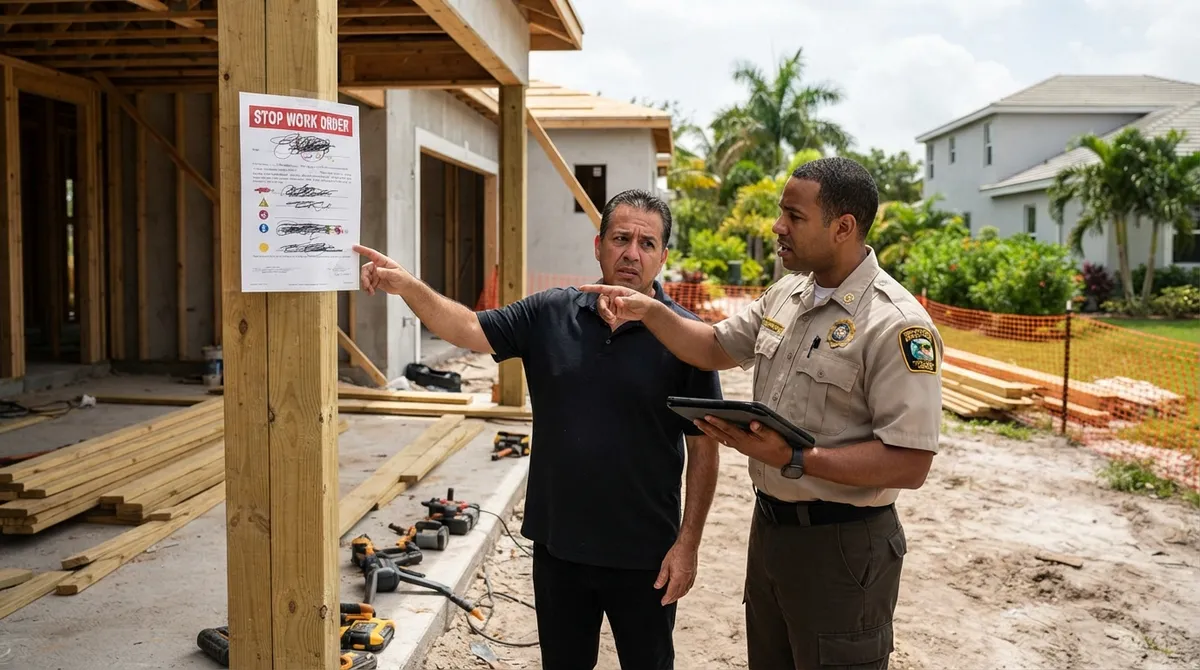
If Broward County or your municipality issues a notice of violation, ignoring it is not a strategy that ends well. Under the county's citation ordinance, you generally have 30 days after being served to pay or contest the citation. Fail to respond, and the licensed contractor tied to the property can have their ability to pull permits anywhere in Florida suspended until the fine is resolved.
And here's the part that catches people off guard: the property owner is responsible for resolving the violation, even if a previous owner or a contractor who's long gone did the unpermitted work. If you bought a house with a skeleton in the closet, it's now your skeleton.
5. Documents You'll Likely Need
Depending on the scope of the unpermitted work, you may need to submit:
- As-built architectural or engineering drawings showing the current condition
- A property survey
- Structural calculations, if load-bearing elements were altered
- Product approvals for windows, doors, or roofing materials
- Photographs documenting the existing construction
- Contractor information and license numbers
- Separate permits for electrical, plumbing, mechanical, or gas work as applicable
This is where having an in-house drafting and engineering team really pays off. At 1 Contractor Solutions, our own sealed drawings mean we're not waiting on a third-party engineer to return a phone call when a reviewer asks for a revision. Our As Built Drawings and Engineer Letters services are built specifically for situations like this.
6. Will They Make You Open Up Walls?
This is the question that makes people nervous, and honestly, sometimes the answer is yes. If walls, ceilings, or concrete are covering work that should have been inspected — think electrical wiring, plumbing lines, or structural framing — the building official may require selective demolition or destructive testing to verify what's underneath.
It's not always this dramatic. A lot of ATF permits close out with photo documentation, an engineer's letter, and a final inspection. But it's smart to go in mentally prepared for the possibility, rather than being blindsided.
7. Owner-Builder vs. Licensed Contractor: Who Can Apply
Florida allows owner-builders to pull certain permits themselves under specific conditions, but there are limits, and the process comes with its own set of responsibilities and liability. Many people find it faster and less stressful to work with a licensed contractor or a permitting service that already understands Broward's paperwork quirks.
If you're considering the owner-builder route, our Owner Builder Permits resource walks through what's required before you sign anything.
8. How Long Does the Process Take?
Florida Statutes section 553.792 sets a 30-business-day review requirement for certain complete applications on qualifying structures under 7,500 square feet. That's the statutory floor, but it doesn't guarantee your ATF permit sails through in a month.
Corrections, additional inspections, jurisdictional back-and-forth, and revision cycles can stretch things out. A well-prepared, complete application from the start is your best defense against delays — reviewers reject incomplete submissions far more often than complete ones.
Typical ATF Permit Timeline
| Stage | Estimated Time |
|---|---|
| Jurisdiction confirmation & research | 1-3 business days |
| Plan/document preparation | 1-3 weeks |
| Initial plan review | Up to 30 business days (statutory) |
| Corrections & resubmittal | Varies, often 1-4 weeks per cycle |
| Inspections & closeout | Days to several weeks |
9. Selling or Refinancing With Unpermitted Work
Realtors, this one's for you. Unpermitted work is one of the most common surprises that surfaces during a title search or appraisal, and it can hold up a closing fast. Buyers' lenders often want open permits or code violations resolved before funding, and title companies flag it routinely.
If you're representing a buyer or seller in Broward County, getting ahead of this early — rather than discovering it during due diligence — saves everyone a lot of stress. Our Realtor Closing Support service exists precisely for this scenario, and we've helped plenty of closings stay on schedule instead of falling apart at the finish line.
10. Solar Installations and ATF Permits
Solar companies aren't immune to this issue either. Sometimes a system gets installed before final electrical or structural documentation is squared away, especially on older roofs where the original permit history is murky. If you're a solar contractor dealing with a Broward property that has permit gaps, coordinating structural and electrical documentation upfront prevents a much bigger headache down the line. Our Solar Contractors page covers how we support faster, code-compliant approvals.
11. General Contractors: Protecting Your License
If you're a GC who took over a project with existing unpermitted work, or discovered mid-job that a permit lapsed, don't sit on it. Broward's citation system ties penalties directly to the contractor of record in some cases, and an expired or missing permit can jeopardize your ability to pull permits elsewhere in Florida. We handle this constantly through our After The Fact Expired Permits service, and our General Contractors resources are built around exactly these scenarios.
12. Common Mistakes That Slow Down ATF Approvals
- Filing with the wrong jurisdiction (county vs. city)
- Submitting incomplete as-built drawings
- Forgetting trade-specific permits (electrical, plumbing, mechanical)
- Not addressing prior open permits or expired permits on the same property
- Assuming the ATF permit alone resolves a code violation without final inspection sign-off
- Underestimating the doubled fee in project budgeting
13. Does an ATF Permit Actually Close the Violation?
Not automatically. The permit has to be finalized — meaning inspections pass and the building official signs off — before the underlying violation is considered resolved. Simply submitting an application doesn't close the file. This is a detail that trips up a lot of property owners who think filing is the finish line rather than the starting point.
14. When to Bring In a Permitting Specialist
If your property has stacked complications — an expired permit, a code violation, and unpermitted square footage all at once — untangling it yourself can eat weeks of your time. This is where a dedicated permitting partner earns its keep. At 1 Contractor Solutions, we've spent over 15 years working Florida's permitting maze, and we've filed in more than 400 municipalities across all 67 counties. Our in-house drafting and engineering team means sealed drawings happen under one roof, not through three separate vendors playing phone tag.
You can browse our full Services lineup, or check out how we support Broward County projects specifically, including work in Fort Lauderdale. We also connect with the community regularly — follow us on LinkedIn or follow us on Facebook for permitting updates and tips.
15. Where to Go From Here
An after the fact permit in Broward County isn't a punishment — it's a path forward. The key is treating it like any other permit application: confirm jurisdiction, gather complete documentation, budget for the doubled fee, and follow through to final inspection. Rushing or skipping steps almost always costs more time in the long run.
For more background on related topics, check out our insights on legalizing unpermitted work in Florida, after the fact permit costs statewide, and what happens when an open permit is found at closing. You can also review Florida's statutory language directly through the Florida Statutes Section 553.79 for the legal foundation behind permitting requirements.
If you'd rather not navigate Broward's dual jurisdiction system alone, our team is standing by. Feel free to get a free quote and let us confirm your jurisdiction, review your violation history, and map out exactly what it will take to get your property compliant. You can also visit us on Google — 1 Contractor Solutions to see how we've helped other Broward County property owners through this exact process. We're here, we answer fast, and we genuinely enjoy untangling the messy stuff so you don't have to.
FAQs
How do I get an after the fact permit in Broward County?
First things first, figure out whether your property falls under Broward County or a city building department — that changes everything about where you file. From there, you'll gather as-built drawings, pay the doubled fee, and work through inspections until the building official signs off. It sounds like a lot, but with the right documentation ready upfront, it moves along pretty smoothly.
How much does an after the fact permit cost in Broward County?
Broward County's own building code definitions state that ATF permits cost double the standard permit fee, and that's before factoring in any $500 civil penalties that might come with a citation. The exact total depends on your project's scope, so it's worth getting a firm estimate before you start.
Can I sell or refinance a Broward County property with unpermitted work?
You can try, but unpermitted work tends to surface during title searches and appraisals, and it can absolutely stall a closing. The smart move is resolving it before you list, which keeps buyers, lenders, and everyone's stress levels much happier.
Will Broward County require me to open walls for an ATF permit?
Sometimes, yes — if concealed work like wiring or plumbing needs verification, the building official may ask for selective demolition or testing. It's not guaranteed, but it's smart to go in prepared for that possibility rather than being caught off guard.
What happens if I ignore a Broward County notice of violation?
Ignoring it tends to make things worse, not better. You typically have 30 days to respond, and failing to do so can lead to a contractor's permitting privileges being suspended statewide until the fine is paid — so it's really best to tackle it head-on.
We do this work every day across all 67 Florida counties. Call (866) 314-6931 and we will tell you what your situation actually requires — including when you do not need us.
Related services
Permit Facilitation & Filing
You have a crew scheduled, a client asking for dates, and a permit sitting somewhere in a queue you cannot see. We file it, w…
See the servicePlan Review Coordination
A permit in plan review is not one queue. On a commercial project it can be six queues, each with its own reviewer, its own c…
See the serviceReady to get your permit moving?
One call tells you which jurisdiction controls your project, what it will take, and what it will cost. Most of the time we can scope it on the phone.