
Blog
14 Things to Know Before Installing Pavers in Florida (2026)
Do you need a permit for pavers in Florida? Learn the 14 key factors, from driveways to drainage, before you break ground.
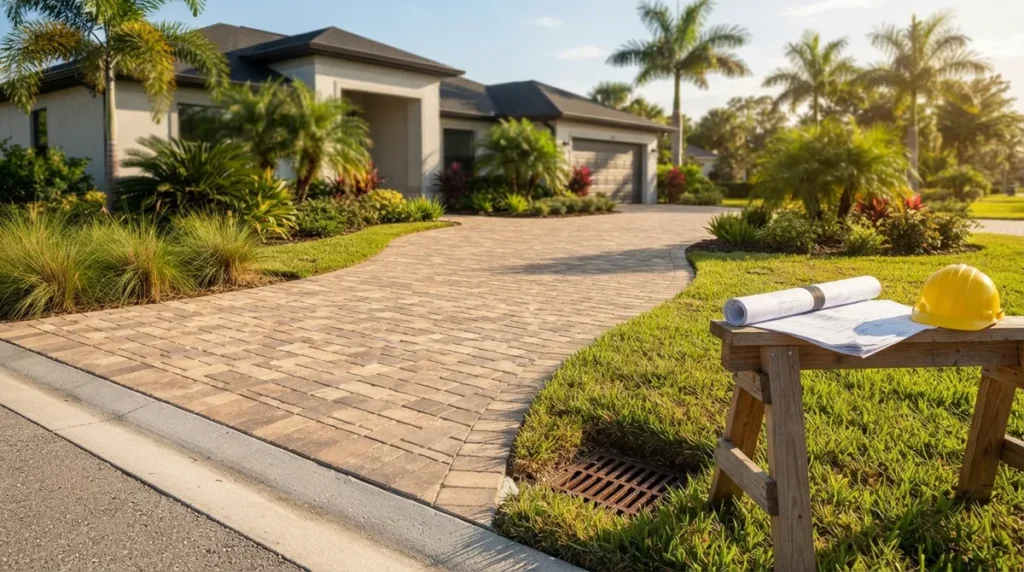
Key Takeaways
-
Florida has no statewide yes-or-no rule for pavers; each city and county sets its own requirements, so always confirm with your local permitting office before starting work.
-
Driveways connecting to public roads, sidewalks, swales, or right-of-way commonly require extra approvals such as a driveway connection permit, even when small patios do not.
-
Pavers are not automatically pervious; many jurisdictions count them as impervious or semi-pervious, so a 1,000 sq ft paver area may count as 800 sq ft toward lot coverage (e.g., Fernandina Beach).
-
Projects that change grading, redirect runoff, or alter swales or ditches usually trigger engineering and stormwater review, which may require sealed drawings.
-
Right-of-way rules conflict by county: Nassau County allows qualifying residential pavers in right-of-way, while Flagler County prohibits them in county-maintained right-of-way.
-
Check HOA architectural approval and any city, county, or water-management-district requirements separately, and get all answers confirmed in writing.
You have picked the color, the pattern, and maybe even the crew. Then a neighbor mentions you might need a permit, and suddenly your sunny patio plan feels a little cloudy. So, do I need a permit for pavers in Florida? The honest answer is: it depends, and it depends on where you live and what the project actually changes.
Florida has no single statewide yes-or-no rule for pavers. Each city and county sets its own requirements. A small patio in the backyard may be simple in one jurisdiction, while a driveway that touches the road can trigger several approvals in another. The good news? Once you know the 14 factors below, you can walk into any permitting office with confidence.
Whether you are a homeowner, a general contractor, or an agent helping a client, this friendly guide breaks it all down in plain English. Let's get your project moving.
Quick Answer: Do You Need a Permit for Pavers in Florida?
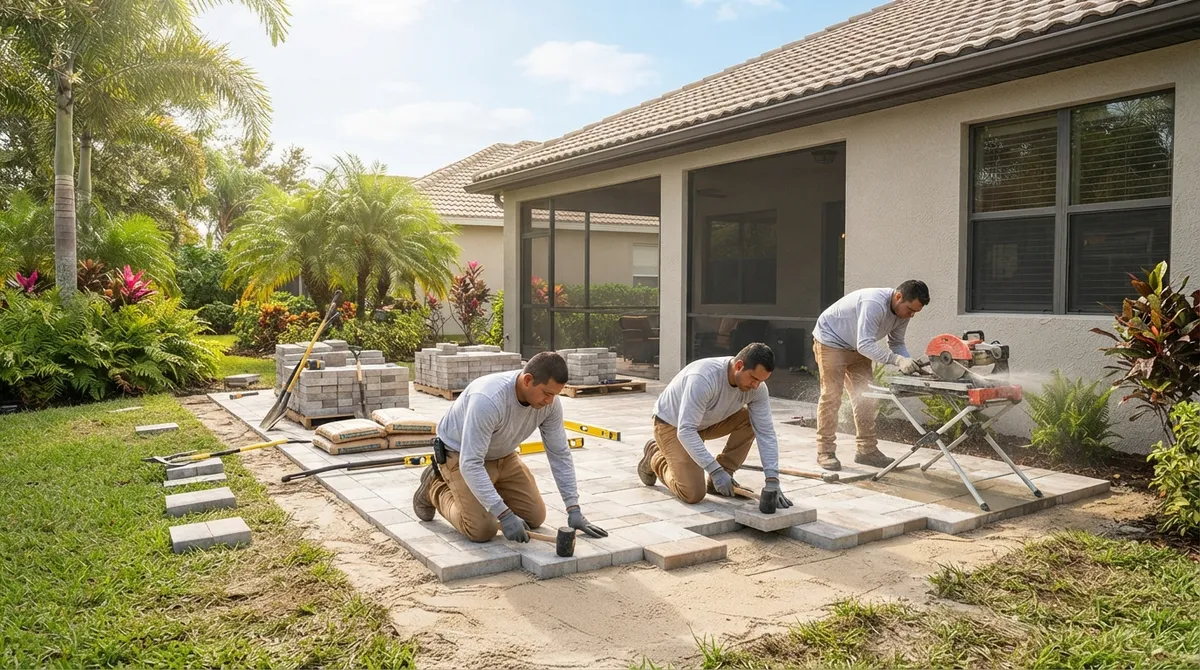
Here is the short version. A basic paver patio or walkway on private property sometimes needs no building permit. However, local zoning, stormwater, or engineering approvals may still apply. Driveways, right-of-way work, and anything that changes drainage or grading are far more likely to need approval.
| Project Type | Permit Likelihood | Why |
|---|---|---|
| Small backyard patio | Low to moderate | Depends on city or county, size, and lot coverage |
| Walkway on private lot | Low | Usually minimal unless drainage changes |
| Driveway replacement | Moderate to high | Impervious coverage and apron connections |
| Driveway connecting to public road | High | Right-of-way or driveway connection permit |
| Project that alters grading or swales | High | Engineering and drainage review |
Because rules vary so much, always confirm with your local building or permitting department before work begins.
14 Things to Know Before You Install Pavers
1. There Is No Single Statewide Rule
Florida's 67 counties and 400-plus municipalities each handle paver projects differently. What flies in one city may need a full application in the next town over. That is why a quick call to the local authority is always your first move.
2. Small Patios May Skip the Building Permit, but Not Everything Else
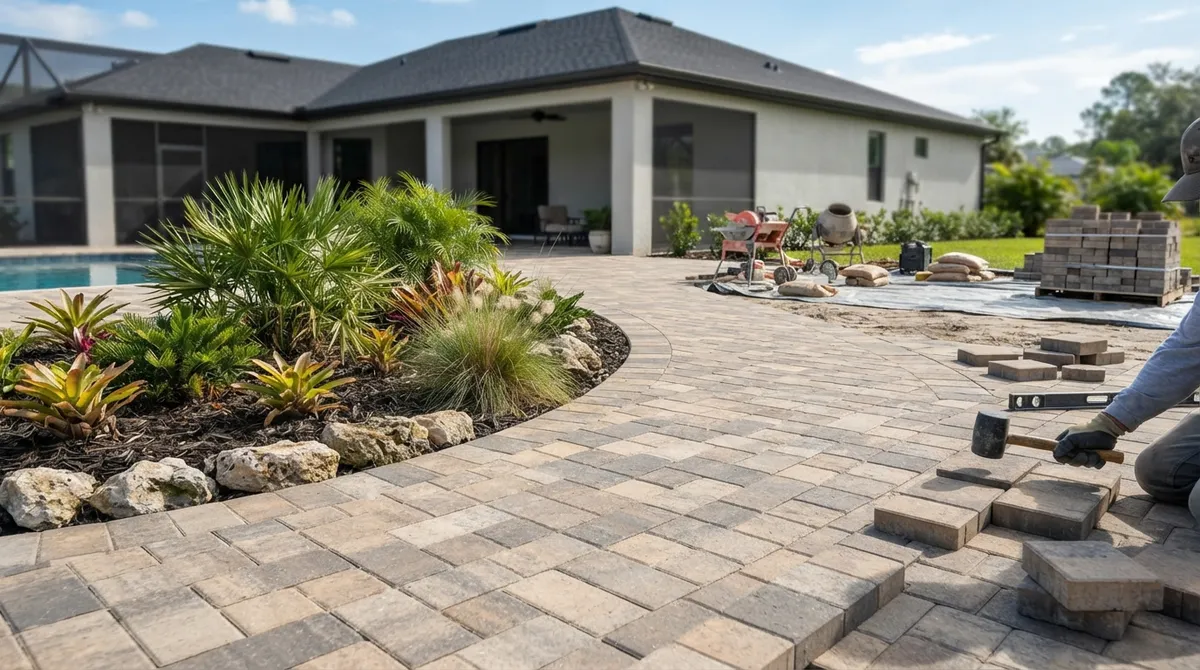
A modest paver patio on private property may not need a building permit in some places. Even so, zoning setbacks, lot coverage limits, and stormwater rules can still apply. Think of the building permit as just one piece of the puzzle.
3. Driveways Trigger More Approvals
Driveways are where things get interesting. If your pavers connect to a public road or cross a sidewalk, swale, easement, or right-of-way, extra permits are common. Nassau County, for example, requires permits for driveway or drainage connections to or across public right-of-way. Franklin County requires a driveway connection permit before you install or modify a connection to a county-maintained road.
4. Pavers Are Not Automatically Pervious
Many homeowners assume pavers let water soak right through. Local authorities often disagree. Pavers may be counted as impervious or partially impervious when checking your lot's allowable coverage and stormwater requirements.
5. Some Cities Use a Semi-Pervious Factor
Fernandina Beach guidance lists pavers as semi-pervious and applies an 80% impervious factor unless manufacturer information supports a lower value. That means a 1,000-square-foot paver area might count as 800 square feet toward your coverage limit.
6. Miami-Dade Has Very Specific Paver Conditions
Miami-Dade County reviews pavers generally as non-structural impervious-surface improvements, and prior approval is required for improvements covered by its ordinance. Pavers can only be treated as pervious if they meet a defined set of conditions, shown below.
| Miami-Dade Pervious Paver Condition | Requirement |
|---|---|
| Traffic use | Low-traffic use only |
| Soil type | Sandy soils |
| Slope | Under 5 degrees |
| Water table clearance | At least 24 inches between water table and paver base |
| Manufacturer certification | Required |
| Soil permeability | At least 0.8 inches per hour (underdrain required if lower) |
7. Changing Drainage Usually Means Engineering Review
If your project redirects runoff, changes elevations, or alters a ditch, swale, drain, or canal, expect closer scrutiny. Orlando's residential guidance calls for grading and stormwater calculations when a project increases impervious area or alters elevations or drainage patterns.
8. Right-of-Way Rules Vary Wildly
Want pavers between your driveway and the street? Check the road's jurisdiction first. Nassau County allows qualifying pavers for residential driveways and sidewalks in county right-of-way, subject to specifications and certification. Flagler County guidance, on the other hand, says pavers are not permitted in a county-maintained right-of-way. Same idea, opposite answers.
9. Replacing an Existing Driveway Still Counts
Swapping concrete for pavers feels like a cosmetic upgrade, but it can change how the surface is classified for stormwater and coverage. Some jurisdictions treat it like new work, so do not assume a like-for-like replacement is exempt.
10. HOAs Add Another Layer
Even when the city says no permit is needed, your homeowners association may require architectural approval. That is separate from government permitting, so get both in writing.
11. City and County Approvals Can Both Apply
A county permit may not replace separate city, water-management-district, or other approvals. If you live near a municipal boundary, confirm which authority actually controls your parcel. This is one of the most common surprises we see.
12. Know What an Application May Require
If a permit is needed, expect to provide some or all of the following:
- A site plan or sketch showing the paver area
- Project dimensions and square footage
- Material details and manufacturer data
- Drainage information or stormwater calculations
- Contractor license or owner-builder documents
- Scheduled inspections
Requirements and fees vary, so verify with the authority having jurisdiction. The available research does not point to one uniform statewide permit fee.
13. Skipping the Permit Can Cost You Later
Unpermitted work tends to resurface at the worst moment: a home sale, an insurance claim, or a code complaint. If you are already in that spot, see 7 Steps to Legalize Unpermitted Work Florida (2026) and How to Sell a Florida House With Unpermitted Additions. Buyers and lenders increasingly ask about open or missing permits.
14. A Permitting Pro Can Save You Time
Because the rules are local and layered, many contractors and homeowners hand this step to an expert. 1 Contractor Solutions works across all 67 Florida counties and handles filing, tracking, plan review coordination, and sealed drawings in house. If you want a clear answer before you break ground, get a free quote.
How to Find Out If Your Paver Project Needs a Permit
Follow these steps to get a reliable answer for your specific address:
- Confirm your jurisdiction. Identify whether your parcel sits in a city or unincorporated county.
- Check who maintains the road. City, county, or state ownership changes the rules for driveway work.
- Measure the project. Write down square footage and note any change to grade or drainage.
- Review lot coverage. Add your new pavers to existing impervious surfaces and compare with local limits.
- Call or email the permitting office. Ask specifically about pavers, driveways, and stormwater review.
- Get the answer in writing. A short email confirmation protects you and your contractor.
If you are not sure which department controls your property, you can start with 1 Contractor Solutions' building department lookup to find the right office.
Who Needs to Pay Attention Most?
Different readers face different pain points, so here is how this plays out in real life.
| Reader | Biggest Paver Permit Concern |
|---|---|
| Homeowners | Avoiding fines and surprises at resale |
| General contractors | Right-of-way, drainage, and inspection scheduling |
| Realtors and investors | Open or missing permits slowing a closing |
| Design trade professionals | Accurate site plans and stormwater calculations |
Contractors can learn more about how we help on our general contractor page, and homeowners can start at our homeowner page.
What About Pavers Near Pools or Outdoor Kitchens?
Pavers rarely travel alone. They often surround a pool deck, lead to an outdoor kitchen, or border a new addition. When that happens, the paver work may fall under a larger permit. For related projects, see How to Legalize an Unpermitted Outdoor Kitchen in FL and 8 Steps to Legalize After the Fact Pools in Florida (2026). Bundling the work into one permit can keep things tidy.
When Engineering Comes Into Play
Some paver projects need more than a sketch. If you are raising grade, adding retaining elements, or increasing impervious area enough to trigger stormwater review, a sealed drawing may be required. Learn more in Who Seals Structural Drawings for Florida Permits? and explore our site plan services. Having engineering in house means fixes happen fast when a reviewer leaves a comment.
What If Your Permit Gets Denied?
It happens, and it is usually fixable. Common reasons include missing drainage details, unclear coverage math, or right-of-way conflicts. Our guide on who can rescue a denied building permit in Florida walks through next steps. You can also learn about revisions and resubmittals to get back on track quickly.
Helpful Resources and Community
Want local permitting tips as they happen? You can follow us on LinkedIn or follow us on Facebook. Our marketing partner, Brain Buzz Marketing, helps us share practical guides like this one. And if you want to see what clients say, Visit us on Google — 1 Contractor Solutions.
Final Thoughts: Check First, Pave Second
So, do you need a permit for pavers in Florida? Sometimes yes, sometimes no, and the only way to know for sure is to check your local rules. Driveways, right-of-way work, and anything affecting drainage or impervious coverage are the biggest triggers. A simple backyard patio may be easier, but local zoning and stormwater rules can still sneak in.
The smartest move is to confirm before you dig. A few minutes of research can save you weeks of delays and hundreds of dollars in rework. If you would rather have a team handle the details, 1 Contractor Solutions can research your jurisdiction, prepare the plans, and file and track the permit for you. Ready to pave with peace of mind? Get a free quote today and let us take the paperwork off your plate.
FAQs
Do I need a permit to install pavers for a patio in Florida?
Maybe, and that is the friendly truth! A small patio on private property may not need a building permit in some jurisdictions, but zoning, stormwater, or lot coverage rules can still apply. A quick call to your local permitting office will settle it.
Do I need a permit for a paver driveway in Florida?
Often, yes. Driveways that connect to a public road or cross a sidewalk, swale, or right-of-way commonly need extra approvals, such as a driveway connection permit. Requirements differ by city and county, so confirm before you start.
Do pavers count as impervious surface in Florida?
In many places, yes, at least partially. Local authorities may treat pavers as impervious or semi-pervious when checking lot coverage and stormwater rules. Fernandina Beach, for example, applies an 80% impervious factor unless manufacturer data supports a lower value.
Can I install pavers in a Florida public right-of-way?
It depends on the road's owner and the local rules. Nassau County allows qualifying pavers for residential driveways and sidewalks in county right-of-way with proper specifications, while Flagler County guidance says pavers are not permitted in a county-maintained right-of-way.
What documents are needed to apply for a paver or driveway permit in Florida?
Most applications ask for a site plan or sketch, project dimensions, material details, and drainage information. You will also need contractor license or owner-builder documents. Exact requirements and fees vary, so verify with your local authority.
We do this work every day across all 67 Florida counties. Call (866) 314-6931 and we will tell you what your situation actually requires — including when you do not need us.
Related services
Permit Facilitation & Filing
You have a crew scheduled, a client asking for dates, and a permit sitting somewhere in a queue you cannot see. We file it, w…
See the servicePlan Review Coordination
A permit in plan review is not one queue. On a commercial project it can be six queues, each with its own reviewer, its own c…
See the serviceReady to get your permit moving?
One call tells you which jurisdiction controls your project, what it will take, and what it will cost. Most of the time we can scope it on the phone.