
Blog
10 Facts: Who Files Solar Permits in Fort Lauderdale
Learn who's legally responsible for solar permits in Fort Lauderdale and how permitting services help contractors file faster.
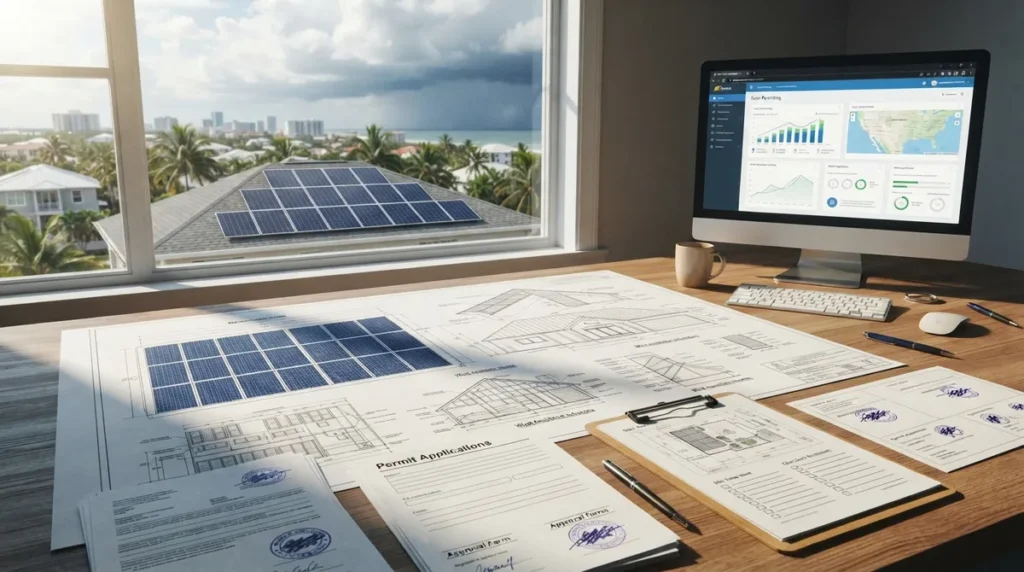
Key Takeaways
-
The licensed solar or electrical contractor is legally responsible for pulling permits in Fort Lauderdale, but can authorize a permitting service to handle filing, tracking, and corrections as their agent.
-
Fort Lauderdale's High-Velocity Hurricane Zone status requires enhanced documentation including wind-load calculations, uplift resistance, and mounting hardware specs that exceed requirements in most other states.
-
Nearly all solar installations require two mandatory reviews: structural (roof attachment, wind-uplift resistance) and electrical (one-line diagram, equipment specs, service panel integration).
-
Projects must be submitted through LauderBuild, the city's official online permitting portal, with different jurisdictions in Broward County using entirely different portals, fee schedules, and review procedures.
-
Contractors must hold both a valid Florida license and local municipality registration before permits can be issued; missing either requirement commonly causes application delays.
-
A complete, code-compliant permit package submitted the first time avoids correction cycles that can delay approvals by weeks, making proper structural and electrical documentation critical for timeline efficiency.
If you've ever tried to get a straight answer to "who actually files the solar permit," welcome to the club. It's one of the most common questions we hear from solar installers, homeowners, and even seasoned general contractors working in Broward County. The honest answer is a little more nuanced than a single name, but don't worry, we're going to walk through it together in plain English, no jargon overload, no runaround.
Fort Lauderdale sits inside Florida's High-Velocity Hurricane Zone, which means solar permitting here comes with extra layers most other parts of the country never think about. Add in the city's own LauderBuild online permitting system, structural and electrical review requirements, and the fact that responsibility can shift depending on who owns the property, and it's easy to see why this question keeps popping up. Grab a coffee, and let's sort out exactly who does what.
1. The Licensed Solar Contractor Is Usually the Legally Responsible Party
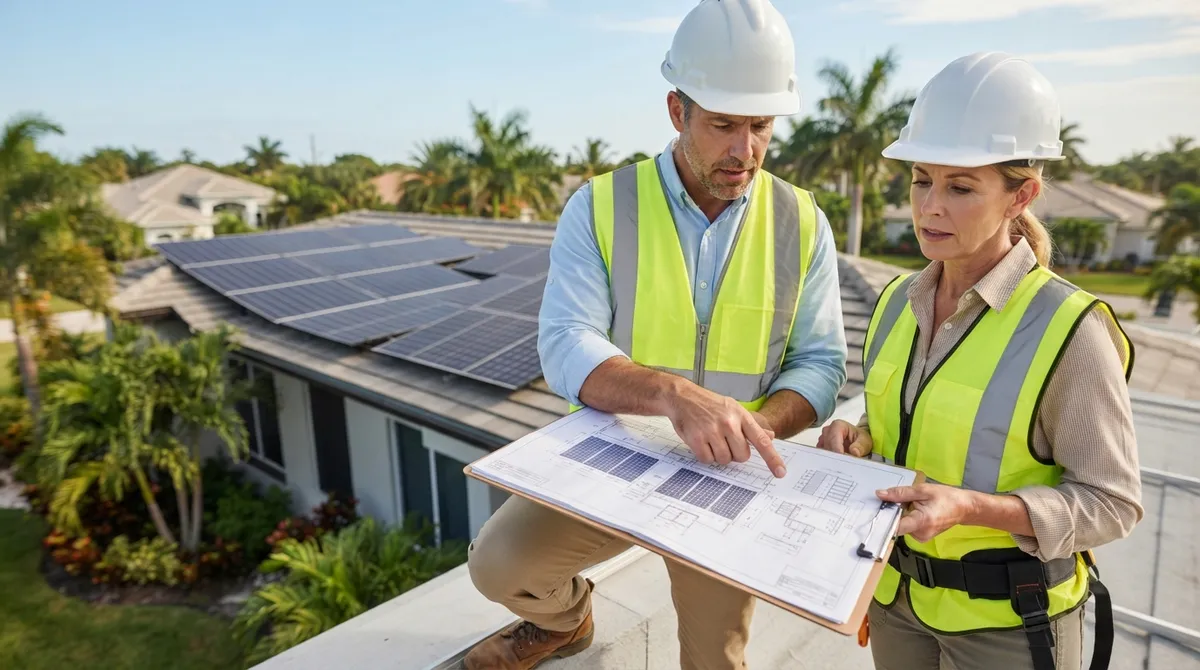
In Fort Lauderdale, the licensed solar or electrical contractor performing the installation is generally the one legally responsible for pulling the permit. Florida Statutes Chapter 489 governs contractor licensing, and the permit application typically needs to identify the responsible contractor along with their license information.
This makes sense when you think about it. The contractor is the one physically installing the racking, wiring the inverters, and tying into the electrical panel, so the jurisdiction wants a licensed, accountable party attached to that work. That said, being "responsible" for the permit doesn't mean the contractor has to personally sit at a computer filling out forms all day.

2. A Permitting Service Can File on the Contractor's Behalf
Here's the part that surprises a lot of people: a Florida permitting service can absolutely prepare, submit, and manage the application as the contractor's authorized agent. This is exactly the kind of work we handle every day at 1 Contractor Solutions, whether it's a residential rooftop system in Fort Lauderdale or a larger commercial array elsewhere in Broward County.
Think of it like hiring a bookkeeper. You still own the business and you're still accountable for the numbers, but someone else is handling the tedious data entry so you can focus on running your crews. A permitting service doesn't replace the contractor's license or legal responsibility, but it absolutely takes the administrative weight off their shoulders.
What a Permitting Service Typically Handles
- Gathering and organizing required documents before submission
- Preparing the online application through the city's LauderBuild portal
- Tracking review status and flagging delays early
- Responding to plan review corrections on behalf of the contractor
- Coordinating inspection scheduling once the permit is approved
- Managing fee payments and paperwork logistics
3. LauderBuild Is the City's Official Submission Portal
City of Fort Lauderdale solar permits are submitted through LauderBuild, the municipality's online permitting platform. If your project sits inside city limits, this is where the application lives from start to finish, including document uploads, review comments, and inspection requests.
Projects just outside city limits, like those in Dania Beach, Hollywood, Lauderdale-by-the-Sea, or unincorporated Broward County, may use entirely different portals, fee schedules, and review procedures. That's why confirming jurisdiction before you file is such a critical first step, and it's one reason our Building Department Lookup tool tends to be a lifesaver for solar teams juggling multiple job sites.
4. Solar Permits Almost Always Require Two Types of Review
Nearly every solar photovoltaic installation in Fort Lauderdale triggers at least two technical reviews: structural and electrical. The structural review looks at roof attachment points, load paths, and wind-uplift resistance. The electrical review examines the one-line diagram, equipment specifications, and how the system ties into the existing service panel.
Larger commercial systems, ground-mount arrays, or solar carports can pull in additional reviewers too, including fire and zoning departments. This is where having in-house structural and MEP engineering support really pays off, because corrections can be addressed quickly instead of waiting weeks for an outside consultant to respond.
5. Fort Lauderdale's Hurricane Zone Status Raises the Documentation Bar
Because Fort Lauderdale falls within Florida's High-Velocity Hurricane Zone, solar permit packages need to go above and beyond what's required in many other parts of the state. Reviewers want to see clear documentation addressing wind-load calculations, uplift resistance, mounting hardware specs, and applicable product approvals under the Florida Building Code.
Skipping or shortchanging this documentation is one of the most common reasons solar applications bounce back with correction comments. A well-prepared package the first time around can shave real time off your approval timeline.
Typical Required Documents for a Fort Lauderdale Solar Permit
| Document | Purpose |
|---|---|
| Broward County Uniform Building Permit Application | Standard application form identifying the project and responsible contractor |
| Site or roof plan | Shows panel layout, roof geometry, and equipment placement |
| Electrical one-line diagram | Details system wiring, inverters, and interconnection points |
| Structural attachment details | Confirms racking and mounting meet code requirements |
| Wind-load calculations | Demonstrates uplift resistance for hurricane-zone compliance |
| Product approvals | Verifies equipment meets Florida Building Code standards |
| Contractor license information | Identifies the responsible licensed party on the permit |
6. Owner-Builder Permits Are Rarely the Right Fit for Solar Companies
Florida law does allow property owners to apply as owner-builders for certain qualifying residential work, but this route comes with real legal responsibilities and restrictions. For a solar company installing systems on behalf of a paying customer, owner-builder permits generally aren't the normal path.
Commercial properties, or homes owned by an LLC, corporation, or trust, typically require a licensed contractor as the applicant rather than an individual owner. If you're a homeowner curious about this option for other types of projects, our page on Owner Builder Permits breaks down what's actually involved and where the pitfalls tend to hide.
7. The Applicant Stays on the Hook for Corrections and Inspections
Whoever is listed as the applicant, whether that's the contractor directly or a permitting service acting as their agent, remains responsible for responding to plan review comments and scheduling required inspections. A permitting service can absolutely manage these administrative tasks, but it can't independently approve construction or take on responsibilities outside its licensing scope.
This is exactly why plan review coordination and revisions and resubmittals support matter so much for busy solar crews. Nobody wants a $30,000 job sitting idle for three weeks because a correction letter got buried in an inbox.
8. Solar Companies Working Across Multiple Cities Face a Patchwork of Rules
If your solar company installs systems throughout South Florida, you already know that what works in Fort Lauderdale might not fly in a neighboring town. Different municipalities can require different forms, fee structures, and review timelines, even for nearly identical residential systems.
- Confirm the exact jurisdiction controlling the property, since city lines aren't always obvious.
- Verify whether the local portal is LauderBuild or a separate county or city system.
- Check for jurisdiction-specific solar application packages or supplemental forms.
- Identify whether structural, electrical, fire, or zoning review applies to your project type.
- Confirm contractor registration status with that specific municipality before filing.
Companies scaling across counties like Miami-Dade, Palm Beach, and Broward often find it more efficient to hand this coordination off entirely so their crews can stay focused on installations rather than paperwork.
9. Contractor Registration Matters Just as Much as Licensing
Holding a valid Florida contractor license is only part of the equation. Many municipalities, including jurisdictions throughout Broward County, also require contractors to register locally before permits can be issued under their name. Missing this step is a surprisingly common reason applications stall.
Our Contractor Registration Checklist tool is a quick way to double-check you're covered before submission day. It's a small step that can save a genuinely frustrating delay later.
10. Permitting Services Bridge the Gap Without Replacing the Contractor
At the end of the day, the cleanest way to think about it is this: the licensed contractor owns the legal responsibility, and a permitting service owns the administrative heavy lifting. Together, that partnership tends to produce faster, smoother approvals than either party trying to juggle everything solo.
This is precisely the role 1 Contractor Solutions plays for solar companies across Florida. We prepare code-compliant structural and electrical documentation, submit through the correct portal, track every step, and work corrections in-house through our own engineering and architectural drafting teams. If you'd like to see how this looks in practice for a specific Fort Lauderdale address, you can always review typical Florida solar permit timelines before your next project kicks off.
Comparing Roles: Contractor vs. Permitting Service
| Task | Licensed Contractor | Permitting Service |
|---|---|---|
| Holds legal responsibility for the installation | Yes | No |
| Prepares application documents | Sometimes | Typically, yes |
| Submits through LauderBuild | Sometimes | Typically, yes |
| Responds to plan review corrections | Ultimately accountable | Manages the process |
| Performs the physical installation | Yes | No |
| Schedules inspections | Ultimately accountable | Coordinates logistics |
Curious how this plays out for other trades too? Our Solar Contractors page and General Contractors resources go into more detail on how permitting coordination fits into a busy installation schedule, whether you're based in Fort Lauderdale or expanding across Florida.
Why This Matters for Real Estate and Homeowners Too
Solar permitting doesn't just affect installers. Real estate professionals evaluating a property with existing panels need to confirm permits were properly filed and closed out, since an open or missing solar permit can absolutely hold up a closing. Homeowners considering solar for their own roofs benefit from understanding this process too, especially when comparing quotes from different installers.
If you're a realtor or investor who's run into a surprise open permit during due diligence, our Realtor Closing Support service and article on what happens when an open permit is found at closing are worth a look before your next transaction.
Wrapping It Up
So, who files permits for solar companies in Fort Lauderdale? The licensed contractor is legally responsible, but a trusted permitting partner can absolutely handle the filing, tracking, and corrections on their behalf. That partnership is what keeps projects moving instead of stalling in a review queue somewhere.
If your solar company, contracting business, or homeownership project needs help navigating LauderBuild, structural review, or any part of Broward County's permitting maze, we'd genuinely love to help. Feel free to get a free quote and see how much smoother permitting can feel with an experienced team in your corner. You can also see what our 1 Contractor Solutions customers say on Google by visiting our Visit us on Google — 1 Contractor Solutions profile, or connect with us for updates by choosing to follow us on LinkedIn or follow us on Facebook. We're here, we answer fast, and we're genuinely rooting for your project to sail through approval.
FAQs
Who is legally responsible for pulling a solar permit in Fort Lauderdale?
The licensed solar or electrical contractor performing the installation is generally the legally responsible party. That said, they can absolutely authorize a permitting service to handle the actual filing and tracking on their behalf.
Can a Florida permitting service file a solar permit on behalf of a contractor?
Yes, a permitting service can prepare documents, submit through LauderBuild, track review status, and handle corrections as the contractor's authorized agent. It's a huge relief for busy solar crews juggling multiple job sites at once.
Does Fort Lauderdale require structural and electrical review for solar panels?
Almost always, yes. Because the city sits in Florida's High-Velocity Hurricane Zone, reviewers pay close attention to wind-load calculations, roof attachments, and electrical one-line diagrams before approving a system.
Can a homeowner pull an owner-builder solar permit in Fort Lauderdale?
Owner-builder permits exist for certain qualifying residential work, but they're generally not the typical route when a solar company is installing a system for a paying customer. Commercial or LLC-owned properties usually require a licensed contractor applicant instead.
How long does solar permitting take in Fort Lauderdale?
Timelines vary based on system size, completeness of the submittal, and whether corrections are needed during review. A well-prepared application with proper wind-load and attachment documentation tends to move through much faster than one missing key details.
We do this work every day across all 67 Florida counties. Call (866) 314-6931 and we will tell you what your situation actually requires — including when you do not need us.
Related services
Permit Facilitation & Filing
You have a crew scheduled, a client asking for dates, and a permit sitting somewhere in a queue you cannot see. We file it, w…
See the servicePlan Review Coordination
A permit in plan review is not one queue. On a commercial project it can be six queues, each with its own reviewer, its own c…
See the serviceReady to get your permit moving?
One call tells you which jurisdiction controls your project, what it will take, and what it will cost. Most of the time we can scope it on the phone.