
Blog
10 Facts: What Happens If Your FL Permit Expires
Learn exactly what happens when a Florida building permit expires, your options for reactivation, and how to avoid costly delays or liens.

Key Takeaways
-
Florida building permits expire after 180 days without an approved inspection or work activity; however, even one passed inspection typically resets this clock and keeps your permit active.
-
An expired permit does not automatically require demolition or starting over—your local building department may allow an extension, reactivation, or closure under Florida Statute 553.79 depending on your situation.
-
Each of Florida's 67 counties has different rules, fees, and timelines for expired permits; always contact your specific building department directly for current requirements before assuming anything.
-
Property owners remain legally responsible for permit compliance even if a contractor originally pulled the permit and is now unavailable, making early resolution critical to avoid liens or code enforcement action.
-
Unresolved expired permits can delay real estate closings, trigger property liens, block final inspections, and create financing complications; addressing the issue early prevents these costly consequences.
-
Understanding the difference between extension (adds time before expiration), reactivation (reopens after expiration), and new permit (required for significant changes or code updates) helps you navigate the fastest path forward.
So your permit sat quietly on a shelf for a while, and now you're wondering if you've accidentally created a legal mess. Take a breath — you're not alone, and you're definitely not the first person to ask us this question. Whether you're a homeowner who paused a renovation, a general contractor juggling a dozen jobs, or a solar company waiting on a client's roof repair, an expired building permit in Florida is a fixable problem, not a five-alarm fire. Let's walk through exactly what happens, what your county might require, and how to get back on track without losing your mind.
Florida's permitting rules can feel like a maze because every county and city runs its own show. But the underlying framework comes from the Florida Building Code, and once you understand the basics, the rest gets a lot easier to navigate. Here are 10 things you need to know about expired building permits in Florida, straight from the rulebook and years of hands-on experience helping folks just like you.
1. Your Permit Has a 180-Day Clock Ticking
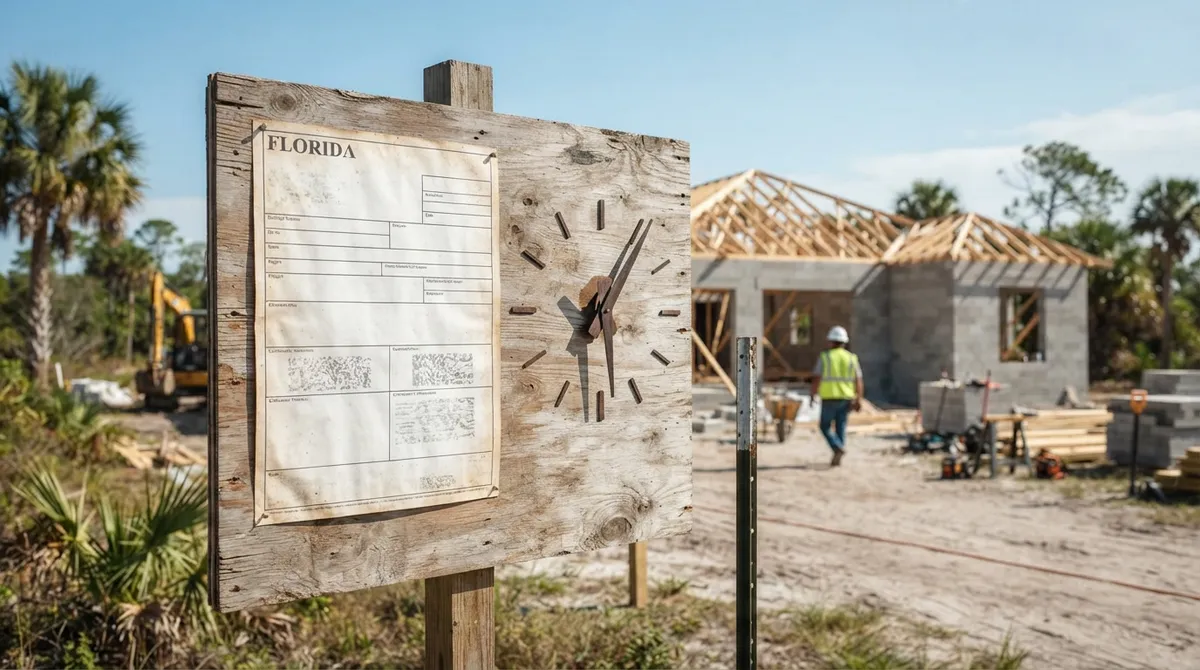
Under Florida Building Code section 105.4.1, a permit generally becomes invalid if the authorized work doesn't start within 180 days of issuance. That same 180-day rule applies if work is suspended or abandoned after it begins. Think of it like a gym membership that quietly expires if you never show up — except this one can affect your ability to sell a house or finish a build.
The good news? An approved inspection within that 180-day window usually counts as proof the project is still active. So if you've had even one passed inspection recently, you may be in better shape than you think.
2. An Expired Permit Doesn't Mean Demolition
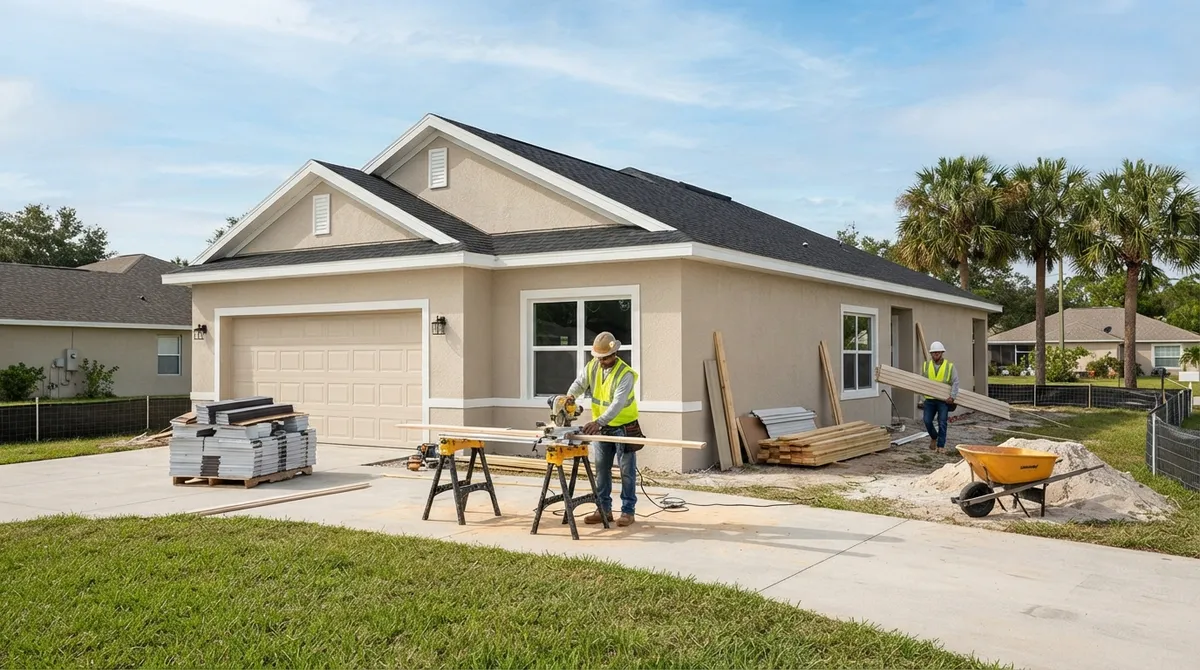
This is the myth that keeps homeowners up at night, and we're happy to bust it. An expired permit does not automatically mean your addition, pool, or roof has to come down. It also doesn't always mean you need to start from scratch with a brand-new application.
What actually happens depends entirely on your local building department. Some will let you extend or reactivate the existing permit. Others will ask for a new application with updated plans. A few, under the right conditions, will close the file entirely without requiring anything new from you.
3. Local Rules Vary More Than You'd Expect
Florida has 67 counties and hundreds of municipalities, and no two handle expired permits exactly the same way. Here's a quick side-by-side look at how a few jurisdictions have described their process:
| Jurisdiction | Extension Option | Reactivation Window | Typical Fee |
|---|---|---|---|
| Polk County | 90-day extension if requested before expiration | Reopening possible for permits expired up to 180 days | $15 extension / $50 administrative review |
| Leon County | Reactivation form available | 180 days added upon approval | $90 request fee |
| Collier County | 90-day extension | 180 days tied to passed inspections | Varies by permit type |
These are just examples, not statewide guarantees. If your project falls under Polk County, Hillsborough County, or any of Florida's other jurisdictions, always confirm current fees and deadlines directly with the issuing office before assuming anything.
Why This Matters for General Contractors
If you manage projects across multiple counties, you already know how exhausting it is to keep track of 67 different rulebooks. That's exactly why many general contractors rely on a team like permit facilitation and filing support to track deadlines before they become a problem.
4. Florida Statute 553.79 Offers a Path to Close Old Permits
Here's a fact that surprises a lot of property owners: Florida Statute 553.79 allows a local enforcement agency to close a permit if the work is substantially complete, even without a final inspection, once six years have passed since issuance and no apparent safety hazards exist. This is huge for older properties where a permit was left open for years and nobody quite remembers why.
The local building official has discretion here, and the closeout process still requires documentation showing the work meets the code that was in effect when the permit was originally filed. This is where sealed as-built drawings often make the difference between a quick approval and months of back-and-forth.
5. What Building Officials Look at Before Deciding Your Fate
When you approach a building department about an expired permit, the reviewer is essentially asking a few key questions:
- Has any inspection been approved in the last 180 days?
- How long has the permit actually been expired — weeks, months, or years?
- Is the work substantially complete or barely started?
- Are there any apparent safety hazards visible on-site?
- Do the original plans still meet current code, or has code changed significantly since filing?
The answers to these questions determine whether you're looking at a simple extension, a full reactivation, or a fresh application under today's code requirements.
6. Extension vs. Reactivation vs. New Permit: Know the Difference
These three terms get used interchangeably by frustrated homeowners, but they actually mean very different things to a building department.
- Extension — Requested before the permit expires, this simply adds more time to an already-active permit. Usually the cheapest and fastest option.
- Reactivation — Requested after expiration, this reopens a lapsed permit, sometimes with added conditions or updated fees, and can add anywhere from 90 to 180 days depending on the county.
- New Permit — If too much time has passed, or the project changed significantly, the building official may require an entirely new application, updated plans, and compliance with current code — which can mean revised structural or MEP drawings.
If you're not sure which category your project falls into, our open permit search tool is a good starting point before you call the county.
Solar Companies: This Applies to You Too
Solar installers often deal with expired permits when a project stalls waiting on utility interconnection approval or a roof repair. If your permit lapses mid-installation, the same 180-day rules apply, and a delayed final inspection can hold up your customer's system activation for weeks. Working with a team that handles solar contractor permitting daily can keep these timelines from spiraling.
7. Ignoring an Expired Permit Has Real Consequences
We won't sugarcoat this part. Letting an expired permit sit unresolved can create genuine headaches down the road:
- Delayed or blocked final inspections and Certificate of Occupancy issuance
- Complications at closing if you're selling the property
- Potential property liens — Broward County specifically warns that failure to renew or replace an expired permit may result in a lien against the property
- Referral to code enforcement or a contractor licensing board for permits expired too long, as Polk County has noted
- Financing or insurance complications tied to unresolved permit history
None of these are inevitable, but they're common enough that we see them constantly in our work across Miami-Dade County, Broward County, and beyond.
8. Real Estate Deals Can Hinge on This One Document
If you're a realtor, investor, or buyer, an expired permit discovered during a title search or inspection can absolutely delay or derail a closing. Buyers get nervous, lenders ask questions, and sellers scramble to figure out what "substantially complete" even means for their specific situation.
The smart move is to check permit status early, well before you're staring down a closing date. Our realtor closing support service exists specifically to untangle these situations before they become deal-breakers, and our building department lookup tool helps you confirm exactly which office controls the property in question.
9. Who's Actually Responsible for Fixing It
Here's something every homeowner should hear loud and clear: you, the property owner, remain responsible for permit compliance — even if a contractor originally pulled the permit and has since vanished, retired, or simply stopped answering calls. This surprises a lot of people, but it's the reality in nearly every Florida jurisdiction.
That said, you don't have to navigate this alone. Whether you're dealing with an after-the-fact or expired permit situation, a licensed permitting team can contact the building department on your behalf, request written confirmation of the permit's status, and figure out the fastest legitimate path forward.
10. The Fastest Way Forward Is Usually a Direct Call and a Clear Plan
Before you resume any work on a property with a lapsed permit, contact the issuing building department directly and get written confirmation of where things stand. Trying to guess your way through this — or worse, just continuing construction and hoping nobody notices — almost always makes things more expensive and stressful later.
This is exactly the kind of situation where 1 Contractor Solutions steps in. We handle plan review coordination, prepare updated sealed drawings when current code requires them, and manage the entire reactivation or reapplication process across all 67 Florida counties. Because our engineering and drafting happen in-house, we're able to respond to reviewer comments same-day instead of waiting weeks on an outside consultant.
A Quick Comparison: DIY vs. Professional Help
| Approach | Time Investment | Risk Level | Best For |
|---|---|---|---|
| Handle it yourself | High — multiple calls, form research, follow-ups | Moderate to high — easy to miss local nuances | Simple, recently expired permits with no code changes |
| Hire a permitting specialist | Low — mostly document gathering on your end | Low — professionals track deadlines and requirements | Older permits, code updates, closings, or multi-county projects |
For architects, designers, and specialty trades who'd rather not build an in-house permitting department, outsourcing this work through our drafting-only or full plans and engineering services can save weeks of back-and-forth with local reviewers.
Local Examples Worth Knowing
If you're working in Pinellas County, Manatee County, Lee County, or Collier County, each office publishes its own bulletins and forms describing extension and reactivation timelines. Collier County, for instance, has published guidance (see Collier County's Building Permit Resolution Services page) describing 90-day extensions and inspection-tied reactivation windows. Always verify current fees and eligibility with the specific office handling your file, since policies can and do change.
For a deeper look at Florida's statutory framework, the full text of Florida Statute 553.79 is publicly available and worth a read if you enjoy legal fine print — or if you just want peace of mind that you're not missing anything important.
Wrapping It Up: You've Got Options, Not a Dead End
Here's the encouraging truth: an expired building permit in Florida almost never means starting over, tearing something down, or panicking. It means making a phone call, gathering the right documents, and following whichever path your local building department lays out — extension, reactivation, closeout, or a fresh application with updated plans.
At 1 Contractor Solutions, we've spent more than 15 years helping general contractors, solar companies, realtors, and homeowners across all 67 Florida counties untangle exactly this kind of situation. Our in-house drafting and engineering team means we're not waiting on outside consultants when a reviewer has a comment — we fix it and keep moving. You can visit us on Google — 1 Contractor Solutions to see how we've helped other Florida property owners just like you, and feel free to follow us on LinkedIn or follow us on Facebook for more permitting tips and updates.
If your permit has expired, is about to expire, or you're just not sure where things stand, don't wait for a code enforcement letter to force the issue. Get a free quote today, and let's get your project back on solid, approved ground.
FAQs
How long can a building permit go without an inspection in Florida?
Generally, Florida Building Code section 105.4.1 uses a 180-day window — if there's no approved inspection within that time, your permit can be considered suspended or abandoned. The good news is that even one passed inspection typically resets that clock, so staying on top of inspections is your best friend here.
Can I renew or reactivate an expired building permit in Florida?
In many cases, yes! Local building departments often allow extensions or reactivations, though the exact process, deadlines, and fees vary by county. It's always worth calling your local office first, since some jurisdictions add 90 to 180 days back onto a reactivated permit.
Do I need a new permit if my Florida building permit expires?
Not necessarily! An expired permit doesn't automatically require starting from scratch. Depending on how long it's been expired and how complete the work is, your building official might approve an extension, a reactivation, or even close the file entirely under Florida Statute 553.79.
What happens if I sell a house with an expired building permit in Florida?
This can definitely slow down a closing, since buyers and lenders often want confirmation the permit is resolved before finalizing the sale. The best approach is to check the permit status early and get it addressed before it becomes a last-minute scramble at the closing table.
Who is responsible for renewing a building permit — the homeowner or contractor?
Even if your contractor originally pulled the permit, you as the property owner remain responsible for making sure it stays valid or gets properly closed. It's a bit surprising to a lot of folks, but it's the reality across Florida, so don't hesitate to get professional help if your contractor is unavailable.
We do this work every day across all 67 Florida counties. Call (866) 314-6931 and we will tell you what your situation actually requires — including when you do not need us.
Related services
Permit Facilitation & Filing
You have a crew scheduled, a client asking for dates, and a permit sitting somewhere in a queue you cannot see. We file it, w…
See the servicePlan Review Coordination
A permit in plan review is not one queue. On a commercial project it can be six queues, each with its own reviewer, its own c…
See the serviceReady to get your permit moving?
One call tells you which jurisdiction controls your project, what it will take, and what it will cost. Most of the time we can scope it on the phone.