
Blog
Why Does High Volume Roofing Permitting Florida Slow You Down?
High volume roofing permitting in Florida means juggling dozens of jurisdictions, product approvals, and rules. Here's how to keep permits moving.
Key Takeaways
-
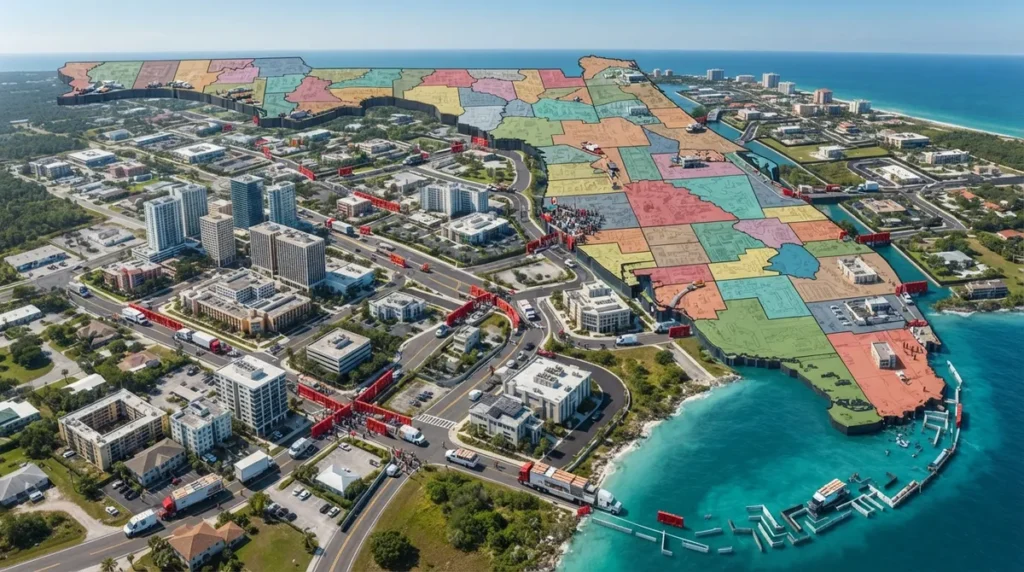
Florida has no statewide roofing permit office, requiring contractors to navigate 67 different county and municipal jurisdictions with varying requirements, documentation standards, and portal systems.
-
The 25-percent rule under Florida Statute 553.844 can trigger broader code compliance obligations when roof repairs exceed a threshold within 12 months; every job requires a history check to avoid stop-work orders.
-
Most roofing jobs require permits despite the new $7,500 exemption starting July 1, 2026, because the exemption excludes structural, electrical, and flood-hazard area work that typically applies to roof installations.
-
High-volume roofing contractors must implement a standardized 8-step process: verify jurisdiction, confirm licensing, pull product approvals, prepare applications, submit correctly, resolve corrections quickly, schedule inspections properly, and close permits.
-
Outsourced permitting partners with in-house engineering reduce delays significantly by managing jurisdiction verification, correction tracking, and inspection coordination across multiple counties without adding payroll costs.
-
Storm season dramatically shifts permit volume and requires distinguishing emergency stabilization from permanent repairs with detailed documentation of existing conditions and insurance-driven changes before filing.
If you have ever tried to get fifty roof permits moving at once across five different Florida counties, you already know the headache. One county wants a wind-uplift calculation attached, another wants a separate electrical sub-permit for the roof-mounted equipment, and a third one bounces your application because the property sits half a foot inside a flood zone you did not even know existed. Multiply that by hundreds of jobs a month, and you have a full-time logistics problem layered on top of your actual roofing business.
That is exactly the world high volume roofing permitting florida lives in. Because Florida does not have one statewide roofing permit office, every single job has to be matched to the correct city or county building department before anything gets filed. For roofing contractors, solar companies adding roof-mounted arrays, general contractors bundling reroofs into larger renovations, and even homeowners trying to make sense of a storm-damage repair, this patchwork system is the single biggest source of delay. Let's walk through what actually drives permit volume, what the current rules require, and how a dedicated permitting partner keeps hundreds of files moving without losing a single one in the shuffle.
What Makes Roofing Permitting in Florida So Complicated
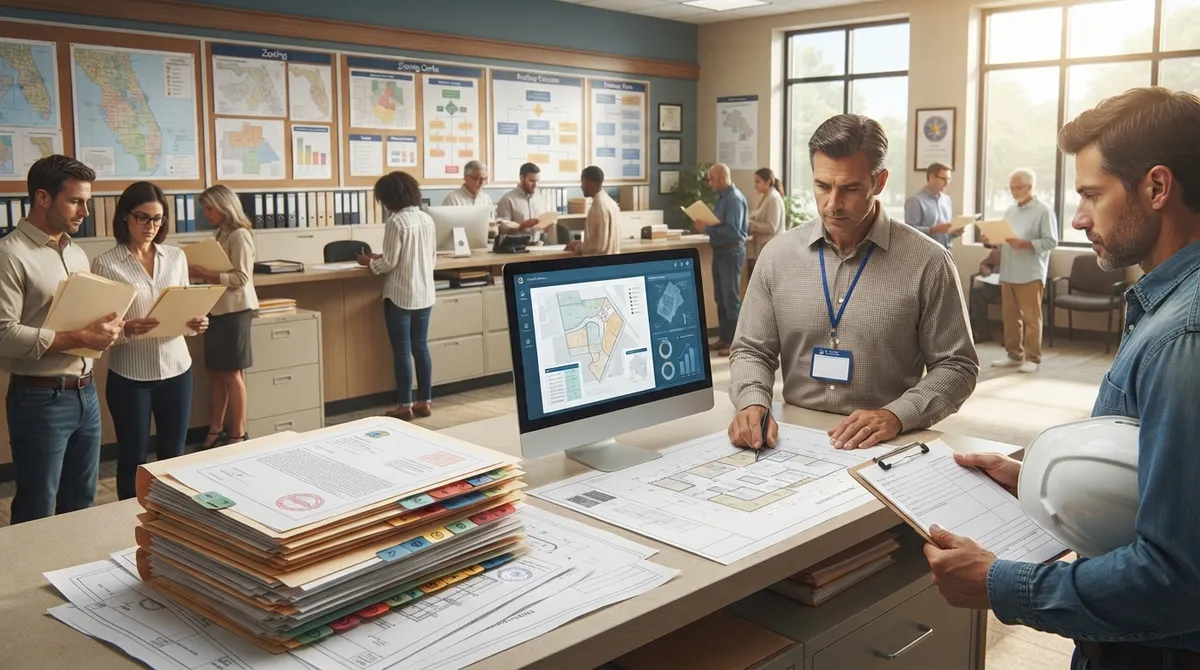
Florida's roofing rules are built on the Florida Building Code, but every county and municipality layers its own amendments, portal quirks, and inspection sequencing on top of that foundation. A roof that sails through approval in Pasco County might get flagged for additional documentation in Pinellas County, even though the scope of work is nearly identical. That inconsistency is normal, and any team handling volume needs a repeatable way to check the building department lookup for every address before submitting anything.
Here is what typically drives the complexity for high-volume filers:
- Confirming the correct authority having jurisdiction, especially near city and county line properties
- Verifying the contractor's license and municipal registration status in each jurisdiction
- Matching the roofing material and assembly to a valid Florida Product Approval or accepted local approval
- Determining whether the scope triggers the 25-percent rule for broader code compliance
- Checking flood zone status, since flood-hazard areas change how repairs and exemptions are treated
- Tracking inspection requirements, which vary between dry-in, in-progress, and final inspections
Do You Actually Need a Permit for This Roof?
In almost every case, yes. A full roof replacement or re-roof generally requires a building permit in Florida, and that requirement extends to substantial repairs, roof recoveries, structural deck work, skylights, and any roof-mounted equipment tied into electrical or mechanical systems. There is no statewide exception that lets a contractor skip the permit simply because the job seems small or routine.
Beginning July 1, 2026, Florida Statute 553.79(1)(g) requires qualifying local governments to exempt certain work valued at less than $7,500 on a single-family dwelling. That sounds like a broad relief valve, but it is narrower than it appears. The exemption excludes work involving structural, electrical, plumbing, mechanical, or gas components, does not apply in flood-hazard areas under the cited guidance, and often requires documentation or a written exemption process before it applies. Projects also cannot be split into smaller pieces just to dodge the threshold. Given how many roofing jobs touch flashing, decking, or electrical tie-ins for solar equipment, most reroofs will still need a full permit regardless of the new statute.
The 25 Percent Rule and Why It Still Trips Up High-Volume Filers
The 25-percent rule is one of the most misunderstood benchmarks in Florida roofing compliance. Under Florida Statute 553.844 and related Florida Building Code guidance, work performed on a roof within a 12-month period can trigger broader compliance obligations once it crosses a certain percentage of the total roof area. The tricky part is that the precise application depends on the applicable statute, the code edition in effect, the roof's repair history, and how the local building official interprets the rule.
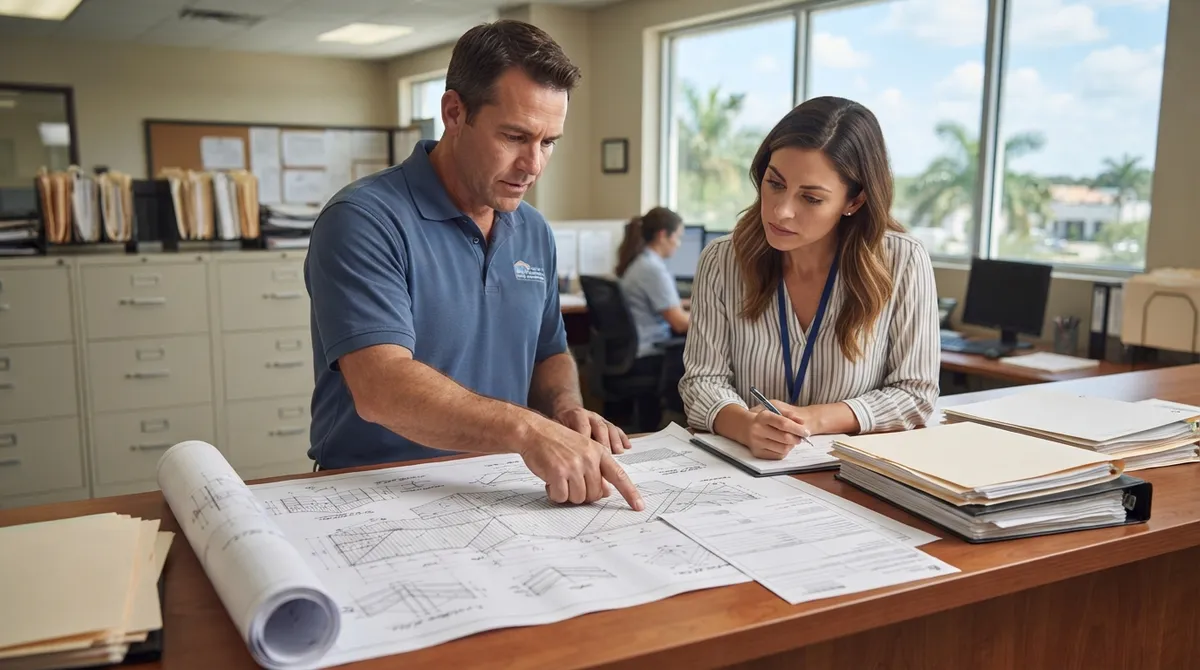
For a contractor filing five permits a week, that means every single job needs a quick history check before submission. Was there a prior repair on this same roof in the last year? Does this new scope push the cumulative work over the threshold? Getting this wrong does not just cause a correction; it can force a stop-work order or an unplanned redesign mid-project, which is exactly the kind of delay that roof permit filing services are built to prevent.
Notice of Commencement and Other Paperwork That Adds Up
Under Florida Statute 713.13, a Notice of Commencement is commonly required once a project's value crosses $2,500. For high-volume roofing operations, that means tracking which jobs need a recorded NOC, making sure it is filed before the first inspection, and keeping copies organized so nothing holds up the final sign-off. It is a small piece of paperwork, but missing it on even a handful of jobs out of a few hundred can create a real bottleneck.
Comparing Permitting Approaches for Roofing Volume
| Approach | Best For | Main Risk |
|---|---|---|
| In-house office manager handling permits part-time | Small crews doing under 10 roofs a month | Jurisdiction mistakes, missed corrections, slow turnaround |
| Dedicated permitting staff hired directly | Mid-size roofing companies | High payroll cost, limited coverage across counties |
| Outsourced permitting partner with in-house engineering | High-volume roofing, solar, and GC operations | Requires clear communication on job scope and timelines |
Building a Repeatable Process for Hundreds of Roofing Permits
Scaling roofing permits across Florida is really a systems problem disguised as a paperwork problem. The companies that handle volume well treat every job the same way, no matter how routine it looks on paper. Here is a simple sequence that keeps a high-volume pipeline moving:
- Verify the property address against jurisdiction boundaries using a reliable open permit search to check for existing open permits before filing something new
- Confirm contractor license standing and municipal registration status for that specific city or county
- Pull the Florida Product Approval documentation matching the exact roofing assembly being installed
- Prepare the application package, including any required roof diagrams, wind-uplift data, or engineering support
- Submit through the correct portal and track the review timeline, following up before deadlines lapse
- Resolve every reviewer comment quickly, since unanswered corrections are the number one cause of expired permits
- Schedule inspections in the right order and keep affidavits or photographs ready for jurisdictions that require them
- Close out the permit so the property record reflects completed work, protecting future sales and refinancing
Skipping any one of these steps on a single job might not matter much. Skipping it across a hundred jobs a month turns into missed inspections, expired permits, and unhappy homeowners wondering why their roof still shows an open permit six months later.
Storm Season Adds Another Layer
Storm-related roofing work needs even more diligence. The permit package often has to distinguish emergency stabilization from permanent repairs, document existing roof conditions before work begins, and reflect any changes made through the insurance claims process. One widely cited figure from a RemodelTrends report syndicated by The Cincinnati Enquirer noted that Hillsborough County issued only 12 roofing permits during the month Hurricane Milton made landfall, describing it as a 59 percent decline in roofing investment activity. That is a localized snapshot rather than a statewide trend, but it illustrates how quickly permit volume can swing after a major storm, and why contractors need a permitting partner who can flex up fast once repair demand returns.
Where High-Volume Roofing Permitting Gets Filed Most Often
Roofing volume tends to cluster around Florida's coastal and storm-exposed counties, along with the fast-growing metro areas where reroofing follows new construction booms by a decade or two. Some of the busiest jurisdictions for roofing permit volume include Hillsborough County, Pinellas County, Manatee County, Lee County, Collier County, Miami-Dade County, and Broward County. Each of these areas has its own portal, its own inspection scheduling quirks, and its own interpretation of wind-load and flood requirements.
| Inspection Type | When It Happens | Common Requirement |
|---|---|---|
| Dry-in or in-progress inspection | After underlayment and before final roofing material | Verify fastening pattern and underlayment compliance |
| Final inspection | After the complete roofing system is installed | Confirm finished assembly matches approved plans |
| Reinspection (if needed) | After a failed inspection is corrected | May require photos, affidavits, or a follow-up visit |
How a Permitting Partner Changes the Math
This is where a dedicated permitting team earns its keep. 1 Contractor Solutions operates as an outsourced permitting department for roofing contractors, solar installers, and general contractors who need hundreds of permits moving at once without adding permit staff to their own payroll. Because plan drafting and engineering happen in-house, corrections get resolved quickly instead of waiting on an outside consultant to return a call. That matters enormously when you are running volume, because every day a permit sits in correction status is a day a crew cannot get on the roof.
The Roof Permit Partnership Program was built specifically for roofing companies that need a repeatable filing process across multiple counties. Rather than training an internal hire on the quirks of forty different portals, roofing companies hand off intake, jurisdiction verification, application prep, correction tracking, and inspection coordination to a team that already knows the differences between, say, how Sarasota County handles roof diagrams versus how a coastal high-velocity hurricane zone jurisdiction reviews wind-uplift documentation.
General contractors bundling roof work into larger renovation projects benefit the same way. Solar companies adding roof-mounted arrays need documentation that satisfies both the roofing permit and the electrical permit simultaneously, and that coordination is much smoother when one team is managing the whole package. Homeowners and real estate professionals dealing with an older reroof that never got closed out can also lean on after-the-fact and expired permit services to clear up open permits before a sale falls through.
If you want to see how local clients have experienced the process, take a look at what people are saying and visit us on Google — 1 Contractor Solutions. You can also follow us on LinkedIn or follow us on Facebook for ongoing updates on Florida code changes and permitting trends.
A Quick Checklist Before You File Your Next Batch of Roofing Permits
Before hitting submit on a new round of roofing permits, run through this short list:
- Has the jurisdiction been confirmed for every property, not assumed based on mailing address?
- Is the contractor properly registered with that specific municipality?
- Does the roofing assembly have valid Florida Product Approval documentation attached?
- Has the 25-percent rule been checked against any prior roof work in the last 12 months?
- Is a Notice of Commencement required and, if so, has it been recorded?
- Are inspection requirements and sequencing understood for that jurisdiction?
Running through this list on every job sounds tedious, but it is far less painful than discovering the problem after a crew is already on the roof.
Bringing It All Together
High volume roofing permitting in Florida is not really about paperwork volume. It is about consistency across dozens of different rule sets, all while storms, seasonal demand, and code updates like the 9th Edition of the Florida Building Code keep shifting the ground under your feet. Contractors who build a repeatable process, verify jurisdiction on every address, and resolve corrections quickly are the ones who keep crews working instead of waiting.
If your roofing permits keep piling up across multiple counties and you are ready for a team that already knows the rules in all 67 Florida counties, get a free quote and let's talk about how to keep your permits moving as fast as your crews can work.
FAQs
Do I need a permit to replace a roof in Florida?
Yes, in almost every case a full roof replacement or re-roof requires a building permit in Florida, and the same goes for substantial repairs, roof recoveries, and structural deck work. Even the newer $7,500 exemption that starts July 1, 2026 has plenty of exclusions, so it's smart to double-check your specific job before assuming you're in the clear.
What is the 25 percent roofing rule in Florida?
It's a benchmark under Florida Statute 553.844 that can trigger broader code compliance once repair work crosses a certain percentage of the total roof area within a 12-month period. The exact impact depends on your code edition, roof history, and how your local building department interprets it, so it's worth checking before you file.
Can a Florida permitting service handle hundreds of roofing permits for one contractor?
Absolutely, and honestly that's the whole point of working with a dedicated permitting partner. A good team standardizes intake, verifies jurisdiction for every address, and tracks corrections across dozens of counties so your crews never sit idle waiting on paperwork.
What inspections are required for a roof replacement in Florida?
Most jurisdictions require at least a dry-in or in-progress inspection after underlayment goes down, plus a final inspection once the roofing system is complete. Exact names, sequencing, and any required photos or affidavits vary by city or county, so it always pays to confirm ahead of time.
How can roofing companies reduce permit delays across multiple Florida jurisdictions?
The biggest win is building a repeatable process: verify jurisdiction first, check product approvals early, and resolve reviewer corrections fast instead of letting them sit. Partnering with a permitting team that already knows the local quirks in places like Sarasota, Hillsborough, and Miami-Dade counties makes a world of difference too.
We do this work every day across all 67 Florida counties. Call (866) 314-6931 and we will tell you what your situation actually requires — including when you do not need us.
Related services
Permit Facilitation & Filing
You have a crew scheduled, a client asking for dates, and a permit sitting somewhere in a queue you cannot see. We file it, w…
See the servicePlan Review Coordination
A permit in plan review is not one queue. On a commercial project it can be six queues, each with its own reviewer, its own c…
See the serviceReady to get your permit moving?
One call tells you which jurisdiction controls your project, what it will take, and what it will cost. Most of the time we can scope it on the phone.