
Blog
Who Should I Hire for an After-the-Fact Wall in FL?
Confused about who to hire for an unpermitted retaining wall in Florida? Learn which pros handle engineering, construction, and permitting.
Key Takeaways
-
Start by contacting your local building department (city or county) to learn their specific requirements for after-the-fact retaining walls, as rules vary significantly by jurisdiction and can differ block by block.
-
Hire a Florida-licensed professional engineer (civil or structural) as your most critical team member to evaluate the existing wall and determine if it meets code or what corrective measures are needed.
-
Retaining walls over 48 inches tall without lateral support or over 24 inches with added lateral loads typically require accepted engineering design per Florida Building Code R404.4, even if you assume your wall is exempt.
-
Assemble key documents including site plans, surveys, photographs, construction details, and engineering-sealed plans before submitting your after-the-fact application to avoid delays and rejections.
-
Consider hiring a permit expediter to coordinate between your engineer, contractor, and building department, as they can respond to reviewer comments quickly and minimize delays in the approval process.
-
If your wall is already backfilled and landscaped, inspectors may require exploratory excavation to verify the footing and reinforcement, so budget for potential corrective repairs before final approval.
So your retaining wall went up before the paperwork did. Maybe you inherited it when you bought the house, maybe a landscaper built it "real quick" a few years back, or maybe life just got busy and the permit slipped through the cracks. Whatever the story, you're not alone, and you're definitely not in trouble that can't be sorted out. The question we hear most often at 1 Contractor Solutions is simple: who should I hire for retaining wall after the fact Florida projects, and where do I even start? Let's walk through it together, friend to friend.
The good news is that Florida has a well-worn path for legalizing existing work, including retaining walls. The trick is knowing which professional handles which piece of the puzzle. Hire the wrong person first, or skip a step, and you can waste weeks chasing your tail. Hire the right team in the right order, and you can often get this resolved faster than you'd expect.
Start With Your Local Building Department, Not a Contractor
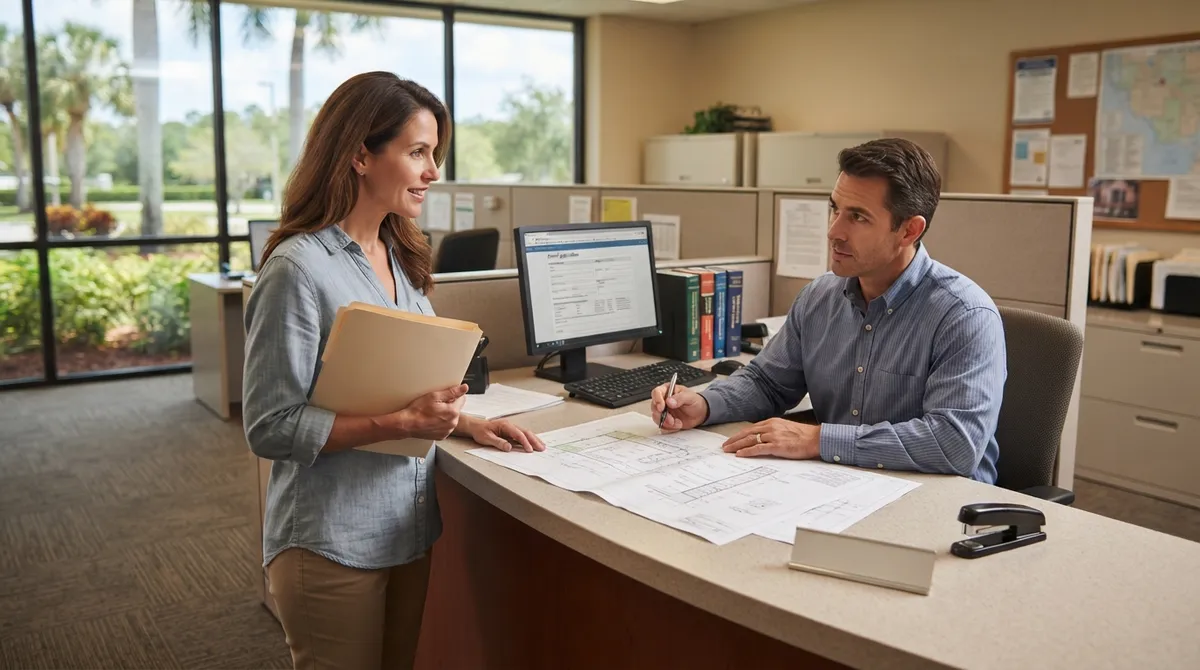
Before you call anyone else, your first move should be figuring out exactly which building department has jurisdiction over your property. That might be your city, or it might be the county, and the rules genuinely differ block by block in some areas. Our building department lookup tool can point you toward the right office so you're not guessing.
Once you know who's in charge, ask them directly what they require for an after-the-fact retaining wall application. Some jurisdictions have a specific checklist. Others will want to see photos, a survey, and construction details before they'll even discuss engineering. Getting this answer up front saves you from hiring the wrong professional first.
Why This Step Gets Skipped (and Why It Shouldn't)
Homeowners and even some general contractors assume every county treats retaining walls the same way. They don't. A wall that's exempt in one municipality might require full engineering review two towns over. If you'd like a broader sense of how this plays out statewide, our guide on how to legalize an after-the-fact retaining wall in Florida breaks down the process in more detail.
The Professional Who Matters Most: A Florida-Licensed Engineer
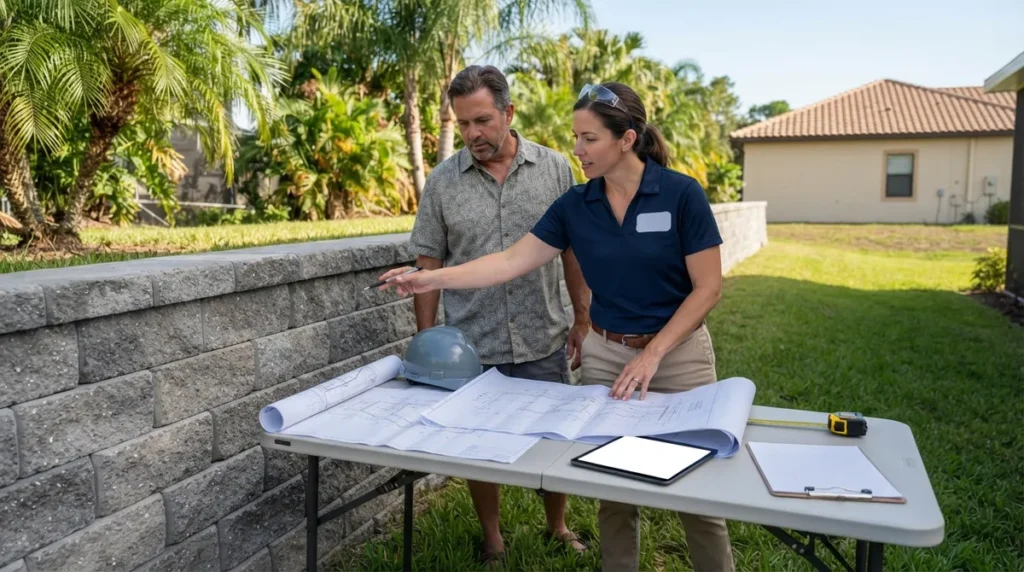
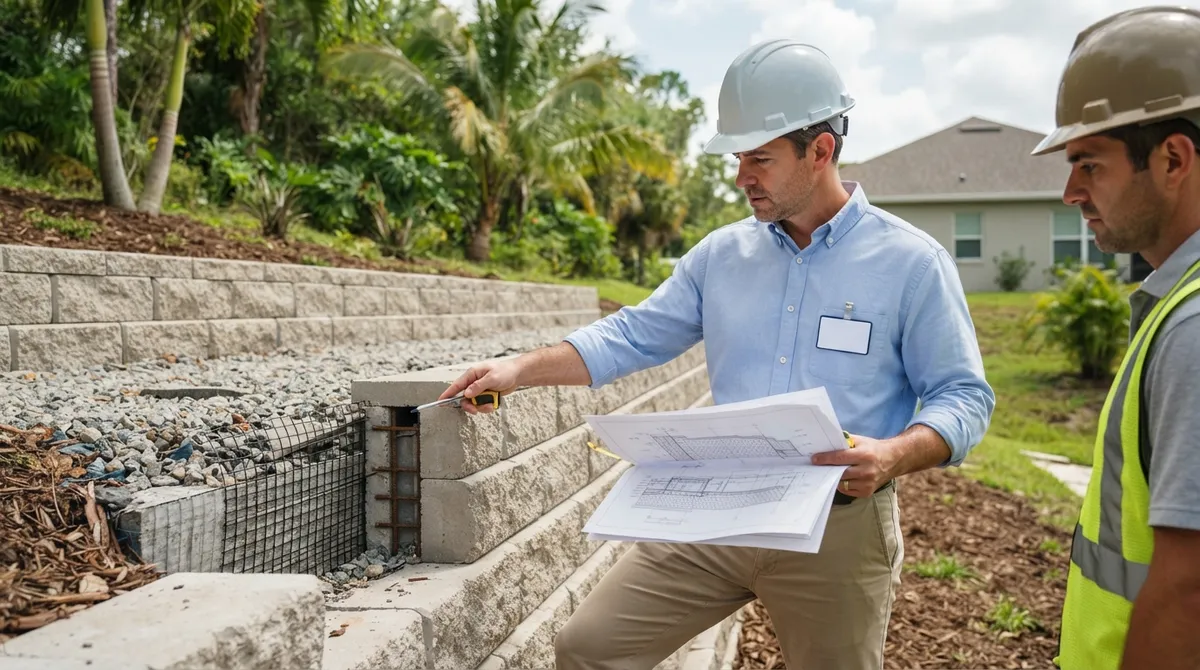
Here's the honest answer to who should i hire for retaining wall after the fact florida situations: in most cases, your most important hire is a Florida-licensed professional engineer, ideally one with civil or structural experience specific to retaining walls. This person evaluates what's already built and determines whether it meets code, or what needs to change so it does.
An engineer can:
- Assess the existing wall's design, materials, and apparent condition
- Determine whether the wall qualifies for accepted engineering design under the Florida Building Code
- Prepare signed and sealed plans or a written evaluation when the building department requires one
- Identify red flags like inadequate drainage, missing reinforcement, or insufficient footing depth
- Recommend corrective measures if the wall doesn't currently meet safety factors
According to the Florida Building Code, Residential Section R404.4, walls not laterally supported at the top that retain more than 48 inches of unbalanced fill require accepted engineering design. The same applies to walls over 24 inches that resist lateral loads beyond ordinary soil pressure. The code also specifies a 1.5 safety factor against both sliding and overturning. These aren't arbitrary numbers. They exist because a failed retaining wall can mean serious property damage, or worse.
Don't Assume Your Wall Is Exempt
A lot of folks think, "My wall is only three feet tall, so I'm fine." Maybe, maybe not. Height measurement rules, surcharge loads from a nearby driveway or structure, drainage conditions, and local ordinances can all change whether engineering is required. Clermont, Florida, for example, states that landscaping-only walls three feet or less don't require engineering under its specific local criteria, but that's a local example, not a statewide rule. Always confirm with your building department rather than assuming.
| Wall Scenario | Typically Requires Engineering? | Notes |
|---|---|---|
| Wall over 48 inches, no lateral support at top | Yes | Per FBC Residential R404.4 |
| Wall over 24 inches with added lateral load (driveway, structure) | Yes | Surcharge loads matter |
| Landscaping-only wall, 3 feet or less | Sometimes exempt locally | Verify with your specific jurisdiction, example from Clermont guidance |
| Wall near property line or drainage easement | Often yes | Location and setbacks can trigger review regardless of height |
Who Handles the Actual Construction Fixes?
Once the engineer has weighed in, you may need a licensed retaining-wall or general contractor to perform any corrective work the review uncovers. This could be anything from adding drainage improvements to partial reconstruction, depending on what the inspector finds.
Some property owners consider going the owner-builder route. That's sometimes an option in Florida, but it's worth remembering that owner-builder status doesn't waive engineering requirements, inspections, or code compliance. You're still responsible for getting it right. If you're weighing that path, our page on owner-builder permits lays out what's actually involved.
Where a Permitting Service Fits Into the Picture
This is where a company like 1 Contractor Solutions earns its keep. A permit expediter or Florida permitting service can't replace the engineer's technical judgment, and it can't override the building official's final say. But it can coordinate everyone involved, so you're not the one stuck playing phone tag between the engineer, the contractor, and the county.
Here's what that coordination typically looks like:
- Confirming exactly which documents your jurisdiction requires for the after-the-fact application
- Assembling the site plan, survey, dimensions, photographs, and construction details
- Coordinating with your engineer to get sealed drawings or an evaluation letter attached to the file
- Submitting the application and tracking its progress through plan review
- Responding to reviewer comments quickly, rather than letting the file sit for weeks
- Scheduling any required inspections once the permit is issued
Because our drafting and engineering happen in house, and our own engineer signs and seals the work, we can move faster when a reviewer flags something. You're not waiting on an outside consultant to return a call. If you'd rather have someone else carry this load while you focus on your project or your family, you can always get a free quote and see what the process looks like for your specific wall.
What Happens When the Wall Is Already Covered or Finished
Here's a wrinkle that catches people off guard. If your retaining wall is already built, backfilled, and landscaped, the inspector may not be able to verify the footing, reinforcement, or drainage just by looking at it. That's simply the nature of concealed work.
When this happens, the jurisdiction might require:
- Exploratory exposure of the footing so it can be measured and inspected
- Additional documentation, like photos taken during original construction if you have them
- Corrective repairs before final approval is granted
- In rare cases, partial or complete reconstruction if the wall can't be verified any other way
This is exactly why it helps to have both a qualified engineer and an experienced permitting team on your side from the start. They know how to present a case to the building official and, when exploratory work is unavoidable, how to minimize the disruption. For a deeper look at what unpermitted structures generally face, our article on how to legalize unpermitted work in Florida covers the bigger picture beyond just retaining walls.
A Quick Reference: Who Does What
| Professional | Primary Role | Can They Guarantee Approval? |
|---|---|---|
| Florida-licensed PE (civil/structural) | Evaluates wall, prepares sealed plans if required | No, but their judgment carries real weight with reviewers |
| Licensed contractor | Performs corrective construction, pulls permit | No |
| Permit expediter/permitting service | Coordinates documents, filing, tracking, comment responses | No, but keeps the process moving efficiently |
| Building official (AHJ) | Reviews and approves or denies the application | Final decision-maker |
Real Estate Angle: Why This Matters at Closing
If you're a realtor, investor, or buyer, an unpermitted retaining wall can absolutely stall a closing. Title companies and lenders don't love open questions about structural elements, and appraisers may flag it too. Our resources on what to do when an open permit is found at closing and realtor closing support are worth a look if this is affecting a deal you're trying to close in Tampa, Sarasota, or anywhere else across the state.
Documents You'll Likely Need
While every jurisdiction has its own checklist, most after-the-fact retaining wall applications ask for some combination of the following:
- A completed permit application
- A site plan or survey showing the wall's location and setbacks
- Dimensions and current photographs of the wall
- Construction details, including materials and drainage provisions
- Engineering documents, when the wall's height or loading requires accepted engineering design
Some jurisdictions also require a Notice of Commencement for work valued over a certain threshold, similar to Clermont's stated $5,000 mark. Requirements like this vary, so always confirm current thresholds with your local office before you file. If you're not sure who governs your address, our open permit search tool can help you check what's already on file.
Bringing It All Together
So, who should i hire for retaining wall after the fact florida projects really come down to? Start with the building department to learn the rules that apply to your address. Bring in a licensed Florida engineer to evaluate the wall and prepare sealed documents if needed. Line up a licensed contractor for any corrective work. And consider a permitting service to keep the whole thing organized and moving, especially if you're juggling a job, a sale, or a dozen other priorities.
We've helped homeowners, general contractors, and real estate professionals across Manatee County, Hillsborough County, and Pinellas County work through exactly this kind of situation. Whether your property sits in Bradenton, Tampa, St. Petersburg, or somewhere quieter along the coast, the same core team and process applies. You can browse our full list of permitting and engineering services to see everything we handle beyond retaining walls, or check out the Florida counties we serve to confirm we're active in your area.
Curious what past clients have experienced working with us? You can visit our 1 Contractor Solutions location on Google to read reviews, or connect with us on social media by following our updates through follow us on LinkedIn and follow us on Facebook. We also recommend reviewing guidance from the Florida Building Code Residential foundations chapter if you want to read the underlying code language yourself.
Ready to Get This Sorted?
An unpermitted retaining wall doesn't have to feel like a looming cloud over your property. With the right engineer, the right contractor, and a permitting team that knows Florida's 67 counties inside and out, this is a solvable problem, not a permanent headache. We'd genuinely love to help you get it resolved. Reach out today to get a free quote and let's talk through your specific wall, your specific county, and the fastest realistic path to a clean, approved permit.
FAQs
Who should I hire to legalize an unpermitted retaining wall in Florida?
Start with your local building department to learn their exact requirements, then bring in a Florida-licensed engineer to evaluate the wall and prepare sealed documents if needed. A permitting service can coordinate the whole application while a licensed contractor handles any corrective construction work.
Do I need a Florida-licensed engineer for an after-the-fact retaining wall permit?
In many cases, yes, especially if the wall retains more than 48 inches of unbalanced fill or resists lateral loads beyond 24 inches, per Florida Building Code Residential Section R404.4. Even shorter walls may need engineering depending on surcharge loads, drainage, and local rules, so it's best to confirm with your building department.
Can a permit expediter get an after-the-fact retaining wall permit in Florida approved on their own?
A permit expediter can coordinate documents, file the application, and track progress, but they can't replace an engineer's technical evaluation or guarantee the building official's approval. Think of them as the friendly project manager keeping everyone on the same page.
Does a retaining wall under four feet need a permit in Florida?
Not necessarily automatically exempt, height alone doesn't decide it. Factors like surcharge loads, drainage, wall location, and your specific jurisdiction's rules all play a part, so it's worth checking with your local building department before assuming you're in the clear.
What happens if an unpermitted retaining wall fails inspection in Florida?
If an inspector can't verify hidden elements like the footing or reinforcement, the jurisdiction may require exploratory exposure, additional documentation, corrective repairs, or in some cases partial reconstruction. It sounds intimidating, but with the right engineer and permitting team, most situations are absolutely workable.
We do this work every day across all 67 Florida counties. Call (866) 314-6931 and we will tell you what your situation actually requires — including when you do not need us.
Related services
Permit Facilitation & Filing
You have a crew scheduled, a client asking for dates, and a permit sitting somewhere in a queue you cannot see. We file it, w…
See the servicePlan Review Coordination
A permit in plan review is not one queue. On a commercial project it can be six queues, each with its own reviewer, its own c…
See the serviceReady to get your permit moving?
One call tells you which jurisdiction controls your project, what it will take, and what it will cost. Most of the time we can scope it on the phone.