
Blog
What Should You Do When a Florida Inspection Finds Unpermitted Work?
Inspection flagged possible unpermitted work in Florida? Learn how to verify permits, legalize the work, and keep your sale or project moving.
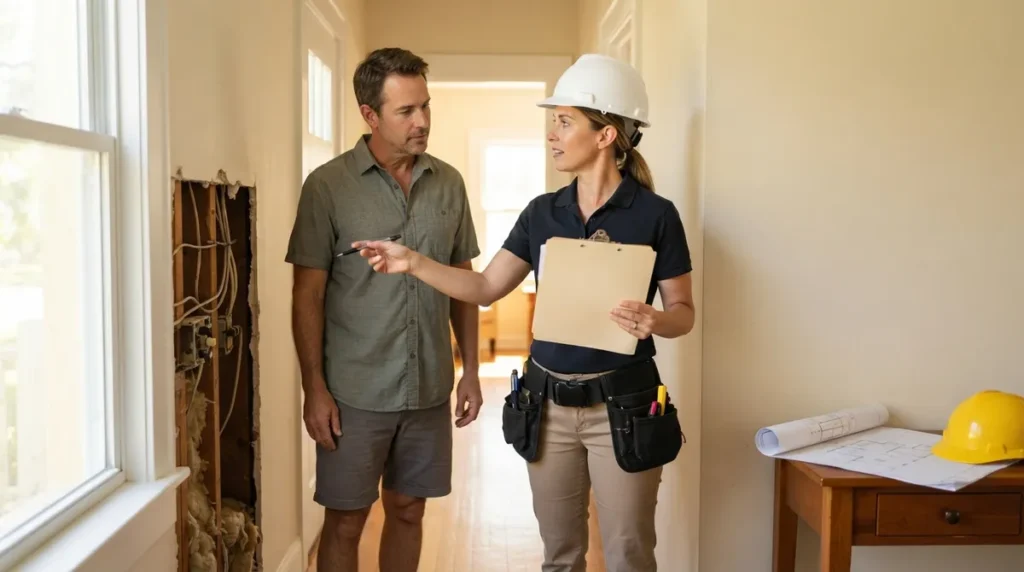
Key Takeaways
-
A home inspector's 'possible unpermitted work' note is an observation, not a legal finding; only the local building department can confirm permit history and determine code compliance.
-
Start by pulling permit records for the address and confirming which city or county jurisdiction controls the property, since permit rules and fees vary locally across Florida.
-
Call the building department before opening any walls or demolishing finished surfaces, and ask exactly what documentation and inspections they will require for the specific work.
-
Typical resolution involves documenting the work, preparing as-built drawings and sealed engineering, applying for an after-the-fact permit, exposing concealed work if required, correcting code gaps, and obtaining final approval.
-
Reinspection fees can be costly: under Florida Statutes §553.80, local agencies may charge four times the initial inspection fee for repeat inspections of the same continuously noted violation, so finish corrections first.
-
For buyers, sellers, and agents, request permit records early, involve your Realtor and attorney on disclosure and negotiation options, and address the issue before closing to avoid delays.
You finally found the house. The kitchen sparkles, the lanai looks like a postcard, and the offer is in. Then the inspection report lands in your inbox with a note that stops your stomach for a second: possible unpermitted work. Take a breath. If you are looking for home inspection unpermitted work resolution in Florida, you are in very good company, and this is a problem that has a path forward.
Whether you are a buyer, a seller, a Realtor trying to save a closing, a contractor who inherited a mess, or a homeowner who just discovered a prior owner's DIY project, the steps are surprisingly similar. The trick is knowing the order to tackle them in, and knowing who actually decides what happens next (hint: it is not the inspector).
In this guide, we will walk through what a flag in an inspection report really means, how to verify permit history, what a typical resolution looks like, and how to keep a sale or project moving. We will keep it friendly and practical, because nobody needs more stress.
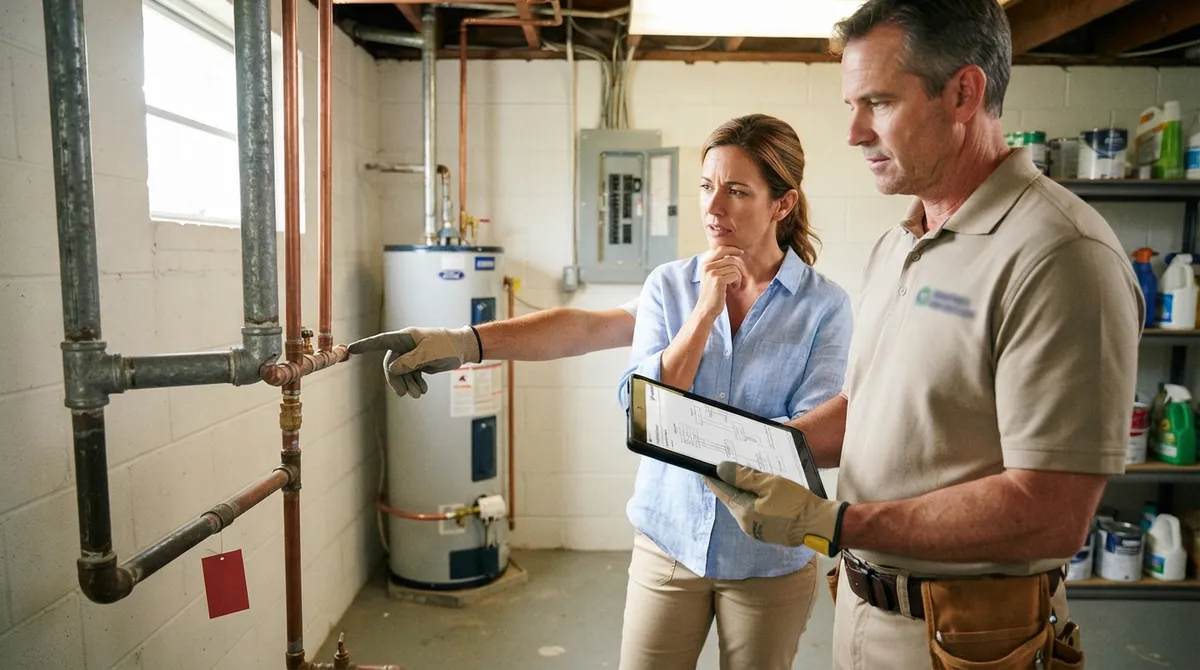
What Does 'Possible Unpermitted Work' Actually Mean in an Inspection Report?
Here is the most important thing to understand right away: a home inspector observes and reports. An inspector might notice a patio enclosure with no visible permit sticker, a panel that looks upgraded, or a bathroom that appears newer than the rest of the house. That is an observation, not a legal finding.
A home inspection report does not establish whether a permit was legally required or whether the work meets code. Only the local building department can confirm permit history, and only the building official can make a determination about compliance. So when the report says "suspected unpermitted work," read it as "worth checking," not "guilty as charged."
Under the statewide framework in Florida Statutes §553.79, work that requires a building permit generally has to be permitted through the appropriate local enforcing agency. But each city or county administers its own permits and inspections, which means procedures and fees can look quite different from one jurisdiction to the next.
Three Things People Often Mix Up
- The inspector's observation: what the inspector saw and wrote down.
- Official permit records: what the building department has on file for the address.
- A building official's determination: whether the work needed a permit and whether it complies.
Keeping these three separate will save you a lot of confusion, especially in the middle of a real estate transaction.
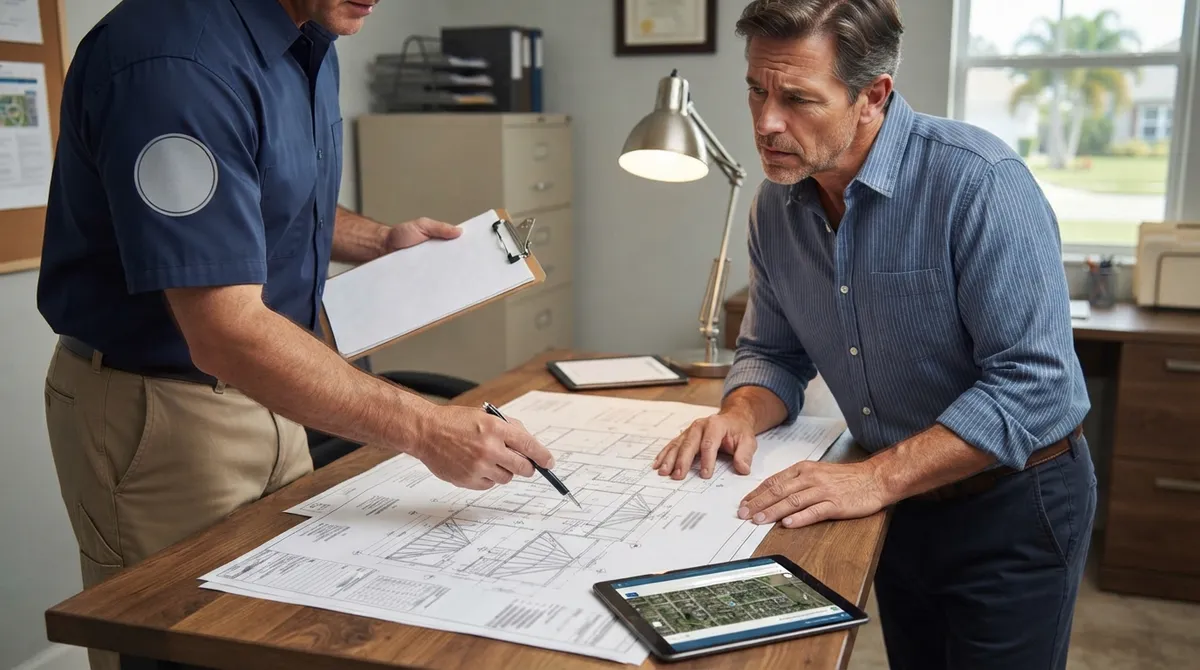
How Do You Find Out Whether Work Was Permitted in Florida?
Start with detective work, friendly detective work. You are simply trying to answer two questions: what was done, and when?
- Identify the work. Note exactly what the inspector flagged: an addition, a garage conversion, a re-roof, a pool cage, new electrical, plumbing changes, and so on.
- Estimate the timeline. Ask the seller, review old listings, check aerial imagery, and look at appraisal or tax records for clues about when the change appeared.
- Confirm the correct jurisdiction. Properties near city lines can surprise you. Our building department lookup helps you figure out which office actually controls the address.
- Check the permit history. Search the local records, and use our open permit search tool to spot open or expired permits tied to the property.
- Ask the building department directly. Describe the work and ask what documentation and corrective steps they would require.
That last step is gold. Building departments can tell you what they expect for your specific situation before you spend money on anything.
Common Outcomes of a Records Check
| What the Records Show | What It Usually Means | Typical Next Step |
|---|---|---|
| No permit on file for the flagged work | Work may have been done without a required permit | Ask the building department about an after-the-fact permit path |
| Permit opened but never finaled | Work started but inspections were never completed | Work toward closing the open permit |
| Permit expired | Permit lapsed before final approval | Learn the reinstatement or new-permit requirements |
| Permit closed and finaled | Work was inspected and approved | Request copies for the transaction file |
If you find an open or expired permit, you are often in a better spot than you think. Our guide on how to close an expired permit in Florida walks through that scenario in detail.
What Does a Typical Resolution Look Like?
Every jurisdiction does things a little differently, so treat the following as a general roadmap rather than a promise. In most cases, resolution follows a rhythm like this:
- Identify and document the work with photos, measurements, and a description of what exists today.
- Talk to the building department about what they will accept and what they will require.
- Prepare plans and engineering showing the work as built, often with sealed drawings.
- Apply for an after-the-fact permit (sometimes called a retroactive permit) through the local agency.
- Expose concealed work if required so inspectors can verify framing, wiring, plumbing, or tie-downs.
- Make corrections to meet the applicable code.
- Pass inspections and obtain final approval, and a Certificate of Completion or Occupancy where applicable.
If that feels like a lot, it is because these cases genuinely involve moving parts. The good news is that they are solvable, and professionals handle them every week. You can dig deeper in our article on how to legalize unpermitted work in Florida.
Why Plans and Engineering Matter So Much
When work already exists, the building department needs proof that it is safe and code-compliant. That usually means drawings of what was actually built, plus engineering for structural, electrical, or mechanical elements. Our as-built drawings and engineer letters services exist for exactly this reason, and our in-house engineer signs and seals the work so you are not waiting on an outside consultant.
Will the Building Department Make Me Open Up Walls?
This is the question that keeps people up at night, and the honest answer is: it depends. Do not assume a permit can simply be issued retroactively, and do not assume the inspection will be a quick visual walk-through.
Officials may require concealed work to be opened or removed so it can be inspected. Think wall cavities with wiring, plumbing behind drywall, or framing hidden under finishes. In other cases, an engineer's letter, photographs taken during construction, or targeted inspection openings may satisfy the reviewer.
Our friendly advice: before you disturb any finished surface, ask the local building official what they require. Opening a wall the wrong way can create extra cost, and sometimes a small access hole is all that is needed.
Factors That Influence How Much Gets Exposed
- The type of work (structural and electrical often get more scrutiny)
- How much of it is concealed by finishes
- Whether original photos or documentation exist
- The jurisdiction's policy and the individual reviewer's judgment
- The engineer's findings on whether the work can be verified without opening it
What Happens If the Work Does Not Meet Code?
Sometimes the work was done well, and the paperwork is simply missing. Other times, corrections are needed. If something falls short of the applicable code, the building department can require upgrades before issuing final approval. That might mean adding structural connectors, replacing improper wiring, adjusting egress, or correcting how something was framed.
It also helps to know that Florida law provides for local enforcement of building-code requirements. Unpermitted work can lead to stop-work orders, notices of violation, permit and inspection fees, penalties under local rules, and required remediation. The consequences depend on the facts and local ordinances, so avoid trusting any statewide penalty number you read online.
For a local example, one Florida city's building division states that work found underway without a required permit may be stopped and describes a penalty of twice the permit fee. That is one jurisdiction's rule, not a statewide formula, so always confirm current charges with the office that serves your property.
Also worth knowing: under Florida Statutes §553.80, a local agency may, in specified circumstances, charge a reinspection fee of four times the initial inspection fee for subsequent inspections of the same continuously noted code violation. Translation: showing up to reinspection unprepared can get pricey, so make sure corrections are truly finished first. If you already received a notice, our code compliance violations page explains how we help.
How Do You Handle Unpermitted Work During a Home Sale?
Transactions add a time clock, and that is where emotions run high. A few principles keep everyone on solid ground.
For Buyers
Do not panic, and do not walk away automatically. Request permit records, ask the seller what they know, and consider asking your Realtor and attorney about options such as asking the seller to resolve the issue, negotiating a credit, or extending the timeline. Decisions about disclosure, contract terms, and closing implications belong with your real-estate professional and legal counsel.
For Sellers
Getting ahead of the issue is usually less stressful than waiting for it to surface at closing. If you know about unpermitted work, talk with your agent and attorney about disclosure, then consider starting the legalization process early. Our article on open permits found at closing shows how quickly small issues can become big delays.
For Realtors and Investors
Permit surprises are a classic deal-killer, but they are also a solvable one. Having a permitting partner who can research history, prepare plans, and coordinate with the building department can keep a closing on track. We built our realtor closing support service for precisely this moment.
| Your Role | Biggest Concern | Smart First Move |
|---|---|---|
| Buyer | Inheriting someone else's problem | Request permit history and talk to your agent and attorney |
| Seller | Delays or lost deals at closing | Verify records early and begin resolution before listing or during contract |
| Realtor | Keeping the closing date alive | Bring in a permitting team to research and scope the fix |
| Investor | Budget and timeline surprises | Get a permitting and engineering scope before pricing the rehab |
| Homeowner | Insurance, resale, and safety | Confirm status with the building department and plan the legalization path |
Can an Owner-Builder Fix It Themselves?
Some homeowners wonder whether they can simply pull the permit on their own. Florida Statutes §489.103(7) describes conditions for an owner-builder exemption, including local permitting-agency approval and owner supervision for qualifying work. It is not a blanket exemption from permits, code compliance, or licensing requirements, so verify eligibility with your local agency before you start anything.
Even when owner-builder status is available, the technical side (drawings, engineering, and corrections) still has to be done right. If you want to explore that route, see our owner-builder permits page, or ask about after-the-fact and expired permits support so you do not have to navigate the paperwork alone.
What Does It Cost and How Long Does It Take?
This is the question everyone asks, and we want to be straightforward: there is no reliable statewide figure. Fees, penalties, and inspection requirements are set or administered locally, and the scope of the work drives the engineering and construction costs. A small shed legalization is a very different animal than a full addition.
What we can say is which factors tend to move the needle:
- Jurisdiction: permit fees and penalty rules vary by city and county.
- Type and size of the work: structural, electrical, and additions generally require more documentation.
- Concealment: the more that is hidden, the more verification may be required.
- Code gaps: corrections add cost and time.
- Review queues: county timelines fluctuate, though private provider options can help in some cases.
For a closer look at cost drivers, our article on after-the-fact permit costs in Florida breaks down what to expect to ask about. And if timelines matter, check out how long a building permit takes in Florida.
How Can 1 Contractor Solutions Help?
If you are looking for home inspection unpermitted work resolution in Florida, you do not have to untangle it alone. 1 Contractor Solutions acts as Florida's outsourced permitting department. We research permit history, tell you which jurisdiction actually controls the property, prepare as-built drawings and sealed engineering, file the application, track it, work the reviewer comments, and carry it through final approval.
Because our drafting and engineering are in house, corrections do not stall while you wait for an outside consultant to call someone back. We work across all 67 Florida counties, respond within 30 minutes day or night, and offer urgent permit rescue when a closing or stop-work order puts the clock on you. You can also browse our full list of permitting services, or read what customers say when you visit us on Google — 1 Contractor Solutions.
Curious about the bigger picture? Stay connected and follow us on LinkedIn or follow us on Facebook for Florida permitting tips as the rules evolve in 2026. For official statutory language, you can also review Florida Statutes section 553.791 on the Florida Legislature's website.
Your Next Steps: A Quick Checklist
- Get the inspection report and highlight every item flagged as possible unpermitted work.
- Confirm the correct jurisdiction and pull the permit history.
- Call the building department and ask what they would require for your specific situation.
- Bring in a permitting professional to scope plans, engineering, and corrections.
- Loop in your agent and attorney about disclosure, contract, and closing questions.
- Do not open walls or demolish anything until you know what the official expects.
Wrapping Up
Unpermitted work sounds scary, but it is one of the most common surprises in Florida real estate, and it is very manageable with the right plan. Verify the facts, talk to the local building official, document what exists, and let experienced hands handle the plans, engineering, and permit coordination.
Ready to turn that scary line in your inspection report into a closed-out, finaled permit? Reach out today and get a free quote. Give us an address and a problem, and we will tell you exactly what it will take and then go do it. Permits approved. Projects moving.
FAQs
What should I do if a home inspection finds possible unpermitted work in Florida?
Don't panic, because the inspector's note is an observation, not a legal finding. Start by confirming the permit history with the local building department, then ask what documentation and corrections they would require. A permitting team can help you scope plans, engineering, and an after-the-fact permit if one is needed.
Can I get an after-the-fact permit for unpermitted work in Florida?
In many cases, yes, but the process depends on the jurisdiction and the type of work. You may need as-built plans, engineering, inspections, and possibly corrections before final approval. Always ask the local building official first, since permits aren't automatically issued retroactively.
Will the building department make me open walls or ceilings for inspection?
Sometimes. Officials can require concealed work to be exposed so it can be inspected, though an engineer's letter or documentation may help in some situations. Check with the building official before disturbing any finished surfaces.
Can unpermitted work delay or stop a Florida home sale?
It can certainly slow things down, especially if it surfaces during inspection, appraisal, or title review. The sooner you verify permit records and start the resolution, the better your odds of keeping the closing on schedule. Your real-estate agent and attorney can advise on disclosure and contract questions.
How much does it cost to resolve unpermitted work in Florida?
There is no reliable statewide number, because fees, penalties, and inspection requirements are set locally and depend on the scope of the work. Costs are driven by the jurisdiction, the type of work, how much is concealed, and whether corrections are needed. Asking the local building department and getting a professional scope is the best way to get a realistic estimate.
We do this work every day across all 67 Florida counties. Call (866) 314-6931 and we will tell you what your situation actually requires — including when you do not need us.
Related services
Permit Facilitation & Filing
You have a crew scheduled, a client asking for dates, and a permit sitting somewhere in a queue you cannot see. We file it, w…
See the servicePlan Review Coordination
A permit in plan review is not one queue. On a commercial project it can be six queues, each with its own reviewer, its own c…
See the serviceReady to get your permit moving?
One call tells you which jurisdiction controls your project, what it will take, and what it will cost. Most of the time we can scope it on the phone.