
Blog
What Do Florida Building Code Compliance Plans Include?
Learn what Florida building code compliance plans include, who can seal them, how review works in 2026, and how to avoid common permit delays.
Key Takeaways
-
Florida law requires a permit and plan review before covered construction, alteration, repair, or demolition begins, and the local building official or licensed plans examiner makes the official approval decision.
-
A permitting consultant can prepare and coordinate your package, but cannot approve it; approval rests solely with the local authority.
-
Confirm which Florida Building Code edition applies to your submittal date, since the 9th Edition (2026) has a pending effective date of June 19, 2026.
-
Many projects require drawings signed and sealed by Florida-licensed architects or engineers, especially structural changes, trusses, and engineered systems, so confirm requirements early.
-
Common rejection triggers include unsealed engineering, wrong code edition on the cover sheet, missing product approvals, incomplete site plan data, and inconsistencies between architectural, structural, and MEP sheets.
-
Qualified private providers may perform certain plan-review and inspection services under Florida Statutes 553.791, which can help when county review queues are long.
If you have ever stared at a permit checklist and wondered what the building department actually wants to see, you are in good company. Almost everyone who builds, remodels, or legalizes a property in Florida hits that moment. The good news is that it gets much easier once you understand what florida building code compliance plans are and how reviewers use them.
Think of your plan set as the story of your project, told in drawings and notes. It shows the reviewer where the work happens, what it is made of, and how it meets the Florida Building Code. If the story is clear and complete, review tends to move along. If it has gaps, you will hear about it in a comment letter.
In this friendly guide, we will walk through what compliance plans contain, who is allowed to prepare and seal them, how review works in 2026, and how to avoid the mistakes that slow people down. Whether you are a contractor, solar installer, realtor, designer, or homeowner, you will find practical steps you can use right away.

What Are Florida Building Code Compliance Plans?
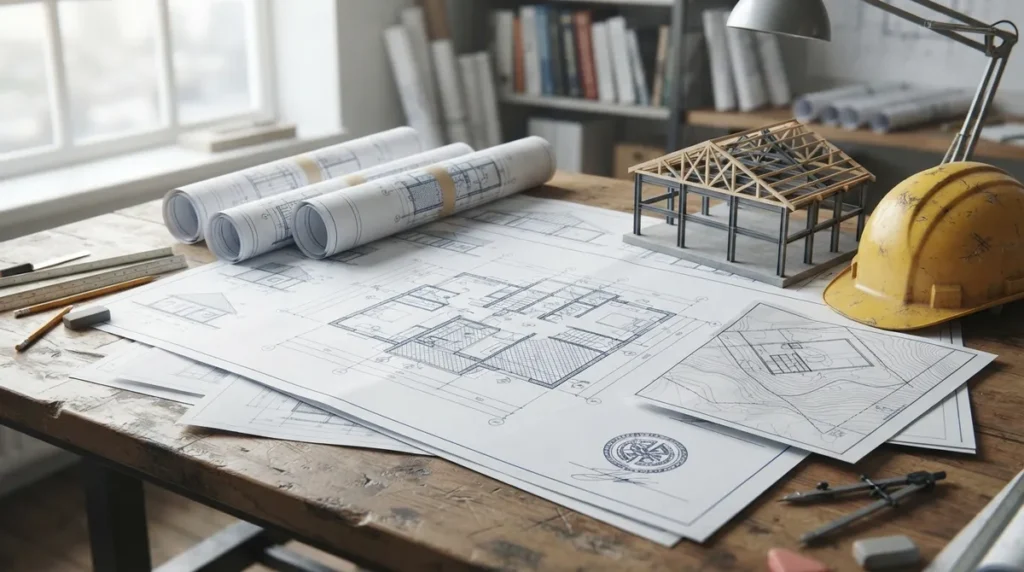
Florida building code compliance plans are the construction documents you submit with a permit application to show your proposed work meets the Florida Building Code and any local requirements. They describe the location, nature, and extent of the work in enough detail for a plans examiner to confirm compliance.
Depending on the project, a plan set may include several kinds of drawings and documents:
- Architectural plans: floor plans, elevations, sections, and details
- Structural plans: foundations, framing, connections, and wind-load design
- Mechanical, electrical, and plumbing (MEP) plans: systems layouts, load calculations, and riser diagrams
- Site plans: setbacks, drainage, lot coverage, and utilities
- Fire-protection documents: when the occupancy or scope requires them
- Product approvals and specifications: windows, doors, roofing, and other materials
Not every project needs every item. A small interior repair is very different from a two-story addition or a commercial buildout. That is why it helps to confirm the scope early.

Why Florida Requires Plan Review Before You Build
Florida law generally requires a permit before covered construction, alteration, repair, or demolition begins. Under Florida Statutes section 553.79, the local enforcing agency must review required plans and specifications for code compliance before issuing the permit, subject to statutory exceptions. Fire-safety review may also apply.
Who does the reviewing? Under section 468.604, the building official or an appropriately licensed plans examiner is responsible for reviewing construction plans. That is an important point: the local authority makes the official permit decision. A permitting consultant can prepare, organize, and coordinate your package, but cannot approve it.
Here is a quick snapshot of who does what:
| Role | What They Do | Who Decides Approval? |
|---|---|---|
| Building official or plans examiner | Reviews plans for Florida Building Code and local amendment compliance | Yes |
| Design professional (architect/engineer) | Prepares and seals required drawings | No |
| Permitting service | Assembles, checks, files, tracks, and answers comments | No |
| Qualified private provider | Performs statutory plan review and inspections when allowed | Within statutory limits |
Which Code Edition Applies to Your Plans?
Code editions change, and this matters for your drawings. The Florida Building Commission has identified the Florida Building Code, 8th Edition (2023), and lists June 19, 2026, as the pending effective date for the 9th Edition (2026). Because the date is around the corner, projects can land on different sides of the transition.
Before you finalize a plan set, confirm which edition governs your project in your jurisdiction. Applications submitted before an effective date may be reviewed under the earlier code, while later submittals follow the new one. When in doubt, ask the local building department directly.
What Goes Into a Strong Compliance Plan Set?
Reviewers love plans that are clear, consistent, and easy to cross-check. Here is what a solid package typically includes.
Project Data and Code Summary
A cover sheet should state the project address, scope, occupancy or use, construction type, applicable code edition, wind speed and exposure, and flood zone information when relevant. This sets the stage for everything else.
Clear Drawings with Enough Detail
Plans should show dimensions, materials, and connection details. If a wall is being removed, the drawing should say what supports the load above it. If a window is being replaced, the product approval should be referenced. Vague drawings invite comments.
Sealed Engineering Where Required
Many projects require drawings prepared or signed and sealed by Florida-licensed design professionals. Structural changes, trusses, engineered systems, and many commercial scopes commonly fall into this category. The exact professional and scope depend on the project, so confirm requirements early. For deeper support, see our engineering services and structural engineering resources.
Supporting Documents
Think energy calculations, product approvals, truss drawings, soil or survey information, owner authorization letters, and contractor information. The checklist your local department posts will tell you what is needed.
Step-by-Step: How to Prepare Compliance Plans
Here is a simple process that works for most projects:
- Confirm the jurisdiction. City lines can be tricky. Use the building department lookup to find who controls your address.
- Pull the submittal checklist. Florida law requires local agencies to post permit application types and required attachments online.
- Define the scope. Write down exactly what is being built, changed, or repaired.
- Identify required professionals. Decide whether an architect, structural engineer, or MEP engineer must seal the drawings.
- Draft the plans. Include code data, details, notes, and product approvals.
- Run an internal check. Compare drawings against the checklist and the code edition in force.
- Submit electronically when available. Florida law requires enforcement agencies to accept completed applications electronically.
- Respond to comments promptly. Address each reviewer note clearly and resubmit.
Who Can Prepare and Seal Florida Plans?
This is one of the most common questions we hear. The answer depends on the project. Florida law requires certain design documents to be prepared or signed and sealed by licensed Florida professionals, and the applicable discipline varies with the scope.
Here is how different readers typically fit in:
| Reader | Typical Need | Helpful Resource |
|---|---|---|
| General contractors | Plan sets, sealed structural, permit tracking | General contractor support |
| Solar companies | Structural letters, electrical diagrams, fast filing | Solar permitting help |
| Realtors and investors | Permit research, closing support, legalization | Realtor support |
| Homeowners | Additions, remodels, repairs, owner-builder paths | Homeowner help |
| Designers and trades | Outsourced drafting, MEP, permit administration | Drafting only |
If you already have your own engineer, drafting-only support can produce the permit set while your professional keeps the seal and the client relationship.
How Local Rules Can Change Your Plans
Florida has one statewide code, but local requirements still matter. Cities and counties can have their own submittal checklists, administrative procedures, zoning rules, and technical amendments. Miami-Dade and Broward have well-known high-velocity hurricane zone requirements, while other areas emphasize flood, coastal, or site-plan rules.
That means a plan set accepted in one jurisdiction may need adjustments in another. If you work across counties, local knowledge saves real time. We regularly handle filings in places like Hillsborough County, Miami-Dade County, and Orange County, and the checklists rarely look identical.
Common Reasons Plans Get Comments or Rejections
Plan review comments are normal, so please do not take them personally. They are simply the reviewer's way of saying, "Show me this." The most frequent triggers include:
- Missing or unsealed engineering when sealing is required
- Wrong code edition referenced on the cover sheet
- Product approvals not attached or not matching the drawings
- Site plan missing setbacks, drainage, or lot coverage data
- Inconsistent details between architectural, structural, and MEP sheets
- Incomplete application forms or missing owner and contractor information
The silver lining is that Florida law requires an enforcing agency that denies or revokes a permit for noncompliance to identify the specific noncompliant plan or project features and the code chapters and sections supporting the finding. That gives you a clear path for corrections. For more on this topic, read why a building permit gets rejected and our guide to revisions and resubmittals.
Can a Private Provider Review Your Plans?
Yes, in many cases. Florida Statutes section 553.791 allows qualified private providers to perform certain plan-review and inspection services, subject to statutory qualifications and required affidavits. Local officials still keep specified responsibilities, such as administrative, site, floodplain, and other reviews.
This option can help when the county queue is long and your schedule is tight. If you want to compare paths, take a look at private provider versus building department review and our private provider services.
How Long Does Plan Review Take?
There is no single answer, because timelines depend on the jurisdiction, project type, workload, and how complete your submittal is. A tidy residential package may move more quickly than a complex commercial scope with multiple disciplines.
You can stack the odds in your favor by submitting a complete package, responding to comments quickly, and tracking the application closely. For a deeper look, see how long a building permit takes in Florida.
What a Florida Permitting Service Can and Cannot Do
A good permitting partner takes a lot off your plate. That said, it helps to be honest about the limits. Here is the breakdown:
| A Permitting Service Can | A Permitting Service Cannot |
|---|---|
| Research jurisdiction and submittal requirements | Guarantee permit approval |
| Draft or coordinate plans and sealed engineering | Replace the building official's review |
| Check plans against code and local checklists | Override a reviewer's code findings |
| File, track, and answer plan-review comments | Waive required inspections or fees |
At 1 Contractor Solutions, we act as Florida's outsourced permitting department. Our drafting and engineering are in house, and our own engineer signs and seals the work, so reviewer comments get fixed fast instead of bouncing between outside consultants. If you want to see how that works end to end, explore our permit facilitation and filing and plan review coordination services.
Compliance Plans for Existing or Unpermitted Work
Compliance plans are not only for new construction. If work was done without a permit, or a permit expired, you may need as-built drawings, an engineer letter, or verification of what is behind the walls. The goal is to show the finished work meets code or can be brought into compliance.
These situations come up often during sales and refinances. If that sounds familiar, these resources can help: after-the-fact and expired permits, as-built drawings, and how to legalize unpermitted work. If you are facing a denial or stop work order, our urgent permit rescue team can step in.
Practical Tips to Keep Your Plans on Track
- Check the code edition first. Do not assume. Confirm it for your jurisdiction and submittal date.
- Match every sheet. Dimensions, notes, and product callouts should agree across disciplines.
- Attach product approvals early. This is a favorite reviewer comment.
- Keep communication clean. Answer each comment point by point.
- Ask before you assume. A quick call to the building department can prevent weeks of rework.
- Keep records. Save every submittal, comment letter, and approval for closeout.
You can also stay connected with us by following us on LinkedIn or following us on Facebook for Florida permitting updates. And if you have worked with us, we would love for you to visit us on Google — 1 Contractor Solutions and share your experience.
Final Thoughts: Make Your Plans Work for You
Florida building code compliance plans may look intimidating at first, but they are simply a clear, organized way of proving your project is safe and code-ready. When you confirm the jurisdiction, use the right code edition, include sealed engineering where needed, and respond to comments quickly, you put yourself in a strong position.
You do not have to do it alone. Whether you are a contractor juggling crews, a solar company chasing approvals, or a homeowner planning an addition, we are happy to help you get the package right. When you are ready, get a free quote and let us take the permit off your to-do list. Permits approved. Projects moving.
FAQs
What plans are required for a Florida building permit?
It depends on the project, but plans often include architectural, structural, MEP, and site drawings, plus product approvals and supporting forms. Your local building department posts a submittal checklist, so that is the best place to confirm what your scope needs.
Who can prepare or sign and seal building plans in Florida?
Florida law requires certain design documents to be prepared or signed and sealed by Florida-licensed design professionals, such as architects or engineers. Which professional and which scope applies depends on your project, so it is smart to confirm early.
What happens if my Florida building plans fail plan review?
Don't worry, it happens all the time! The reviewer issues comments, and if a permit is denied for noncompliance, Florida law requires the agency to identify the specific features and the code sections involved. You then correct the plans and resubmit.
Can a private provider review building plans in Florida?
Yes, qualified private providers can perform certain plan-review and inspection services under Florida Statutes section 553.791, with required affidavits. Local officials still keep specific responsibilities, so it helps to confirm how your jurisdiction handles it.
Can I submit Florida building permit plans electronically?
Yes, Florida law requires local enforcement agencies to allow completed permit applications to be submitted electronically. Portals and file requirements vary by city or county, so check your building department's checklist before uploading.
We do this work every day across all 67 Florida counties. Call (866) 314-6931 and we will tell you what your situation actually requires — including when you do not need us.
Related services
Permit Facilitation & Filing
You have a crew scheduled, a client asking for dates, and a permit sitting somewhere in a queue you cannot see. We file it, w…
See the servicePlan Review Coordination
A permit in plan review is not one queue. On a commercial project it can be six queues, each with its own reviewer, its own c…
See the serviceReady to get your permit moving?
One call tells you which jurisdiction controls your project, what it will take, and what it will cost. Most of the time we can scope it on the phone.