
Blog
Unpermitted Roof in Tampa? DIY vs. Pro Help Wins
Compare DIY vs. professional help for after-the-fact roofing permits in Hillsborough County, and see which route actually gets your roof legalized faster.
Key Takeaways
-
Hillsborough County has separate permitting jurisdictions: unincorporated county, Tampa, Temple Terrace, and Plant City each maintain different procedures and fee schedules, so confirming your jurisdiction before filing is critical to avoid rejection.
-
After-the-fact roofing permits require complete documentation including product approvals, contractor licensing, and often affidavits or exploratory openings to verify concealed work, which is why incomplete submissions frequently stall for weeks in plan review.
-
Hillsborough County issues citations up to $500 per violation for continued unpermitted work, making prompt action financially essential and turning this from a minor paperwork issue into a potential enforcement problem if delayed.
-
Professional permitting services typically resolve cases faster by managing plan review responses, coordinating with engineers and contractors, and knowing exactly what county reviewers expect, offsetting their service fee through quicker approval timelines.
-
Common DIY mistakes include assuming contractors already filed permits, submitting incomplete product documentation, missing jurisdiction requirements, and ignoring plan review comments until deadlines pass, each turning straightforward cases into months-long delays.
-
Real estate transactions benefit significantly from professional permitting help because unpermitted roofs discovered during closing can derail deals, making specialist involvement cost-effective when transaction timelines and lender concerns are at stake.
So, your roof got replaced or repaired, and somewhere along the way, the permit part just... didn't happen. Maybe your contractor said they'd handle it and disappeared. Maybe you're buying a home in Tampa and just found out during closing. Whatever brought you here, take a breath. You're not the first Hillsborough County homeowner to face this, and you won't be the last. The good news? There's a clear path forward, and understanding your options is the first step toward getting this resolved without losing sleep over it.
This article compares two very real paths: trying to handle an after-the-fact roofing permit yourself, or bringing in professional permitting help. We'll walk through what each route actually involves, what Hillsborough County expects, and why so many homeowners, contractors, and real estate professionals end up choosing the second option once they see what's really required.
What Is an After-the-Fact Roofing Permit, Anyway?
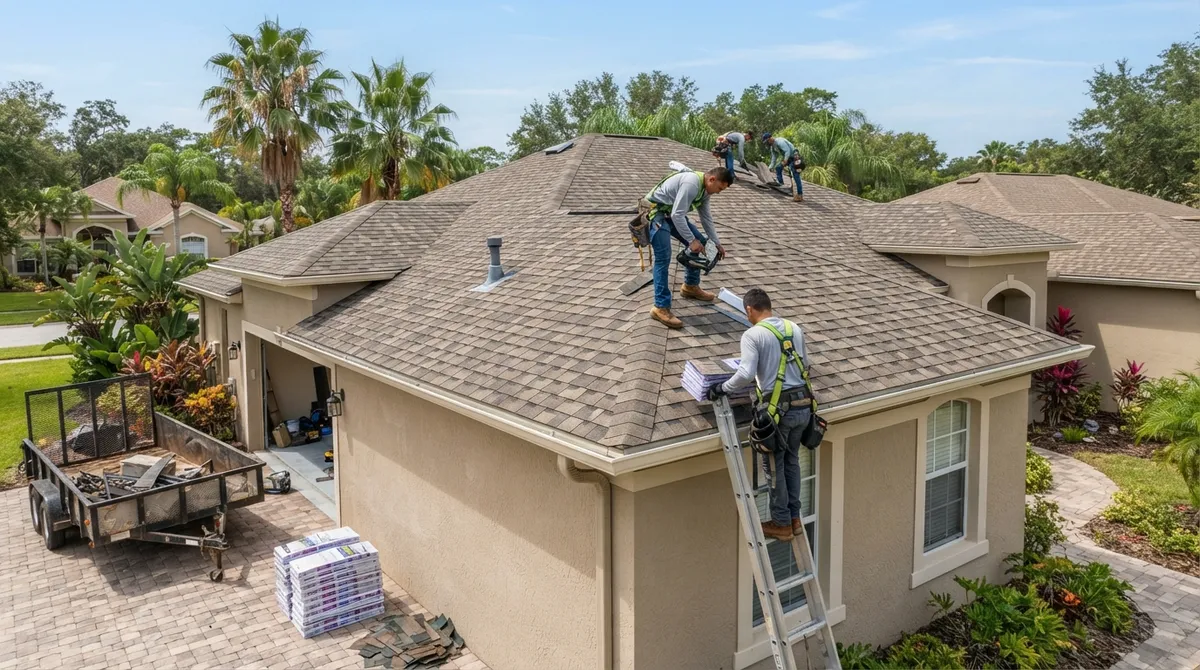
An after-the-fact roofing permit is exactly what it sounds like. It's the permit you get after roofing work has already started or finished, instead of before, which is how the process is supposed to work. Hillsborough County is pretty direct about this: if work began without the required permit, you're instructed to stop work immediately and contact Development Services to sort out how to get it permitted retroactively.
This isn't a rare or exotic situation. Roofs get replaced during storm recovery, contractors sometimes skip the paperwork to save time, and previous homeowners occasionally cut corners before selling. Whatever the reason, once you know about it, the responsible move is to fix it, not ignore it.
DIY vs. Professional Help: The Core Comparison
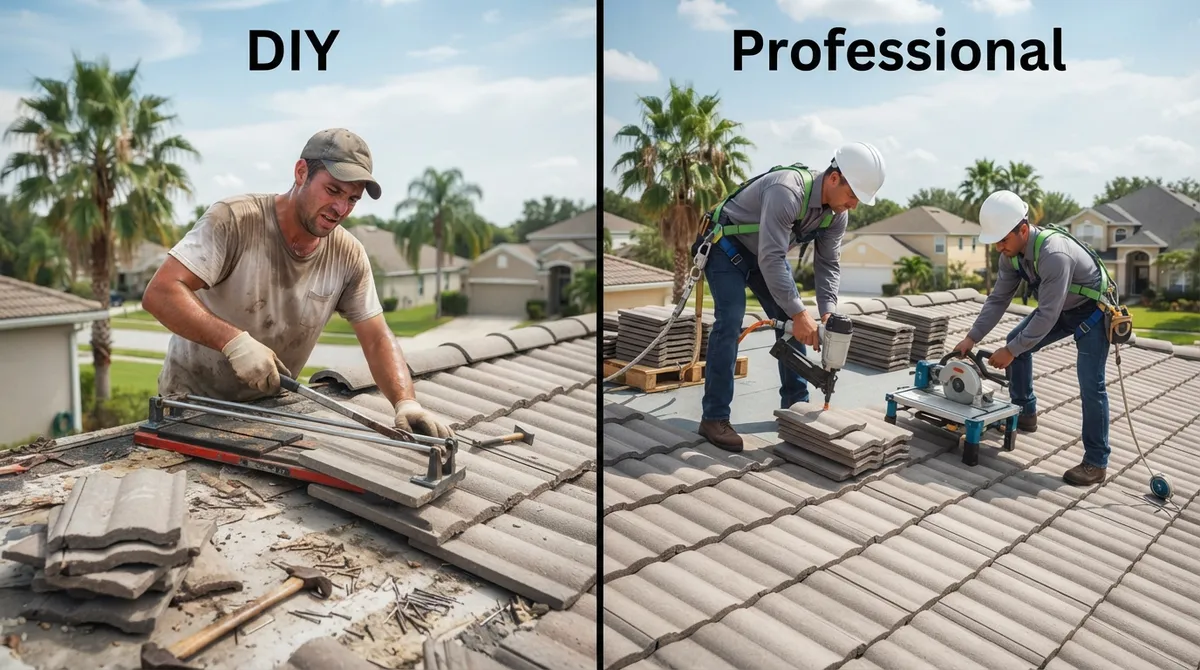
Let's get into the heart of it. When you discover you need an after-the-fact roofing permit in Hillsborough County, you basically have two roads: figure it out yourself through HillsGovHub, or bring in a permitting professional who does this daily. Here's how they stack up.
| Factor | Doing It Yourself | Hiring a Permitting Professional |
|---|---|---|
| Time Investment | High — learning curve on HillsGovHub, forms, and requirements | Low — you hand off the details and get updates |
| Jurisdiction Confusion | Common — Tampa, Temple Terrace, and Plant City each have separate offices | Rare — professionals confirm jurisdiction before filing |
| Documentation Gaps | Frequent — product approvals and contractor info often missing | Minimized — experienced teams know what reviewers want to see |
| Plan Review Comments | Can stall for weeks without a response strategy | Handled promptly with relevant documentation |
| Risk of Delay or Rejection | Higher, especially for first-timers | Lower, due to familiarity with county procedures |
| Cost | Permit fees only, but time cost can be significant | Permit fees plus service fee, offset by faster resolution |
Going It Alone: What the DIY Route Actually Involves
If you're the type who likes tackling projects yourself, here's what you're signing up for.
Step One: Confirm Your Jurisdiction
Before anything else, you need to know who actually governs your property. Unincorporated Hillsborough County uses one set of procedures, but if your home sits inside Tampa, Temple Terrace, or Plant City, you'll be dealing with that municipality's own permitting office, fee schedule, and inspection process instead. This trips up a surprising number of people, especially those near city boundary lines.
Step Two: Search Existing Permit Records
Next, you'll want to check whether a permit already exists (sometimes contractors do file, just late). Permit records dated after January 19, 2021, are searchable through HillsGovHub, the county's online permitting portal. Anything older may require a direct call to Development Services.
Step Three: Gather Documentation
This is where things get tricky. A roofing permit application generally needs:
- Property information and parcel details
- A clear description of the roofing work performed
- Roofing material specifications and Florida product approvals
- Contractor licensing information, if a licensed contractor did the work
- Photos or other evidence of the completed installation
Because the roof is already covered, inspectors often can't verify concealed components like underlayment, deck condition, fastening patterns, or ventilation just by looking at the surface. That means you might need contractor affidavits, exploratory openings, or even engineering documentation to demonstrate compliance.
Step Four: Submit and Respond to Reviewer Comments
Once submitted through HillsGovHub, your application goes through plan review. If comments come back (and for after-the-fact permits, they often do), you're responsible for addressing each one, sometimes multiple rounds, before approval.
The Professional Route: Why Homeowners and Contractors Choose It
Now let's flip to the other side. A qualified Florida permitting service brings a different kind of value to this process, one built on repetition, relationships, and knowing exactly what Hillsborough County reviewers expect to see.
1. Jurisdiction Clarity From Day One
A permitting professional confirms immediately whether your property falls under county or municipal authority, saving you from filing in the wrong place entirely.
2. Complete Documentation Packages
Rather than guessing what to include, an experienced team assembles product approvals, contractor information, and supporting evidence in the format reviewers actually want. This alone can shave weeks off the timeline.
3. Coordination With Licensed Contractors and Engineers
When concealed work can't be verified visually, someone needs to coordinate exploratory openings, affidavits, or engineering documentation. Professionals who do this regularly already have those relationships in place.
4. Faster Response to Plan Review Comments
Instead of scrambling to understand a reviewer's comment, a permitting team that handles Hillsborough County cases daily knows how to respond quickly and correctly the first time.
5. Reduced Risk of Costly Delays
Continuing unpermitted work or mishandling the application process can lead to enforcement action. Hillsborough County states that failure to stop unpermitted work can result in a citation of up to $500 per violation, so getting it right matters.
What a Good Permitting Partner Should Offer
Not every service is created equal. Here's a quick checklist of what separates a trustworthy provider from someone just cutting corners.
- Transparent, upfront pricing with no vague add-ons
- Documented experience specifically with Hillsborough County roofing cases
- Confirmation that any contractor involved holds proper licensing
- A written scope of services before work begins
- Secure handling of your property documents and personal information
- A clear, honest explanation of what happens if the roof fails inspection
Be cautious of anyone promising guaranteed approval without an inspection, or asking you to misrepresent when the roofing work actually occurred. That's a red flag, full stop. No legitimate provider can guarantee approval, since that decision ultimately rests with the building official.
Where Homeowners Stumble Most Often
Over years of handling these cases across Florida, certain mistakes show up again and again.
- Assuming the roofing contractor already pulled the permit without confirming it
- Filing in the wrong jurisdiction because the property sits near a city line
- Submitting incomplete product approval documentation
- Ignoring plan review comments until deadlines lapse
- Ignoring signs of concealed defects that inspectors may later question
Each of these can turn a straightforward fix into a months-long headache. The Sarasota County experience with after-the-fact roof permits shows similar patterns to what plays out in Hillsborough, which is why our Sarasota County after-the-fact roof permit guide covers many of the same underlying principles.
Real Estate Transactions and Roofing Permits
If you're a realtor, investor, or buyer, an unpermitted roof discovered during a title search or inspection can genuinely derail a closing. Buyers get nervous, lenders get cautious, and everyone wants the issue resolved fast. Real estate professionals working in Hillsborough County increasingly rely on permitting specialists precisely because timelines matter so much in a transaction, and delays cost real money on both sides of the deal.
Solar Installers and Roofing Permits: A Related Consideration
Solar companies frequently encounter roofing permit questions too, especially when panels get installed on a roof that later turns out to lack proper permitting. If your solar project touches roofing work, coordinating both permit types together, rather than treating them as separate problems, tends to produce a smoother outcome.
How the Process Typically Unfolds With Professional Help
Here's a general sequence many Hillsborough County cases follow once a permitting professional gets involved.
- Initial consultation to confirm jurisdiction and review the property's permit history
- Documentation gathering, including contractor information and product approvals
- Application preparation and submission through HillsGovHub
- Coordination of any required affidavits, photographs, or exploratory work
- Response management for plan review comments
- Scheduling and coordinating required inspections
- Final approval and closeout of the permit record
Every case is different, and timelines depend heavily on the property's specific history and the building official's determination, but having someone manage each step tends to keep the process moving instead of stalling out.
Frequently Overlooked Details Worth Knowing
A few details tend to surprise people partway through this process.
| Question | Quick Answer |
|---|---|
| Is a permit needed for partial roof repairs? | Often yes, depending on scope; verify with the county before assuming otherwise. |
| Does the process differ inside Tampa city limits? | Yes, municipalities like Tampa maintain their own permitting offices and procedures. |
| Can existing roofs be opened for inspection? | Sometimes required when concealed components can't otherwise be verified. |
| Who confirms if a permit already exists? | HillsGovHub search tools, or a direct call to Development Services. |
Why Experience Matters More Than It Seems
After-the-fact roofing cases aren't just paperwork exercises. They require judgment calls about documentation, honest communication with reviewers, and sometimes tough conversations about what compliance actually requires. Firms with structural and engineering capability in-house, rather than outsourcing every technical question, tend to move these cases faster because they aren't waiting on a third party's schedule to answer a reviewer's question.
This is part of why 1 Contractor Solutions keeps drafting and engineering in-house rather than farming it out. When a Hillsborough County reviewer flags a concern about a roofing system's structural documentation, having an in-house engineer available to respond quickly, rather than waiting days for an outside consultant, makes a real difference in how fast a case moves toward approval. The team's work spans after-the-fact and expired permits, roof permits, and permit facilitation and filing across every Florida county, including Pinellas and Manatee.
A Note on Costs and Penalties
Every property's fee calculation depends on project scope, valuation, and the specific jurisdiction involved, so treat any general figure as a starting point rather than a guarantee. What's confirmed is that Hillsborough County's homeowner guidance warns of citations up to $500 per violation for continued unpermitted work, which underscores why prompt action matters more than trying to save a few dollars by waiting.
For broader context on how these costs tend to play out across Florida, our guide on after-the-fact permit costs in Florida breaks down the variables that typically drive pricing up or down.
Bringing It All Together
DIY works fine for some homeowners with time, patience, and a genuine willingness to learn HillsGovHub's ins and outs. But for most people, especially those juggling a real estate closing, a solar installation, or a contractor's busy schedule, professional permitting help simply moves faster and reduces the odds of an expensive misstep.
Whichever path you choose, the most important thing is not to wait. Hillsborough County wants unpermitted work addressed promptly, not ignored until it becomes a bigger problem. You can always start by contacting Development Services directly at (813) 272-5600, or reach out to get a free quote and let a team that handles these cases daily walk you through your specific situation.
Curious what other homeowners and contractors say about working with a permitting team on cases like this? You can visit us on Google — 1 Contractor Solutions to see real feedback, or connect with the team through follow us on LinkedIn and follow us on Facebook for ongoing updates on Florida permitting changes.
For general homeowner guidance straight from the source, the Hillsborough County homeowner permits page is worth bookmarking, and if you want to understand how a similar Florida municipality handles roof inspections, the City of Clearwater's roofing permit requirements offer a useful side-by-side comparison.
FAQs
How do I get an after-the-fact roofing permit in Hillsborough County?
You'll want to first confirm whether your property falls under unincorporated county rules or a city like Tampa, then contact Development Services or use HillsGovHub to start the application. Gathering your roofing documentation ahead of time, like product approvals and contractor details, makes the whole process go a lot smoother!
How much does an after-the-fact roof permit cost in Hillsborough County?
Honestly, it varies quite a bit depending on your project's scope and valuation, so it's best to confirm exact figures directly with the county. What we do know is that ignoring the issue can lead to citations up to $500 per violation, so getting the ball rolling sooner rather than later tends to save you money in the long run.
Can a permitting service obtain a permit for a roof that's already installed?
Yes, a qualified permitting professional can absolutely help with this, though they'll be upfront that no one can guarantee approval since that decision rests with the building official. What they can do is prepare a thorough, honest application and coordinate any documentation needed to demonstrate compliance.
Will Hillsborough County require my roof to be opened up for inspection?
It's possible, especially if inspectors can't verify concealed components like underlayment or fastening just by looking at the surface. In those cases, exploratory openings, contractor affidavits, or engineering documentation might be needed to show everything was done correctly.
Does the process differ if my property is inside Tampa, Plant City, or Temple Terrace?
It sure does! Each of these municipalities runs its own permitting office with separate fees, forms, and inspection procedures, so confirming your exact jurisdiction first saves you from filing in the wrong place entirely.
We do this work every day across all 67 Florida counties. Call (866) 314-6931 and we will tell you what your situation actually requires — including when you do not need us.
Related services
Permit Facilitation & Filing
You have a crew scheduled, a client asking for dates, and a permit sitting somewhere in a queue you cannot see. We file it, w…
See the servicePlan Review Coordination
A permit in plan review is not one queue. On a commercial project it can be six queues, each with its own reviewer, its own c…
See the serviceReady to get your permit moving?
One call tells you which jurisdiction controls your project, what it will take, and what it will cost. Most of the time we can scope it on the phone.