
Blog
Truss Engineering vs. Full Re-Roof: Which Fix Wins in FL?
Compare after-the-fact truss engineering with a full re-roof in Florida. Learn costs, timelines, and which path your building department may accept.
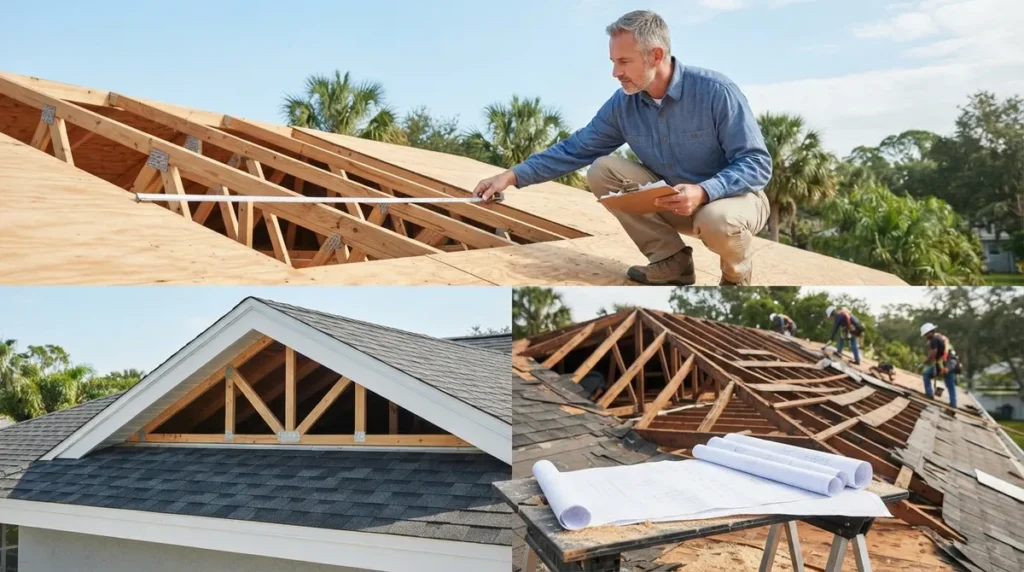
Key Takeaways
-
After-the-fact truss engineering involves a Florida-licensed structural engineer evaluating installed roof systems, documenting them, and submitting sealed paperwork to the building department—it's not an automatic approval and the building official makes the final decision.
-
You have two main paths: certify existing sound trusses through after-the-fact engineering (faster, lower cost, low disruption) or do a full tear-off and re-roof (more expensive, disruptive, but provides a clean slate for defective work).
-
A proper ATF evaluation requires identifying permit history, gathering truss records, inspecting accessible conditions, comparing to current Florida Building Code standards, and preparing sealed documentation with repair details if needed.
-
Building departments may require selective openings to inspect concealed trusses, connections, bearing points, and bracing; assembling dated photos and delivery records upfront can minimize demolition requirements.
-
Truss placement layouts and truss design drawings serve different purposes—layouts show where trusses sit while design drawings describe engineering loads and connections; missing original drawings can often be replaced through engineer field measurements and manufacturer records.
-
Choose a provider with in-house Florida-licensed engineers, local jurisdiction knowledge including specific submittal checklists, roof framing expertise, full-service support from permit filing through inspections, and honest expectations with no approval guarantees.
Picture this: you're closing on a Florida home, or finishing a job for a client, and someone discovers the roof trusses were installed without a permit. Maybe the old owner skipped the paperwork. Maybe a crew cut a few corners. Now there's a stop in the process, and everyone is asking the same thing: what's the smartest way out?
Here's the good news. You have real options, and you are far from alone. Finding the best truss and roof after the fact engineering Florida property owners can rely on usually comes down to one big decision: do you document and certify what's already up there, or do you tear it off and start over?
In this friendly guide, we'll walk through both paths side by side. You'll see what each one involves, what a Florida-licensed engineer actually does, what building departments tend to ask for, and how to pick the route that protects your timeline and your wallet. Whether you're a general contractor, a solar installer, a realtor, or a homeowner, you'll leave with a clear plan.
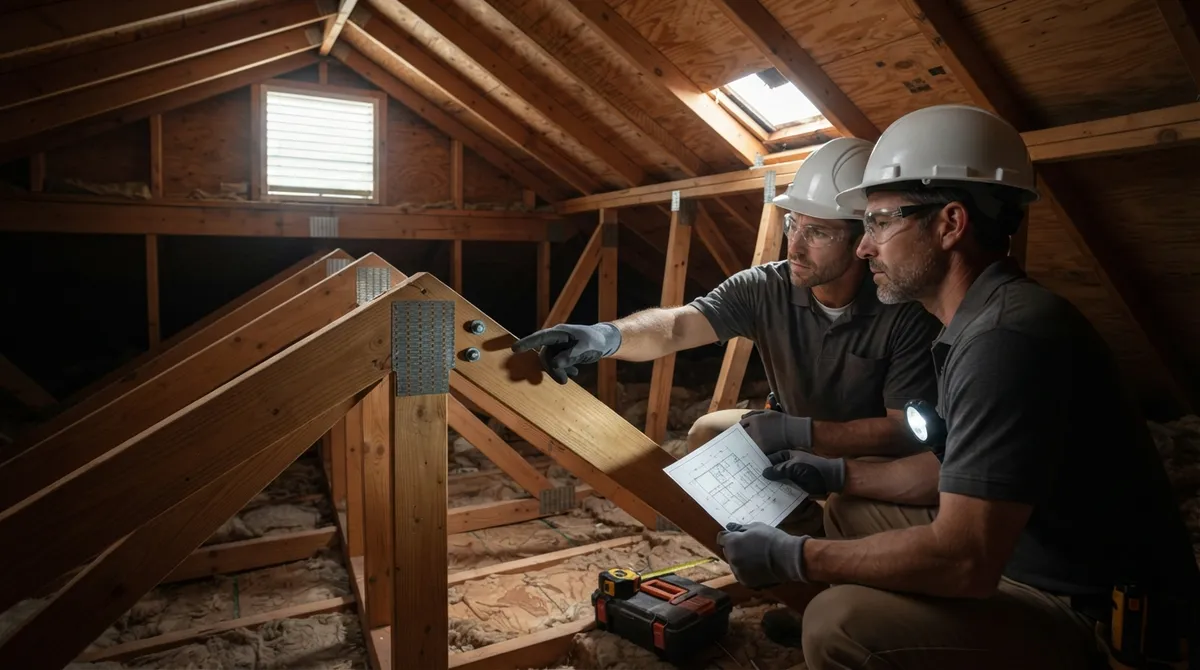
What "After-the-Fact" Truss and Roof Engineering Really Means
After-the-fact (ATF) engineering is the process of documenting, evaluating, and seeking approval for roof or truss work that was built before the required permit, plans, or inspections existed. It runs through your local building department's permit and inspection process. It is not a statewide certificate, and it is not an automatic approval.
Florida's current statewide baseline is the Florida Building Code, 8th Edition (2023), effective December 31, 2023. But local submittal checklists differ, and the building official makes the final call in every jurisdiction.
That last point matters. An engineer's report is powerful evidence, yet it does not grant a permit by itself. If you want a deeper walkthrough of the permit side, our guide on how to get an after-the-fact permit in Florida covers the basics.
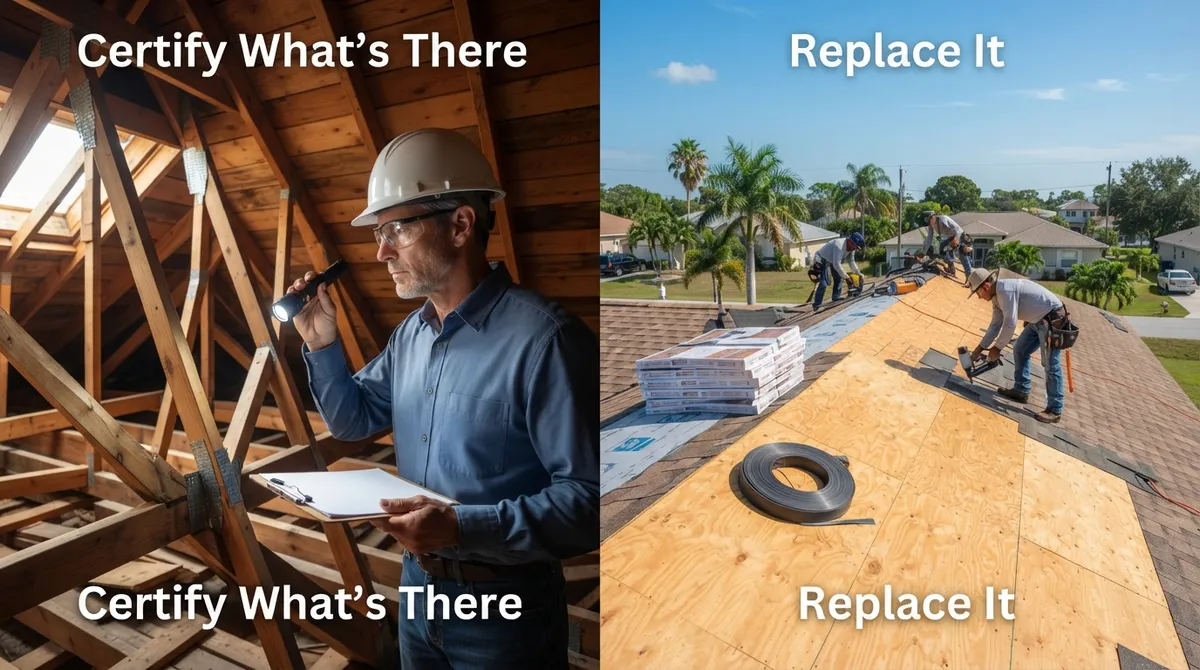
The Two Paths: Certify What's There or Replace It
Think of it like a used car. You can get a thorough inspection and a clean bill of health, or you can scrap it and buy new. Both are valid. The right choice depends on what's actually wrong, if anything.
Path 1: After-the-Fact Truss and Roof Engineering
With this route, a Florida-licensed structural engineer evaluates the installed system, documents it, and prepares sealed paperwork. If something needs strengthening, the engineer details a repair rather than a full rebuild. Then you file an ATF application and work through inspections.
Path 2: Full Tear-Off and Re-Roof
This route removes the existing roof, and sometimes the trusses, and rebuilds under a fresh permit with truss drawings approved before installation. It's the cleanest slate, but it's also the most expensive and disruptive.
Side-by-Side Comparison
| Factor | After-the-Fact Engineering | Full Tear-Off and Re-Roof |
|---|---|---|
| Typical timeline | Often weeks, depending on the jurisdiction | Longer: permit, materials, crew scheduling |
| Disruption to occupants | Low to moderate (possible selective openings) | High (weather exposure, noise, displacement risk) |
| Cost profile | Engineering, permit fees, and any needed repairs | Demolition, new materials, labor, and new permit |
| Best when | Work appears sound but lacks paperwork | Work is defective, damaged, or can't be verified |
| Approval certainty | Decided by the building official | Decided by the building official, but plans precede construction |
Notice that neither path carries a guaranteed approval. Anyone who promises one is overselling. Reputable providers can only guarantee a thorough, well-documented submittal.
What a Florida Engineer Actually Does for ATF Truss Work
Many people picture an engineer simply stamping a letter. The real process is more hands-on. Here's how a solid ATF truss evaluation usually unfolds:
- Identify the authority and permit history. Confirm which jurisdiction controls the address and whether any prior permits are open, expired, or missing.
- Gather available records. Collect truss layouts, manufacturer design drawings, delivery tickets, photos, and any prior inspection notes.
- Inspect accessible conditions. A Florida-licensed engineer examines trusses, bearing points, connections, bracing, and roof deck from attic and exterior access.
- Evaluate against code. The engineer compares what's installed to the applicable Florida Building Code loads, spans, spacing, and connection requirements.
- Prepare sealed documentation. This may include an evaluation report, framing plan, and repair details if anything falls short.
- Submit and respond. The ATF application goes in, review comments get answered, and inspections are scheduled.
Florida Board of Professional Engineers guidance is clear that final engineering documents must be signed, dated, and sealed by the engineer in responsible charge. An engineer should also never seal work outside their expertise, so make sure the person you hire actually handles structural roof framing. You can read more about our in-house capabilities on our structural engineering page.
Truss Layouts vs. Truss Design Drawings: Know the Difference
These two documents get confused constantly, and mixing them up can stall a review. They serve different purposes:
- Truss placement layout: shows where each truss sits in the roof.
- Individual truss design drawings: describe the engineering of each truss, including loads, span, spacing, bearing, reactions, connectors, and deflection and bracing details.
- Roof framing plan: ties the layout to the structure and often must match the manufacturer's layout.
- Supporting calculations: help the reviewer confirm the system meets code.
The 2023 Florida Residential Code expects truss design drawings to be provided to the building official and approved before installation. In an after-the-fact scenario, that timing has already passed, which is exactly why the evaluation and documentation process exists. Orange County's published guidance, for example, calls for applicable truss engineering and a manufacturer-provided layout matching the design professional's roof framing plans, and other jurisdictions publish their own checklists.
When the Original Truss Drawings Are Missing
This is the question we hear most. Lost paperwork is common, especially on older work or properties that changed hands. The situation is more manageable than it sounds.
If original truss records are unavailable, a Florida-licensed structural engineer may be able to inspect accessible conditions, evaluate the installed system, and prepare sealed documentation or repair details. Sometimes the truss manufacturer can reissue drawings from their records. Other times, the engineer works from field measurements and member identification.
Still, the building official decides what evidence is sufficient. Some jurisdictions are flexible; others want more. If you're also dealing with an expired or inactive permit, our after-the-fact and expired permits team can sort out the permit history first.
Will They Make Me Open the Ceiling?
Concealed framing is the plot twist nobody enjoys. If drywall or roof sheathing covers the trusses, officials may require selective opening so they can verify trusses, connections, bearing, and bracing.
Here's how that typically plays out:
- Attic access with good lighting often reveals most of what an engineer needs.
- Small inspection openings may be enough in some jurisdictions.
- Larger openings may be required if connections or bracing can't be seen.
- Corrective work, such as added bracing or hurricane connectors, may be needed before final inspection.
The more evidence you assemble upfront, including dated photos and delivery records, the less likely you'll face extensive demolition.
Which Path Fits Your Situation?
Let's make this practical. The table below maps common scenarios to the path that usually makes the most sense. Treat it as a starting point, not a verdict, since the local building official has the last word.
| Scenario | Usually Better Fit | Why |
|---|---|---|
| Trusses look sound, but the permit was never pulled | After-the-fact engineering | Documentation may be enough, with minor corrections |
| Missing bracing or connectors found | After-the-fact engineering with repair details | Targeted fixes are cheaper than a rebuild |
| Trusses were cut or heavily altered | Depends on engineer's findings | May need engineered repairs or replacement |
| Severe damage, rot, or major deficiencies | Full tear-off and re-roof | Repair may cost more than replacement |
| Closing deadline is tight | After-the-fact engineering, started early | Often faster than a full rebuild |
What Each Audience Should Know
General Contractors
If a sub skipped the permit on your job, move quickly and keep communication open with the building department. A clean ATF packet protects your license and your client relationship. Our team supports general contractors with filing, tracking, and revisions.
Solar Companies
Solar installers care about roof structure because panel loads depend on it. If the underlying trusses lack documentation, your structural letter may stall. Verifying the framing first can prevent a rejected solar submittal down the road. See how we help solar contractors keep approvals moving.
Realtors and Property Buyers
Unpermitted roof work can surface at inspection, appraisal, or title review. Start the engineering evaluation as soon as it's flagged, because that clock is real. Our realtor and closing support exists for exactly this.
Florida Homeowners
Don't panic, and don't ignore it. An open or missing permit rarely fixes itself, and unresolved issues can affect insurance claims and resale. Our homeowner resources explain your options in plain language.
How to Choose the Best Provider for ATF Truss and Roof Work
Since local rules vary, "best" really means "best prepared for your jurisdiction." Use this checklist when comparing providers:
- Florida-licensed engineers in house, so reviewer comments get answered quickly.
- Local jurisdiction knowledge, including each department's submittal checklist.
- Experience with roof framing specifically, not just general engineering.
- Full-service support, from permit research to filing, tracking, and inspections.
- Honest expectations, with no approval guarantees.
- Fast response, because deadlines in this space tend to be tight.
At 1 Contractor Solutions, we act as Florida's outsourced permitting department. Our drafting and engineering are in house, our engineer signs and seals the work, and we handle the filing and review comments from start to finish across all 67 counties. If you'd like to see what other clients say, visit us on Google — 1 Contractor Solutions.
A Note on Costs
Costs vary widely, so beware of anyone quoting a flat price without seeing the site. Your total depends on the jurisdiction's fees, engineering scope, whether openings are required, and whether repairs are needed. For context on typical fee structures, read our breakdown of after-the-fact permit costs in Florida. Generally, documenting and certifying sound work costs far less than demolishing and rebuilding, but only a proper evaluation can tell you which situation you're in.
Helpful Official Resources
Before you commit, it's smart to check primary sources. The Florida Building Commission publishes the current code editions, and the Florida Board of Professional Engineers signing and sealing guidance explains what makes engineering documents valid. You can also review the truss provisions in Chapter 8 of the 2023 Florida Residential Code and check your local building department's published checklist, since every jurisdiction does things a little differently.
The Bottom Line: Which Fix Wins?
For most properties with sound but undocumented trusses, after-the-fact engineering wins on speed, cost, and disruption. A full re-roof wins when the work is genuinely defective or can't be verified. The deciding factor is what a qualified engineer finds when they look, and what your building official will accept.
The takeaway? Don't guess. Get the permit history checked, get a Florida-licensed structural engineer on the roof, and make a decision based on facts. If you're ready to move, get a free quote and we'll tell you which jurisdiction controls your address, what it will take, and then go do it. We also stay active in the community, so feel free to follow us on LinkedIn or follow us on Facebook for more Florida permitting tips. Permits approved. Projects moving.
FAQs
Do I need a Florida structural engineer to legalize unpermitted roof trusses?
In most cases, yes. Building departments typically want sealed documentation from a Florida-licensed engineer when truss records are missing or the work needs evaluation. Your local building official ultimately decides what evidence is required, so it's worth confirming the checklist early.
Can an engineer approve my trusses if the original drawings are missing?
Often they can evaluate the installed system, inspect accessible conditions, and prepare sealed documentation or repair details. That said, the engineer's report doesn't grant a permit on its own. The building official decides whether the evidence is enough and what corrections or inspections follow.
Will I have to remove drywall or roof decking for a truss inspection?
Sometimes, yes. If framing is concealed, officials may ask for selective openings so they can see trusses, connections, bearing, and bracing. Good photos, delivery records, and attic access can often reduce how much needs to be opened.
Does an engineer's letter guarantee approval of an unpermitted roof in Florida?
Nope, and it's wise to be wary of anyone who says otherwise. An engineer's letter is strong supporting evidence, but approval always rests with the local building department. A well-prepared packet simply gives you the best possible shot.
How much does after-the-fact roof engineering cost in Florida?
It varies with your jurisdiction's fees, the engineering scope, whether openings are needed, and whether repairs are required. Documenting sound work typically costs far less than a full tear-off, but a site evaluation is the only way to get a reliable number.
We do this work every day across all 67 Florida counties. Call (866) 314-6931 and we will tell you what your situation actually requires — including when you do not need us.
Related services
Permit Facilitation & Filing
You have a crew scheduled, a client asking for dates, and a permit sitting somewhere in a queue you cannot see. We file it, w…
See the servicePlan Review Coordination
A permit in plan review is not one queue. On a commercial project it can be six queues, each with its own reviewer, its own c…
See the serviceReady to get your permit moving?
One call tells you which jurisdiction controls your project, what it will take, and what it will cost. Most of the time we can scope it on the phone.