
Blog
One Firm, Many Counties: Can It Handle Your ATF Permits?
Wondering if one firm can handle after-the-fact permits across multiple Florida counties? Here's how multi-jurisdiction coordination really works.

Key Takeaways
-
A single firm can coordinate after-the-fact permits across multiple Florida counties, but each application must still be submitted to and approved by the specific jurisdiction with authority over that property—whether county or independent city.
-
After-the-fact permits require proving completed work meets current Florida Building Code and local requirements, often involving inspections of concealed areas, as-built drawings, or sealed engineering evaluations, making them significantly more complex than standard filings.
-
Jurisdiction identification is critical: Florida has 67 counties but over 400 municipalities with independent building departments; filing with the wrong office wastes time and can trigger additional scrutiny, so confirming the correct authority is the essential first step.
-
Fees and procedures vary significantly across jurisdictions; some building departments charge investigation or penalty fees running two to three times the standard permit fee, so confirming the exact checklist and costs upfront is essential for accurate budgeting.
-
Contractor licensing scope must be verified statewide before filing multi-county projects; state-certified contractors can work statewide while locally registered contractors may only be authorized in specific jurisdictions where registered.
-
A coordinating firm with in-house engineering and drafting teams provides faster turnaround than hiring separate single-county specialists, as reviewer comments get addressed same-day rather than requiring multiple vendor handoffs and week-long delays.
Picture this: you're a general contractor with unpermitted additions to legalize in Tampa, a solar company with a backlog of after-the-fact filings spanning three counties, or a realtor trying to close a sale before an open permit turns into a deal-breaker. You start wondering, can one firm handle after the fact permits in multiple Florida counties, or do you need a different specialist for every zip code? It's a fair question, and honestly, one of the most common ones we hear from busy contractors and homeowners alike.
Here's the good news: yes, a single permitting-services firm can generally coordinate after-the-fact permit projects across many Florida counties at once. But there's a catch worth understanding before you hand off your project. Each application still has to go through the specific building department that has jurisdiction over that exact property, whether that's a county office or an independent city government. Let's break down how this actually works, what to watch for, and how the right partner keeps your projects moving no matter where they're located.
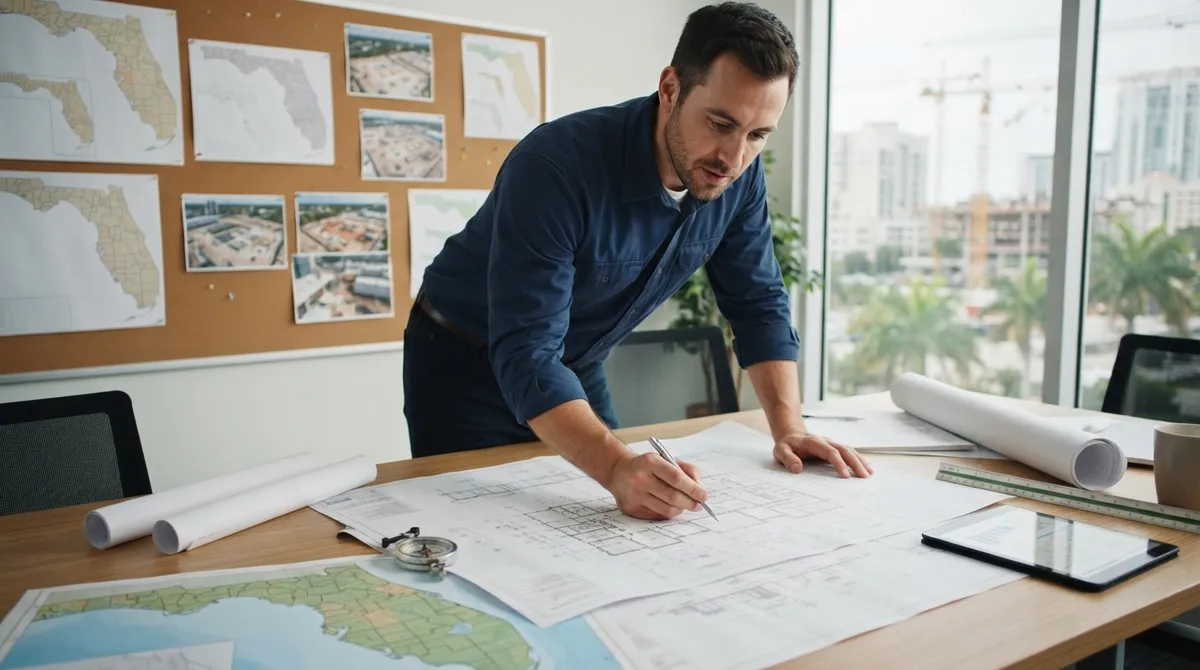
What Does "Handling Multiple Counties" Really Mean?
When people ask whether one firm can manage permits statewide, they're usually picturing a single phone call that magically fixes everything everywhere. That's not quite how Florida permitting works, but the reality is still pretty encouraging for anyone juggling projects across jurisdictions.
Florida has 67 counties, but that number doesn't tell the whole story. Many cities and municipalities run their own independent building departments completely separate from the county they sit inside. Tampa, Boca Raton, and West Palm Beach are great examples of cities that handle their own plan review and permitting rather than deferring to the surrounding county. So a firm working across Hillsborough County and Pinellas County isn't just navigating two systems. It might be navigating a dozen, depending on how many municipalities sit inside those county lines.
The Coordinator Role, Not a Replacement for Local Authority
A permitting firm acts as your authorized representative and project coordinator. It cannot override the independent authority of a local building official, and it can't promise approval on anyone's behalf. What it can do is know exactly which jurisdiction controls your property, prepare a compliant application package for that specific authority, and walk the project through review, corrections, and closeout.
That's a big deal for busy professionals. You don't need to memorize the after-the-fact checklist for every county from Monroe to Duval. You need a partner who already has.

Why After-the-Fact Permits Are Trickier Than Standard Filings
An after-the-fact permit, sometimes called a retroactive or ATF permit, is required when work was completed without the proper permit in the first place. Maybe a previous owner enclosed a patio without pulling paperwork, or a contractor installed a roof and skipped the inspection. Either way, the permit doesn't automatically legalize the work. You still have to prove the completed work meets the currently applicable Florida Building Code and every relevant local requirement.
That typically means:
- Researching the property's permit history and any active code violations tied to the address.
- Documenting existing conditions, sometimes with photos, measurements, or exposed assemblies.
- Preparing as-built drawings or new plans that reflect what was actually built.
- Submitting the application to the correct building department with all required forms and fees.
- Completing inspections, which may require opening up walls, ceilings, or foundations so an inspector can verify what's behind the finishes.
- Correcting any deficiencies the reviewer identifies.
- Obtaining final approval and permit closure.
Some of this work requires sealed drawings or engineering evaluations, especially for structural, electrical, plumbing, mechanical, or roofing components. That's where in-house engineering becomes such a valuable advantage. When your structural engineering and drafting teams sit under one roof, a reviewer comment doesn't require three phone calls and a week's delay. It gets addressed the same day.
Multi-County Workflow: How a Firm Actually Coordinates Projects
So how does a firm keep straight which rules apply where? The strongest approach isn't a one-size-fits-all template. It's a repeatable process customized for each jurisdiction.
| Step | What Happens | Why It Matters |
|---|---|---|
| 1. Jurisdiction Identification | Confirm whether the property falls under county or independent municipal authority | Filing with the wrong office wastes time and can trigger additional scrutiny |
| 2. Violation Check | Search for open code-enforcement cases or prior permit history | Existing violations may add fees or require resolution before permit issuance |
| 3. Checklist and Fee Confirmation | Obtain that jurisdiction's specific after-the-fact requirements and fee schedule | Requirements vary widely from one building department to the next |
| 4. Document Preparation | Draft as-builts, structural evaluations, or sealed plans as required | Concealed work often needs professional documentation before approval |
| 5. Application Submission | Package and file with the correct authority having jurisdiction | Each property gets its own tailored submission, never a generic template |
| 6. Review Response and Closeout | Address reviewer comments, schedule inspections, secure final approval | Follow-through prevents permits from stalling indefinitely |
Notice that step three, confirming the checklist and fee schedule, appears separately for a reason. Fees and procedures are not standardized statewide. Some jurisdictions charge investigation or penalty fees that run two to three times the normal permit fee, though the exact amount always depends on the specific building department. If you're weighing out the numbers ahead of time, our breakdown on after-the-fact permit Florida cost is a solid starting point.
Licensing Matters Across County Lines
Another piece worth understanding: contractor licensing works differently depending on the license type. A state-certified Florida contractor generally has authority to pull permits statewide within the scope of that license. A locally registered contractor, on the other hand, may only be authorized to work in the specific jurisdiction where that registration was obtained. Before accepting a multi-county project, a responsible permitting firm verifies contractor and design-professional credentials through the Florida Department of Business and Professional Regulation. You can check current license standing directly at the Florida DBPR license verification portal.
This matters more than people realize. If a solar company is installing systems in Lee County one week and Collier County the next, the underlying contractor license needs to actually support that scope of work in both places. A good permitting partner catches license mismatches before they become application rejections.
Comparing Single-County Specialists vs. Statewide Coordination
Some property owners assume hiring a hyper-local specialist in each county is the safer bet. Others prefer one firm managing everything from a bird's-eye view. Here's how the two approaches actually stack up.
| Factor | Single-County Specialist | Statewide Coordinating Firm |
|---|---|---|
| Local relationship knowledge | Often strong within one office | Built through repeated multi-jurisdiction filings |
| Consistency across projects | Varies firm to firm | Centralized process and documentation standards |
| Engineering and drafting turnaround | May require outside consultants | Faster when done in-house across all locations |
| Project tracking for multi-site owners | Requires managing several vendors | Single point of contact for every jurisdiction |
| Licensing verification | Limited to local knowledge | Confirms scope statewide before filing |
For a homeowner with a single property, either approach can work fine. But for general contractors, solar installers, restoration companies, and property managers juggling projects in five or six counties, the coordination advantage of a single firm becomes significant fast.
Special Considerations Beyond the Building Department
After-the-fact permitting isn't always just a building department conversation. Depending on the project and location, you may also need to coordinate with:
- Zoning departments, especially for setback or use issues
- Floodplain management offices, particularly in coastal counties
- Fire marshal review for commercial or mixed-use properties
- Environmental agencies for wetlands, septic, or stormwater concerns
- Homeowners associations with their own architectural approval rules
In Miami-Dade and Broward counties, projects also fall under the High-Velocity Hurricane Zone, which adds wind-load and construction requirements that don't apply elsewhere in the state. That's one more reason a firm working in Miami-Dade County and Broward County needs specialized familiarity with those zones, not just general Florida Building Code knowledge.
Who Benefits Most From a Multi-County Permitting Partner
This approach isn't one-size-fits-all, but certain professionals see outsized value from centralized coordination:
- General contractors managing several job sites who need consistent plan drafting and permit tracking without juggling separate vendors per county.
- Solar companies scaling installations across regions who need fast, code-compliant structural and electrical documentation.
- Realtors and investors who discover open permits during due diligence and need research plus resolution before a closing date arrives.
- Homeowners facing a code violation notice who just want someone to explain what's actually required and handle it.
- Architects and design trades who'd rather outsource permit administration than build an in-house department.
If any of that sounds familiar, it might be worth exploring how a dedicated after-the-fact and expired permits team can take this off your plate entirely.
How 1 Contractor Solutions Approaches Multi-County Projects
At 1 Contractor Solutions, we've built our entire process around the reality that Florida permitting is not one system, it's hundreds of overlapping ones. We work in all 67 counties and have filed in more than 400 municipalities, so when you send us an address in Sarasota County or Orange County, we already know who's really in charge of reviewing it.
Because our drafting and engineering teams work in-house, reviewer comments get addressed same-day instead of sitting in someone else's inbox for a week. We're also a licensed private provider, which means in many cases we can perform plan review ourselves rather than waiting in a county queue. That combination is exactly why contractors, solar installers, and realtors trust us to manage projects spanning multiple jurisdictions at once.
Curious what other clients have experienced? You can visit us on Google — 1 Contractor Solutions to read real reviews, or follow us on LinkedIn for ongoing updates on Florida permitting changes that affect your projects.
Final Thoughts: Yes, One Firm Can Do This Right
So, can one firm handle after-the-fact permits in multiple Florida counties? Absolutely, as long as that firm treats each jurisdiction as its own unique process rather than forcing a one-size-fits-all shortcut. The right partner researches the correct authority having jurisdiction, verifies licensing scope, prepares jurisdiction-specific documentation, and follows the project all the way through final closeout, no matter how many counties are involved.
If you're sitting on unpermitted work in one property or fifty, you don't have to figure out the patchwork of Florida's permitting rules alone. Our team has spent 15+ years untangling exactly this kind of multi-jurisdiction puzzle, and we'd love to help you sort out yours. Reach out today and get a free quote to see how quickly we can get your after-the-fact permits back on track, wherever in Florida they're located.
FAQs
Can a Florida permitting company pull after-the-fact permits statewide?
Yes, a permitting company can coordinate after-the-fact projects across the state, but every single application still gets submitted to and approved by whichever building department actually has jurisdiction over that property. Think of the firm as your statewide project manager rather than a single office that overrides local rules.
Does an after-the-fact permit legalize unpermitted work in Florida?
Not automatically. You still have to prove the completed work meets the current Florida Building Code and all applicable local requirements, which often means opening up concealed areas for inspection or providing sealed engineering documentation.
How much does an after-the-fact permit cost in Florida?
It really depends on the jurisdiction. Some building departments charge an investigation or penalty fee that can run two to three times the standard permit fee, so it's always worth confirming the exact number with the local authority before you budget for the project.
Can a county issue a permit if the property is inside a city?
Generally, no. If a property sits within an independent municipality like Tampa or Boca Raton, that city's own building department controls the permit, even though the property is also located within a larger county.
Do I need an engineer or architect for an after-the-fact permit?
It depends on the scope of the work. Structural, electrical, plumbing, and mechanical components often need sealed drawings or a professional evaluation, especially when the original work was concealed behind walls or ceilings.
We do this work every day across all 67 Florida counties. Call (866) 314-6931 and we will tell you what your situation actually requires — including when you do not need us.
Related services
Permit Facilitation & Filing
You have a crew scheduled, a client asking for dates, and a permit sitting somewhere in a queue you cannot see. We file it, w…
See the servicePlan Review Coordination
A permit in plan review is not one queue. On a commercial project it can be six queues, each with its own reviewer, its own c…
See the serviceReady to get your permit moving?
One call tells you which jurisdiction controls your project, what it will take, and what it will cost. Most of the time we can scope it on the phone.