
Blog
How to Handle Work Done Without a Permit in Florida
Work done without a permit in Florida? Learn the consequences, the after-the-fact process, and the steps to bring your property into compliance.
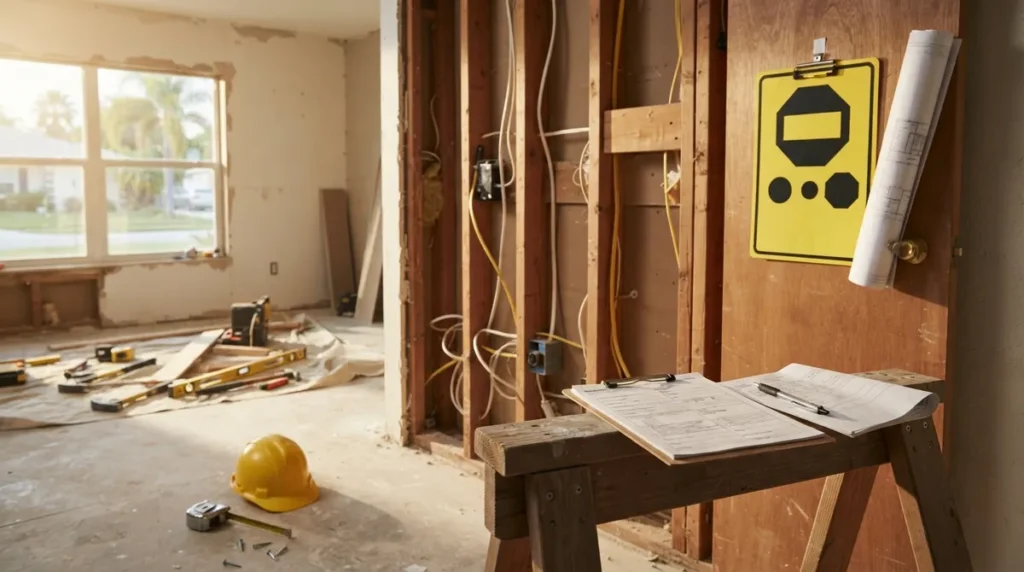
Key Takeaways
-
Work done without a permit in Florida can usually be legalized through an after-the-fact permit, but approval is not guaranteed and the process varies by jurisdiction.
-
Your local building authority (county, city, or town) controls permitting for your address, so confirm which one has jurisdiction before taking any other step.
-
Stop all further work and avoid covering or finishing the area until the building department tells you what it requires.
-
Consequences can include stop-work orders, notices of violation, double permit fees in some places, required corrections, and delays in sales, refinances, or insurance reviews.
-
If work is concealed, the department may require it to be exposed for inspection, so ask exactly what it needs to see before opening any walls.
-
Removal is not the typical outcome when unpermitted work is sound and can be verified or corrected to meet code, especially when the owner cooperates early.
Finding out that work was done without a permit can feel like a punch to the stomach. Maybe you bought a home and the inspector spotted an unpermitted addition. Maybe a past contractor skipped the paperwork. Or maybe a neighbor made a call and a code officer showed up at your door. First, take a breath. This happens to Florida property owners all the time, and it is usually fixable.
So what happens if work was done without a permit in Florida? In short, the local building authority can require you to apply after the fact, pay extra fees, pass inspections, and correct anything that does not meet code. Approval is not guaranteed, and every jurisdiction does things a little differently.
In this guide, we will walk you through what is at stake, what to do first, and how to bring the work into compliance. Whether you are a homeowner, a contractor, a solar installer, or a real estate professional, you will find a clear path forward.
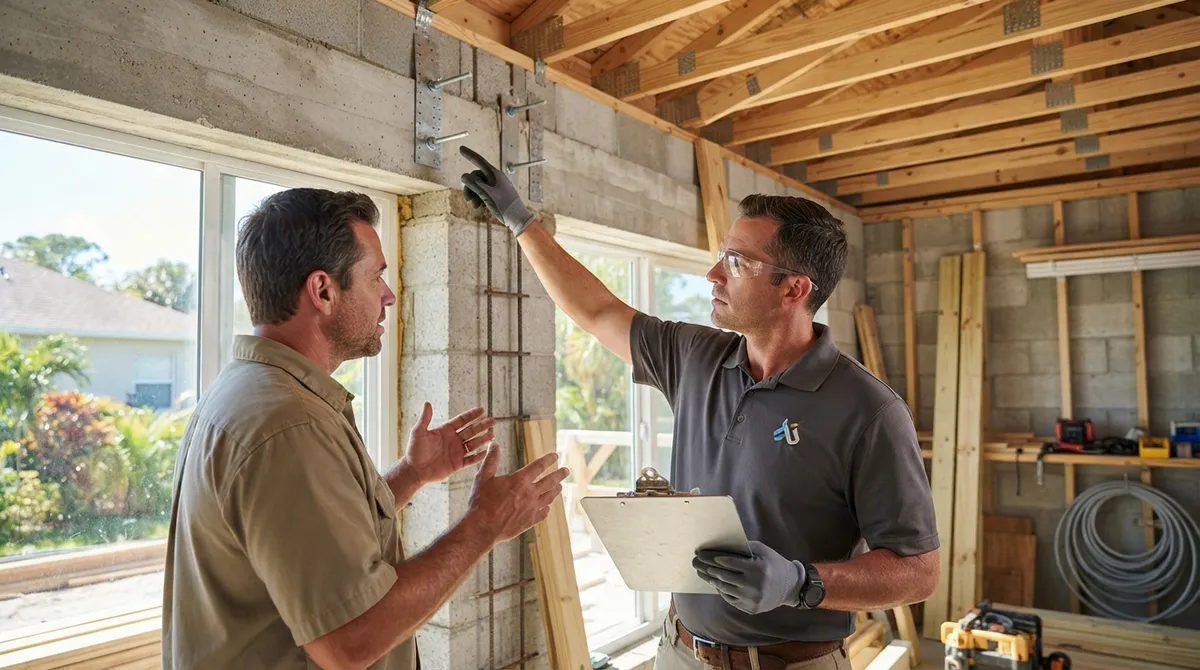
Why Florida Requires Permits in the First Place
Florida Statutes §553.79 generally makes it unlawful to construct, alter, repair, modify, or demolish a building without first getting a required permit from the enforcing agency. Whether your specific project needs one depends on the type of work and your local rules.
Permits exist to protect people. Inspectors verify that framing, wiring, plumbing, and structural connections meet the Florida Building Code. That matters even more in a state that faces hurricanes, flooding, and high winds every year.
Here is a point many owners miss. Florida has 67 counties, but the permitting authority might be the county, a city, or a town. Do not assume the county handles your address. Our building department lookup tool can help you confirm who has jurisdiction over your property.
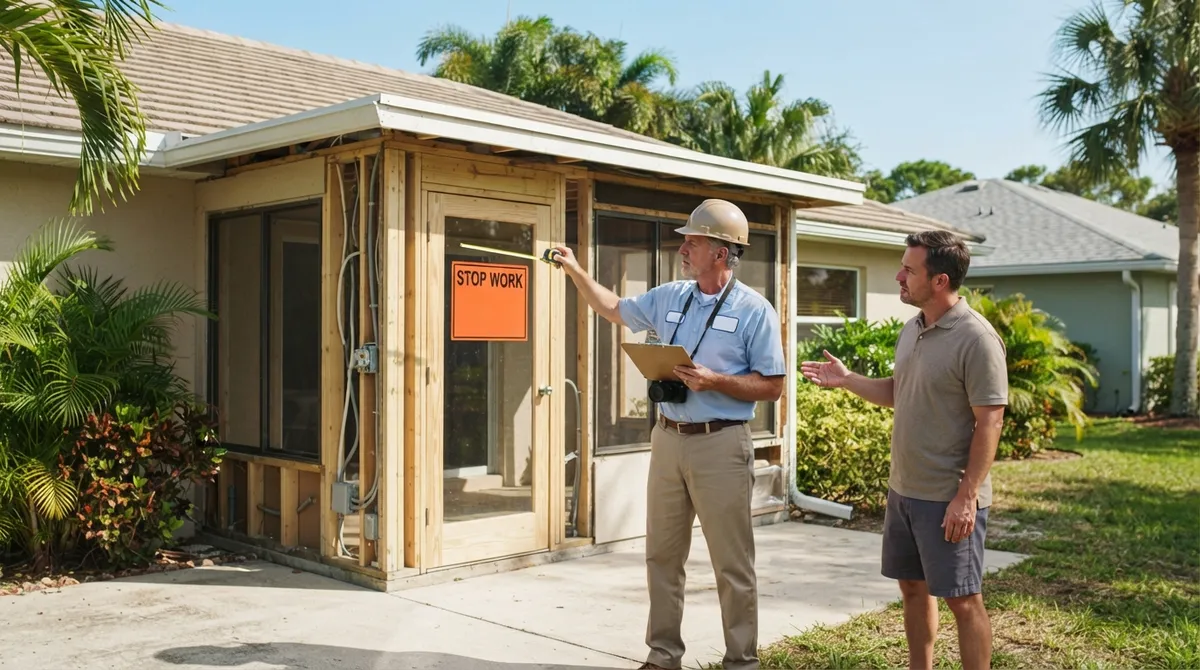
What Can Happen If Work Was Done Without a Permit
Consequences vary by location and by the type of work. There is no single statewide penalty amount. Still, most owners run into a similar set of outcomes.
- Stop-work orders: The authority can halt any ongoing work until the issue is resolved.
- Code enforcement action: A notice of violation may be issued, sometimes with a deadline to respond.
- Fines and extra fees: Some jurisdictions charge penalties or multiply permit fees for after-the-fact applications. Pembroke Pines, for example, states that after-the-fact permits are subject to double permit fees. That is a local policy, not a statewide rule.
- Required corrections: Work that does not meet code may need to be fixed, upgraded, or in some cases removed.
- Delays and complications: Open violations can slow down sales, refinances, and insurance reviews.
None of this is meant to scare you. It is meant to help you plan. Most cases end with the work legalized and the file closed, especially when the owner acts early and cooperates with the building department.
Common Consequences at a Glance
| Consequence | What It Means for You | How Likely to Vary by Location |
|---|---|---|
| Stop-work order | Work must pause until compliance is reached | Common when work is active or discovered mid-project |
| Notice of violation | You get a deadline to apply, correct, or respond | Procedures and deadlines differ by jurisdiction |
| Added fees or penalties | Higher cost than a normal permit | Varies widely; verify with your authority |
| Corrections or removal | Non-compliant work may need to be fixed or removed | Depends on the work and applicable codes |
| Transaction friction | Possible issues with sales, loans, or insurance | Depends on lender, buyer, and policy |
How to Handle Work Done Without a Permit: Step by Step
The good news is that there is a well-worn path for fixing this. Here is how most Florida owners and contractors approach it.
- Pause any further work. Do not keep building, covering, or finishing the area until you know what the building department needs.
- Identify the right authority. Confirm whether the county or a municipality controls permitting for your exact address.
- Gather what you know. Collect photos, contracts, receipts, product information, and anything showing when and how the work was done.
- Ask for the current after-the-fact checklist. Request the department's fee schedule, document requirements, and inspection process before you spend money on repairs.
- Prepare the required plans and documents. Depending on scope, this can include as-built drawings, site plans, or engineer letters.
- Submit the application and respond to comments. Plan reviewers may send correction notices, and you will need to answer each one.
- Complete inspections and corrections. Inspectors verify the work, and you fix any deficiencies they find.
- Get final approval and close the permit. A closed permit is what lenders, insurers, and buyers want to see.
If that list feels like a lot, you are not alone. Many people hand the whole thing off to a team that does this every day. Our after-the-fact and expired permit service is built for exactly this situation.
Understanding the After-the-Fact Permit Process
An after-the-fact permit, sometimes called a retroactive permit, is how you legalize work that has already been built. It is not automatic approval. Think of it as a regular permit review, only with the work already in place.
The owner typically applies to the local authority, provides plans or documentation, goes through plan review, passes inspections, fixes any problems, and receives final approval. If you want a deeper walkthrough, our guide on how to get an after-the-fact permit in Florida covers the process in more detail.
What Documents Are Usually Needed
Requirements differ by jurisdiction and project, but the packet often includes some combination of these items.
- A completed permit application and owner or contractor information
- Drawings that show the work as it exists today
- Site plans or surveys when the work affects setbacks or footprints
- Structural, electrical, plumbing, or mechanical documentation
- Product approvals or specifications for items like windows, doors, or roofing
- An engineer letter or report when the authority requires professional verification
For many projects, as-built drawings are the backbone of the application. They give the reviewer a clear picture of what was actually constructed.
What If the Work Is Already Covered Up?
Here is where things can get a little more involved. If completed work is concealed behind drywall, flooring, or finishes, the building department may require it to be exposed so inspectors can verify what is inside the walls or under the slab.
That can include framing, wiring, plumbing, or foundations. Depending on the scope, the authority may also ask for professional plans, field verification, or an engineer's report.
Before you open any walls, ask the department exactly what it wants to see. Sometimes a limited opening is enough. Sometimes a sealed letter from an engineer can reduce how much demolition is needed. Our engineer letters and structural engineering support help owners avoid unnecessary tear-outs.
Can You Be Forced to Tear Down Unpermitted Work?
This is the question that keeps people up at night. The honest answer is that it depends. If the work can be verified and brought into compliance, the authority usually allows it to stay. If it cannot meet code, or if it violates zoning or setback rules, removal or major correction may be required.
Many owners worry about the worst case, but removal is not the typical outcome when work is sound and the owner cooperates. The key is to document the work properly and work with the authority instead of avoiding it.
You can read more on this topic in our article on whether you will really have to demolish unpermitted work.
How Unpermitted Work Affects Sales, Loans, and Insurance
Unpermitted work does not automatically block every transaction, and it does not mean every insurer will deny a claim. The real impact depends on the buyer, lender, policy, and the facts of your situation.
| Situation | Possible Impact | Smart Move |
|---|---|---|
| Selling a home | Buyer or lender may ask for the work to be permitted or disclosed | Disclose accurately and legalize before listing if possible |
| Refinancing | Appraisal or title review may flag open or missing permits | Check permit records early and resolve gaps |
| Insurance review | Underwriters may question unpermitted improvements | Talk to your agent and keep documentation ready |
| Buying a home | You may inherit responsibility for prior owner's work | Research permit history before closing |
If you are in the middle of a deal, you can use our open permit search tool to check for open items. And if a closing is on the line, our realtor and closing support can help keep the transaction moving. For a closer look at one common scenario, see our article on what to do when an open permit is found at closing.
Tips for Each Type of Reader
Different people face this problem from different angles. Here is how to think about it based on your role.
Homeowners and Residential Property Owners
If a past contractor or previous owner skipped the permit, you can still fix it. Start by contacting the building department with jurisdiction and ask for the after-the-fact checklist. Our homeowner services are designed to make this less stressful.
General Contractors and Design Trade Professionals
If a subcontractor or a client pushed a job forward without a permit, cleaning it up quickly protects your license and your reputation. Accurate drawings and organized documentation speed things up. See how we support general contractors across Florida.
Solar Companies
Solar installs need code-compliant structural and electrical documentation. If a system went in without a permit, you will likely need engineering support to verify roof loads and electrical connections. Learn more about our work with solar contractors.
Real Estate Professionals and Investors
Permit research should happen before you buy, not after. A quick records review can save weeks and thousands of dollars. Our realtor support was built with this in mind.
Mistakes to Avoid
A few missteps can turn a manageable problem into a harder one. Watch out for these.
- Ignoring a notice. Deadlines matter, and missed deadlines can lead to larger penalties.
- Covering up work further. More concealment usually means more exposure later.
- Assuming the fee is the same everywhere. Fees and penalties vary by jurisdiction, so verify current numbers.
- Skipping professional drawings. Weak documentation often triggers more review comments and delays.
- Hiring an unlicensed contractor to finish. That can create a second set of problems.
If you have already received a violation, our code compliance violations service can help you respond properly and on time.
When It Is Time to Call a Professional
You do not have to figure this out alone. A permitting team that knows Florida jurisdictions can tell you which authority controls your project, what the reviewer will expect, and how to avoid common rejection reasons.
At 1 Contractor Solutions, we act as an outsourced permitting department. We prepare plans, file applications, track reviews, handle revisions, and carry the project through closeout. Our drafting and engineering are done in house, and our own engineer signs and seals the work, so comments get fixed fast. You can learn more on our services page.
We also respond within 30 minutes, day or night. If you want to see what other clients say, visit us on Google — 1 Contractor Solutions and read the reviews. You can also follow us on LinkedIn or follow us on Facebook for updates.
Official Resources Worth Bookmarking
It never hurts to read the source. The official text of Florida Statutes §553.79 explains the statewide framework for building permits and inspections. Keep in mind that your local building department sets its own after-the-fact procedures, fees, and inspection requirements, so always confirm the current rules with the authority that governs your address.
Ready to Fix It the Right Way?
Work done without a permit is stressful, but it is rarely the end of the road. With the right plans, honest communication, and a steady process, most Florida properties can be brought into compliance and the file closed for good.
If you are ready to move forward, we are here to help. Get a free quote and tell us your address and your situation. We will help you figure out who controls your project, what it will take, and how to get it done. Permits approved. Projects moving.
FAQs
What happens if you remodel without a permit in Florida?
The local building authority can issue a stop-work order, start code enforcement, add fees or penalties, and require you to apply for an after-the-fact permit. You may also need inspections and corrections before the work is approved. Outcomes vary by jurisdiction, so check with the department that covers your address.
Can I sell a house in Florida with unpermitted work?
Often you can, but it depends on the buyer, the lender, and the facts of your situation. Unpermitted work can slow or complicate a sale if it comes up during inspections or record checks. Disclosing it honestly and legalizing it before listing usually makes the process smoother.
How much does an after-the-fact permit cost in Florida?
There is no single statewide price, because fees and penalties are set locally. Some jurisdictions charge extra, like doubled permit fees, while others handle it differently. The best move is to ask your building department for its current fee schedule before you budget.
Can a building department make me tear out unpermitted work?
It can, but that is not the usual result when the work is sound and can be verified. If the work meets code, or can be corrected to meet code, it can often stay. Removal is more likely when the work cannot be brought into compliance or violates zoning rules.
Can unpermitted work affect homeowners insurance in Florida?
It can raise questions during an insurance review, but it does not mean every insurer will deny a claim. The outcome depends on your policy and the specific facts. Talking with your insurance agent and getting the work properly permitted can help protect you.
We do this work every day across all 67 Florida counties. Call (866) 314-6931 and we will tell you what your situation actually requires — including when you do not need us.
Related services
Permit Facilitation & Filing
You have a crew scheduled, a client asking for dates, and a permit sitting somewhere in a queue you cannot see. We file it, w…
See the servicePlan Review Coordination
A permit in plan review is not one queue. On a commercial project it can be six queues, each with its own reviewer, its own c…
See the serviceReady to get your permit moving?
One call tells you which jurisdiction controls your project, what it will take, and what it will cost. Most of the time we can scope it on the phone.