
Blog
How to Choose Who to Hire for Emergency Permitting in FL
Wondering who restoration contractors should hire for emergency permitting in Florida? Learn how to choose the right partner and avoid costly delays.
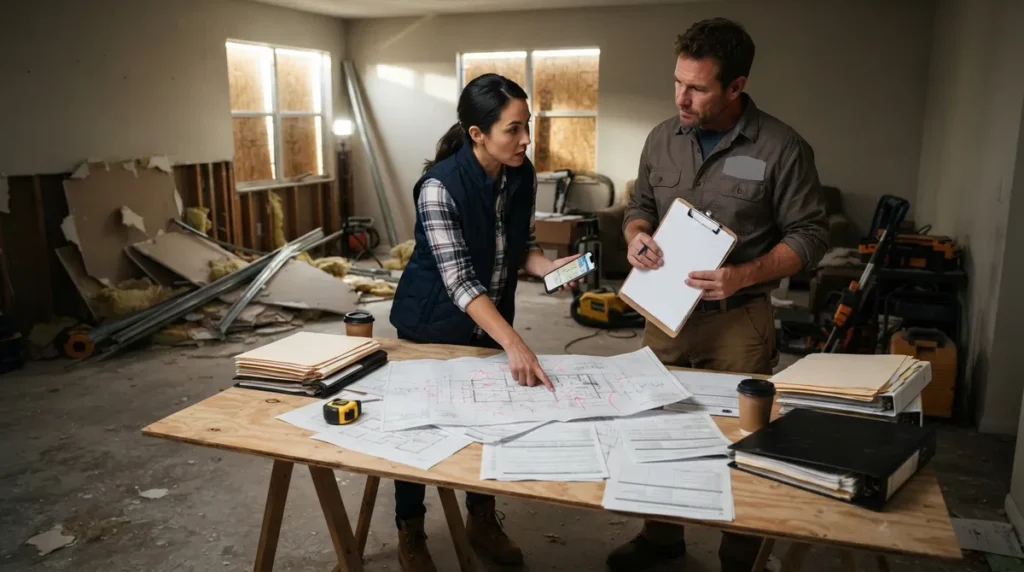
Key Takeaways
-
Hire a Florida permit expediter or permitting consultant with specific experience in your property's jurisdiction—they manage filings, inspections, and follow-up so your crew can work, but they do not replace your contractor license or engineer.
-
Emergency permitting rules vary dramatically across Florida's 67 counties and are event-specific; there is no statewide blanket exemption, so always confirm current local procedures with the building department before starting any work.
-
Avoid generic permit services and verify your partner has recent filings in your exact city or county, since rules change from county to county and even block to block.
-
Look for a permitting partner with in-house licensed engineering and drafting capabilities so reviewer comments get fixed internally instead of being passed between outside consultants, speeding up the entire process.
-
Submit complete permit packages on the first submission and respond quickly to reviewer comments, as incomplete applications are the leading cause of delays in post-storm permitting.
-
Red flags include anyone guaranteeing approval, advising you to start work without confirming local rules, offering vague pricing, or claiming they transfer your compliance responsibility—the contractor remains legally responsible.
The roof is open to the sky, the water is still standing in the living room, and the homeowner is calling you every two hours. You have a crew ready to roll. Then comes the question that stops everything cold: who is handling the permit?
If you run a restoration company in Florida, you already know that the work is only half the battle. After a hurricane, flood, or fire, who restoration contractors should hire for emergency permitting can make the difference between a crew working tomorrow and a crew sitting idle for weeks. The good news? You do not have to figure it out alone.
In this friendly, step-by-step guide, we will walk through what kind of professional you actually need, what they can and cannot do, how emergency rules really work across Florida's 67 counties, and how to vet a partner before you hand over a single file. Grab a coffee, and let's get you permit-ready.
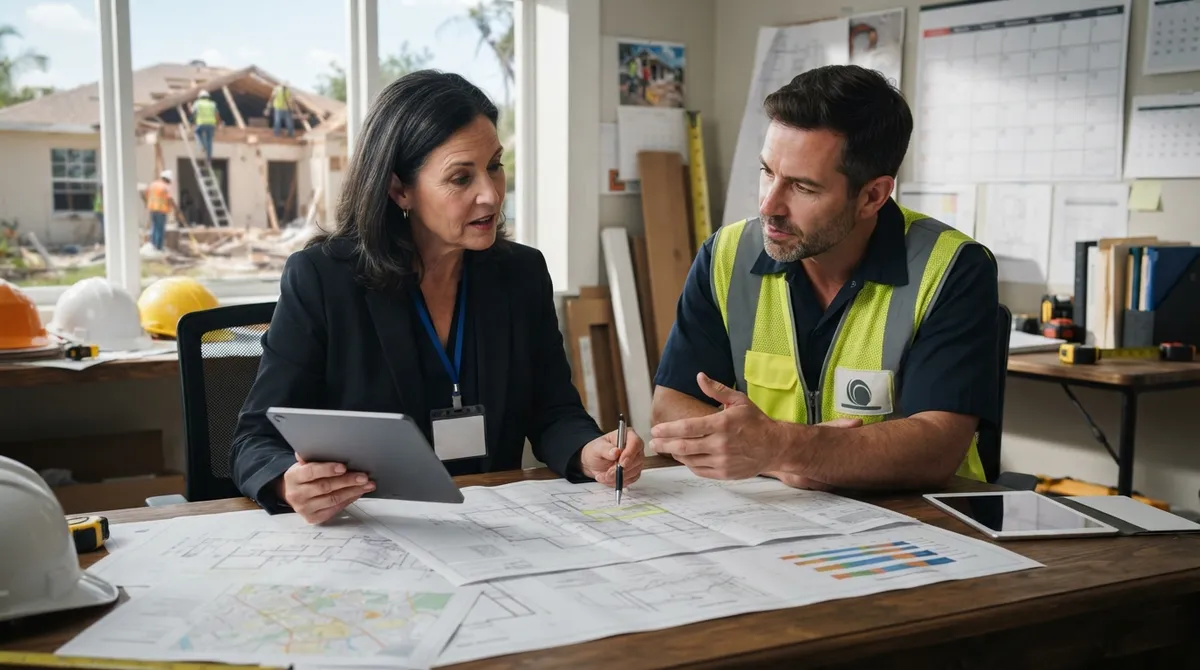
The Short Answer: Hire a Florida Permit Expediter or Permitting Consultant
For most restoration contractors, the best hire for emergency permitting is an experienced Florida permit expediter or permitting consultant who knows the specific city or county where the damaged property sits. That person (or team) manages applications, checklists, plan uploads, agency follow-up, and inspection scheduling so you can stay focused on the job site.
Here is the important part, and we want to be upfront about it: a permit expediter supports your process, but does not replace the licensed contractor, architect, or engineer. The local building department remains the authority that decides whether a permit is required and whether it gets issued.
Think of the right partner as your outsourced permitting department. If you want to see how that works for restoration firms specifically, take a look at our page for restoration companies.
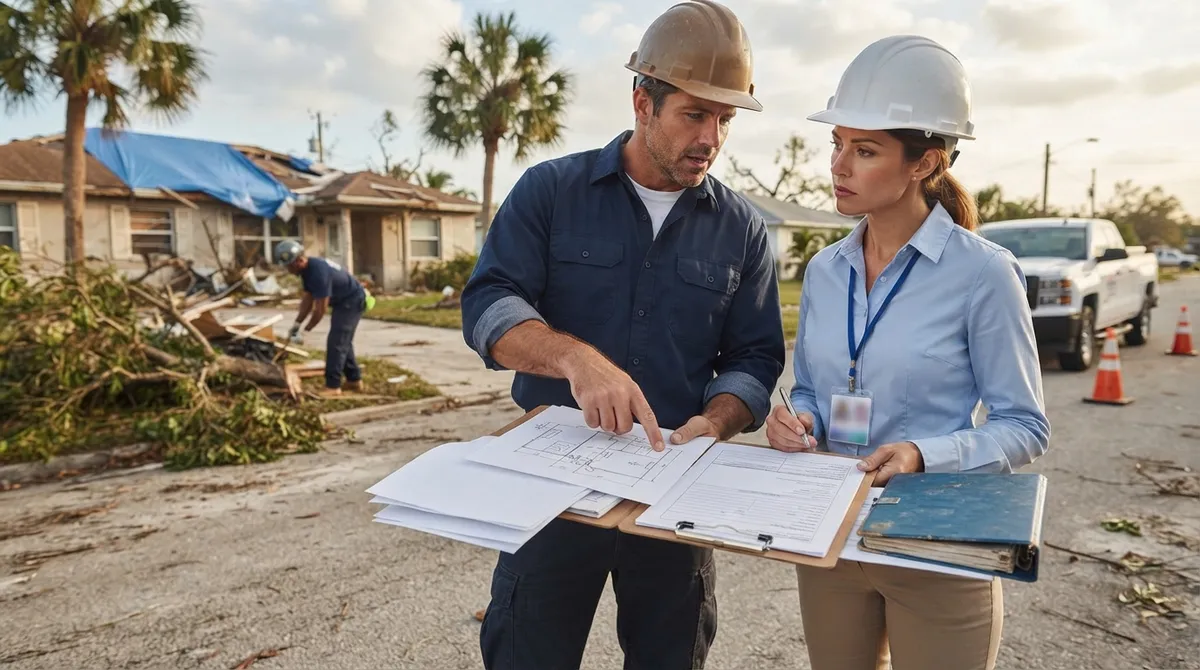
Why Emergency Permitting Is Different in Florida
Florida Statutes section 553.79 generally requires a permit before covered construction, alteration, repair, or demolition begins. But emergencies bend the rules a little, and that is where things get tricky.
Emergency orders and local post-disaster procedures may allow limited work to begin before a permit is issued. However, the scope, deadlines, documentation, and inspection requirements vary by jurisdiction and by event. There is no statewide blanket exemption.
A few real-world examples show how much variation exists:
- Fort Lauderdale: Its published procedure for repairs tied to the April 12, 2023 flood event allowed specified repairs by licensed contractors before permitting, with conditions like design-professional oversight, and required permits within 60 days after repair work began and before final inspection.
- Miami: Its post-storm plan describes emergency stabilization permits.
- Port St. Lucie: Lists fast-track review and expedited categories for certain repairs.
- Nassau County: Says certain storm-repair permit types may be issued within 24 hours when applications and supporting documents are compliant.
- Palm Beach County: Offered a Hurricane Milton fee waiver for qualifying applications submitted October 14, 2024 through April 14, 2025, while stating that licensing, insurance, inspections, and other legal requirements stayed in effect. That window has passed unless officially extended.
Notice the pattern? Every one of those is local and event-specific. That is exactly why a generic "permit person" is not enough. You need someone who knows the local playbook.
Who Can Help: Comparing Your Emergency Permitting Options
Not every professional does the same job. Here is a quick comparison of the people you may need on an emergency restoration project.
| Professional | What They Do | What They Cannot Do | Best For |
|---|---|---|---|
| Permit expediter / consultant | Identifies jurisdiction, assembles submittals, tracks reviews, schedules inspections | Replace a licensed contractor or sign and seal engineering | Speeding up filing and follow-up |
| Licensed Florida contractor | Holds the license required to pull most building permits and perform the work | Design structural work that needs a design professional | Pulling permits and performing repairs |
| Florida-licensed engineer | Signs and seals structural, electrical, mechanical, or plumbing designs and engineer letters | Handle administrative filing on their own | Structural damage, load paths, truss and roof questions |
| Architect / drafter | Prepares permit plan sets and as-builts | Seal engineering unless licensed to do so | Reconstruction after fire or major damage |
| Private provider | Performs plan review and inspections in lieu of the building department | Issue the permit itself | Bypassing long county review queues |
The sweet spot is a partner that combines several of these roles under one roof, so you are not juggling five phone calls during a crisis.
How to Choose Your Emergency Permitting Partner: Step by Step
Ready to hire? Follow these steps and you will avoid most of the headaches we see.
- Identify the authority having jurisdiction. Confirm whether the damaged property sits in a city, a county, or an unincorporated area. This is not always obvious near city lines, and filing in the wrong place wastes days.
- Confirm current emergency procedures. Ask the building department what is allowed before a permit, what must be documented, and what deadlines apply to this specific event.
- Verify local experience. Ask which counties and municipalities the partner has actually filed in recently, not just where they claim coverage.
- Check response availability. Disasters do not follow business hours. Look for same-day or even faster response.
- Get the scope and fees in writing. You should know exactly what is included, what is extra, and who owns each deliverable.
- Ask about design capability. Find out whether they provide only administrative expediting or also offer licensed drafting and engineering with sealed drawings.
- Request references and proof of insurance. A trustworthy firm will gladly provide both.
If you are not sure which jurisdiction controls a property, our building department lookup tool is a handy place to start.
What a Qualified Permitting Partner Should Actually Do
A good emergency permitting partner is more than a runner dropping paper at a counter. Here is what you should expect from them:
- Identify the authority having jurisdiction for each damaged property
- Confirm permit triggers and any emergency exceptions currently in effect
- Assemble jurisdiction-specific submittals and checklists
- Coordinate licensed trades and design professionals
- Track deadlines, comments, and approvals
- Arrange required inspections through closeout
That list lines up closely with permit facilitation and filing and plan review coordination, which are two of the core services restoration firms lean on after a storm.
When You Also Need an Engineer or Architect
Here is a question we hear all the time: does emergency restoration work require a Florida-licensed engineer or architect? Sometimes, yes.
Roof deck damage, compromised trusses, wall failures, and fire-related structural loss often call for a sealed engineer letter or structural drawings. Fort Lauderdale's 2023 flood procedure, for example, tied pre-permit work to design-professional oversight. Even when a local emergency order is flexible, structural questions still need a qualified answer.
That is why in-house engineering matters so much. When a reviewer flags something, the fix happens inside one team instead of waiting on an outside consultant to call someone back. Explore our engineer letters and structural engineering services to see how that looks in practice.
Emergency Work Scenarios and What They Typically Need
Every loss is different, but this table gives you a general sense of what to expect. Always confirm with the local building department before starting work.
| Scenario | Likely Permit Needs | Possible Extra Support |
|---|---|---|
| Hurricane roof damage | Roof permit, possible emergency or fast-track review | Engineer letter if decking or trusses are damaged |
| Flood damage | Repair permits, possible substantial damage review | Design-professional oversight, MEP review |
| Fire loss | Demolition, structural, and rebuild permits | Sealed structural and MEP plans |
| Water intrusion with mold | Remediation and repair permits as required | Environmental and mold coordination |
| Window and door failure | Impact window and door permits | Product approval documentation |
Many of these jobs touch more than one category. If your project involves demolition or windows, our pages on demolition permits and impact window and door permits go deeper. For roofing-heavy storm work, the roof permits page is worth a read.
Red Flags to Avoid When Hiring
Disasters bring out the best in people, and occasionally the worst. Watch for these warning signs:
- Guaranteed approval promises. No one controls the building department's decision. Anyone who guarantees approval is overselling.
- Advice to start work without confirming local rules. Emergency exceptions are local and event-specific. Skipping this step can create after-the-fact headaches later.
- No clear scope or fee schedule. Vague pricing in a crisis usually becomes expensive pricing.
- No Florida jurisdiction experience. Rules change from county to county, sometimes block to block.
- Claims that hiring them transfers your responsibility. It does not. The contractor remains responsible for lawful work and compliance.
If work already started without the right paperwork, do not panic. There are paths forward, including after-the-fact and expired permit solutions.
Speeding Up Post-Storm Reviews and Inspections
Once you have the right partner, a few habits help everything move faster. Submit complete packages the first time, because incomplete applications are the number one cause of delays. Respond to reviewer comments quickly and with the right professional behind the answer.
It also helps to understand your review options. In some situations, a licensed private provider can perform plan review and inspections instead of leaving you in the county queue. Read more about private provider plan review and inspections, and keep our guide on restoration company permitting in Florida handy for broader context.
Finally, remember that local service statements, like Nassau County's 24-hour storm-repair note, are not statewide guarantees. Build your schedule around what your specific jurisdiction actually delivers.
Where 1 Contractor Solutions Fits In
At 1 Contractor Solutions, we act as Florida's outsourced permitting department. We are not a construction contractor. We are the team restoration companies call when the permit is the only thing standing between them and a scheduled crew.
We work across all 67 Florida counties, respond within 30 minutes day or night, and keep drafting and engineering in house, so our own engineer signs and seals the work. That means reviewer comments get fixed fast instead of getting passed around. If your project is already stuck, our urgent permit rescue team can step in.
Curious what other pros think? You can see what our 1 Contractor Solutions customers say on Google, and you can follow us on LinkedIn or follow us on Facebook for Florida permitting updates.
A Quick Pre-Hire Checklist
Before you sign anything, run through this list:
- Do they know the exact jurisdiction where the damaged property is located?
- Can they show recent filings in that city or county?
- Is the scope and fee structure written down?
- Do they offer licensed drafting and engineering, or will you need a separate firm?
- Will they confirm current emergency procedures with the building department before work begins?
- Can they respond the same day, including nights and weekends?
If you can check every box, you are in good hands.
Final Thoughts: Make the Call Before the Crew Rolls
Emergency restoration is stressful enough without permit surprises. The smartest move is to line up an experienced Florida permit expediter or permitting partner before the next storm season, or at the very first sign of a loss. You stay licensed and in charge of the work, and your partner handles the paper chase, the deadlines, and the inspections.
Ready to put a team behind your next emergency job? Reach out today and get a free quote. We are happy to help you get permits approved and projects moving.
FAQs
Who should restoration contractors hire to handle emergency permits in Florida?
Most restoration contractors do best with an experienced Florida permit expediter or permitting consultant who knows the specific city or county involved. They handle applications, documents, and inspections, while you and any required engineer or architect stay responsible for the licensed work.
Can restoration work begin before a building permit is issued in Florida?
Sometimes, but only when a local emergency order or post-disaster procedure allows it. The scope, deadlines, and inspection rules vary by jurisdiction and event, so always confirm with the local building department before starting.
Does a permit expediter replace my contractor license or an engineer?
Nope. An expediter supports the process, but Florida generally requires an active contractor license to pull a building permit, and structural or design work may need a Florida-licensed design professional. Hiring help does not transfer your compliance responsibility.
What should I check before hiring an emergency permitting service?
Verify their Florida experience in your jurisdiction, ask for references and insurance, and get the scope and fees in writing. Also find out whether they offer sealed drawings in house, and steer clear of anyone promising guaranteed approval.
We do this work every day across all 67 Florida counties. Call (866) 314-6931 and we will tell you what your situation actually requires — including when you do not need us.
Related services
Permit Facilitation & Filing
You have a crew scheduled, a client asking for dates, and a permit sitting somewhere in a queue you cannot see. We file it, w…
See the servicePlan Review Coordination
A permit in plan review is not one queue. On a commercial project it can be six queues, each with its own reviewer, its own c…
See the serviceReady to get your permit moving?
One call tells you which jurisdiction controls your project, what it will take, and what it will cost. Most of the time we can scope it on the phone.