
Blog
8 Solar Company Permitting Fort Lauderdale Tips (2026)
Eight practical tips for solar company permitting in Fort Lauderdale, from LauderBuild and checklists to engineering, code, and utility steps.
Key Takeaways
-
Fort Lauderdale's city aims to finish initial solar permit reviews within 30 days or less, but this is a target, not a guaranteed approval date, so plan schedules with buffer.
-
Incomplete submittal packages are the leading cause of permit delays; match equipment model numbers across all documents and show setbacks, array layout, and roof access pathways on the roof plan.
-
Always download the current Solar Panel Permit Checklist from Development Services for each project, since requirements can change between code cycles or staffing updates.
-
Monitor the LauderBuild portal daily for reviewer comments, because unanswered comments can stall projects for days even when the package is otherwise solid.
-
Utility interconnection approval is a separate process from the city construction permit and is generally required before a grid-connected system can operate, so start it early in parallel.
-
Scope the full job before filing, including batteries, panel or service upgrades, which can trigger extra reviews or separate permits that cause costly mid-review delays.
If you run a solar company in Broward County, you already know the panels are the easy part. The hard part is the paperwork standing between a signed contract and a crew on the roof. Every day a permit sits in review is a day your installers are idle, your customer is wondering what happened, and your cash flow is waiting on a green sticker.
Good news: solar company permitting Fort Lauderdale style is very manageable once you know how the city's process works. Fort Lauderdale runs applications through its digital LauderBuild portal, holds a SolSmart Gold designation, and aims to finish initial permit reviews within 30 days or less. That target is not a guarantee, though, and incomplete packages are the number one reason projects stall.
Whether you are a growing installer, a general contractor adding solar to your lineup, or a homeowner trying to understand what your installer is doing, these eight tips will help you keep projects moving. We will walk through the portal, the paperwork, the code, and the little details that separate a smooth approval from a frustrating rejection.
1. Start With the City's Current Solar Checklist
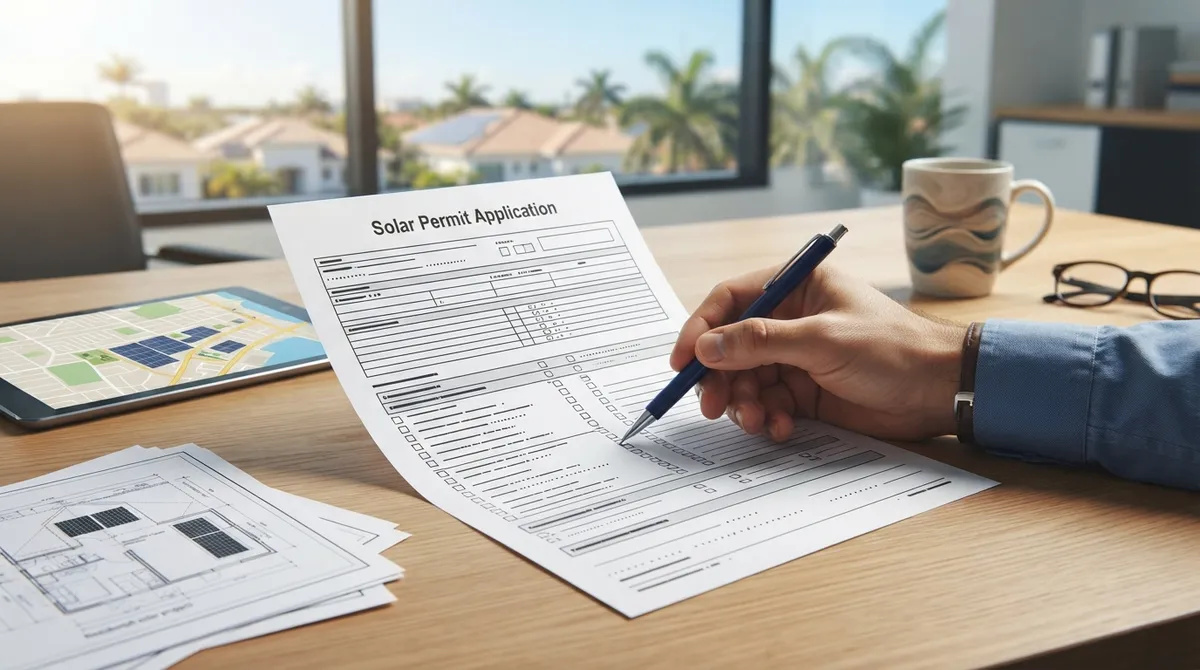
Before you draw a single line, pull the City of Fort Lauderdale's current Solar Panel Permit Checklist from the Development Services forms page. Think of it as the answer key to the test. Reviewers use it to decide whether your package is complete, so building your submittal around it is the smartest first move you can make.
Checklists get updated, and requirements can shift between code cycles or staffing changes. A package that sailed through last year might get flagged this year simply because a form changed. Make it a habit to download a fresh copy for every job rather than reusing an old template.
- Download the checklist at the start of each project, not the end.
- Confirm the code edition and any local amendments listed.
- Verify fees and permit scope with Development Services before you file.
- Keep a dated copy of the checklist in your project file.

2. Know How LauderBuild Works
Fort Lauderdale processes permit applications digitally through LauderBuild, the city's Citizen's Portal. Getting comfortable with it early saves real time, because a misfiled document or wrong permit type can send your application back to square one.
Here is a simple way to approach a new submission:
- Confirm your contractor account and registration are active in the portal.
- Select the correct permit type for the scope of work.
- Upload every required document as clearly labeled, legible files.
- Pay any fees due at submission and save your confirmation.
- Monitor the portal daily for reviewer comments or status changes.
Many installers underestimate that last step. Reviewer comments can sit unanswered for days simply because nobody was watching the portal. If your team is stretched thin, our permit facilitation and filing service handles submission and tracking so comments get answered fast.
3. Understand the Review Types a Solar Project Triggers
A rooftop solar PV installation generally requires both building and structural review as well as electrical review. The exact permit structure depends on the system, the property, and the scope of work, so do not assume every job looks the same. Adding batteries, a service upgrade, or other associated work can trigger extra reviews or separate permits.
| Project Element | Likely Review Focus | Common Pitfall |
|---|---|---|
| Rooftop PV array | Structural attachment, wind loads, electrical | Missing roof capacity documentation |
| Battery storage | Electrical, possible additional review | Treating it as part of the base permit |
| Main panel upgrade | Electrical service review | Not showing it on the one-line diagram |
| Solar thermal equipment | Mechanical and plumbing considerations | Assuming PV rules apply |
The takeaway is simple: scope the whole job before you file. Discovering mid-review that you need a second permit is a classic way to lose weeks.
4. Build a Complete Submittal Package
Incomplete applications are the most common cause of delays, and they are also the most preventable. Typical solar submittals include a completed permit application, a site or roof plan, an electrical one-line or riser diagram, equipment specifications, and structural documentation that addresses roof capacity, attachment details, and wind loads. The city's current checklist controls what your specific project must include.
Plan sets need to be clear, consistent, and code-driven. A one-line diagram that does not match the equipment spec sheets is an instant red flag for a reviewer. So is a roof plan that does not show setbacks and array layout clearly.
- Match equipment model numbers across every document.
- Show array layout, setbacks, and roof access pathways on the roof plan.
- Include attachment details and fastener specifications.
- Label conductor sizes, overcurrent protection, and disconnects on the one-line.
- Use legible, properly scaled drawings every time.
If drafting is a bottleneck for your team, our plans and engineering team prepares permit-ready sets, and if you already have your own engineer, drafting only lets us draw the set and stop there.
5. Get the Structural and Electrical Engineering Right
Florida wind loads are no joke, and Broward County reviewers know it. Structural documentation needs to show the roof can carry the added dead load and that the racking attachment can resist uplift. Skimping here leads straight to comment letters.
On the electrical side, your design must comply with the applicable electrical code and adopted requirements. The details of interconnection, rapid shutdown, labeling, and grounding all need to be addressed clearly. Sealed drawings are often the difference between a one-round approval and a three-round slog.
This is where having engineering in house really pays off. When a reviewer flags a structural or electrical question, you want a fix within hours, not a week of phone tag with an outside consultant. Our structural engineering and MEP engineering teams produce sealed work and respond to reviewer comments directly.
6. Follow the Right Florida Building Code
Florida's current statewide code edition is the Florida Building Code, 8th Edition (2023), which took effect December 31, 2023. That is the baseline for solar structural and electrical design in 2026. Always confirm the edition and any local amendments at the time you apply, because the code your drawings cite must match what the city is enforcing.
| Code Item | What to Confirm |
|---|---|
| Florida Building Code edition | 8th Edition (2023) in effect |
| Electrical code requirements | Applicable edition and adopted amendments |
| Local checklist | Current version on the city's forms page |
| Wind design criteria | Correct wind speed and exposure for the site |
A quick tip: put the code edition on your cover sheet or general notes. It signals to the reviewer that you are working from the right playbook and heads off needless back-and-forth.
7. Plan for Contractor Licensing and Registration
Permit applicants should verify that the contractor holds the appropriate Florida license and is registered with the city as required. A homeowner may be able to pursue certain work as an owner-builder in some situations, but solar installations typically involve electrical work and licensed professionals, so confirm what applies before you assume anything.
Registration problems are sneaky. Your license can be perfectly valid and your application still gets held because registration with the municipality is not current. That is a painful reason to lose a week.
- Verify your Florida contractor license is active and the right classification for the work.
- Confirm your registration with the City of Fort Lauderdale is current.
- Check insurance and workers' compensation documentation.
- Keep your qualifier information consistent across every form.
If you are expanding into new jurisdictions, our municipality registration and DBPR licensee processes services take that admin burden off your plate. You can also use the free contractor registration checklist to see what you might be missing.
8. Do Not Confuse the City Permit With Utility Interconnection
Here is a mix-up that trips up even experienced teams: utility interconnection approval is separate from the municipal construction permit. Generally, you need interconnection approval before a grid-connected system can operate. A finished permit and a passed inspection do not mean the customer can flip the switch.
Treat the two as parallel tracks. Start the utility application early so it does not become the final holdup after inspection. Customers get understandably frustrated when a system sits idle on the roof, so setting expectations upfront builds trust.
Also remember that the city's SolSmart Gold designation and its participation in the GoSolar Broward Rooftop Solar Challenge reflect efforts to streamline solar permitting. They are encouraging signs, but they do not replace permit or code requirements.
Realistic Timelines: What to Tell Your Customers
Fort Lauderdale says Development Services aims to complete initial permit reviews within 30 days or less. Notice the wording: it is an initial review target, not a promise of end-to-end approval. Corrections, workload, project complexity, and other agency approvals can all stretch the schedule.
| Factor | Effect on Timeline |
|---|---|
| Complete first submittal | Keeps you within the review window |
| Reviewer comments | Adds a resubmittal round for each cycle |
| Batteries or service upgrades | May add reviews or permits |
| Utility interconnection | Runs separately, can extend go-live |
Our Florida solar permit timelines guide goes deeper on what to expect across jurisdictions. And if you want the local picture, take a look at how we support permitting in Fort Lauderdale and across Broward County.
When It Is Time to Call in Backup
Plenty of solar companies handle permitting in house until volume climbs or a project gets stuck. At that point, an outsourced permitting department can be a game changer. 1 Contractor Solutions works as Florida's outsourced permitting department, handling filing, tracking, reviewer comments, revisions, and closeout, with in-house sealed drawings so fixes do not wait on outside consultants.
If you want to see how other installers have fared, see what our 1 Contractor Solutions customers say on Google. And if you are scaling across counties, our solar contractor services are built for exactly that. For updates and permitting news, follow us on LinkedIn or follow us on Facebook.
One more helpful resource: the City of Fort Lauderdale publishes its solar power information page, which is worth bookmarking alongside the Development Services forms.
Wrapping Up
Smooth solar permitting in Fort Lauderdale comes down to preparation: use the current checklist, master LauderBuild, scope the full project, submit a complete and code-compliant package, keep your licensing and registration current, and track utility interconnection separately. Do those things consistently and your approval times will thank you.
Ready to stop babysitting permits and get back to installing? Reach out today to get a free quote and let our team handle the paperwork while your crews stay on the roof. We respond within 30 minutes, day or night, and we would love to help.
FAQs
How do I apply for a solar permit in Fort Lauderdale?
Applications are submitted digitally through the city's LauderBuild Citizen's Portal. Start by downloading the current Solar Panel Permit Checklist from Development Services, then upload a complete package and watch the portal for reviewer comments. We are happy to handle the filing and tracking for you if you would rather stay focused on installs.
How long does solar permitting take in Fort Lauderdale?
The city aims to complete initial permit reviews within 30 days or less, but that is a target rather than a guaranteed approval date. Corrections, project complexity, and other approvals can add time. Submitting a complete, code-compliant package is the best way to stay on schedule.
What documents are required for a Fort Lauderdale rooftop solar permit?
Typical submittals include a permit application, a site or roof plan, an electrical one-line diagram, equipment specifications, and structural documentation covering roof capacity, attachments, and wind loads. The city's current checklist controls what your specific project needs, so always confirm it before filing.
Is utility approval required in addition to the city solar permit?
Yes. Utility interconnection approval is a separate process from the municipal construction permit, and it is generally needed before a grid-connected system can operate. Starting both tracks early helps prevent a system from sitting idle after inspection.
Do batteries or a panel upgrade need additional permits?
They can. Battery storage, service upgrades, or other associated work may trigger additional reviews or separate permits depending on the project scope. Scope the entire job up front and confirm requirements with Development Services before you file.
We do this work every day across all 67 Florida counties. Call (866) 314-6931 and we will tell you what your situation actually requires — including when you do not need us.
Related services
Permit Facilitation & Filing
You have a crew scheduled, a client asking for dates, and a permit sitting somewhere in a queue you cannot see. We file it, w…
See the servicePlan Review Coordination
A permit in plan review is not one queue. On a commercial project it can be six queues, each with its own reviewer, its own c…
See the serviceReady to get your permit moving?
One call tells you which jurisdiction controls your project, what it will take, and what it will cost. Most of the time we can scope it on the phone.