
Blog
8 Mistakes When Pulling Permits Out of County in Florida
Wondering if your Florida license works in another county? Learn the certified vs. registered rules and 8 mistakes that delay out-of-county permits.

Key Takeaways
-
A Florida state-certified contractor can generally pull permits statewide under §489.113(4)(a), but must show current certification and pay applicable fees to the local building official.
-
A state-registered contractor is limited to areas where local licensing requirements were met, so registered contractors must satisfy local rules before working in a new county.
-
Statewide authority does not eliminate paperwork: many offices require a contractor profile, license upload, insurance proof, workers' comp documentation, or a business tax receipt.
-
Confirm the permitting authority first, since the city often issues permits for addresses inside municipalities even when a county name or mailing address suggests otherwise.
-
Your license covers only its classification scope, so a roofing contractor cannot pull structural or electrical permits, and local officials verify scope before issuing permits.
-
Out-of-county applications are most often rejected for missing documents, so verify each office's checklist and track review timelines, fees, and inspection rules before bidding.
You've got a crew booked, materials ordered, and a client who's been waiting patiently. Then the question hits: can I pull permits in another county with my Florida license? It's a great question, and honestly, it trips up even seasoned contractors. The short answer is often yes, but the details are where projects get stuck.
Here's the good news. Florida law gives certified contractors real flexibility across county lines. The not-so-good news? Local offices still have their own paperwork, portals, and quirks. Skip one step, and your permit sits in limbo while your crew sits on the tailgate.
In this friendly guide, we'll walk through eight common mistakes contractors make when working outside their home county. We'll also clear up the certified versus registered license puzzle, show you how to find the right permitting office, and share what to have ready before you apply. Whether you're a general contractor, solar installer, or a homeowner hiring out-of-area help, you'll leave with a clear plan. Let's get you permitted and building.
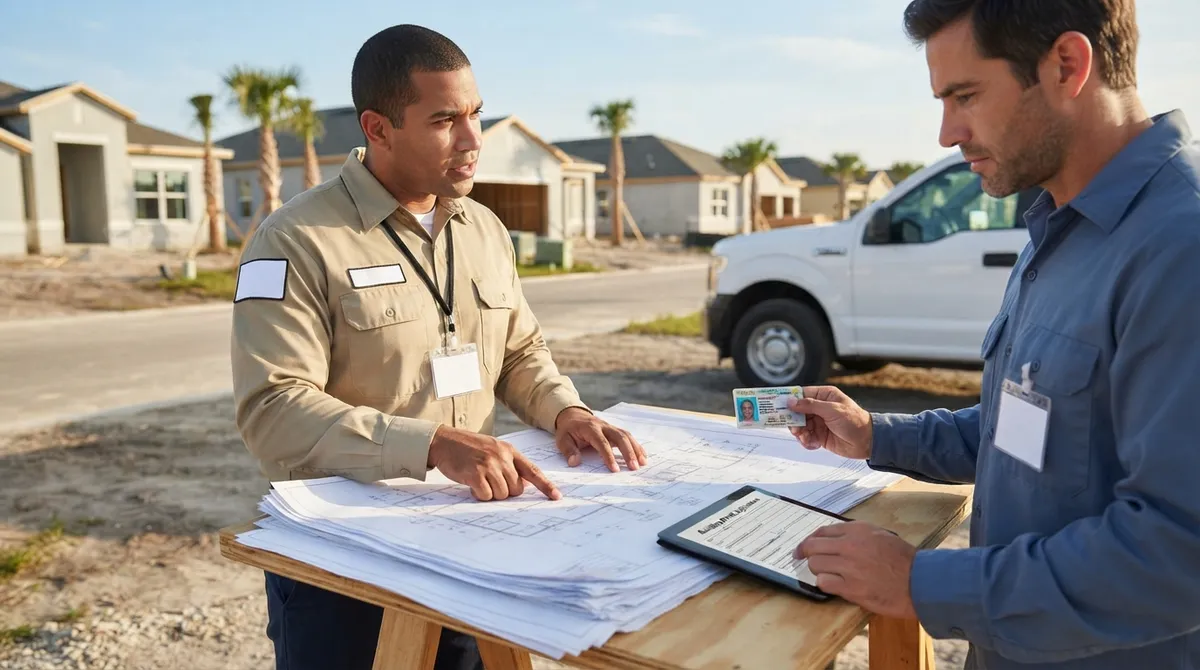
The Quick Answer: Can a Florida License Travel Across Counties?
In most cases, yes. If you hold an active state-certified contractor license, you can generally apply for permits statewide within the scope of that license. Under Florida Statute §489.113(4)(a), a certificateholder who wants to work in another area must show the local building official current certification and pay the applicable permit and occupational-license fees.
That statute is the heart of the answer. Your certification isn't tied to the county where you first earned it. However, statewide authority does not mean zero paperwork. Each building department can still require its own forms, plans, insurance proof, and inspection steps.
Think of it like driving across Florida with your driver's license. Your license works everywhere, but each county still has its own parking rules and toll booths. The permit office is the toll booth, and it's friendlier when you arrive prepared.
Certified vs. Registered: The Difference That Changes Everything
This is the first place many contractors stumble. Florida issues two main types of contractor licenses, and they behave very differently when you cross county lines.
| Feature | State-Certified License | State-Registered License |
|---|---|---|
| Geographic reach | Statewide, within license scope | Limited to areas where local requirements were met |
| Governing statutes | §489.113(4)(a), §489.131 | §§489.117 and 489.513 |
| Separate local license needed? | Generally no for professional licensing | Often yes, in each area you work |
| Local admin steps | Profile setup, uploads, fees may apply | Local compliance plus admin steps |
| Best for | Multi-county work | Staying within registered jurisdictions |
A registered contractor may only work in the counties, municipalities, or development districts where they've complied with applicable local licensing requirements. If you're registered and want to expand, you'll need to satisfy those local rules first.
Not sure which license you hold? Check your DBPR record. If you want help sorting out your status, our team handles DBPR licensee processes every day.
Mistake #1: Assuming Statewide Means Paperwork-Free
Let's start with the big one. Contractors hear "statewide license" and think they can simply show up and submit. That's rarely how it works.
Even certified contractors must follow the project jurisdiction's permit, fee, documentation, and inspection procedures. Many local offices want you to create a contractor profile, upload your license, provide proof of insurance, or register in their system before you can apply.
These steps are administrative. They are not a second professional license. A certified contractor generally cannot be required to obtain a separate local professional license or pay a local professional-license fee for work within the statewide certificate's scope (§489.131(3)(a)). But a business tax receipt or contractor profile? Those can still be on the table.
Our contractor registration checklist is a handy way to see what offices commonly ask for before you apply.
Mistake #2: Applying to the Wrong Permitting Office
Here's a sneaky one. The permit authority is usually the city or county building department with jurisdiction over the project address. It's not always the county.
If the property sits inside a municipality, the city often issues the permit rather than the county. Near city lines, it can get genuinely confusing. A home with a "Tampa" mailing address, for example, might actually fall under unincorporated Hillsborough County.
Before you apply, confirm jurisdiction. You can start with our building department lookup tool, or read our guide on which Florida jurisdiction reviews my project.
Getting this right saves you from rejected applications and wasted fees. It's a five-minute check that prevents a two-week delay.
Mistake #3: Skipping the Local Contractor Registration Step
Some offices call it registration, others call it a contractor profile or license verification. Whatever the label, many Florida jurisdictions want your information on file before they'll accept an application.
For example, Sumter County says state-certified contractors may obtain permits there and offers an online registration process. Osceola County directs contractors to register with the county after obtaining a state license and describes annual business tax receipt renewal. Requirements vary, so always verify current procedures directly with the permitting authority.
Common local requirements include:
- Uploading a copy of your state license
- Providing workers' compensation proof or an exemption
- Submitting general liability insurance certificates
- Paying a business tax receipt or registration fee
- Creating an online portal account
If juggling these across dozens of offices sounds exhausting, you're not alone. Our municipality registration service takes this off your plate, and our insight on Florida contractor municipality registration explains the process in detail.
Mistake #4: Working Outside Your License Scope
Your certificate is statewide, but it is not unlimited. It only covers the type of work your license allows. A certified roofing contractor can't suddenly pull a permit for a structural addition, and a certified plumber can't pull electrical permits.
Local officials must verify that a contractor is appropriately certified or registered for the project area before issuing a permit (§489.131(5)). If your license classification doesn't match the work, expect a denial.
Before you bid out of county, double-check three things:
- Your license classification matches the scope of work.
- Your license status is active and in good standing.
- Any required subcontractor trades are separately licensed.
For a refresher on classifications, see our guide to Florida contractor license requirements.
Mistake #5: Not Knowing That Permits Can Be Denied or Conditioned
Statewide authority is strong, but it isn't absolute. Under §489.113(4)(b), local authorities may deny, suspend, or condition a certified contractor's permit authority in specified cases involving findings of fraud or willful building-code violations.
This isn't something most contractors run into. But if you've had a disciplinary issue, expect more scrutiny. Keep your records clean, your inspections passed, and your permits closed out properly.
Speaking of closing things out, open or expired permits can follow you around. If you've got loose ends, our open permit search can help you spot them, and our team can help resolve expired permits before they cause trouble.
Mistake #6: Submitting an Incomplete Application Package
Out-of-county permit applications are rejected most often for missing paperwork, not for license problems. Each office has its own checklist, and what worked in Pinellas may not be enough in Miami-Dade.
Here's a general starter package for most Florida permit submittals:
- Completed permit application for the correct trade
- Proof of active state certification
- Insurance and workers' compensation documentation
- Signed and sealed plans, where required
- Product approvals or notices of acceptance
- Notice of Commencement for qualifying projects
- Owner authorization or contractor agreement
Speaking of notices, review our guide on the Notice of Commencement in Florida so you're not caught off guard at inspection time.
If plans are part of your package, our plans and engineering team prepares sealed drawings in house, so you're not waiting on an outside consultant when a reviewer has a question.
Mistake #7: Misusing Owner-Builder Permits
Some contractors, especially those unfamiliar with a county, wonder if they can slip through by using an owner's permit. Please don't. Owner-builder permits are a separate route entirely, and they don't let a contractor evade licensing rules.
The property owner must meet Florida's owner-builder requirements and accept the legal responsibilities that come with it. Regulated work may still require licensed subcontractors. Using an owner's permit as a workaround for unlicensed or out-of-scope work can create serious legal and insurance problems.
If you're a homeowner considering this route, learn the rules first through our owner-builder permits page. And if you're curious who else qualifies to apply, our article on who can pull a permit in Florida breaks it down.
Mistake #8: Underestimating Local Timelines and Inspection Rules
Your license may travel, but review speeds do not. A permit that clears in days in one county can take weeks in another. Inspection scheduling, plan review queues, and resubmittal rules all differ.
Here's a rough way to think about planning for an unfamiliar jurisdiction:
| Planning Factor | What to Check Before You Bid | |
|---|---|---|
| Review time | Current average turnaround for your permit type | |
| Submittal method | Online portal, in person, or email | |
| Inspection scheduling | Lead time and cutoff times | |
| Fees | Permit, plan review, impact, and occupational fees | |
| Special rules | Wind zones, flood zones, historic districts |
Our guide on how long a building permit takes in Florida can help you set realistic expectations with clients. And if you want to skip the county queue, a licensed private provider can perform plan review for you, as explained in our comparison of private provider vs. building department.
A Simple Step-by-Step Checklist for Out-of-County Permits
Ready to put it all together? Follow this quick process the next time you take a job outside your home county.
- Confirm your license type. Verify you hold a state-certified license, not a registered one.
- Verify the jurisdiction. Identify whether the city or county issues the permit for the address.
- Check local contractor requirements. Look for profile setup, registration, or business tax receipt rules.
- Match your scope. Confirm the work falls inside your license classification.
- Gather your documents. License, insurance, plans, product approvals, and owner authorization.
- Submit and pay applicable fees. Include permit and occupational-license fees where required.
- Track the review. Respond quickly to comments and resubmittals.
- Schedule inspections and close out. Don't leave permits open after the job is done.
If that list feels like a second full-time job, that's exactly why contractors call us. 1 Contractor Solutions acts as Florida's outsourced permitting department, filing and tracking permits across all 67 counties so you can stay focused on the work. Our permit facilitation and filing service handles the paperwork from first submittal to closeout.
Who Benefits Most From Out-of-County Permit Help?
Different readers face different hurdles, so here's how this plays out in the real world.
- General contractors: You're juggling multiple jurisdictions at once. A consistent filing partner keeps every county's quirks organized. See our page for general contractors.
- Solar companies: Fast approvals drive your schedule. Code-compliant structural and electrical documentation matters. Visit our solar contractors page.
- Realtors and investors: Permit research can make or break a closing. Our realtor support is built for tight timelines.
- Homeowners: You want to hire the best crew, even if they're based a county away. We help you confirm they're properly licensed and permitted. Explore our homeowner resources.
Whatever your role, the principle is the same: a little preparation upfront prevents big delays later.
How 1 Contractor Solutions Helps You Cross County Lines
We're not a construction contractor. We're the team contractors call when the permit is the thing standing between them and a scheduled crew. Our drafting and engineering are in house, and our own engineer signs and seals the work, so reviewer comments get fixed fast.
We've filed in more than 400 municipalities, handled over 5,000 permits and projects, and spent 15+ years working Florida permitting. We respond within 30 minutes, day or night, and se habla español. You can see what our customers say by checking 1 Contractor Solutions reviews on Google, and you can follow us on LinkedIn or follow us on Facebook for permitting tips and updates.
For official statutory language, you can always review Chapter 489 of the 2026 Florida Statutes directly. It's the foundation for everything we've covered here.
Final Thoughts: Your License Travels, But Preparation Wins
So, can you pull permits in another county with your Florida license? If you're state-certified, generally yes, as long as the work fits your license scope and you follow the local jurisdiction's procedures. If you're state-registered, you'll need to meet local requirements in each area first.
The eight mistakes we covered all come down to one theme: treating a statewide license as a free pass. It's a powerful tool, but it works best when paired with the right paperwork, the right office, and the right timing.
Don't let a county line slow down your next job. Whether you need filing, plans, registration, or a rescue for a stuck permit, we're here to help. Get a free quote today, and let's get your project permitted and moving.
FAQs
Can a Florida-certified contractor pull permits anywhere in Florida?
Generally, yes. A state-certified contractor can apply for permits statewide within the scope of the active certificate, per Florida Statute §489.113(4)(a). You'll still need to show your current certification, pay applicable fees, and follow each local office's procedures.
What is the difference between a Florida certified and a registered contractor?
A certified contractor holds a statewide license, while a registered contractor is limited to areas where local licensing requirements have been met. So if you're registered, you'll need to satisfy local rules before working in a new county. Checking your DBPR record is a great first step.
Do I need to register my Florida contractor license in another county?
Not as a separate professional license if you're certified, but many offices still require a contractor profile, license upload, or business tax receipt. These are administrative steps, and they vary by jurisdiction, so it's smart to confirm with the local building department before you apply.
How do I find out whether the city or county issues the permit?
Look at the project address, because the building department with jurisdiction over that location issues the permit, and that may be a city rather than the county. A building department lookup tool or a quick call to the county can confirm it. Doing this first saves you from rejected applications.
Can a contractor use an owner-builder permit instead?
No, not as a workaround. Owner-builder permits are a separate route where the property owner meets Florida's requirements and accepts the responsibilities, and they can't be used to evade contractor licensing rules. Regulated work may still require licensed subcontractors.
We do this work every day across all 67 Florida counties. Call (866) 314-6931 and we will tell you what your situation actually requires — including when you do not need us.
Related services
Permit Facilitation & Filing
You have a crew scheduled, a client asking for dates, and a permit sitting somewhere in a queue you cannot see. We file it, w…
See the servicePlan Review Coordination
A permit in plan review is not one queue. On a commercial project it can be six queues, each with its own reviewer, its own c…
See the serviceReady to get your permit moving?
One call tells you which jurisdiction controls your project, what it will take, and what it will cost. Most of the time we can scope it on the phone.