
Blog
10 Roofing Permit Services Tampa Mistakes to Avoid
Avoid the 10 most common Tampa roofing permit mistakes, from square-footage thresholds to jurisdiction mix-ups, before your next re-roof project.
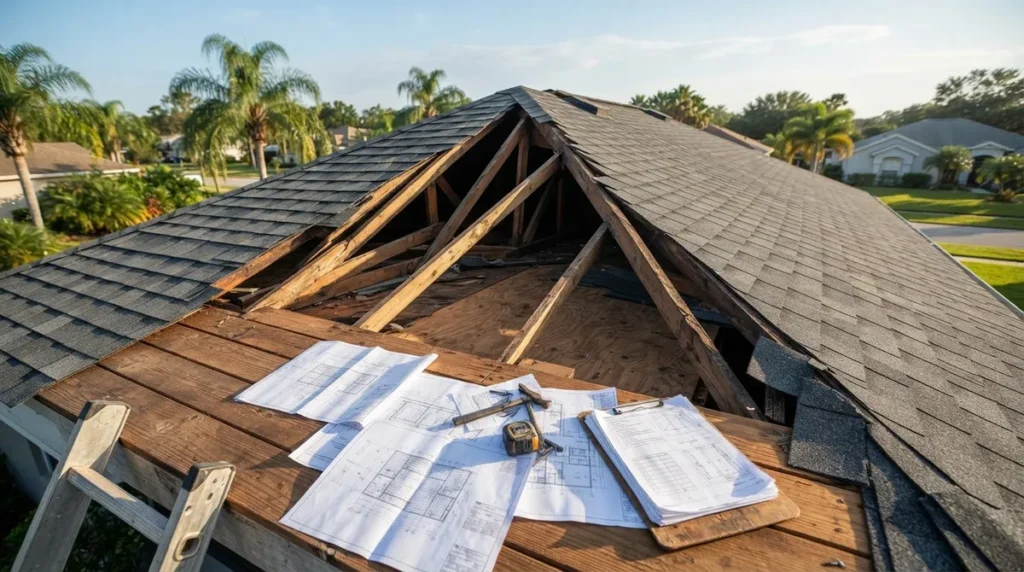
Key Takeaways
-
Tampa requires a permit for roof-covering work exceeding 500 square feet; confirm jurisdiction (City of Tampa vs. Hillsborough County) before filing, as rules differ significantly between the two.
-
Distinguish between roof-covering permits (shingles, tile, membrane) and structural permits (truss/rafter work); filing the wrong type triggers rejection or stop-work orders.
-
For homes built before March 1, 2002, submit hurricane-mitigation verification affidavits with your permit application; missing this step is a common reason permits stall on older Tampa properties.
-
Properties in historic districts (Barrio Latino, Hyde Park, Seminole Heights, Downtown) require additional architectural review before permit issuance; budget extra time upfront to avoid application rejection.
-
Verify contractor licensing status and owner-builder requirements before filing; expired licenses or missing ownership documentation are fast rejection reasons.
-
Take advantage of the mitigation attestation option for non-tile roofs to skip dry-in inspections and save schedule time, but confirm it applies to your specific permit type first.
If you've ever waited three weeks for a Tampa roofing permit to clear review only to get bounced back for a missing signature, you already know how frustrating this process can be. Roofing crews want to be on the roof, not stuck in a permitting queue. Whether you're a general contractor juggling a dozen re-roof jobs, a homeowner replacing shingles after storm damage, or a roofing company trying to scale across Hillsborough County, understanding how roofing company permit services Tampa actually work can save you weeks of headaches.
Tampa's permitting rules aren't always intuitive, and small mistakes can turn a simple re-roof into a stalled project. The good news? Most of these mistakes are completely avoidable once you know what to look for. Grab a cup of coffee, and let's walk through the ten most common missteps we see contractors and property owners make, plus how to sidestep every one of them.
1. Assuming Every Roof Job Skips the Permit Requirement
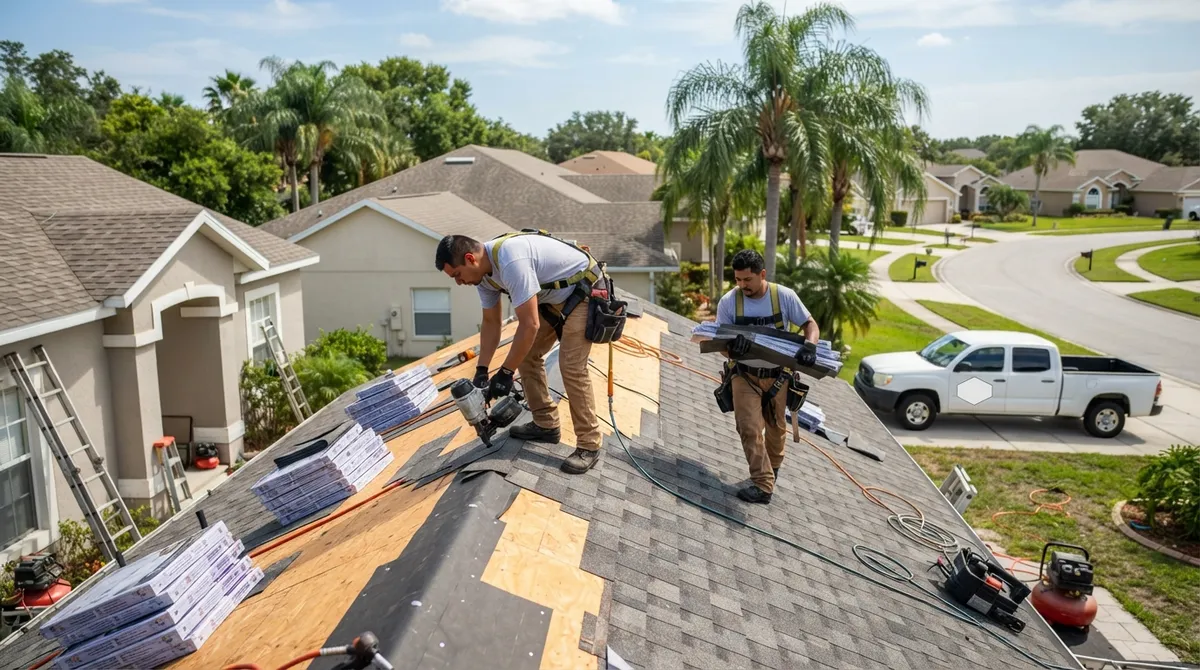
One of the biggest and costliest assumptions is thinking small jobs don't need a permit. In the City of Tampa, a permit is generally required whenever roof-covering work, installation, re-roofing, recovering, or repair, exceeds 500 square feet. That threshold catches more projects than people expect, especially on larger single-family homes or commercial buildings.
Before you assume a project is exempt, confirm the current rule with the authority having jurisdiction. Emergency waivers occasionally shift requirements temporarily, particularly after major storms, so what applied last hurricane season may not apply today.
2. Confusing Roof-Covering Permits with Structural Roof Permits
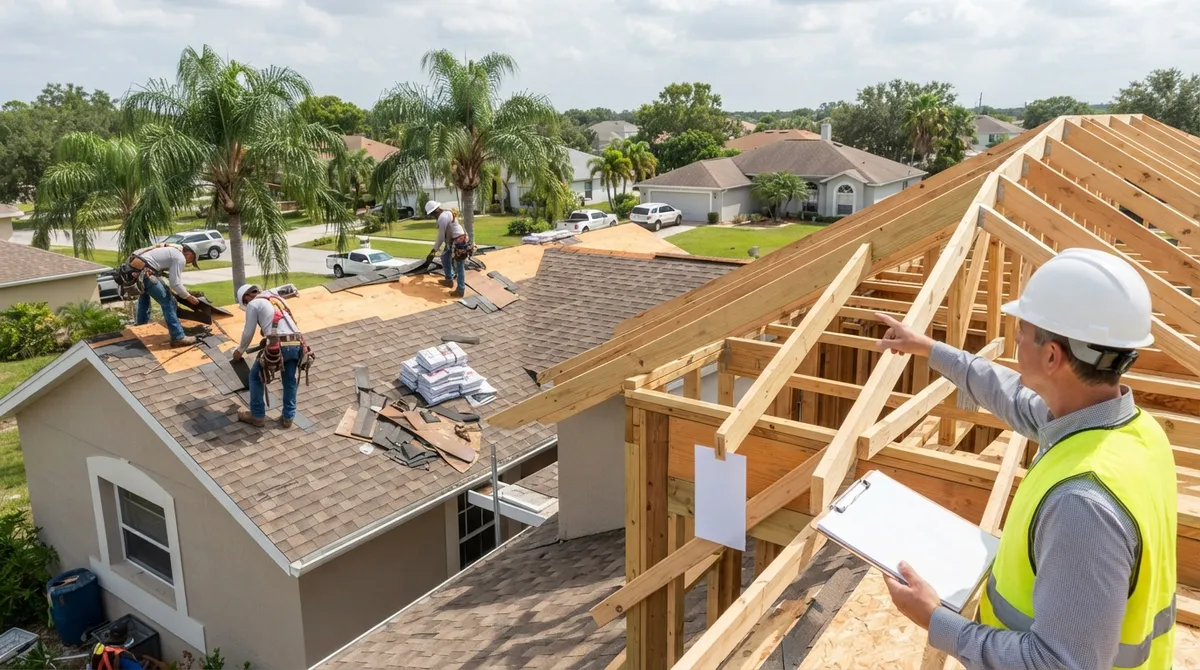
Tampa draws a clear line between two very different types of work, and mixing them up is a classic mistake. Roof-covering work, like shingles, tile, or membrane replacement, falls under a standard roofing permit. But if you're touching trusses, rafters, or other structural components, you need a remodeling permit instead.
This distinction matters because filing the wrong permit type can trigger a rejection or, worse, a stop-work order mid-project. If your scope includes any structural repair, loop in a licensed engineer early. Our structural engineering team frequently helps contractors sort out exactly which permit path a project needs before the application ever gets submitted.
3. Letting the Wrong Person Apply for the Permit
Permit applications in Tampa can be submitted by an appropriately licensed contractor or, in qualifying cases, by the property owner. But owner applications come with strings attached, including owner-occupancy requirements and proof-of-ownership documentation.
Homeowners who try to self-file without understanding owner-builder rules often find their application stuck in limbo. If you're a homeowner considering this route, review the owner-builder permits process carefully, or let a permitting team handle it for you.
Quick Reference: Who Can File
| Applicant Type | Requirements | Common Pitfall |
|---|---|---|
| Licensed Contractor | Current license, insurance, local registration | Expired or unregistered license |
| Homeowner (Owner-Builder) | Owner-occupancy proof, ownership documentation | Missing or outdated proof of ownership |
| Property Manager/Agent | Authorization from owner, contractor license if performing work | Filing without proper authorization letter |
4. Skipping the Dry-In Inspection When It's Required
Tampa's published requirements call for a dry-in inspection before tile installation and a final inspection after the roof is complete. Skipping this step, or assuming it doesn't apply to your project, is a fast way to end up with a failed final inspection.
Current city guidance says inspections are generally virtual through the Vu-Spex system, but requirements can vary depending on roof type and permit circumstances. Always check your specific permit record rather than relying on what a previous project required.
5. Forgetting the Mitigation Attestation Option
Here's a detail a lot of contractors miss: for some non-tile roofs, Tampa allows a contractor to submit a roof mitigation attestation in place of the dry-in inspection. This can save real time on the schedule, but only if you know it exists and file it correctly.
Homeowner permits and tile roofs have additional inspection requirements, so this shortcut isn't universal. Our inspections coordination service helps contractors figure out which inspection path applies to their specific job before they commit to a timeline.
6. Overlooking Hurricane-Mitigation Requirements on Older Homes
If you're re-roofing a single-family home built before March 1, 2002, there's an extra layer to consider. Tampa's roofing guidance references Florida Statute 553.844, which sets hurricane-mitigation retrofit requirements for these older structures.
Contractors can typically submit a mitigation verification affidavit, while homeowner-driven projects may require an inspection or a qualified professional's affidavit instead. Missing this step is one of the more common reasons permits stall on older Tampa properties.
Older Home Mitigation Checklist
- Confirm the home's construction date against the March 1, 2002 threshold.
- Determine whether the applicant is a licensed contractor or the homeowner.
- Prepare the appropriate affidavit, contractor mitigation verification or homeowner professional affidavit.
- Submit the affidavit alongside the permit application, not after.
- Keep a copy on file in case of inspection follow-up.
7. Ignoring Historic District Review Steps
Not every Tampa roofing project moves straight from application to permit. Barrio Latino, Hyde Park, Seminole Heights, and Downtown all carry additional architectural or district-level review requirements before a permit can be issued.
If your project sits in one of these areas, budget extra time upfront. Skipping this step doesn't just delay the permit, it can result in a rejected application that has to restart the review process from scratch.
8. Mixing Up City of Tampa Rules with Hillsborough County Rules
This is one of the sneakiest mistakes because "Tampa" can mean two very different things depending on where the property sits. The City of Tampa and unincorporated Hillsborough County have separate permitting authorities, and their requirements don't always match.
For example, Hillsborough County's re-roof guidance includes a 25% rule for roofs installed before the 2007 Florida Building Code: if more than 25% of a roof area or section is replaced or recovered within 12 months, the entire roof system or section must meet current code. That rule doesn't necessarily apply the same way inside city limits. Before you submit anything, confirm the property's actual jurisdiction using a tool like our building department lookup.
| Feature | City of Tampa | Hillsborough County |
|---|---|---|
| Permit Threshold | 500 sq ft roof-covering work | Varies by scope and code era |
| Dry-In Inspection | Required for tile, virtual via Vu-Spex | County-specific scheduling process |
| 25% Re-Roof Rule | Not the primary published rule | Applies to pre-2007 code roofs |
| Historic District Review | Applies in specific zones | Varies by unincorporated area |
9. Not Verifying Contractor Licensing Before Filing
Florida's DBPR states that local governments may require a license for permitted work only when the work substantially corresponds to a license type issued by the state Construction Industry Licensing Board, or is otherwise authorized by statute. This changed further as of July 1, 2025, following an extension of local licensing authority through June 30, 2025.
Translation: always verify a contractor's current license and the applicable local requirements before submitting a permit application under their name. An expired or improperly registered license is one of the fastest ways to get an application rejected outright. Review our DBPR licensee processes resource if you're unsure where your registration stands.
10. Trying to Manage Applications, Corrections, and Inspections Alone
Roofing companies handling a high volume of permits across Tampa, Clearwater, and Bradenton often underestimate how much time gets eaten up tracking application status, responding to reviewer comments, and rescheduling inspections. Every hour spent on hold with a permitting office is an hour not spent on the roof.
This is exactly why many roofing contractors partner with a dedicated permitting team. At 1 Contractor Solutions, our in-house drafting and engineering department means when a reviewer flags a plan detail, we fix it ourselves instead of waiting on an outside consultant. We're also a licensed private provider, so in many cases we can perform your plan review directly instead of leaving you stuck in the county queue. If you run a roofing company juggling multiple jobs across the Tampa Bay area, our Roof Permit Partnership Program was built specifically for that kind of volume.
Signs You Need Permit Support
- You're spending more time on hold with the permit office than on job sites.
- Reviewer corrections keep coming back for the same reason.
- You're unsure whether a property falls under City of Tampa or county jurisdiction.
- Your crew is scheduled but the permit still hasn't cleared review.
- You need sealed structural drawings and don't have an engineer on retainer.
Whether you're a roofing contractor scaling operations, a general contractor coordinating a re-roof as part of a larger renovation, or a homeowner just trying to get storm damage repaired before the next season, having someone track your permit end-to-end makes a real difference. We've filed in more than 400 Florida municipalities, and Tampa's roofing rules are ones we navigate every week.
Wrapping Up: Getting Your Tampa Roofing Permit Right the First Time
Roofing permits don't have to be the bottleneck that stalls your entire project timeline. Once you understand the 500-square-foot threshold, the difference between roof-covering and structural permits, the hurricane-mitigation rules for older homes, and the jurisdictional split between the city and county, most of the guesswork disappears.
Still, permitting rules shift, emergency waivers come and go, and every property has its own quirks. If you'd rather have an experienced team handle the filing, tracking, and inspection coordination while you focus on the actual roofing work, we'd love to help. You can get a free quote from our team today, and see why contractors across Hillsborough, Pinellas, and Manatee counties trust us with their permitting workload. Feel free to visit us on Google — 1 Contractor Solutions to see what local roofing companies are saying about working with us, or connect with us on follow us on LinkedIn and follow us on Facebook for ongoing permitting updates across Florida.
FAQs
Do I need a permit to replace a roof in Tampa, Florida?
In most cases, yes! The City of Tampa generally requires a permit for roof-covering work like installation, re-roofing, recovering, or repair whenever the project exceeds 500 square feet. It's always worth double-checking with the current city guidance before you get started, since emergency waivers can temporarily shift the rules.
Can a homeowner apply for a roof permit in Tampa, or must a licensed contractor apply?
Good news, homeowners have options here. Tampa allows owner applications in qualifying cases, but you'll need to meet owner-occupancy conditions and provide proof of ownership. Many homeowners find it easier to lean on a permitting service to make sure every document lines up correctly the first time.
What inspections are required for a roof replacement in Tampa?
Tampa typically requires a dry-in inspection before tile installation and a final inspection once the roof is complete. These are generally handled virtually through the Vu-Spex system, though requirements can vary depending on your roof type, so it's smart to confirm what applies to your specific permit.
Are roofing permits different in the City of Tampa and unincorporated Hillsborough County?
They sure are, and this trips up more people than you'd think! The City of Tampa and Hillsborough County operate under separate permitting authorities with different rules, so it's essential to confirm which jurisdiction actually governs your property before assuming either set of requirements applies.
How can a roofing permit service help contractors manage applications, corrections, and inspections?
A dedicated permit service takes the guesswork off your plate, handling everything from filing and tracking to working reviewer comments and scheduling inspections. This means your crew spends more time on rooftops and less time stuck waiting on hold with a permitting office, which honestly is a win for everyone.
We do this work every day across all 67 Florida counties. Call (866) 314-6931 and we will tell you what your situation actually requires — including when you do not need us.
Related services
Permit Facilitation & Filing
You have a crew scheduled, a client asking for dates, and a permit sitting somewhere in a queue you cannot see. We file it, w…
See the servicePlan Review Coordination
A permit in plan review is not one queue. On a commercial project it can be six queues, each with its own reviewer, its own c…
See the serviceReady to get your permit moving?
One call tells you which jurisdiction controls your project, what it will take, and what it will cost. Most of the time we can scope it on the phone.