
Blog
Why Does Your Florida Project Need a Building Liaison?
Discover how a building department liaison in Florida coordinates permits, tracks reviews, and keeps projects moving through local jurisdictions.

Key Takeaways
-
Florida has 67 counties with different building department processes, portals, and review procedures, making local jurisdiction knowledge critical to avoid delays and resubmittals.
-
Florida Statute 553.792 establishes specific review deadlines (5-30-60 business days depending on permit type) and offers fee reductions of 10-20% per day when jurisdictions miss deadlines, so complete initial submissions are essential.
-
A building department liaison coordinates full-cycle permit management including submissions, plan review tracking, revisions, inspections, and closeout, while permit expediters typically focus narrowly on submission and pickup.
-
Complete and accurate documentation submitted on the first attempt is the single most important factor in avoiding bounced applications and unnecessary delays in Florida's high-volume permitting system.
-
Building liaisons cannot override code requirements or guarantee approvals—they serve as communication bridges and advocates, not replacements for licensed architects, engineers, or contractors.
-
Different professional groups (contractors, solar companies, realtors, homeowners) benefit from liaison services for different reasons, from tracking multiple jobsites to resolving unpermitted work before real estate closings.
Picture this: you have crews scheduled, materials ordered, and a homeowner or client eager to see progress, but your permit is sitting untouched in a queue somewhere in a county office. Sound familiar? If you have ever spent an entire afternoon on hold trying to reach a building department, you already understand why a building department liaison Florida professionals rely on can be such a relief. This role exists to take the guesswork, phone tag, and paperwork chaos off your plate so your project keeps moving instead of stalling in a review pile.
Whether you are a general contractor juggling five jobsites, a solar installer racing against interconnection deadlines, a realtor trying to close on a property with a permit question, or a homeowner tackling your first renovation, understanding what a liaison actually does (and doesn't do) can save you weeks of frustration. Let's walk through it together, warmly and honestly, the way a good neighbor would explain how things really work down at the building department.
What Is a Building Department Liaison in Florida, Really?
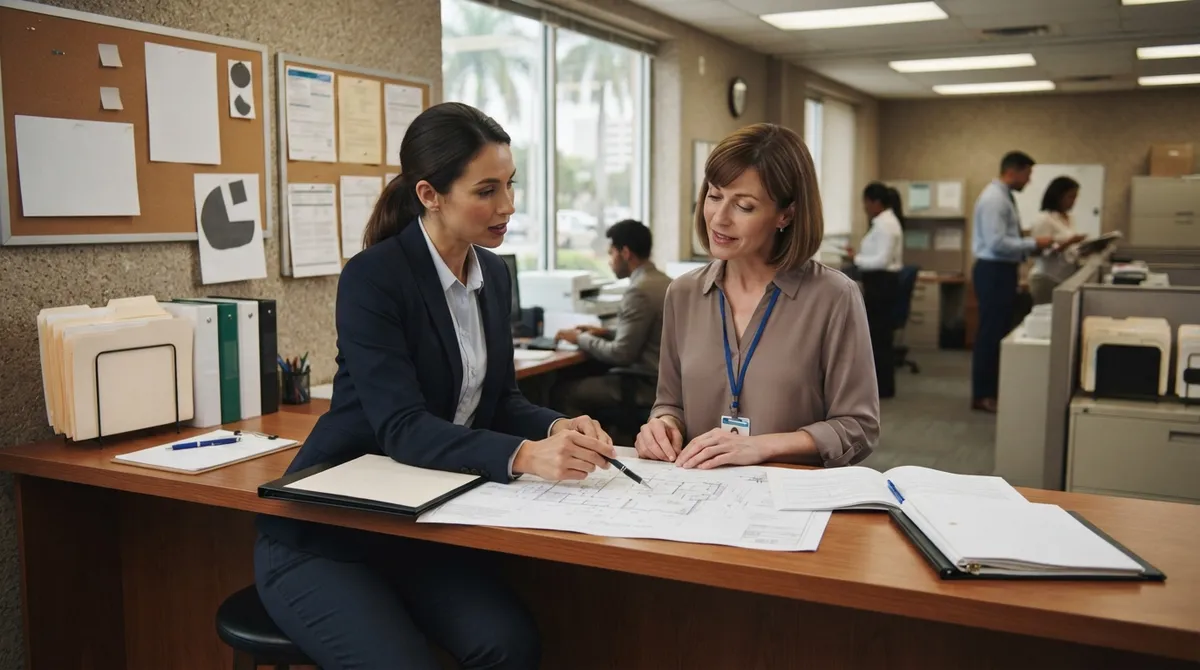
A building department liaison is essentially your project's communication bridge to the local authority having jurisdiction, or AHJ. Rather than approving permits themselves, they coordinate everything around the approval process: assembling application packages, tracking review comments, following up on delays, and keeping your project moving through each stage.
Here is what that typically looks like in practice:
- Preparing and submitting complete permit packages so applications aren't bounced back for missing items
- Monitoring plan-review status across multiple departments (building, zoning, fire, utilities)
- Responding to reviewer comments and coordinating revisions with your design team
- Tracking deadlines and following up when a jurisdiction goes quiet
- Helping schedule inspections and pushing toward final approval or Certificate of Occupancy
What a liaison cannot do is just as important to understand. They cannot override code requirements, guarantee approval, or replace a licensed architect, engineer, or contractor. Florida law still requires accurate documents, proper fees, and compliance with the current building code, no matter who is coordinating the paperwork.
Building Department Liaison vs. Permit Expediter: What's the Difference?
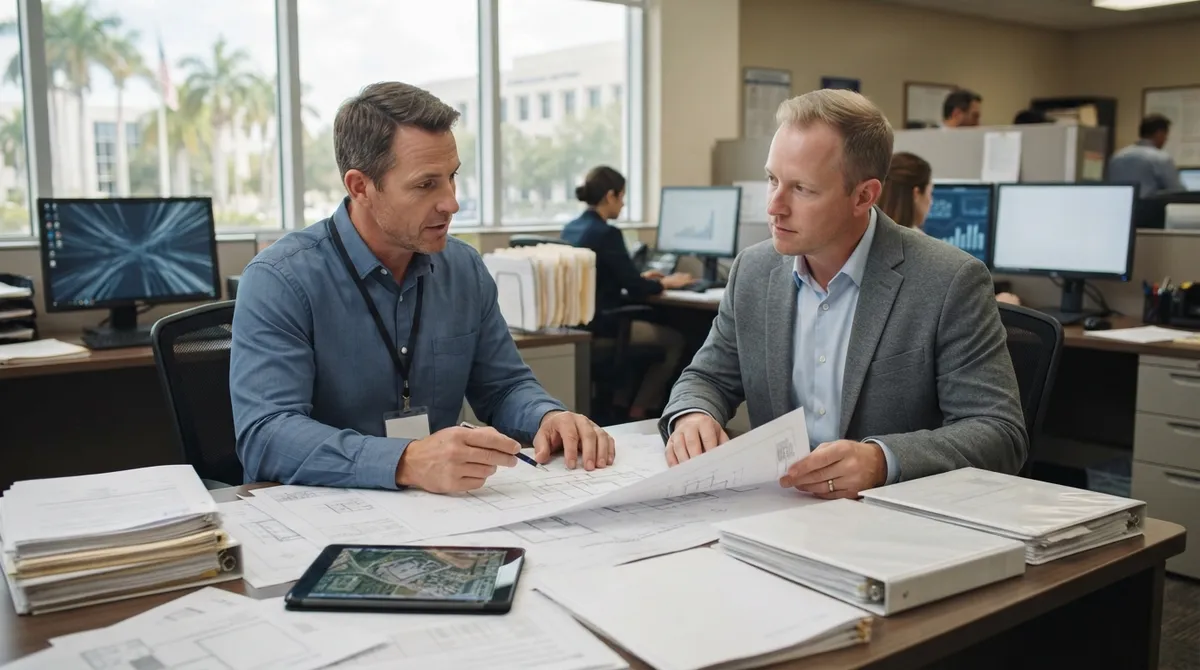
These terms get used interchangeably, but there are subtle distinctions worth knowing, especially if you operate in multiple jurisdictions.
| Aspect | Building Department Liaison | Permit Expediter |
|---|---|---|
| Primary Focus | Full-cycle coordination: submission, review, revisions, closeout | Often focused narrowly on speeding up submission and pickup |
| Registration Requirements | Varies by jurisdiction; some cities require registration | May require city-specific registration, such as in Miami |
| Technical Involvement | Often works alongside in-house drafters and engineers | May or may not have design capability |
| Scope of Service | Can include plan review coordination, resubmittals, inspections | Typically transactional per permit |
The City of Miami, for example, requires permit expediters to register before conducting permit-processing business in the city and to show proof of applicable business tax receipts, though registration itself carries no fee. Rules like this vary widely, which is exactly why so many contractors and property owners turn to a firm that already understands the local landscape rather than learning it themselves project by project.
Why Local Jurisdiction Knowledge Matters So Much
Florida has 67 counties and hundreds of municipalities, and no two building departments operate quite the same way. Submission portals differ. Required forms differ. Even the order in which agencies review your project can differ from one city to the next.
Sunny Isles Beach, for instance, uses a digital process covering application, plan review, comments, issuance, inspections, and closeout, but a neighboring city might still require in-person submissions or a completely different portal. That is one reason many general contractors, solar companies, and homeowners rely on a building department lookup tool just to confirm which office actually has authority over their address, since jurisdiction lines near city borders are not always obvious.
1 Contractor Solutions works across all 67 Florida counties, with especially deep experience in Hillsborough County, Pinellas County, Manatee County, Miami-Dade County, and Broward County. That familiarity means fewer surprises and faster resubmittals when a reviewer sends back comments.
Understanding Florida's Statutory Review Deadlines
One of the most encouraging things about Florida permitting is that timelines aren't left entirely to chance. Florida Statute 553.792 establishes review deadlines for specified permit categories, once a jurisdiction receives a complete and sufficient application.
- Local governments generally must notify an applicant within 5 business days if additional information is needed to determine whether an application is properly completed.
- Certain qualifying repairs under $15,000 to an existing single-family dwelling may be entitled to review within 5 business days.
- Specified residential permits on structures under 7,500 square feet often fall under a 30-business-day review window.
- Several larger residential and nonresidential permit categories fall under a 60-business-day window.
The statute even provides fee reductions, generally around 10% per business day, when a local government misses certain applicable deadlines, with a steeper 20% per-day reduction possible after timely revisions in some circumstances. These protections exist precisely because completeness and responsiveness matter so much, which is exactly where a liaison earns their keep: keeping applications accurate from day one so the clock works in your favor rather than against you.
How a Liaison Helps Different Types of Florida Projects
For General Contractors
When you are running multiple jobsites, the last thing you need is to personally track every jurisdiction's portal and comment log. A liaison handles that tracking, coordinates revisions with drafters or engineers, and flags problems before they become missed deadlines. Many GCs pair this with plan review coordination and in-house architectural drafting so revisions happen quickly instead of waiting on an outside consultant.
For Solar Companies
Distributed energy projects often move on tight interconnection timelines, and every day a permit sits in review is a day of lost revenue. Structural and electrical documentation needs to be code-compliant from the first submission, which is why many solar contractors lean on coordinated MEP engineering and sealed drawings to avoid the back-and-forth that slows smaller shops down.
For Realtors and Real Estate Professionals
An open or expired permit discovered during due diligence can derail a closing fast. A liaison can research permit history, coordinate with the building department to resolve open items, and help legalize unpermitted work before it becomes a deal-breaker. This is where realtor closing support becomes invaluable for keeping transactions on schedule.
For Homeowners
Renovations, additions, and repairs all require documentation most homeowners have never prepared before. A liaison walks you through what is needed, submits on your behalf, and handles the technical back-and-forth so you are not deciphering review comments written in code-speak. Many homeowners also appreciate having someone available for homeowner permitting support from start to finish.
For Design Trade Professionals
Architects and specialty trades often need outsourced drafting or engineering without the overhead of hiring in-house staff. A liaison relationship can extend to drafting-only services when you already have your own engineer of record, keeping your seal and your client relationship intact while still gaining submission support.
What Documents Do You Typically Need?
While requirements vary by jurisdiction and project type, most Florida building permit applications include a similar core set of documents.
| Document Type | Typical Purpose |
|---|---|
| Site plan | Shows property boundaries, setbacks, and structure location |
| Sealed architectural or structural plans | Demonstrates code compliance for the proposed work |
| Engineer letters | Address specific structural or code questions raised during review |
| Notice of Commencement | Required for many projects above a statutory value threshold |
| Contractor license and registration | Confirms the licensed party is authorized to pull the permit |
Missing or inconsistent documentation is one of the most common reasons applications bounce back, which is why permit facilitation and filing services focus so heavily on completeness before anything ever gets submitted.
Confirming Your Applicable Code Edition
It is also worth confirming which code edition applies to your project. The Florida Building Code, 8th Edition (2023), took effect December 31, 2023, according to the Florida Building Commission. Local amendments can still apply on top of the statewide code, so it always pays to confirm specifics with the authority having jurisdiction before finalizing plans.
A Quick Process Overview
While every jurisdiction has its own quirks, most Florida permit journeys follow a similar rhythm.
- Confirm the correct jurisdiction and applicable code requirements for the address
- Prepare complete, accurate plans and supporting documents
- Submit the application through the jurisdiction's portal or office
- Respond promptly to any comments during plan review
- Resubmit revisions and track status until approval
- Schedule required inspections and move toward closeout
Each step is an opportunity for delay if communication breaks down, which is exactly the gap a liaison is designed to fill. If you would rather not navigate this alone, you can always get a free quote to see how coordinated support might fit your specific project.
Why Local Presence Still Matters
Even with digital portals becoming more common, relationships and familiarity with local review staff genuinely help. Teams that regularly submit in Tampa, St. Petersburg, and Bradenton tend to know exactly what a specific reviewer is likely to flag, simply because they've seen the pattern before. That kind of institutional memory is hard to replicate if you are only submitting a permit once every few years.
You can also visit us on Google — 1 Contractor Solutions to see how local clients describe their experience working through Florida's permitting maze, or connect with the team by following updates on LinkedIn and Facebook for ongoing permitting insights.
Setting Realistic Expectations
A good liaison is honest about limitations from day one. Nobody can promise a guaranteed approval date, because review timelines depend on application completeness, jurisdiction workload, and sometimes factors entirely outside anyone's control, like a staffing shortage at the local office. What a liaison can promise is responsiveness, accuracy, and relentless follow-up so your project never sits forgotten in a queue.
According to data from the National Association of Home Builders, Florida consistently ranks among the highest-volume states for building permits nationally, which only reinforces why experienced coordination matters here more than almost anywhere else in the country. High volume means busier building departments, and busier departments make clear, complete, well-tracked applications even more valuable.
Bringing It All Together
Florida's permitting system is full of good intentions, statutory deadlines, and genuinely helpful staff, but it can still feel overwhelming without someone in your corner who knows the terrain. A building department liaison bridges that gap between what you need and what the AHJ requires, without ever pretending to replace the professionals whose seals and signatures make a project legally sound.
If you are a contractor, solar company, realtor, design professional, or homeowner ready to stop guessing and start moving projects forward, 1 Contractor Solutions has spent more than 15 years building relationships with Florida's building departments across all 67 counties. From plans and engineering to inspections and everything in between, the goal is always the same: permits approved, projects moving. Reach out today to get a free quote and see how much smoother your next permit can be.
FAQs
What does a building department liaison do in Florida?
A building department liaison is your friendly go-between with the local building department, handling everything from assembling permit packages to tracking review comments and coordinating inspections. Think of them as your project's advocate who keeps things moving so you don't have to spend your afternoons on hold with the county office.
How is a building department liaison different from a permit expediter?
The terms overlap quite a bit, but a liaison often provides fuller-cycle support, including plan review coordination and resubmittals, while an expediter may focus more narrowly on submission and pickup. Some cities, like Miami, even require expediters to register locally before doing business there, so it pays to ask about registration status.
How long does building permit approval take in Florida?
It really depends on the permit type and jurisdiction, but Florida Statute 553.792 sets helpful benchmarks, like 30 business days for many residential permits and 60 business days for larger projects, once your application is complete. The key phrase there is complete, which is exactly why accurate documentation from the start makes such a difference.
Can a building department liaison guarantee my permit will be approved?
No liaison can honestly promise a guaranteed approval, and you should be cautious of anyone who does. What they can offer is careful preparation, prompt responses to reviewer comments, and steady follow-up, all of which meaningfully improve your odds and your timeline.
What documents do I need for a Florida building permit application?
Most applications require a site plan, sealed architectural or structural drawings, and sometimes a Notice of Commencement depending on project value. Requirements vary by jurisdiction, so it's always worth confirming specifics with the local building department or a knowledgeable liaison before you submit.
We do this work every day across all 67 Florida counties. Call (866) 314-6931 and we will tell you what your situation actually requires — including when you do not need us.
Related services
Permit Facilitation & Filing
You have a crew scheduled, a client asking for dates, and a permit sitting somewhere in a queue you cannot see. We file it, w…
See the servicePlan Review Coordination
A permit in plan review is not one queue. On a commercial project it can be six queues, each with its own reviewer, its own c…
See the serviceReady to get your permit moving?
One call tells you which jurisdiction controls your project, what it will take, and what it will cost. Most of the time we can scope it on the phone.