
Blog
Why Does Unpermitted Construction Haunt Florida Owners?
Discover what unpermitted construction in Florida really means, the penalties involved, and how to legalize it with expert permitting help.
Key Takeaways
-
Florida code enforcement fines for unpermitted work reach up to $250/day for first violations, $500/day for repeat offenses, and up to $5,000 per violation if deemed irreparable, with potential misdemeanor or felony charges under F.S. 489.127 for unlicensed contracting.
-
Property owners bear ultimate responsibility for unpermitted work regardless of who performed it, even if a previous owner or contractor completed the construction without disclosure.
-
Most Florida jurisdictions allow retroactive permit applications for already-completed work by filing the original permit type with disclosure that work is complete, followed by as-built documentation, inspections, and final approval.
-
Unpermitted structural work typically requires a Florida-licensed engineer or architect to inspect and certify compliance, as sealed drawings and engineer letters are critical for reviewer approval under Florida Building Code section 110.1.
-
Each of Florida's 67 counties administers its own permitting procedures and fees with different enforcement approaches, making jurisdiction identification crucial before applying for retroactive permits.
-
Discovering unpermitted construction during title searches or home inspections can stall or derail real estate closings, making early permit history verification essential before buying or listing a property.
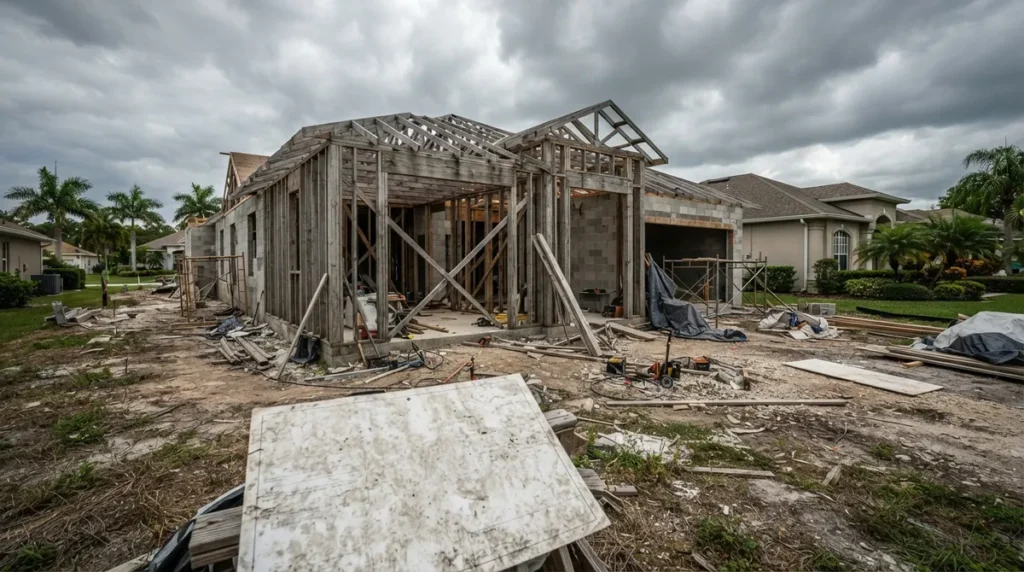
Picture this: you're getting ready to sell your Florida home, refinance it, or maybe just finish that pool cage your uncle built back in 2019 without pulling a permit. Suddenly, a routine title search or a curious code enforcement officer uncovers a problem you didn't even know existed. Welcome to the world of unpermitted construction in Florida, a surprisingly common situation that touches homeowners, real estate professionals, contractors, and solar installers alike. The good news? You're not alone, and there's a clear, manageable path forward.
Unpermitted construction simply means work was done that legally required a permit, but no permit was ever pulled. That could be a garage conversion, an electrical panel upgrade, a new roof, or even a structural addition. Florida takes this seriously, and the consequences can range from a friendly notice to a serious code enforcement case. But here's the encouraging part: with the right guidance, most unpermitted work can be legalized. Let's walk through exactly what that looks like, why it happens, and how a trusted partner like 1 Contractor Solutions can help you breathe easy again.
What Counts as Unpermitted Construction in Florida?
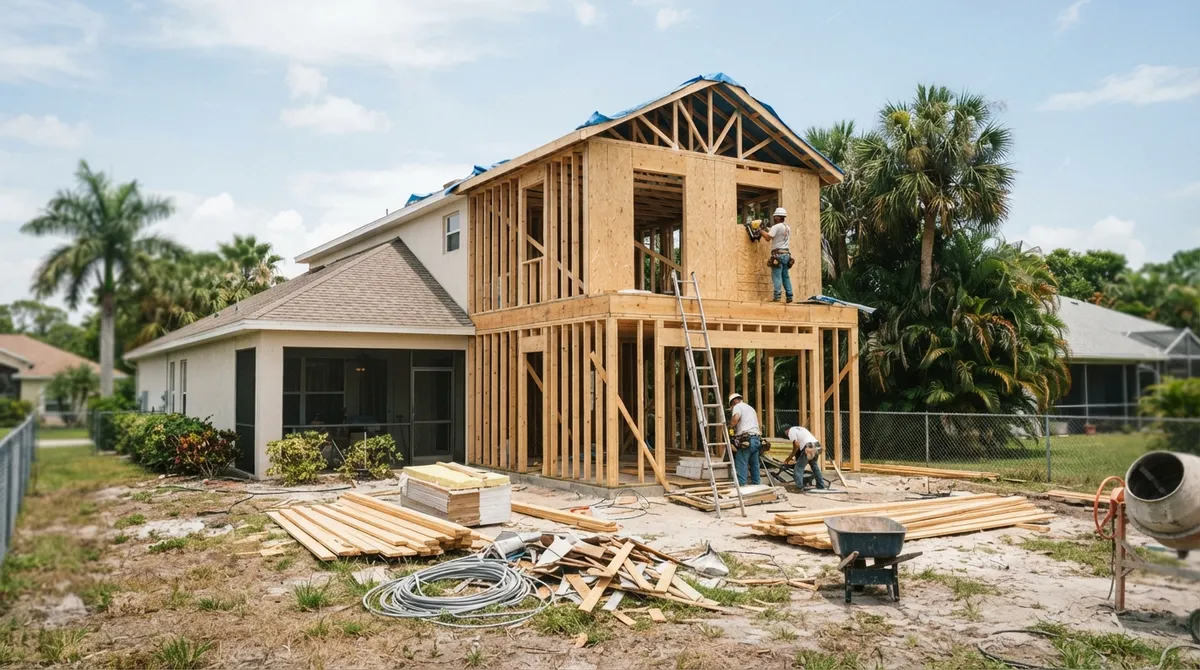
Florida Building Code section 105.1 is pretty clear: if you're constructing, enlarging, altering, repairing, moving, or demolishing a structure, you generally need a permit first. This also applies to electrical, plumbing, mechanical, gas work, and impact-resistant openings. So that new lanai, the rewired kitchen, or the water heater swap your neighbor did himself? All of it likely needed a permit.
Here's the tricky part. Florida doesn't have one single statewide rulebook for every county. Instead, local building departments across all 67 counties administer their own procedures, fees, and enforcement styles. What flies in one jurisdiction might trigger a stop-work order in another. That's why knowing your specific city or county's rules matters so much, and it's exactly the kind of research our team handles daily across regions like Hillsborough County, Pinellas County, and Miami-Dade County.
Common Examples of Unpermitted Work
- Room additions or converted garages built without inspections
- Roof replacements done under the radar to save time
- Solar panel installations missing structural or electrical sign-off
- DIY electrical or plumbing changes by a previous owner
- Pool enclosures, screened patios, or sheds exceeding size limits
- Interior remodels that touched load-bearing walls
Why Unpermitted Construction Happens So Often
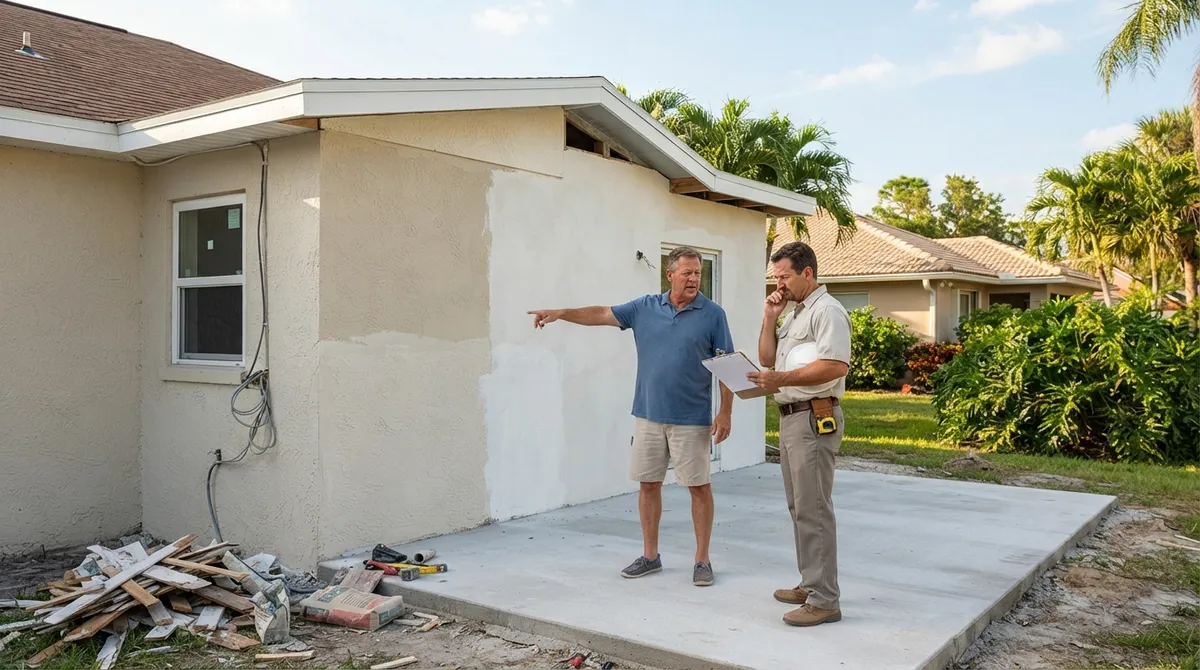
Honestly, it's rarely malicious. Many homeowners genuinely don't realize a permit was needed, especially for smaller projects. Contractors sometimes skip the process to save time on tight schedules. And in older Florida homes, previous owners may have made changes decades ago that nobody thought to document. Whatever the reason, the fix starts with understanding the risk, not panicking about it.
The Real Consequences You Could Be Facing
Let's talk numbers, because they matter here. Under Florida Statutes section 162.09, code enforcement can issue fines up to $250 per day for a first violation and up to $500 per day for repeat offenses. If the violation is considered irreparable, fines can reach $5,000 per violation. That adds up fast if the issue lingers.
There's also Florida Statutes section 489.127, which makes it unlawful to begin work requiring a permit without one in place. A first offense can be a first-degree misdemeanor, and repeat violations after a prior conviction can escalate to a third-degree felony. On top of that, section 489.131 allows administrative fines up to $10,000 for unlicensed contracting activity, separate from any local penalties.
| Violation Type | Potential Penalty | Governing Statute |
|---|---|---|
| First-time code violation | Up to $250/day | F.S. 162.09 |
| Repeat code violation | Up to $500/day | F.S. 162.09 |
| Irreparable violation | Up to $5,000 per violation | F.S. 162.09 |
| Unlicensed contracting (criminal) | Misdemeanor or felony charges | F.S. 489.127 |
| Unlicensed contracting (administrative) | Up to $10,000 fine | F.S. 489.131 |
Beyond fines, unpermitted work can trigger a stop-work order, force you to expose finished walls or ceilings for inspection, or require a licensed engineer to certify the structure is safe. It can also delay or completely derail a real estate closing, something we cover in more detail in Can a Permit Hold Delay a Florida Real Estate Closing?
How to Fix Unpermitted Construction: A Step-by-Step Path
Florida doesn't technically have a single "after-the-fact permit" category everywhere, but in practice, most jurisdictions let you apply for the permit that should have been pulled originally, while disclosing that work is already complete. Here's the general process we walk clients through:
- Identify the correct jurisdiction. City limits and county lines aren't always obvious, and the wrong building department can send your application into a black hole.
- Research existing permit history. We check for open, closed, or expired permits tied to the property using tools like an open permit search.
- Assess the scope of the unpermitted work. This determines whether you need architectural drawings, structural engineering, or simple as-built documentation.
- Prepare as-built drawings or engineer letters. These document what was actually built, often required to satisfy the building official.
- Submit the retroactive application. We handle the filing, tracking, and any reviewer questions along the way.
- Schedule required inspections. This may include opening walls or exposing framing so the inspector can verify code compliance.
- Complete corrective work if needed. Sometimes minor fixes bring the project into compliance without major demolition.
- Receive final approval and closeout. Once everything checks out, the permit closes and the property record reflects legal, permitted work.
This is exactly the kind of process our after-the-fact and expired permits team handles every week, and we've written a deeper walkthrough in Unpermitted Work Florida How To Legalize.
Do You Need an Engineer or Architect?
Often, yes. If the unpermitted work touched structural elements, like removing a wall, adding a second story, or altering a roof line, a Florida-licensed engineer typically needs to inspect and certify the work. Florida Building Code section 110.1 requires permitted work to stay exposed for inspection until it's approved, which is why sealed drawings and engineer letters carry so much weight in these cases.
Our in-house engineering and structural engineering teams prepare these documents daily, meaning you're not stuck waiting on an outside consultant who's slow to respond. That matters when a reviewer flags something and you need a fast turnaround.
Who's Responsible: Homeowner or Contractor?
This question comes up constantly, especially with realtors and property buyers. Generally, the property owner bears ultimate responsibility for unpermitted work, even if a previous contractor or prior owner did the actual building. That's a tough pill to swallow if you just bought the house, but it's the reality of how Florida's permitting system works.
| Scenario | Who Typically Handles the Fix |
|---|---|
| Current owner did unpermitted work | Current owner applies for retroactive permit |
| Previous owner did unpermitted work | Current owner still responsible, though seller disclosures may help |
| Contractor skipped permit without owner's knowledge | Owner corrects it, may pursue separate claims against contractor |
| Unlicensed contractor performed the work | Owner corrects it, contractor faces separate legal exposure |
Special Considerations for Different Audiences
General Contractors
If you're managing a renovation and discover unpermitted work from a previous phase, don't just build over it. That decision can come back to bite you during final inspection or a future sale. Coordinating plan review coordination early saves headaches later, and our team at general contractors resources can help you stay ahead of the curve.
Solar Companies
Solar installations sometimes get flagged when structural mounting details or electrical interconnections weren't properly permitted. Given how fast the distributed energy market is growing in Florida, staying compliant protects your reputation and your client's investment. Check out our guidance for solar contractors and related insight on Florida solar permit timelines.
Real Estate Professionals
Nothing stalls a closing faster than discovering unpermitted work during a title search or home inspection. We've seen deals nearly collapse because nobody caught it early enough. Our realtor and closing support service exists specifically to research permit history and resolve issues before they become deal-breakers, something we detail further in Open Permit Found At Closing.
Homeowners
If you're planning a renovation or just discovered a surprise addition wasn't permitted, take a breath. This is fixable. Our homeowners resource page walks through what to expect, and our team is genuinely here to make the process feel less overwhelming.
Verifying Permit History Before You Buy or Build
One of the smartest moves you can make, whether you're buying a home or planning your next project, is checking for open or expired permits before you commit. Florida's local building departments maintain records, though searching them can be confusing without local knowledge.
- Use a building department lookup to identify the correct jurisdiction
- Run an open permit search for the property address
- Ask for permit history during any real estate transaction
- Confirm contractor licensing with a contractor registration checklist
Some jurisdictions also close permits automatically after 180 days of inactivity, so even a legitimately pulled permit can lapse if inspections stall. That's a separate but related headache we cover in How To Close An Expired Permit In Florida.
Why Working With a Permitting Partner Makes This Easier
Here's the honest truth: navigating unpermitted construction alone is doable, but it's often slow, confusing, and stressful, especially when local rules differ from county to county. That's where a dedicated Florida permitting service earns its keep.
At 1 Contractor Solutions, our team handles the entire journey: identifying the right jurisdiction, preparing as-built drawings, coordinating with licensed engineers, filing applications, responding to reviewer comments, and scheduling inspections. Because our drafting and engineering work happens in-house, we're not stuck waiting on an outside consultant when a reviewer flags an issue. We fix it ourselves, often the same day.
We work across counties including Manatee County, Broward County, and Sarasota County, so no matter where your property sits, we likely already know the local building department's quirks.
A Quick Comparison: DIY vs. Professional Help
| Factor | Doing It Yourself | Working With a Permitting Service |
|---|---|---|
| Jurisdiction research | Time-consuming, easy to get wrong | Handled quickly with local expertise |
| As-built drawings | May require hiring separate drafters | Prepared in-house with sealed drawings |
| Reviewer comments | Owner must interpret and respond | Team manages revisions and resubmittals |
| Timeline | Often delayed by miscommunication | Same-day response and active tracking |
| Risk of penalties | Higher if deadlines are missed | Reduced through proactive management |
Ready to Take the Next Step?
Unpermitted construction doesn't have to feel like a ticking time bomb. Whether you're a homeowner who just found out about a surprise addition, a realtor trying to save a closing, or a contractor cleaning up a previous project, there's a clear path to compliance. You just need the right team walking beside you.
We'd genuinely love to help you sort this out. Feel free to get a free quote and let's talk through your specific situation, no judgment, just solutions. You can also see what real clients have to say when you visit us on Google — 1 Contractor Solutions, or connect with us on follow us on LinkedIn and follow us on Facebook for updates on Florida permitting news. For additional background on Florida's statutory framework, the Florida Legislature's official statutes page is a great resource, and the Florida Senate's statutory archive offers helpful historical context too.
FAQs
What should I do if I discover unpermitted construction on my Florida property?
First, take a deep breath, this is more common than you'd think! Start by researching the property's permit history and reaching out to a Florida permitting professional who can identify the correct jurisdiction and outline your options before you talk to the building department directly.
Can I get an after-the-fact permit in Florida?
While Florida doesn't have one single statewide 'after-the-fact permit' category, most local building departments let you apply for the permit that should have been pulled originally, along with disclosure that the work is already complete. The process varies by county, so local guidance really helps.
Will I have to remove drywall or other finished surfaces to inspect unpermitted work?
It's possible, especially if the inspector needs to verify framing, wiring, or plumbing that's hidden behind finished walls. Florida Building Code generally requires work to stay exposed until it's approved, so some opening up may be necessary depending on your project's scope.
Can unpermitted work prevent me from selling or refinancing a Florida home?
Absolutely, it happens more often than you'd expect during title searches or lender inspections. The good news is that resolving it before listing your home, or working quickly once it's discovered, can keep your closing on track.
Do I need an engineer or architect to legalize unpermitted construction in Florida?
If the work involved structural changes, like removing walls or adding square footage, you'll likely need a licensed engineer or architect to certify everything is safe and code-compliant. Having in-house engineering support speeds this up considerably since you're not waiting on an outside consultant's schedule.
We do this work every day across all 67 Florida counties. Call (866) 314-6931 and we will tell you what your situation actually requires — including when you do not need us.
Related services
Permit Facilitation & Filing
You have a crew scheduled, a client asking for dates, and a permit sitting somewhere in a queue you cannot see. We file it, w…
See the servicePlan Review Coordination
A permit in plan review is not one queue. On a commercial project it can be six queues, each with its own reviewer, its own c…
See the serviceReady to get your permit moving?
One call tells you which jurisdiction controls your project, what it will take, and what it will cost. Most of the time we can scope it on the phone.