
Blog
Who to Hire for Unpermitted Work From a Prior Owner
Learn exactly who to hire when a previous owner left unpermitted work in Florida — consultants, engineers, contractors, and attorneys explained.
Key Takeaways
-
Identify your specific jurisdiction first—Florida has 67 counties with hundreds of municipalities, each with different after-the-fact permit rules, fees, and documentation requirements that vary significantly.
-
Assemble a small team combining a permit consultant, licensed architect/engineer for structural work, licensed trade contractors, and possibly an attorney—no single professional can handle all aspects alone.
-
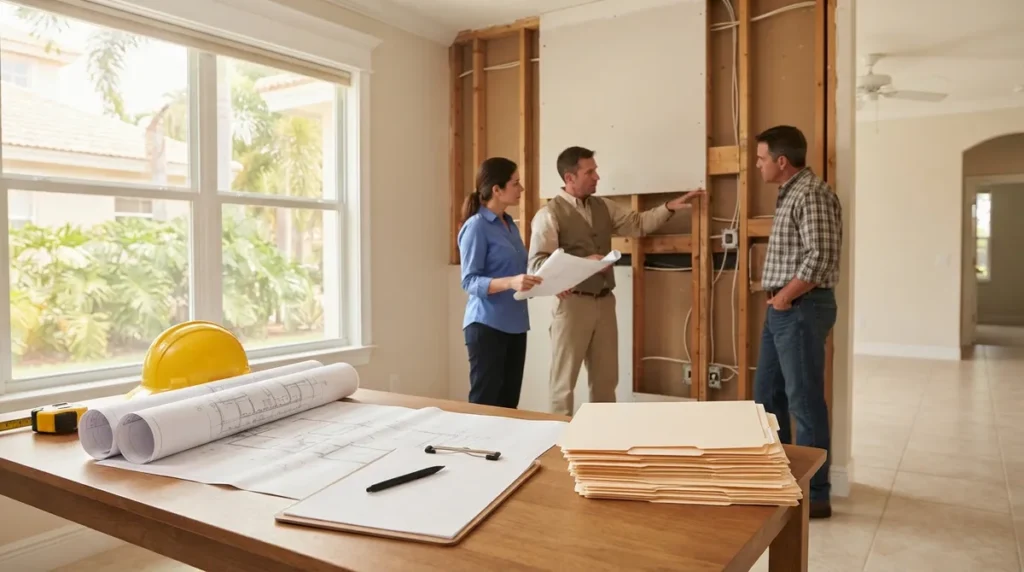
Building departments may require as-built drawings, wall openings for inspection, engineering reports, corrections to code, and penalty fees that are often double standard permit rates before approval.
-
Contact your local building department directly to confirm if an after-the-fact or retroactive compliance process exists and what specific documents and inspections will be required before closing.
-
Preserve all documents including inspection reports, seller disclosures, prior permits, and communications—these are critical if you suspect the seller knowingly hid unpermitted work and may need to pursue legal claims.
-
Timeline varies by scope: minor cosmetic work takes 2-6 weeks with just a consultant, while structural additions require 2-4 months with a full team including engineer and contractor.
So you just found out the sunroom, the extra bedroom, or that beautifully finished garage came without a permit. Take a breath. You are not the first Florida homeowner to discover this, and you will not be the last. Every year, buyers all across the state — from a bungalow in St Petersburg to a canal-front home in Fort Lauderdale — open a closing document or pull a permit history and realize the previous owner skipped a step they really should not have skipped.
The good news? This is fixable. The better news? You do not have to figure it out alone. The real question rattling around in your head right now — who should I hire when previous owner did unpermitted work florida situations land in my lap — has a clear, practical answer, and we are going to walk through it together, step by step, like a friend who has seen this a hundred times (because, frankly, we have).
Start Here: Confirm What Jurisdiction Actually Controls Your Property
Before you call anyone, figure out who you are actually calling. Florida has 67 counties, but hundreds of individual municipalities each run their own building department with its own quirks, forms, and turnaround times. A house that feels like it is in the county might legally sit inside a city's limits, and that city's building department is the one that decides how after-the-fact compliance works.
This trips up even experienced real estate professionals. A property near a county line in Hillsborough County or Orange County may fall under a small city's jurisdiction rather than the county's. Our jurisdiction lookup guidance and our building department lookup tool exist specifically to solve this puzzle quickly.
Why This Step Cannot Be Skipped
Every jurisdiction sets its own rules for what is often called an after-the-fact permit. Some require exposing concealed work for inspection. Some want as-built drawings signed by a licensed professional. Some charge double the standard permit fee as a penalty. None of that is uniform, so calling the wrong office wastes time and can send you chasing the wrong paperwork entirely.
The Short Answer: Who Should I Hire When Previous Owner Did Unpermitted Work Florida Cases Arise
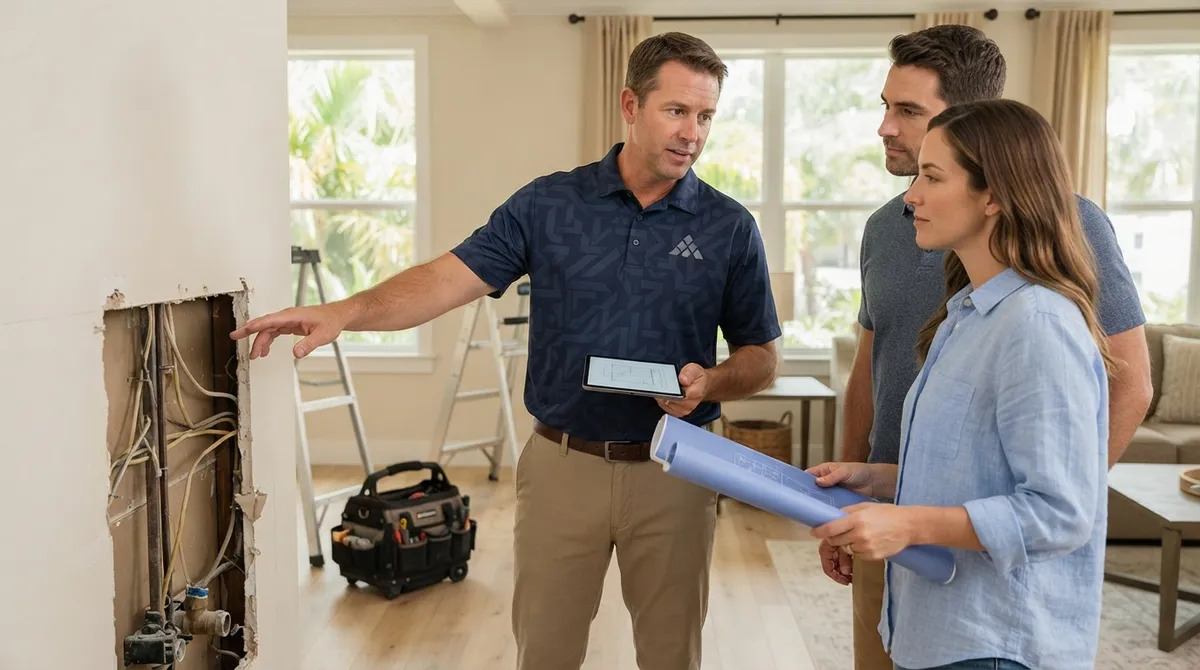
Here is the friendly, no-fluff version. Most Florida after-the-fact permitting situations call for a small team, not a single hero. Depending on the scope of the work, you will likely need some combination of the following:
- A permitting consultant or permit expediter who knows the local building department and can map out exactly what documentation is required.
- A Florida-licensed architect or engineer if the unpermitted work involves structural elements, additions, or anything concealed behind drywall.
- Properly licensed trade contractors for electrical, plumbing, HVAC, or roofing work that needs correction or verification.
- A real estate attorney, especially if you suspect the seller knew about the unpermitted work and did not disclose it.
Notice that a permit expediter alone rarely solves everything. They are wonderful at navigating red tape, but they cannot seal engineering drawings or rewire a panel. Likewise, an engineer cannot file your paperwork faster than the jurisdiction allows. You need the right specialist for the right piece of the puzzle, and that is exactly the kind of coordination after-the-fact and expired permit services are built around.
Step-by-Step: How to Assemble Your Team
1. Call the Building Department First
Ask directly: does this jurisdiction offer an after-the-fact or retroactive compliance process for work completed without a permit? Ask what documents, inspections, or testing will be required before anything is closed out. Every county and city answers this a little differently, so do not assume the process from your last house applies here.
2. Hire a Permitting Consultant to Map the Path
A good consultant will pull the property's permit history, identify gaps, and translate the building department's requirements into a plain-English action plan. This is where our open permit search tool becomes handy — it helps surface exactly what is on file (and what is missing) before you spend a dime on drawings.
3. Bring in an Architect or Engineer for Anything Structural
If the unpermitted work touched load-bearing walls, additions, roof structures, or anything concealed, the jurisdiction will almost certainly require signed-and-sealed drawings or an evaluation report. Our in-house structural and MEP engineering team prepares these reports directly, which means no waiting on an outside consultant to return a phone call when a reviewer has a question.
4. Verify and Hire Licensed Trade Contractors
For electrical, plumbing, or HVAC work that needs correction, only use contractors licensed in Florida with active insurance. Confirm who will formally pull the permit on their end. A permit expediter cannot legalize unsafe wiring simply by filing a form — the physical work sometimes needs real correction first.
5. Loop In a Real Estate Attorney If Disclosure Is in Question
If you believe the seller knowingly hid unpermitted work, this becomes a legal matter, not just a permitting one. According to the Lopez Law Group's guidance on unpermitted improvements, buyers should preserve inspection reports, disclosures, and communications in case a claim becomes necessary.
Comparing Your Options: Who Does What
| Professional | What They Handle | What They Cannot Do |
|---|---|---|
| Permit Expediter / Consultant | Research permit history, prepare applications, coordinate inspections, track approvals | Cannot seal drawings or legalize unsafe construction |
| Licensed Architect / Engineer | Structural evaluations, as-built drawings, signed-and-sealed reports | Cannot expedite local processing timelines alone |
| Licensed Trade Contractor | Physical corrections to electrical, plumbing, HVAC, roofing | Cannot interpret zoning or code requirements independently |
| Real Estate Attorney | Disclosure disputes, contract issues, potential claims against seller | Cannot process permits or perform inspections |
What the Building Department Might Require
Florida Statute §553.79 generally requires a permit for covered construction, alteration, repair, or demolition. It does not guarantee retroactive approval — that decision rests with local officials. Expect requests that may include:
- As-built drawings showing exactly what was constructed
- Selective demolition or opening of walls to expose concealed framing, wiring, or plumbing
- Engineering reports confirming structural adequacy
- Corrections to bring work up to current code
- Payment of after-the-fact fees, which are often higher than standard permit fees
- Multiple inspections before the permit is finally closed
Because these requirements vary so widely by city and county, it helps enormously to work with a team that has filed across dozens of jurisdictions — from Miami to Jacksonville — and already knows the local playbook.
Real Estate Professionals: Protect Your Closing Timeline
If you are a realtor or investor, unpermitted work discovered during due diligence can stall a closing fast. Buyers get nervous, lenders ask questions, and title companies want answers. This is exactly where realtor and closing support services earn their keep — coordinating quickly with building departments so a deal does not fall apart over a paperwork gap.
Solar Companies and General Contractors: Watch for Hidden Surprises
Solar installers and general contractors often discover unpermitted roof work or electrical modifications only after they start their own project. If your crew uncovers surprise construction mid-job, pause and get documentation started immediately rather than building on top of an undocumented condition. Teams working with solar contractor permitting support or general contractor services can often fold the after-the-fact resolution into the existing permit application, saving a second trip through the review queue.
Homeowners: Keep Your Paper Trail Organized
Whether you are planning an addition or just trying to sell without drama, hold onto every document tied to the purchase — inspection reports, seller disclosures, prior permits, and any related emails or texts. If you eventually renovate that unpermitted space yourself, our homeowner permitting guidance walks through exactly what plans and drawings you will need going forward.
How Long Does This Typically Take?
| Scope of Unpermitted Work | Typical Team Needed | Rough Timeline |
|---|---|---|
| Minor cosmetic (non-structural) | Permit consultant only | 2-6 weeks |
| Electrical or plumbing changes | Consultant + licensed trade contractor | 4-10 weeks |
| Structural addition or garage conversion | Consultant + engineer + contractor | 2-4 months |
| Disputed disclosure / legal question | Attorney + full permitting team | Varies widely |
These ranges are general estimates — always confirm specifics with the jurisdiction handling your property, since fees and inspection requirements are never one-size-fits-all across Florida.
A Friendly Reminder: You Are Not Starting From Scratch
1 Contractor Solutions has spent more than 15 years untangling exactly this kind of situation across all 67 Florida counties. Our in-house drafting and engineering team means that when a reviewer flags a concern on your after-the-fact application, we can turn around a correction ourselves instead of waiting on an outside consultant to call back. We are also a licensed private provider, so in many cases we can perform plan review directly rather than leaving you stuck in a county queue.
We answer calls 24/7, respond within 30 minutes day or night, and se habla español. If you want to see how past clients felt about working with us, visit us on Google — 1 Contractor Solutions, or browse our client reviews for a closer look at real outcomes.
Bringing It All Together
Discovering unpermitted work from a previous owner is stressful, but it is almost always solvable with the right sequence: confirm your jurisdiction, hire a consultant to map the process, add an engineer for anything structural, bring in licensed trades for physical corrections, and call an attorney only if disclosure is genuinely in question. You do not need to guess your way through it, and you certainly do not need to panic.
If you would like a team that already knows the paperwork, the reviewers, and the shortcuts across Florida's 67 counties, request your free quote and let's get your property's permit history squared away together. You can also learn more about our broader approach on our about page, or stay connected by following us on LinkedIn and Facebook for ongoing permitting tips across the state.
FAQs
Who should I hire to fix unpermitted work left by a previous owner in Florida?
Start with a permitting consultant who knows your specific jurisdiction, then bring in a licensed architect or engineer if anything structural is involved, plus licensed trade contractors for electrical, plumbing, or HVAC corrections. Most situations need this small team working together rather than just one person.
Can I get an after-the-fact permit for work done by a previous owner in Florida?
Often yes, but it depends entirely on your local building department's process — some jurisdictions require opening walls for inspection, engineering reports, or corrections before approving anything. It's never guaranteed automatically, so check with the specific city or county first.
Should I hire a permit expediter, contractor, architect, or engineer for unpermitted work?
Honestly, you'll likely need more than one. A permit expediter handles the paperwork and coordination, an engineer handles structural documentation, and a licensed contractor handles any physical corrections that are needed on-site.
Will the city or county make me open walls to inspect unpermitted work?
It's possible, especially if the work is structural or if the original construction can't be verified any other way. Some jurisdictions accept as-built drawings instead, so it really comes down to what your local building department decides.
Can I sell or refinance a Florida home with unpermitted work?
It can get complicated — lenders and buyers often want unpermitted work resolved before closing, which is why many sellers work with permitting professionals early to avoid last-minute delays. Getting ahead of it now saves a lot of headaches later.
We do this work every day across all 67 Florida counties. Call (866) 314-6931 and we will tell you what your situation actually requires — including when you do not need us.
Related services
Permit Facilitation & Filing
You have a crew scheduled, a client asking for dates, and a permit sitting somewhere in a queue you cannot see. We file it, w…
See the servicePlan Review Coordination
A permit in plan review is not one queue. On a commercial project it can be six queues, each with its own reviewer, its own c…
See the serviceReady to get your permit moving?
One call tells you which jurisdiction controls your project, what it will take, and what it will cost. Most of the time we can scope it on the phone.