
Blog
7 Things to Know About a Pergola Permit in Port Charlotte
Planning a pergola in Port Charlotte? Learn the size limits, exemption rules, zoning needs, and fees so your project stays permit-compliant.
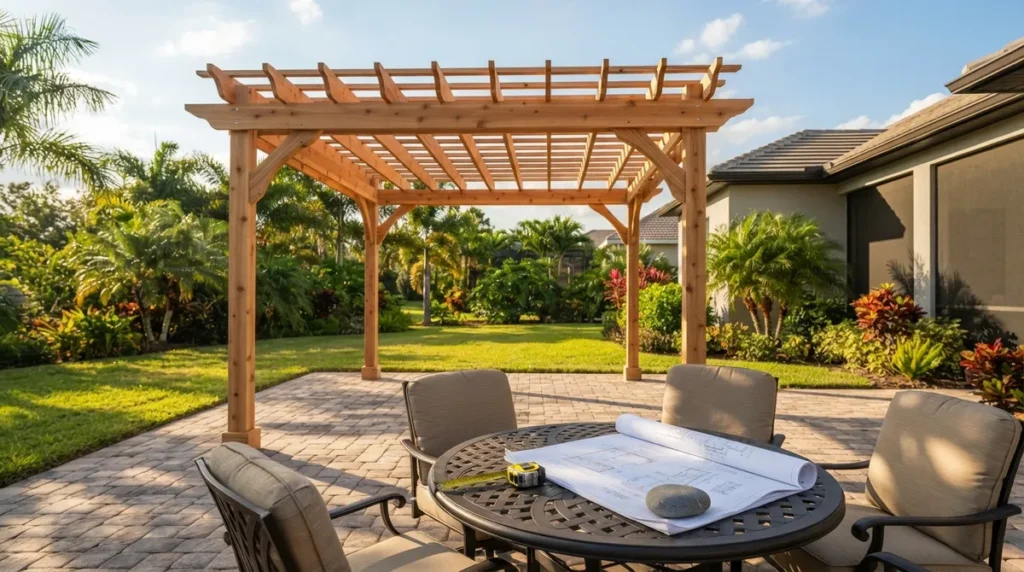
Key Takeaways
-
Charlotte County's permit exemption for pergolas is narrow: it applies only to a single freestanding structure no larger than 12 ft. by 12 ft., with no footings, roofing, sheathing, electrical, or plumbing.
-
Attached pergolas almost always require a building permit, because the county wants to confirm connections can handle Florida wind loads transferred into the home's framing.
-
Adding concrete footings, a solid or sheathed roof, or electrical/plumbing such as a ceiling fan or outdoor kitchen line takes a pergola out of the exemption.
-
Skipping a building permit does not skip zoning: even exempt pergolas must respect setbacks, utility and drainage easements, lot coverage, and deed or HOA rules.
-
Permitted pergola applications typically need an application, an accessory-structure affidavit, a site plan, and signed and sealed plans or engineering; the flat building fee is $90 and a Notice of Commencement is required for contracts over $5,000.
Picture this: you've picked out the perfect cedar pergola, imagined those lazy Sunday afternoons under the shade, and maybe even ordered the lumber. Then a neighbor mentions you might need a permit. Suddenly your weekend project feels a lot more complicated. Take a breath. You're not alone, and the rules are more manageable than they sound.
If you're searching for a pergola permit Port Charlotte answer, here's the short version. Port Charlotte falls under Charlotte County's jurisdiction, and the county's permit exemption for pergolas is narrow. Some small, simple pergolas can skip a building permit, but many can't. And even the exempt ones still have to follow zoning rules.
In this friendly guide, we'll walk through seven things every Port Charlotte homeowner, contractor, and real estate pro should know before the first post hole gets dug. We'll cover size limits, attached structures, zoning, paperwork, fees, and what to do if work has already started. Let's make this easy.
1. The Narrow Exemption: When You Can Skip the Permit
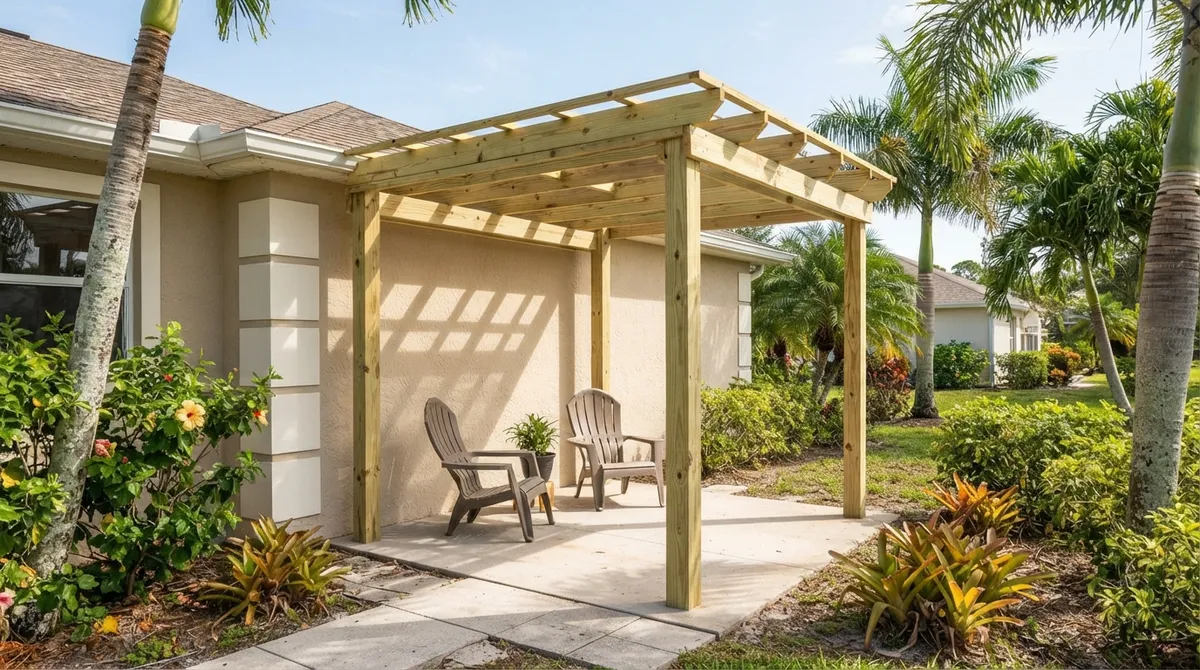
Charlotte County does allow a pergola without a building permit, but only when every condition is met. It's an all-or-nothing deal. Miss one item and the exemption doesn't apply.
According to the county's permit-requirements page, a pergola is exempt only if it is:
- A single, freestanding structure
- No larger than 12 ft. by 12 ft.
- Built with no footings
- Free of roofing, sheathing, electrical, and plumbing
- Compliant with county zoning rules
That last bullet trips people up, and we'll dig into it shortly. For now, remember this: if your pergola is bigger, attached, anchored with footings, or includes a solid roof or lighting, you've left exemption territory.
| Pergola Feature | Meets Exemption? |
|---|---|
| Freestanding, 10 x 10, no footings, open slats | Yes (still check zoning) |
| Freestanding, 12 x 12, no footings, open slats | Yes (still check zoning) |
| Freestanding, 12 x 16 | No |
| Attached to the house | No |
| Set on concrete footings | No |
| Solid or sheathed roof | No |
| Includes wiring, fans, or plumbed outdoor kitchen | No |
2. Attached Pergolas Almost Always Need a Permit
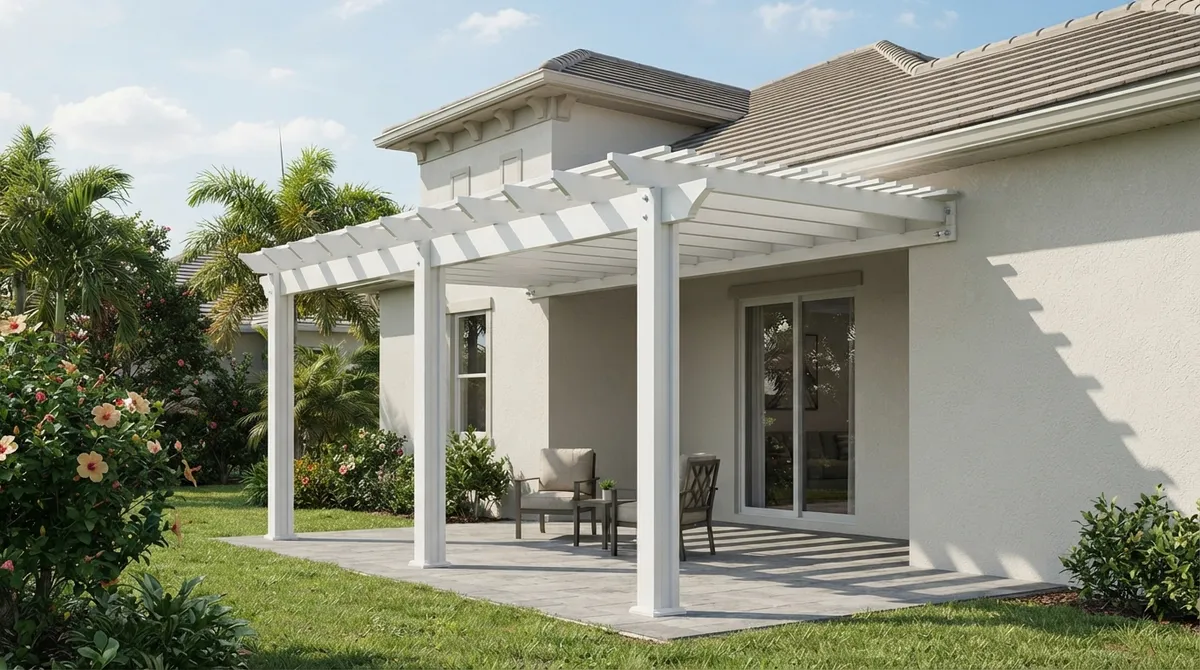
That gorgeous pergola you want to attach to your lanai or back wall? Plan on a permit. The county's exemption covers a single freestanding structure only. Once a pergola ties into your home, it becomes part of the building envelope, and the county wants to confirm it's anchored properly.
Why does this matter in Southwest Florida? Wind. A pergola attached to a house can transfer uplift forces into your roof or wall framing during a storm. Reviewers want to see that the connections can handle it. Attached pergolas are among the most common projects we see homeowners assume are "just a simple backyard add-on."
If you've already built an attached pergola without paperwork, don't panic. There's a path forward, and we'll cover it in point seven.
3. Footings, Roofs, and Electrical Change Everything
Here's where many Port Charlotte projects slip out of the exemption without anyone noticing. Three small upgrades make a big difference:
- Footings. Pouring concrete footings for stability sounds smart, and it is. But footings mean the structure is no longer exempt.
- Roofing or sheathing. A louvered roof is one thing; a solid cover is another. Any roofing or sheathing pushes the project into permitted territory.
- Electrical or plumbing. A ceiling fan, string lighting on a dedicated circuit, or an outdoor kitchen line each trigger additional requirements, and often separate trade permits.
Think of the exemption as a very specific recipe. Swap out one ingredient and you're cooking something different. Florida's high wind loads and flood considerations are the reason the county scrutinizes anything more substantial than a lightweight, open frame.
4. Zoning Still Applies, Even When You're Exempt
This is the point we wish every homeowner knew. Skipping a building permit does not mean skipping zoning. The county is clear that an exemption from the building permit doesn't exempt the project from zoning requirements.
What does that mean in plain English? Even a tiny, no-permit pergola must respect:
- Property-line setbacks
- Utility and drainage easements
- Lot coverage and other land-development rules
- Deed restrictions and HOA rules (separate from the county, but just as binding)
Port Charlotte lots can be tricky. Many are platted with easements along the rear and sides, and canal-front properties add another layer. Placing a pergola in an easement can lead to a forced removal later.
Charlotte County directs zoning questions to 941-743-1964 or Zoning@CharlotteCountyFL.gov. A quick call before you build is free and can save you serious headaches.
5. What a Permitted Pergola Application Looks Like
If your pergola doesn't qualify for the exemption, you'll apply as residential miscellaneous work. Charlotte County lists several documents commonly required:
- An application for construction permit
- An accessory-structure affidavit
- A site plan showing where the pergola sits on your lot
- Clear construction plans or engineering
The county notes that plans must be signed and sealed under its stated submission requirements, and additional documents may apply to your specific project. Review can include structural compliance, such as wind and flood loads, plus a zoning review for location and setbacks.
The Florida Building Code, 8th Edition (2023), which took effect December 31, 2023, is the foundation for these requirements. Plans that look fine to a lumber yard may not satisfy a plan reviewer, which is where drawings and engineering come in. If you're curious about who provides that seal, our guide on who seals structural drawings for Florida permits breaks it down.
For general contractors and design trade pros, this is where outsourcing pays off. Our in-house team prepares site plans and sealed structural drawings so your submission goes in clean the first time.
6. Budgeting: Fees, Surcharges, and the Notice of Commencement
Let's talk money. Charlotte County's residential miscellaneous permit page lists the following fee structure. Always confirm current numbers with the county before you finalize a budget.
| Fee Item | Charlotte County Listing |
|---|---|
| Building flat fee | $90 |
| Surcharge | 2.5% of the building fee |
| Building fee (valuation of $50,000 or more) | 0.004 x ICC valuation |
| Zoning review, if applicable | $22 |
For most backyard pergolas, the flat fee is the number that matters. The valuation formula only comes into play for larger, high-dollar projects.
One more item: a Notice of Commencement. The county requires one for improvements with a direct contract price greater than $5,000, and it must be submitted before the first inspection. If you're hiring a contractor for a premium pergola kit with installation, you may cross that line quickly.
Commercial properties or projects involving electrical, plumbing, or other regulated work can have different requirements, so don't assume a neighbor's experience matches yours.
7. If You Already Built Without a Permit, Here's the Way Forward
Maybe you inherited a pergola with the house. Maybe a previous contractor skipped the paperwork. Maybe you built it last summer and are only now hearing about the rules. It happens more than you'd think, and Florida has pathways to fix it.
The typical route involves documenting what's there, having an engineer verify the structure, and filing for approval after the fact. Our article on how to get an after-the-fact permit for a pergola in Florida walks through each step. If you're thinking about selling, how to sell a Florida house with unpermitted additions is a helpful read, and 4 steps if a prior owner skipped permits in Florida covers the inherited-structure scenario.
Real estate agents and investors, take note: an unpermitted pergola can surface during an inspection or title review and slow down a closing. Getting ahead of it protects your timeline. And if a violation notice has already arrived, our code compliance and violations team can step in.
Quick Checklist Before You Build
Here's a simple way to decide your next move. Answer these questions honestly:
- Is the pergola completely freestanding?
- Is it 12 ft. by 12 ft. or smaller?
- Will it sit without footings?
- Is it open, with no roofing or sheathing?
- Is it free of electrical and plumbing?
- Have you confirmed setbacks and easements with zoning?
If every answer is yes, you likely fit the exemption. If even one is no, plan for a permit and gather your documents. When in doubt, call Charlotte County Building Construction before work begins. The county itself recommends confirming the applicable permit and reviews for anything outside the stated criteria.
How Permit Help Makes the Process Easier
Charlotte County offers online permit application and plan review through its Citizen Access Portal and Digital Plan Room. That's convenient, but it still requires accurate drawings, the right affidavit, and a properly prepared site plan. A small mistake can mean a rejection and a restart.
That's where 1 Contractor Solutions comes in. We act as Florida's outsourced permitting department, handling permit facilitation and filing, tracking, reviewer comments, and revisions. Our drafting and engineering are done in-house, so if a reviewer asks for a change, we fix it quickly. You can read more about our work in Charlotte County, and see what customers say when you visit us on Google — 1 Contractor Solutions.
Want to stay connected? Follow us on LinkedIn or follow us on Facebook for Florida permitting tips. Our marketing partners at Brain Buzz Marketing also help us share timely updates.
Final Thoughts
A pergola should be a joy, not a source of stress. The big takeaways for your pergola permit Port Charlotte project: the exemption is narrow, zoning always applies, and anything attached, roofed, wired, or footed likely needs a permit. A little planning up front keeps your project on schedule and your property clean for future sales or refinancing.
Ready to build with confidence? Get a free quote and let our team prepare your plans, file your application, and carry it through approval. We respond within 30 minutes, day or night, and se habla español.
FAQs
Do I need a permit for a pergola in Port Charlotte, Florida?
Sometimes you don't, and that's good news! Charlotte County exempts a pergola only if it's a single, freestanding structure no larger than 12 ft. by 12 ft. with no footings, roofing, sheathing, electrical, or plumbing, and it still has to follow zoning rules. If your design goes beyond that, it's best to check with the county before you build.
Does a pergola need a permit if it is attached to my house?
Yes, an attached pergola does not meet the county's stated exemption criteria, so plan on a permit. Attached structures tie into your home's framing, so reviewers want to confirm the connections can handle Florida's wind loads.
What zoning rules apply to a pergola in Charlotte County?
Even a permit-exempt pergola must follow setbacks, easements, and other land-development rules. For specific questions about your lot, you can call the county's zoning team at 941-743-1964 or email Zoning@CharlotteCountyFL.gov.
How much does a pergola permit cost in Port Charlotte?
Charlotte County's residential miscellaneous page lists a $90 building flat fee, a surcharge of 2.5% of the building fee, and a $22 zoning review fee if applicable. Larger projects with a valuation of $50,000 or more use a percentage-based formula, so confirm current fees with the county before budgeting.
What documents do I need to apply for a pergola permit in Charlotte County?
The county lists an application for construction permit, an accessory-structure affidavit, a site plan, and clear plans or engineering, with plans signed and sealed under its submission requirements. Extra documents, like a Notice of Commencement for jobs over $5,000, may apply to your project.
We do this work every day across all 67 Florida counties. Call (866) 314-6931 and we will tell you what your situation actually requires — including when you do not need us.
Related services
Permit Facilitation & Filing
You have a crew scheduled, a client asking for dates, and a permit sitting somewhere in a queue you cannot see. We file it, w…
See the servicePlan Review Coordination
A permit in plan review is not one queue. On a commercial project it can be six queues, each with its own reviewer, its own c…
See the serviceReady to get your permit moving?
One call tells you which jurisdiction controls your project, what it will take, and what it will cost. Most of the time we can scope it on the phone.