
Blog
7 Steps for an Asbestos Survey Before Venice Demolition
Planning a Venice demolition? Learn the 7 steps for an asbestos survey, DEP notice, and permit coordination in Sarasota County for 2026.
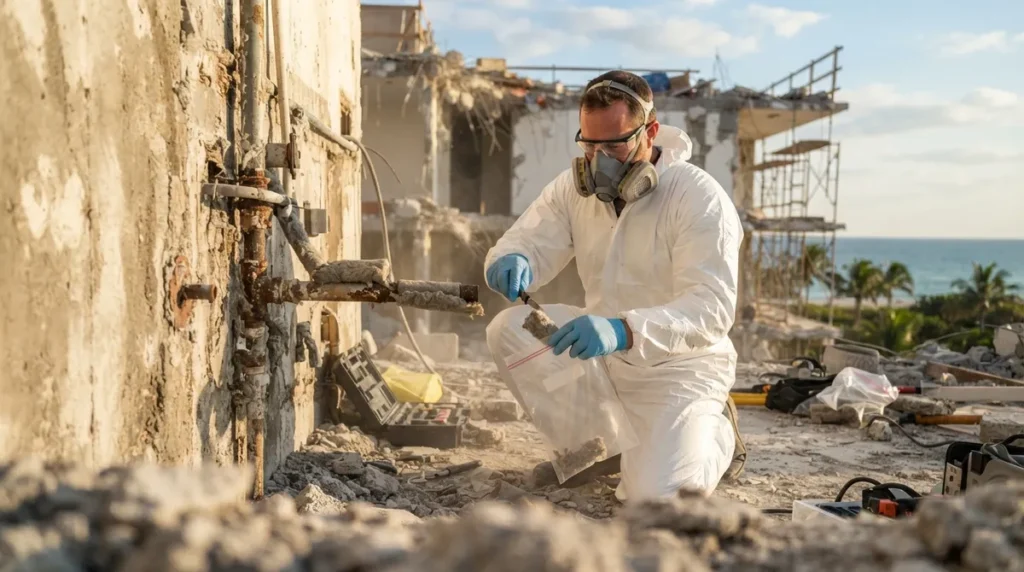
Key Takeaways
-
Confirm first whether your Venice project is regulated: commercial, industrial, and residential buildings with more than four units are generally regulated, while four-or-fewer-unit residential may be exempt.
-
Exemption thresholds (260 linear feet of pipe insulation, 160 square feet of other components, 35 cubic feet) apply to the amount of asbestos-containing material, not building size, so small structures can still be regulated.
-
Regulated projects generally require a Florida-licensed asbestos consultant to perform the pre-demolition survey; general contractors and unlicensed staff do not qualify.
-
File the Florida DEP Notice of Demolition at least 10 working days before work begins, with the survey report attached and quantities matching the survey.
-
A fee waiver for Sarasota County projects only waives the DEP fee; survey, notification, licensing, and safe-work requirements still apply.
-
The asbestos notice and the local demolition permit are separate tracks, so clearing one does not satisfy the other and both must be completed before demolition starts.
Let's be honest: nobody gets excited about asbestos paperwork. You're ready to knock down that tired building in Venice, the crew is lined up, and the dumpsters are on the calendar. Then someone says, "Wait, did we do the asbestos survey?" Suddenly your schedule is wobbling.
Here's the good news. An asbestos survey for demolition in Venice isn't scary once you know the order of operations. It's a pre-demolition step that protects your crew, your neighbors, and your wallet. In Florida, it also ties directly into the permitting process, which is exactly where things tend to get tangled.
In this friendly 2026 walkthrough, we'll cover seven practical steps: figuring out whether your project is regulated, hiring the right consultant, understanding what the report must include, filing the state notice, and lining it all up with your local demolition permit. Whether you're a general contractor, a realtor evaluating a teardown, or a homeowner clearing a lot, you'll leave knowing what to do and in what order. Grab a coffee, and let's get you demolition-ready.
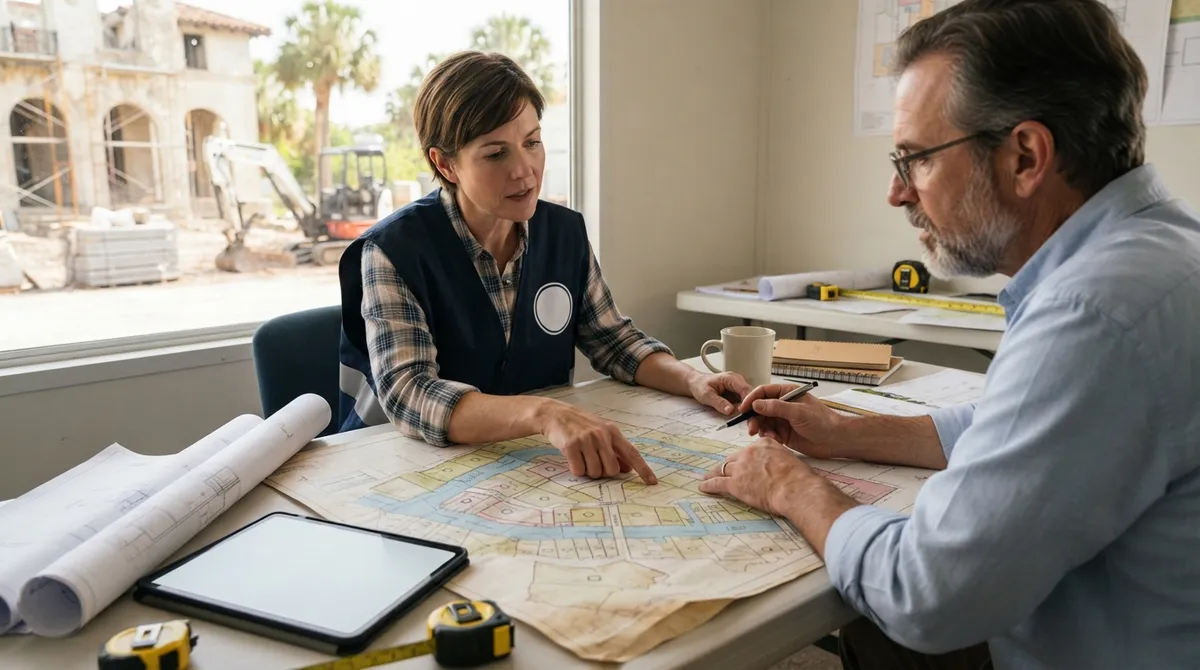
Step 1: Confirm Whether Your Venice Project Is Regulated
Before you spend a dime, figure out whether your project falls under Florida's asbestos rules. Venice sits in Sarasota County, and the same state and federal framework applies here as anywhere else in Florida. The federal Asbestos NESHAP drives most of it, and Florida DEP enforces it through Florida Administrative Code Rule 62-257.301.
In plain English, if the project is regulated, the owner or operator must arrange a pre-demolition asbestos inspection of the affected building or area. That inspection generally must be done by a Florida-licensed asbestos consultant.
Here's a quick way to sort your project:
| Property Type | Typically Regulated? | What to Check |
|---|---|---|
| Commercial building | Generally yes | Survey and notification requirements |
| Industrial or government-owned building | Generally yes | Survey and notification requirements |
| Residential, more than four units | Generally yes | Treated like a regulated facility |
| Residential, four or fewer units | Often exempt | Confirm the residential exemption applies |
One important reminder: a residential exemption from the state asbestos rules does not mean you skip your local demolition permit. Those are separate tracks, and both matter.
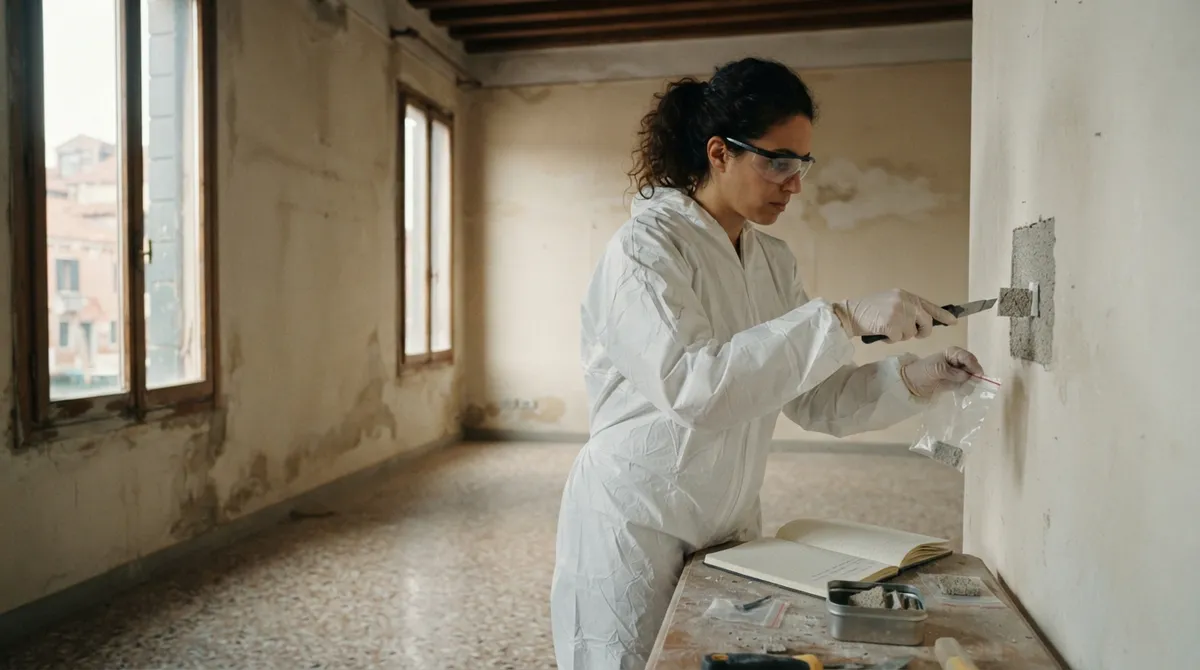
Step 2: Understand the Exemptions and Thresholds (Without Assuming)
This is where people get tripped up. Florida's rule does include limited exceptions, but they're narrower than most folks think.
The thresholds cited in Rule 62-257.301 are:
- 260 linear feet of pipe insulation
- 160 square feet of other facility components
- 35 cubic feet where length or area can't be measured
Notice the wording. These apply to the amount of regulated asbestos-containing material (ACM) involved in the project, not to the size of the building. A small commercial building can still be regulated, and a big one might surprise you either way.
Don't assume your teardown is exempt just because it looks small. The safest approach is to confirm applicability based on your project type, the rule language, and what a qualified consultant finds on site. If you're unsure, ask before you schedule the excavator.
Our team at 1 Contractor Solutions helps owners and contractors sort this out every week as part of our asbestos, mold, and environmental support, so you're not guessing at the rulebook.
Step 3: Hire a Florida-Licensed Asbestos Consultant
This step is non-negotiable for regulated projects. Florida rules generally require the survey to be performed by a Florida-licensed asbestos consultant. Your general contractor, your handyman, or your cousin who "knows a guy" doesn't count here.
When you vet a consultant, look for:
- Current Florida licensure as an asbestos consultant, which you can verify through the state.
- Experience with demolition surveys, not just renovation work.
- Clear scope and turnaround time, because your demolition date depends on it.
- A report format that lines up with what DEP asks you to upload with your notice.
- Willingness to answer questions about quantities and locations in plain language.
A quick tip from the permitting trenches: ask the consultant to measure and report quantities in the same units the DEP notice uses. Mismatched numbers between the survey and the notice are a classic source of headaches.
Step 4: Know What the Survey Report Should Contain
A good survey isn't just a stack of lab results. For a demolition, the report should clearly identify the asbestos-containing materials in the affected area, where they are, what condition they're in, and how much there is.
Here's what to look for in a solid report:
| Report Element | Why It Matters |
|---|---|
| List of ACM found | Tells your team what has to be handled before demolition |
| Location of each material | Lets abatement crews plan the work |
| Condition (friable or non-friable, damaged or intact) | Affects safe work practices |
| Quantities (linear feet, square feet, cubic feet) | Determines threshold applicability and feeds the DEP notice |
| Sample results and methods | Backs up the findings if anyone asks questions later |
| Consultant license information | Shows the survey was done by a qualified professional |
Read it before you file anything. If something looks incomplete or confusing, ask the consultant to clarify now rather than after a reviewer or inspector does.
Step 5: Plan Abatement and Sequence Your Work
If the survey finds regulated ACM, it generally needs to be dealt with properly before demolition proceeds. That means scheduling qualified abatement, coordinating disposal, and building those days into your timeline.
Sequencing matters. A smooth Venice demolition usually runs like this:
- Complete the survey with a licensed consultant.
- Review the findings and quantities.
- Prepare and submit the required state notification (more on that next).
- Wait out the required notice period.
- Complete any needed abatement using qualified professionals.
- Proceed with demolition once your local permit and notice requirements are satisfied.
Contractors, this is the part where schedule slips happen. If you promised a client a demolition date before confirming the notice period, you may be setting yourself up for an awkward phone call. Build the buffer in from the start.
Step 6: File the Florida DEP Notice of Demolition (10 Working Days)
When notification is required, Florida DEP's Notice of Renovation or Demolition must generally be submitted at least 10 working days before work begins. Ten working days, not calendar days, so weekends and holidays don't count toward your clock.
Here's what to know about filing:
- Where it goes: to the applicable local air program, or to the DEP district office where no local program has jurisdiction.
- How: DEP's current instructions describe electronic submission through its Business Portal, with a hard-copy option also referenced in the rule.
- What to attach: the survey report should be uploaded with the notice.
- Quantities must match: the ACM amounts you report should line up with the survey.
- Who is responsible: the owner or operator carries the compliance and notification duty.
Here's a snapshot of the fee structure listed in the rule:
| Submission Method | Listed Fee |
|---|---|
| Electronic with concurrent payment | $100 flat fee |
| Electronic without concurrent payment, or hard copy | $200 |
| Qualifying Sarasota County projects (not county-owned facilities) | Fee waived |
Yes, Venice is in Sarasota County, and the rule lists Sarasota among counties where the DEP asbestos removal project fee is waived for projects not at county-owned facilities. That's a nice break, but it's only a fee waiver. It doesn't waive the survey, the notification, licensing, or safe-work requirements. Fees and portal instructions can change, so verify the current details before you file.
Step 7: Line Up Your Local Demolition Permit
Here's the part that surprises a lot of first-time demolition clients: getting your local demolition permit does not satisfy your asbestos obligations. And clearing the asbestos notice doesn't hand you a demolition permit either. They're two separate lanes that need to merge before the machines roll.
For your Venice project, plan to confirm the current demolition permit checklist with the relevant local authority. Typical items can include site information, utility disconnect documentation, and other submittals depending on the jurisdiction and property. Requirements vary, so always check the current list instead of relying on an old checklist.
This is where having permitting support pays off. At 1 Contractor Solutions, we handle demolition permits and coordinate with the environmental pieces so nothing falls through the cracks. If your demolition is part of a larger project, our permit facilitation and filing team can track everything from application to approval.
Common Mistakes That Slow Venice Demolition Projects
After seeing plenty of projects, a few patterns stand out. Avoid these and you'll already be ahead of the pack:
- Assuming a small structure is exempt. Applicability depends on the project and the rule, not a gut feeling.
- Skipping the survey because "it's a newer building." Age isn't a substitute for an inspection when the project is regulated.
- Counting calendar days instead of working days. That 10-working-day window is easy to miscalculate.
- Mismatched numbers. Survey quantities and notice quantities should agree.
- Treating the fee waiver as a free pass. It only covers the fee.
- Forgetting the local permit. State notification and local permitting run on separate tracks.
If you're a realtor or investor evaluating a teardown property, it's smart to factor survey time and the notice period into your closing and construction timeline before you commit. If your lot has other open permit questions, our guide on who pays for open permits when buying a Florida home is a helpful companion read.
How the Process Compares Across Audiences
Different readers feel different pain points, so here's a quick cheat sheet:
| Who You Are | Your Biggest Risk | Smart Move |
|---|---|---|
| General contractor | Schedule slip from the notice period | Order the survey before quoting a start date |
| Realtor or investor | Surprise costs after closing | Build survey and abatement into due diligence |
| Homeowner | Confusion over exemptions | Confirm unit count and project type early |
| Design or trade professional | Missing documents at permit review | Collect the survey report with your submittal set |
Whichever group you're in, the winning move is the same: start early, keep your documents consistent, and don't assume.
Why Local Permitting Help Makes This Easier
Environmental paperwork and building permits live in different offices with different timelines, and that's exactly why projects stall. A permitting partner who understands both sides can keep the pieces moving together.
1 Contractor Solutions works across all 67 Florida counties, with same-day response and in-house sealed drawings when your project needs engineering support. If you'd like to see how other Floridians feel about working with us, you can read 1 Contractor Solutions reviews on Google. We're also happy to connect with you and follow us on LinkedIn for Florida permitting updates, or follow us on Facebook for tips and news.
For the underlying rules, it's worth browsing the Florida Department of Environmental Protection asbestos program page directly, since DEP updates its portal instructions and forms from time to time.
If your teardown is going to be followed by a new build, you may also want to review our guide on how to get an asbestos survey for demolition in Fort Myers to compare how neighboring Southwest Florida projects handle the same steps.
Ready to Move Your Venice Demolition Forward?
An asbestos survey for demolition in Venice really comes down to a handful of steps: confirm your project type, understand the thresholds, hire a licensed consultant, review the report, plan abatement, file the DEP notice at least 10 working days ahead, and secure your local demolition permit. Do those in the right order and you protect your crew, your neighbors, and your timeline.
You don't have to juggle all of it alone. If you'd like a team to coordinate the environmental side with the building permit side, we'd love to help. Get a free quote from 1 Contractor Solutions today, and let's get your Venice demolition permitted and moving.
FAQs
Do I need an asbestos survey before demolishing a house in Venice, Florida?
It depends on the project. Florida's asbestos rules generally require a pre-demolition survey for regulated projects, while qualifying residential buildings with four or fewer dwelling units may fall under an exemption. Always confirm how your specific project is classified before you assume you're exempt, and remember your local demolition permit is a separate requirement.
Who is qualified to perform an asbestos survey in Sarasota County?
For regulated projects, Florida rules generally call for a Florida-licensed asbestos consultant to conduct the inspection. That applies in Venice just like anywhere else in Sarasota County. Be sure to verify the consultant's current license before you hire.
How far in advance must an asbestos demolition notice be filed in Florida?
When notification is required, the Florida DEP notice must generally be submitted at least 10 working days before demolition or regulated renovation begins. Working days exclude weekends and holidays, so plan your calendar with a little cushion. Filing late can push your whole start date.
Does Sarasota County's asbestos fee waiver mean I can skip the survey or notification?
Nope, and this one trips people up. The waiver only applies to the DEP asbestos removal project fee for qualifying projects not at county-owned facilities. Survey, notification, licensing, and safe-work requirements still apply, so don't skip them.
Where do I submit a Florida asbestos demolition notification for a Venice property?
The notice goes to the applicable local air program, or to the DEP district office where no local program has jurisdiction. DEP's current instructions describe electronic submission through its Business Portal, and you upload the survey report with the notice. Double-check the current submission route before filing.
We do this work every day across all 67 Florida counties. Call (866) 314-6931 and we will tell you what your situation actually requires — including when you do not need us.
Related services
Permit Facilitation & Filing
You have a crew scheduled, a client asking for dates, and a permit sitting somewhere in a queue you cannot see. We file it, w…
See the servicePlan Review Coordination
A permit in plan review is not one queue. On a commercial project it can be six queues, each with its own reviewer, its own c…
See the serviceReady to get your permit moving?
One call tells you which jurisdiction controls your project, what it will take, and what it will cost. Most of the time we can scope it on the phone.