
Blog
5 Steps to Get a Structural Engineer for Unpermitted Work in FL
Wondering how to get a structural engineer for unpermitted work in Florida? Follow these 5 friendly steps from the first call to approval.
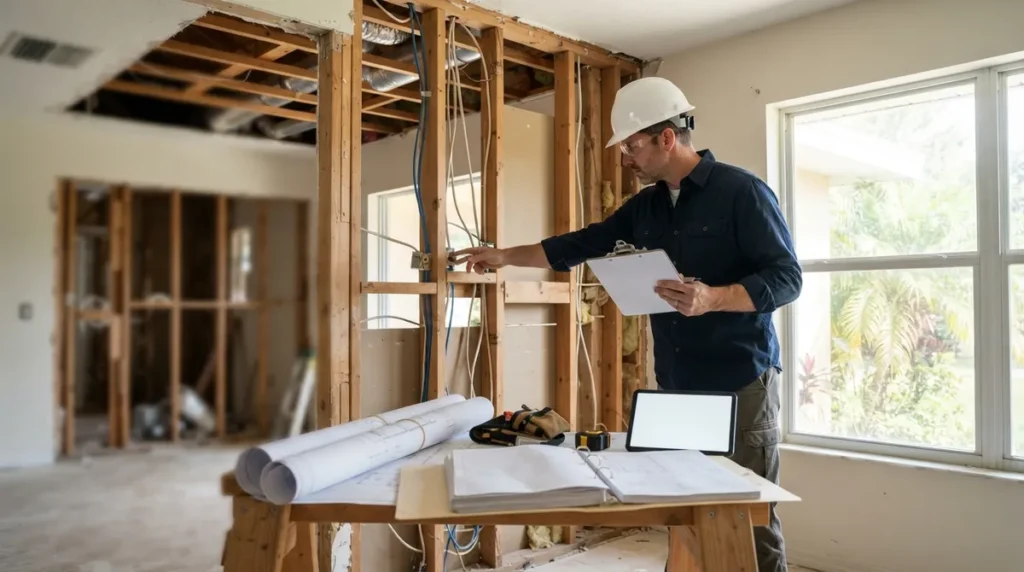
Key Takeaways
-
Call the local building department first to learn whether it accepts after-the-fact permits and exactly what sealed drawings, calculations, or inspections it requires before hiring an engineer.
-
A structural engineer's sealed report does not replace the permit or inspections; the building official decides whether the as-built work and any corrective repairs are approved.
-
Verify any Florida engineer's license on the DBPR portal at MyFloridaLicense.com and confirm the firm's authorization through the Florida Board of Professional Engineers before signing.
-
Engineers will not certify concealed framing or connections without adequate basis, so expect that walls or ceilings may need to be opened or tested for inspection.
-
Get the engineer's scope, deliverables, site access needs, fees, and schedule confirmed in writing, and disclose any suspected problems upfront to avoid costly redos.
-
Avoid closing up walls before inspection, ignoring violation notices, and assuming a sealed letter alone legalizes the work, since these mistakes add time and cost.
So you just found out that the addition, lanai, or remodel on your Florida property was never permitted. First, take a breath. You are in good company, and this is fixable more often than people think. The question most owners, buyers, and contractors ask next is simple: how do I get a structural engineer for unpermitted work in Florida, and what happens after I do?
Here is the friendly truth. A structural engineer is a key piece of the puzzle, but not the whole puzzle. Under Florida law, covered construction generally needs a permit first, and an engineer's report does not replace that permit or the inspections that come with it. What the engineer does is give the building department the evidence it needs to decide whether your existing work can be approved as built.
In this guide, we walk through five clear steps, from calling the right office to submitting the right paperwork. Whether you are a homeowner, a general contractor cleaning up a past job, or a realtor trying to save a closing, you will leave knowing exactly what to do next.
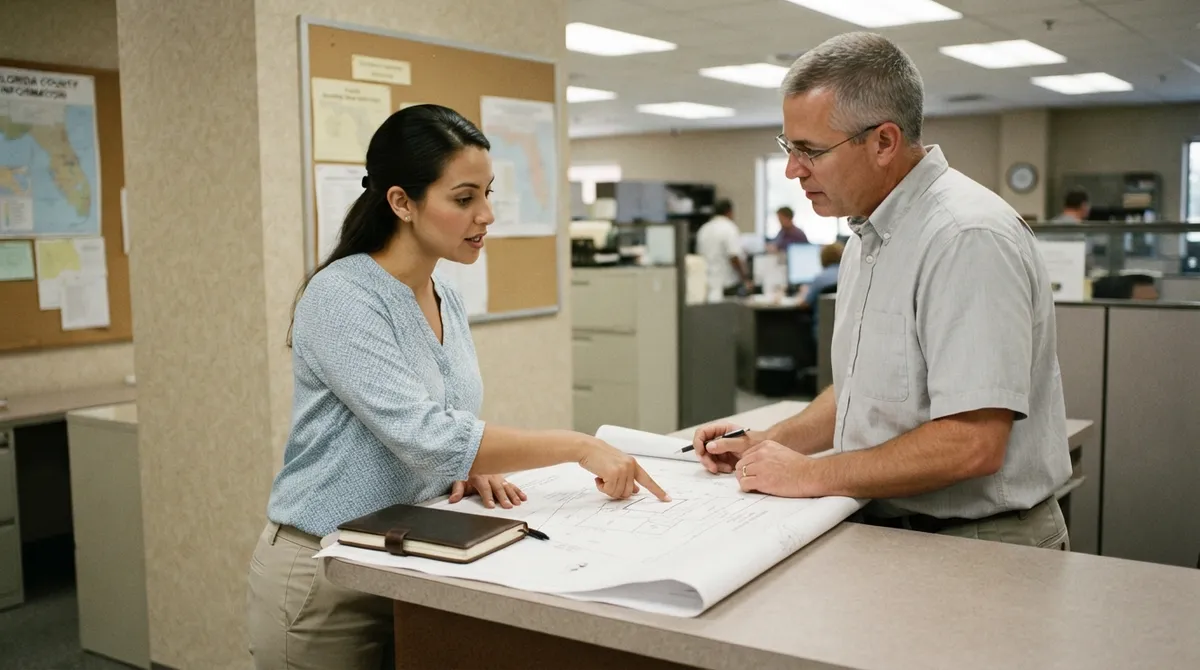
Step 1: Call the Building Department Before You Call Anyone Else
It may feel backward, but the smartest first move is a quick conversation with the city or county building department that has jurisdiction over your property. Florida has hundreds of local enforcing agencies, and each one handles after-the-fact permits a little differently. Not sure which office controls your address? Our building department lookup tool can point you in the right direction, which matters most near city lines.
When you call, ask these questions and write down the answers:
- Do you accept after-the-fact permit applications for this type of work?
- What plans, drawings, or calculations do you require?
- Do you need an engineer's sealed report or sealed drawings?
- Which inspections will be required, and will anything need to be opened up?
- What are the fees and the typical review timeline?
No statewide figure exists for after-the-fact permit costs, timelines, or penalties. Everything depends on your local jurisdiction and the specifics of your project. That is exactly why this first call is so valuable: it tells your engineer what to produce instead of guessing.
Why This Step Saves You Money
Engineers can only deliver what the building official will accept. If you hire one before knowing the local requirements, you may pay for a report that does not match what the reviewer wants. A five-minute call can prevent a costly redo.
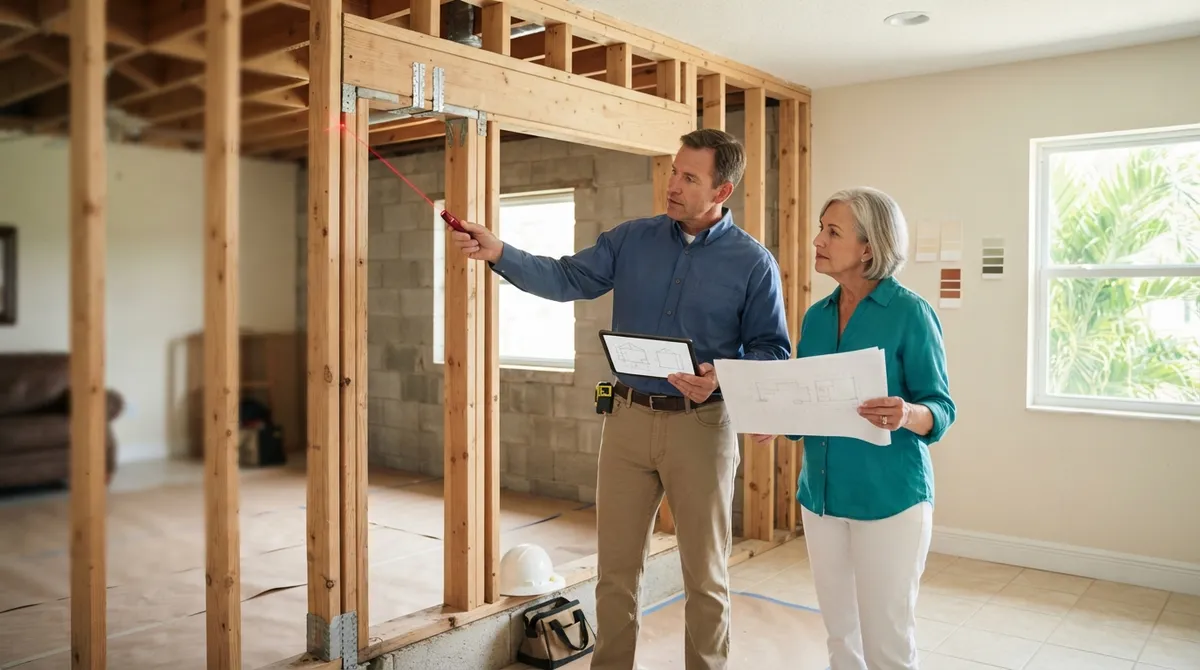
Step 2: Understand What a Structural Engineer Actually Does for Unpermitted Work
Many owners picture an engineer waving a magic wand and stamping the work as legal. That is not how it works, and honestly, knowing the real role will lower your stress. Depending on the project and what the building official requires, a structural engineer may:
- Inspect the visible, accessible conditions on site
- Review any available construction records, photos, or receipts
- Prepare existing-condition or as-built drawings and calculations
- Identify deficiencies in framing, connections, foundations, or load paths
- Recommend repairs or upgrades to meet the Florida Building Code
A responsible engineer will not certify concealed or undocumented work as compliant without an adequate basis. If a wall is closed up and no one can see the framing, the engineer may need that area exposed or tested before putting a seal on anything. That is not them being difficult. That is them protecting you and their license.
If you want to dig deeper into this topic, our guide on structural engineer letters for Florida permits explains what those documents contain and when they are used.
Engineer Report vs. Permit: Quick Comparison
| Item | Engineer's Report or Drawings | After-the-Fact Permit |
|---|---|---|
| Purpose | Provides technical evidence of existing conditions | Legal authorization for the work |
| Issued by | Florida-licensed professional engineer | Local building department |
| Replaces inspections? | No | No, inspections are still required |
| Guarantees approval? | No | Decided by the building official |
Step 3: Find and Verify a Florida-Licensed Professional Engineer
Now for the part you came here for: actually finding the engineer. You need a Florida-licensed professional engineer (PE) with relevant structural experience, ideally someone who has worked with after-the-fact submittals before. Not every engineer enjoys evaluating work they did not design, so ask about experience up front.
How to Verify a License
Never take a license number at face value. Verify it yourself:
- Search the engineer's name on the Florida Department of Business and Professional Regulation (DBPR) public records portal through MyFloridaLicense.com.
- Confirm the license is active and in good standing.
- If you are hiring through an engineering company, check that the firm is authorized to offer engineering services in Florida through the Florida Board of Professional Engineers.
- Ask whether the engineer is familiar with your specific county or city.
The Florida Board of Professional Engineers also maintains an engineering business registry that helps you confirm a firm's status. A few minutes of checking now protects you from a rejected submittal later.
Where to Look
You have several routes. You can ask your general contractor or realtor for referrals, search for local structural firms, or work with a permitting company that has engineering in house. Using a one-stop team can be a big time saver because the person handling your permit already knows what the reviewer wants. At 1 Contractor Solutions, our own engineer signs and seals our structural engineering work, so when a reviewer has a comment, we fix it in house instead of waiting on an outside consultant.
Step 4: Prepare Before You Hire (and Get It in Writing)
Engineers can work faster and quote more accurately when you show up prepared. Before you sign anything, gather what you have and describe the situation honestly. Here is a handy checklist:
- A clear description of the unpermitted work and when it was built
- Any notices, violations, or stop work orders from the city or county
- Permit records or an open permit search for the property (try our open permit search tool)
- Photos, receipts, contractor names, and any old drawings
- Your closing date or lender deadline, if one exists
Then ask the engineer to confirm the following in writing:
| Item to Confirm | Why It Matters |
|---|---|
| Scope of services | Prevents surprises about what is and is not included |
| Deliverables | Tells you exactly which sealed documents you will receive |
| Site access needs | Sets expectations for visits and exposed areas |
| Fee and payment terms | No statewide price exists, so get the number in writing |
| Schedule | Helps you plan around closings and code deadlines |
| Possible exposure or testing | Concealed work may need to be opened for inspection |
Being upfront about the work, including any parts you suspect are not up to par, helps the engineer scope the job correctly. Honesty here is not a risk. It is the fastest path to a clean file.
Step 5: Submit the Package and Follow the Building Department's Lead
With your engineer's documents in hand, you file them with the local after-the-fact permit application. This is where good organization pays off. Typical packages may include an application, existing-condition drawings, structural calculations, a site plan, and the engineer's sealed letter or report, but your jurisdiction decides the exact list.
Once submitted, expect the building department to take over the driver's seat. The authority may:
- Request revisions or additional documentation
- Require you to open up finished areas so inspectors can see the framing or connections
- Require corrective work, such as added straps, fasteners, or footing upgrades
- Schedule inspections before approving or closing the permit
Please do not assume an engineer can guarantee approval. The building official determines which code requirements apply and whether the evidence and corrective work are acceptable. Work that cannot be verified may need to be tested, redesigned, or in rare cases rebuilt. The good news is that many projects are approved after modest repairs and a clean set of drawings.
If you want help coordinating comments and resubmittals, our team handles revisions and resubmittals and plan review coordination so nothing sits in a queue unanswered. You can also read our step-by-step walkthrough on how to get an after-the-fact permit in Florida.
Who Benefits Most From This Process?
Different readers come to this problem from different angles, and each has a slightly different goal:
- Homeowners: You want to stay legal, protect your insurance, and avoid trouble when you sell.
- General contractors: You may be cleaning up a past job or taking over a project another crew started without permits. See how we support general contractors.
- Realtors and investors: A permit hold can derail a closing, so speed and clarity matter. Learn about our realtor and closing support.
- Solar companies: Roof loading and attachment details often need engineering documentation. We work with solar contractors on exactly that.
The Legal Backdrop in Plain English
Florida Statutes section 553.79 generally makes it unlawful to perform covered building construction, alteration, modification, repair, or demolition without first getting a permit from the appropriate enforcing agency. The same statute generally calls for plan review for code compliance before a permit is issued, subject to exceptions.
That is why the after-the-fact path exists: it brings existing work back through the same review-and-inspection system. If you would like a broader overview, our article on how to legalize unpermitted work in Florida covers the full picture, and our service page on after-the-fact and expired permits shows how we carry these files from start to closeout.
Common Mistakes to Skip
You can save yourself real headaches by avoiding these frequent missteps:
- Hiring an engineer before calling the building department
- Skipping the license check on DBPR
- Assuming a sealed letter alone legalizes the work
- Hiding known issues from the engineer
- Closing up walls again before the engineer or inspector has seen them
- Ignoring notices and letting fines or liens build up
We have seen all of these, and none of them are the end of the world. They just cost time. If you are already under a notice or stop work order, our urgent permit rescue team can step in fast, and our code compliance violations service helps resolve citations.
How 1 Contractor Solutions Can Help
If all of this sounds like a lot of phone calls, that is because it usually is. 1 Contractor Solutions acts as Florida's outsourced permitting department. We figure out which jurisdiction controls your address, prepare or review the plans, coordinate our in-house sealed engineering, file the application, track it, and work every reviewer comment through approval and closeout. We serve all 67 Florida counties, answer within 30 minutes day or night, and se habla español. You can also see what customers say by visiting our Google profile for 1 Contractor Solutions, and stay connected when you follow us on LinkedIn or follow us on Facebook.
Conclusion: You Have a Clear Path Forward
Finding a structural engineer for unpermitted work in Florida comes down to five friendly steps: call the building department, understand the engineer's real role, verify a Florida-licensed PE, prepare and get terms in writing, and submit a clean package while following the reviewer's lead. Unpermitted work feels scary, but it is a very common problem with a well-worn solution.
Ready to stop worrying and start moving? Reach out today to get a free quote and let our team handle the engineering, the filing, and the follow-up so your project can finally get the green light.
FAQs
Does unpermitted structural work in Florida need a structural engineer's report?
Often, yes. Many building departments ask for sealed drawings or an engineer's report as evidence that existing structural work meets code, but requirements vary by jurisdiction. The best move is to ask your local building department what it wants before you hire anyone.
How do I verify a Florida-licensed structural engineer?
Search the engineer's name on the DBPR public records portal at MyFloridaLicense.com to confirm an active license. If you hire through an engineering company, also check that the firm is authorized to offer engineering services in Florida through the Florida Board of Professional Engineers.
Will I have to open walls or ceilings so the work can be inspected?
Possibly. If framing or connections are concealed and cannot be verified, the engineer or building official may require areas to be exposed or tested. It is not fun, but it is often the quickest way to get the work approved with confidence.
Can a structural engineer guarantee my after-the-fact permit will be approved?
No. The engineer provides evidence and recommendations, but the building official decides whether the work and any corrective repairs are acceptable. A well-prepared package simply gives you the strongest shot at a smooth approval.
How much does an engineer and after-the-fact permit cost in Florida?
There is no single statewide price, since fees, documentation, and procedures vary by local jurisdiction and project. Ask the building department for its fee schedule and get your engineer's scope and fee confirmed in writing before work begins.
We do this work every day across all 67 Florida counties. Call (866) 314-6931 and we will tell you what your situation actually requires — including when you do not need us.
Related services
Permit Facilitation & Filing
You have a crew scheduled, a client asking for dates, and a permit sitting somewhere in a queue you cannot see. We file it, w…
See the servicePlan Review Coordination
A permit in plan review is not one queue. On a commercial project it can be six queues, each with its own reviewer, its own c…
See the serviceReady to get your permit moving?
One call tells you which jurisdiction controls your project, what it will take, and what it will cost. Most of the time we can scope it on the phone.